Rhyme recognition Reading Comprehension Worksheets for Ages 5-6
3 filtered results
-
From - To
Unlock the joy of reading with our Rhyme Recognition Reading Comprehension Worksheets, designed specifically for ages 5-6! These engaging worksheets enhance young learners' phonemic awareness, crucial for building strong reading skills. Children will enjoy identifying and matching rhyming words through fun activities that foster creativity and language development. Our vibrant illustrations and child-friendly formats make learning exciting, helping to keep little ones engaged. Perfect for home or classroom use, these worksheets promote critical thinking and comprehension in a playful way. Empower your child with the foundational skills for successful reading—download our Rhyme Recognition worksheets today and watch their confidence soar!
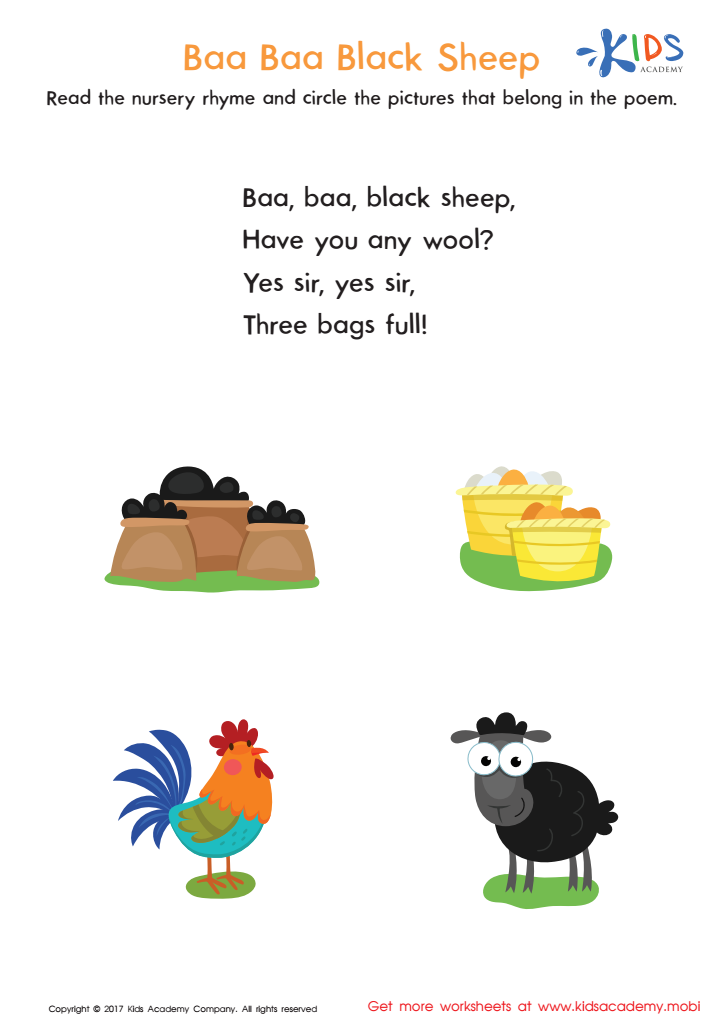
Baa Baa Black Sheep Printable
 Assign to My Students
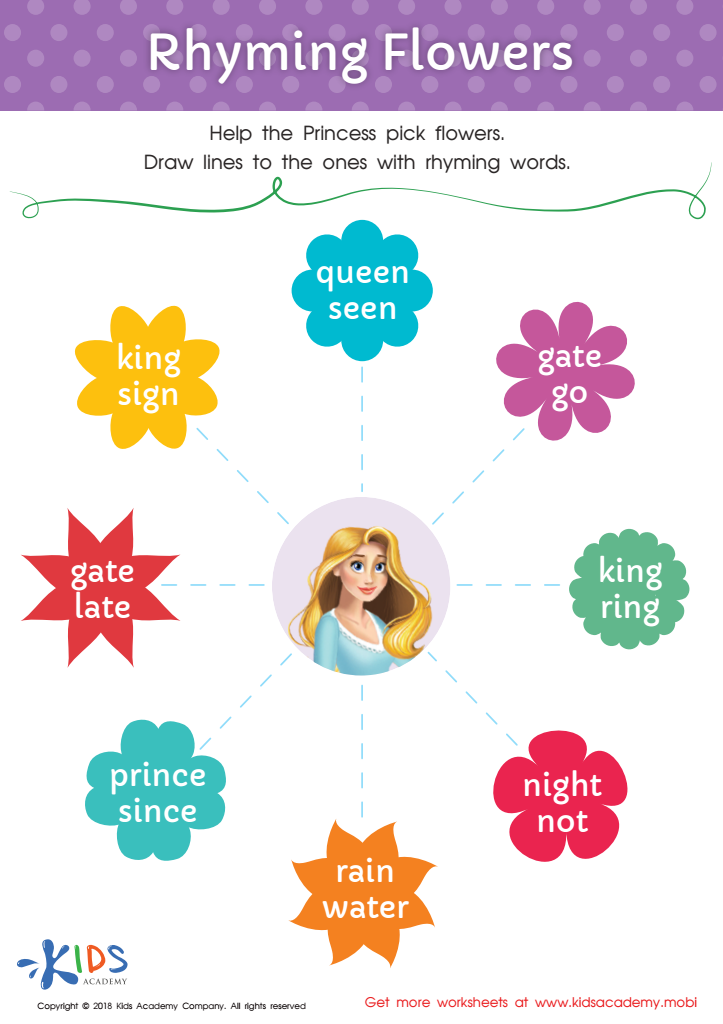
Rhyming Flowers Worksheet
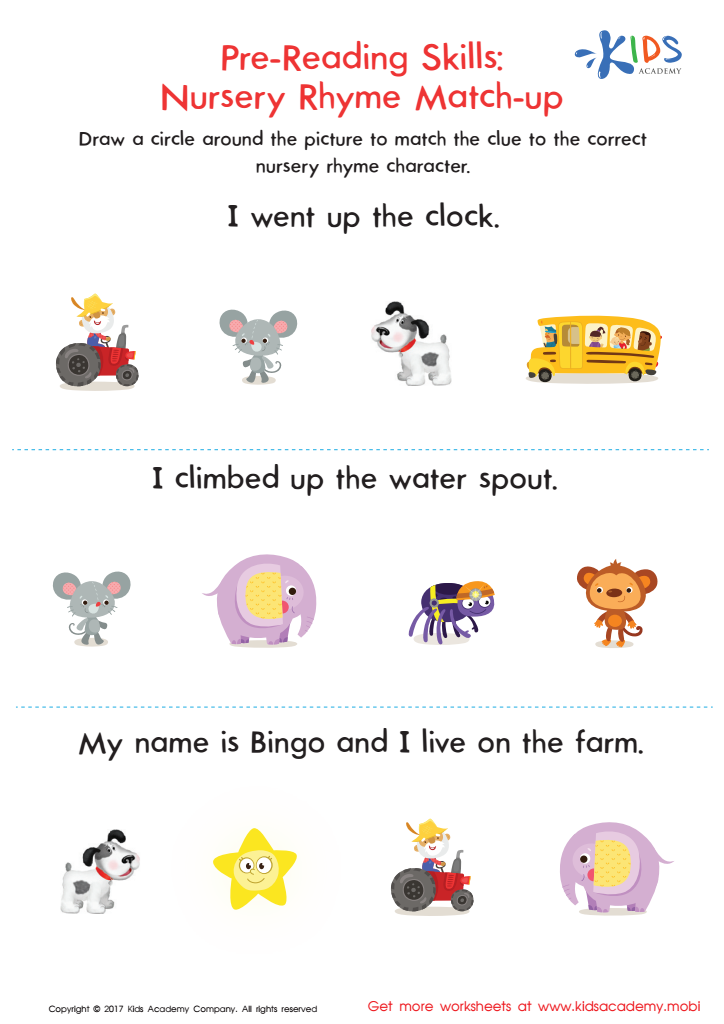
Nursery Rhyme Match–Up Worksheet








Rhyme recognition is an essential skill in early literacy development for children aged 5 to 6. When parents and teachers prioritize rhyme recognition, they lay a foundation for various reading comprehension skills. Recognizing and producing rhymes helps children develop phonemic awareness, which is crucial for decoding words as they read. This skill enables them to identify different sounds in words, making it easier to grasp concept and maintain fluency.
Moreover, rhyme recognition strengthens vocabulary acquisition as children learn new words through familiar sounds and contexts. A playful connection between rhyming words creates an engaging learning atmosphere, boosting their interest in reading. This exciting approach often leads to improved comprehension because children become adept at predicting what words can come next in a text.
Additionally, integrating rhyming activities into literacy practice encourages social interaction and critical thinking. It invites discussions about patterns, connections, and storytelling, nurturing a holistic understanding of language and literature. Ultimately, by fostering rhyme recognition, parents and teachers effectively enhance children's overall reading comprehension skills, empowering them with the confidence and abilities they need for academic success and lifelong learning.








