Story analysis Reading Comprehension Worksheets for Ages 5-6
5 filtered results
-
From - To
Unlock your child’s reading potential with our engaging "Story Analysis Reading Comprehension Worksheets" tailored for ages 5-6. Our expertly designed worksheets help young learners delve deeper into stories by exploring characters, settings, and plots, fostering critical thinking and comprehension. Each worksheet includes colorful illustrations and interactive questions to captivate early readers and enhance their understanding. Perfect for both classroom and at-home learning, our resources build a strong foundation in literacy while making reading fun. Help your child develop essential reading skills and a lifelong love for stories with our captivating and educational worksheets.
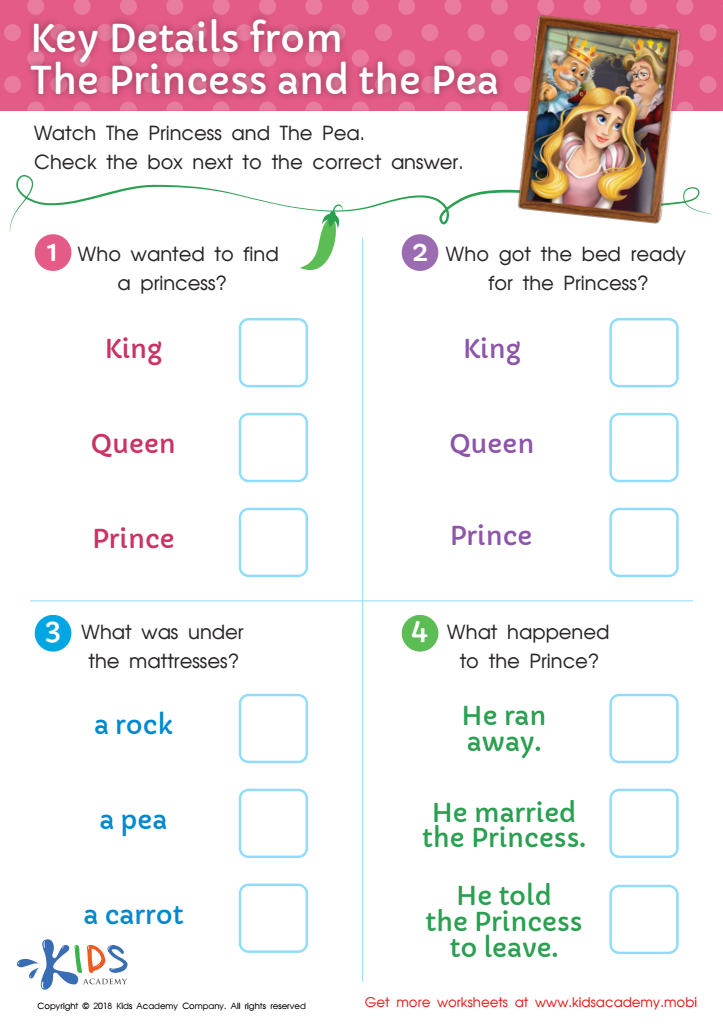
Key Details from the Princess and the Pea Worksheet
 Assign to My Students
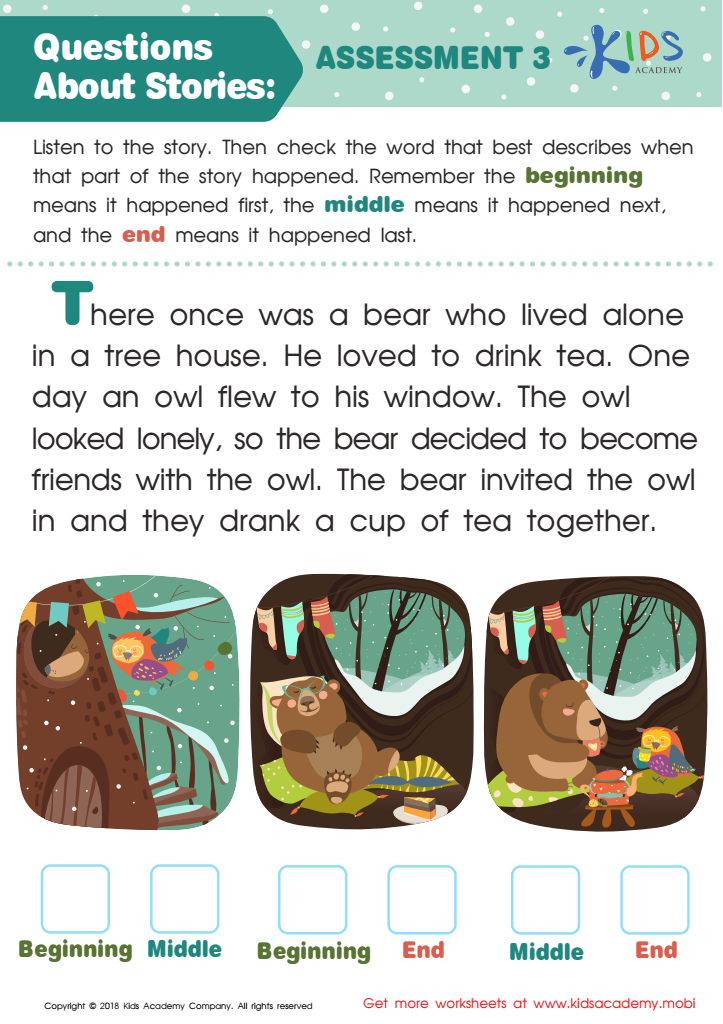
Questions About Stories: Assessment 3 Worksheet
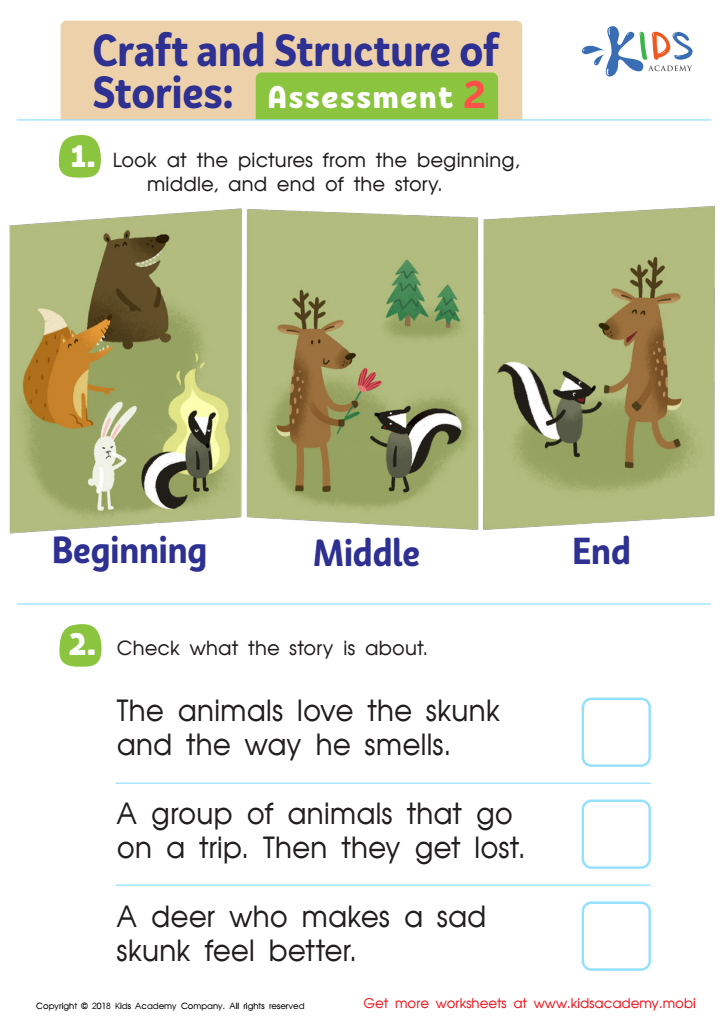
Craft and Structure of Stories: Assessment 2 Worksheet
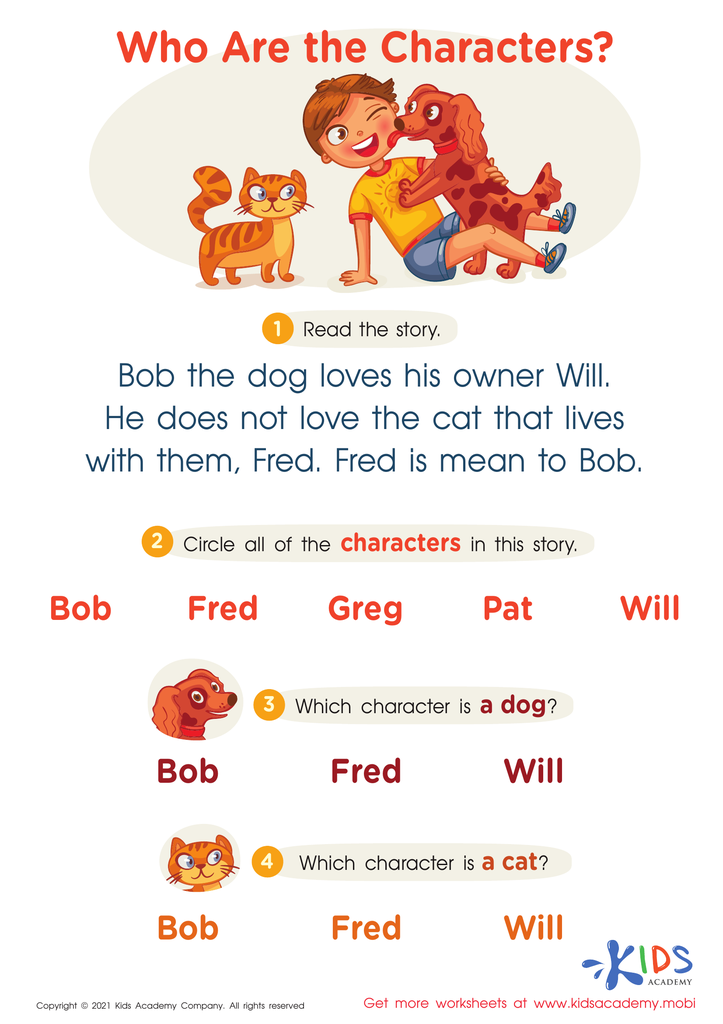
Who Are the Characters? Worksheet
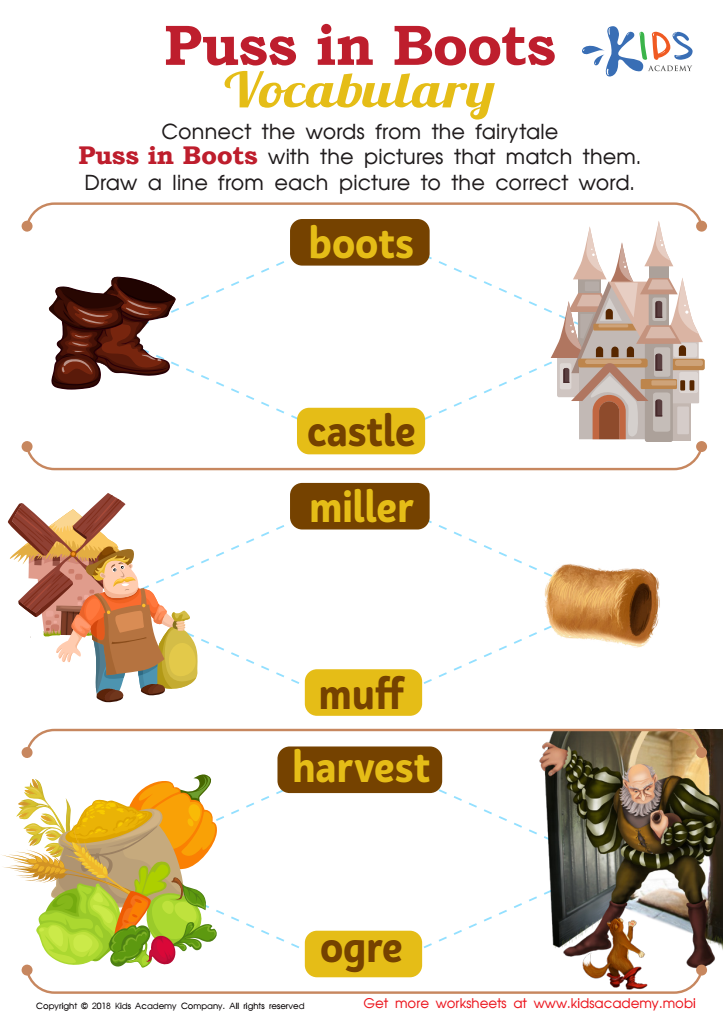
Puss in Boots Vocabulary Worksheet




.jpg)



Parents and teachers should place significant emphasis on story analysis and reading comprehension for children aged 5-6 because these skills form the foundation of effective communication and critical thinking. At this pivotal developmental stage, young children are transitioning from a reliance on parents and caregivers to more independent modes of learning and understanding the world around them.
Understanding and analyzing stories help children to grasp basic narrative structures like beginning, middle, and end, improving their overall ability to follow and recount events. It encourages them to pay attention to details, make predictions, and draw conclusions—all key components of critical thinking. These activities simultaneously enhance vocabulary and language skills, which are crucial for expressing themselves clearly and interacting with others effectively.
Moreover, engaging in story analysis boosts social-emotional development. By identifying with characters and their experiences, children learn empathy and compassion. They begin to recognize different perspectives and emotions, laying the groundwork for improved social interaction and cooperation with peers.
Ultimately, investing time and energy in story analysis and reading comprehension at this age nurtures a lifelong love for reading and learning. It equips children with the tools necessary for academic success and personal growth, fostering smarter, more empathetic, and more articulate individuals.








