Visual interpretation Reading Fiction Worksheets for Ages 5-6
3 filtered results
-
From - To
Explore our engaging Visual Interpretation Reading Fiction Worksheets designed specifically for children ages 5-6! These activities enhance early literacy skills by encouraging young learners to visualize stories and understand character emotions, settings, and plot elements. Our worksheets feature vibrant illustrations and interactive prompts, making it easier for kids to express their thoughts and ideas creatively. By decoding visual cues and connecting them with the text, children develop crucial comprehension skills while enjoying the process. Perfect for classrooms or home learning, our worksheets are a fun way to nurture a love of reading and improve visual interpretation in budding readers!
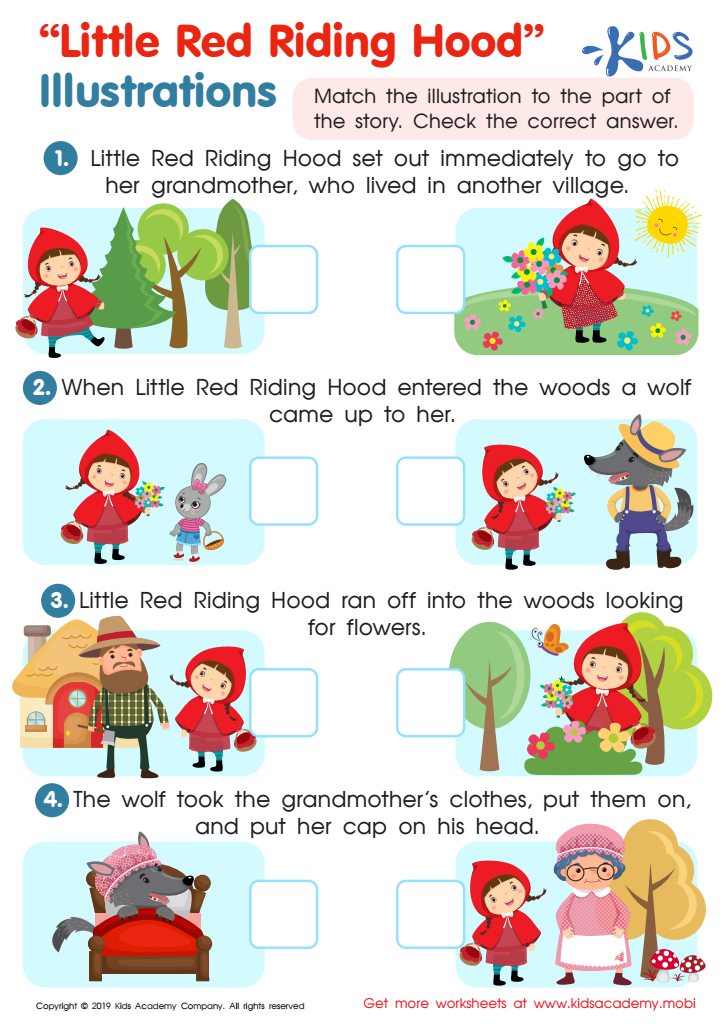
Little Red Riding Hood: Illustrations Worksheet
 Assign to My Students
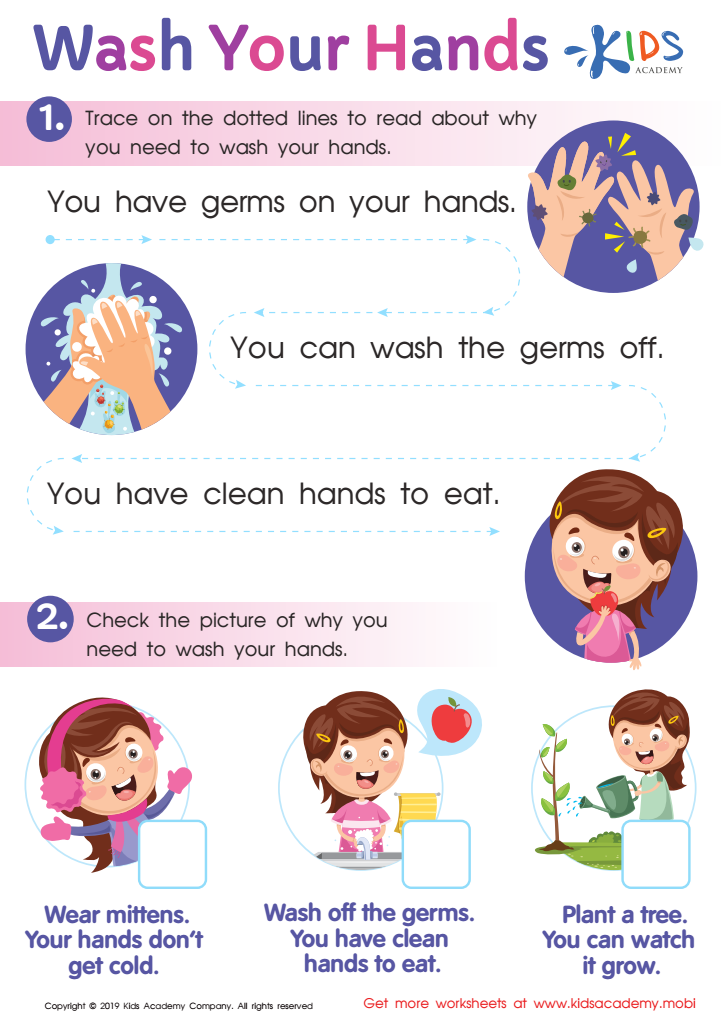
Wash Your Hands Worksheet
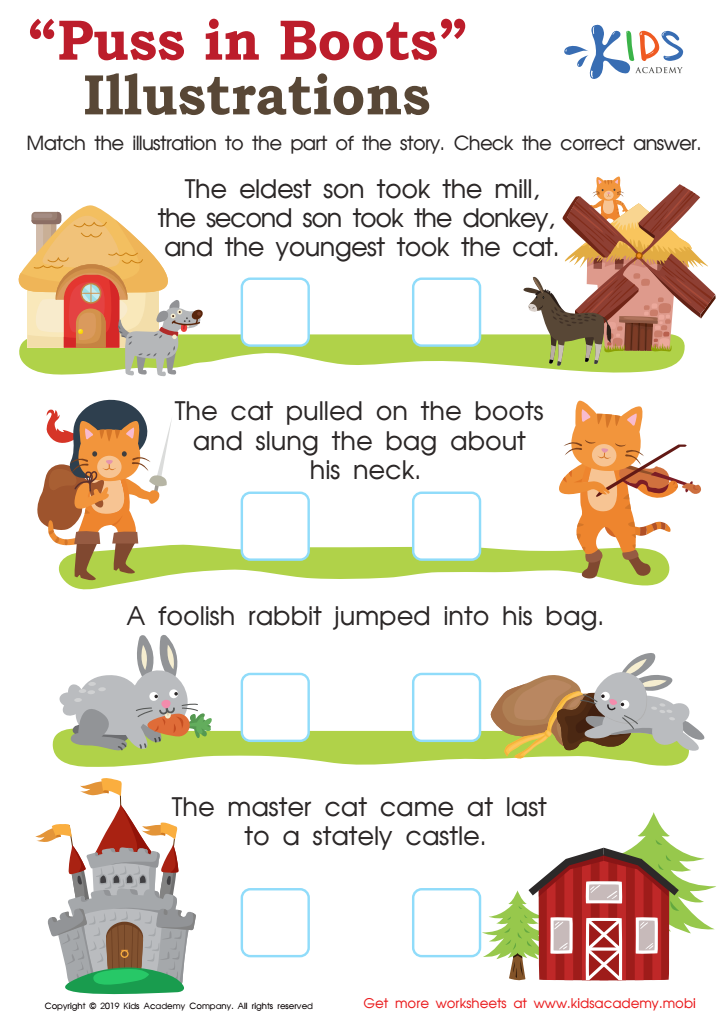
Puss in Boots Illustrations Worksheet








Parents and teachers should prioritize visual interpretation when reading fiction to children aged 5-6 because it significantly enhances comprehension, engagement, and creativity. At this developmental stage, children are significantly influenced by imagery; visual components aid in the understanding of complex narratives, making stories more relatable. This skill helps children make connections between words and meanings, reinforcing vocabulary development and overall literacy.
Moreover, interpreting visuals fosters critical thinking. Children learn to analyze illustrations, which may convey emotions or thematic elements not explicitly stated in the text. By encouraging discussions about the illustrations alongside the narrative, parents and teachers promote deeper cognitive engagement, enhancing the storytelling experience.
Visual interpretation also cultivates a love for reading; bright and engaging illustrations can make stories feel more alive, keeping children interested and motivated. The integration of illustrations nurtures creativity, as children are prompted to imagine expanded stories based on the visuals they see.
Ultimately, focusing on visual interpretation establishes a robust foundation for future reading skills. By nurturing these abilities early on, parents and teachers are equipping children not only for academic success but for an enduring appreciation of literature.








