Vocabulary expansion Reading Fiction Worksheets for Ages 5-6
6 filtered results
-
From - To
Unlock your child's potential with our Vocabulary Expansion Reading Fiction Worksheets designed specifically for ages 5-6. These engaging worksheets introduce young learners to exciting stories while enhancing their vocabulary skills. Through colorful illustrations and age-appropriate text, children will enjoy exploring new words in context, improving their comprehension and expression. Each worksheet includes interactive activities that make learning fun and effective, fostering a love for reading at an early age. Perfect for classrooms or home learning, our resources provide parents and educators with valuable tools to support budding readers in their literary journey. Start expanding your child's vocabulary today!
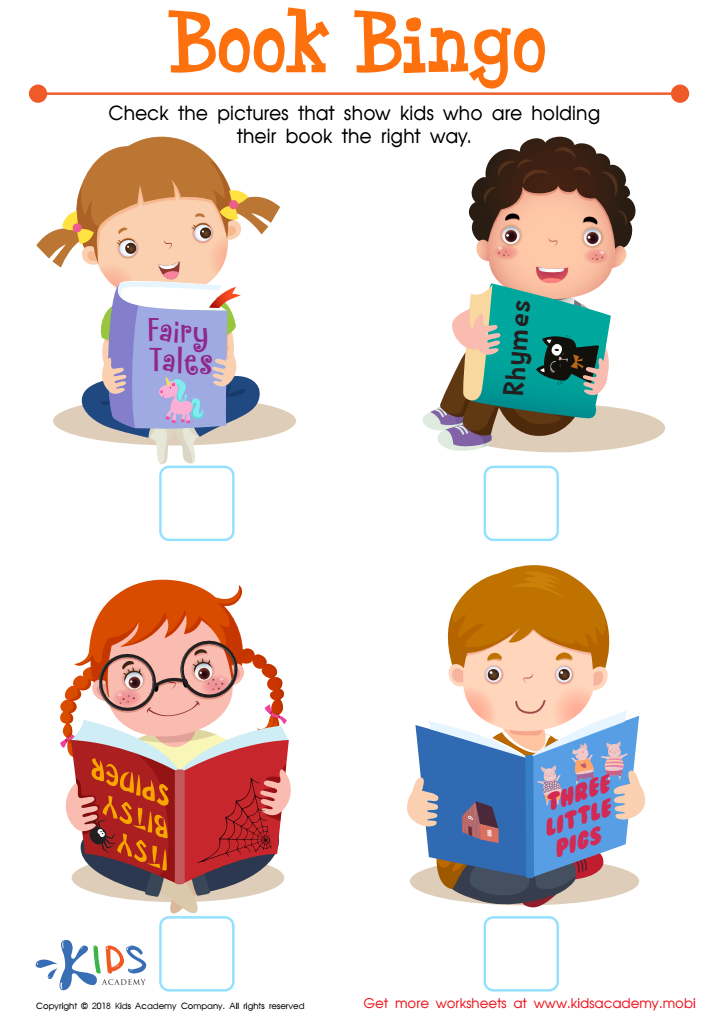
Book Bingo Worksheet
 Assign to My Students
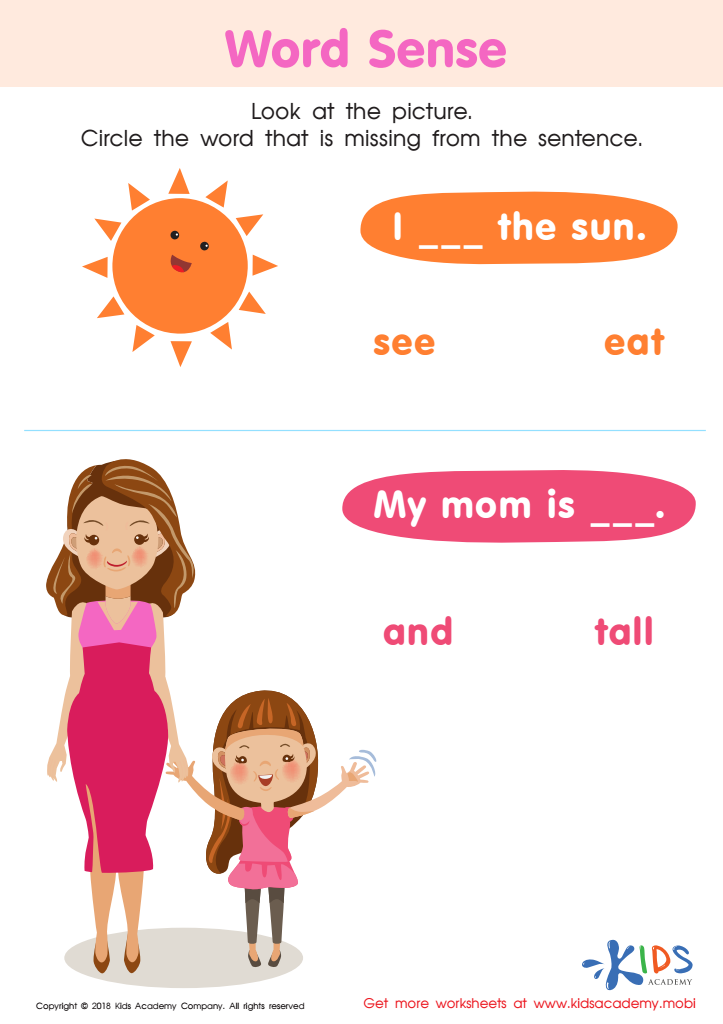
Word Sense Worksheet
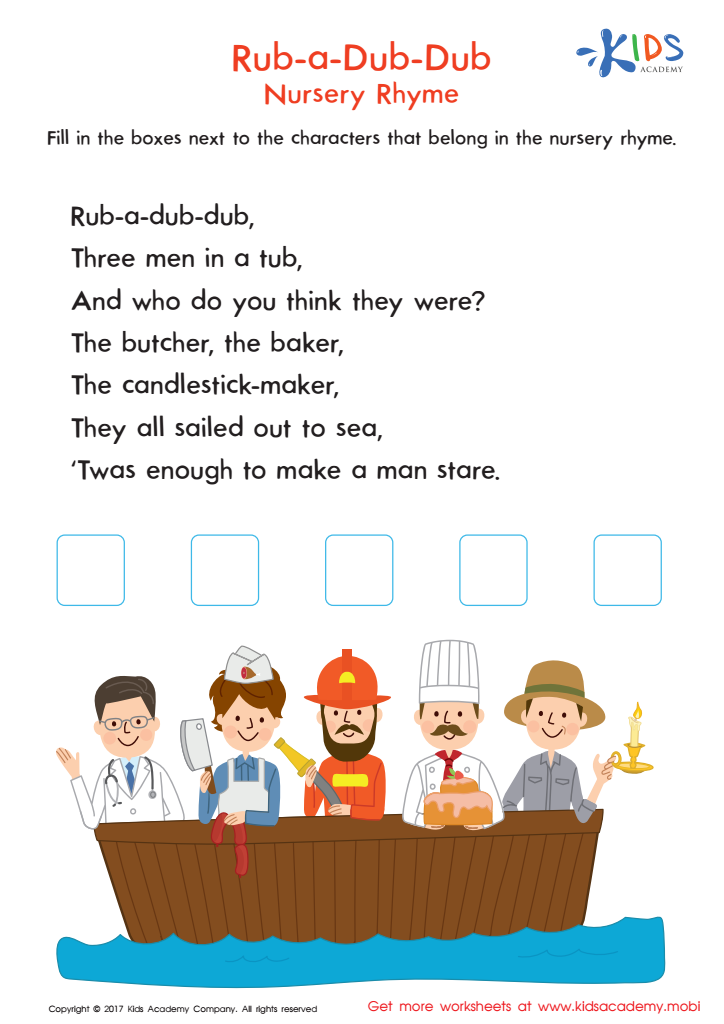
Rub a Dub Dub Printable
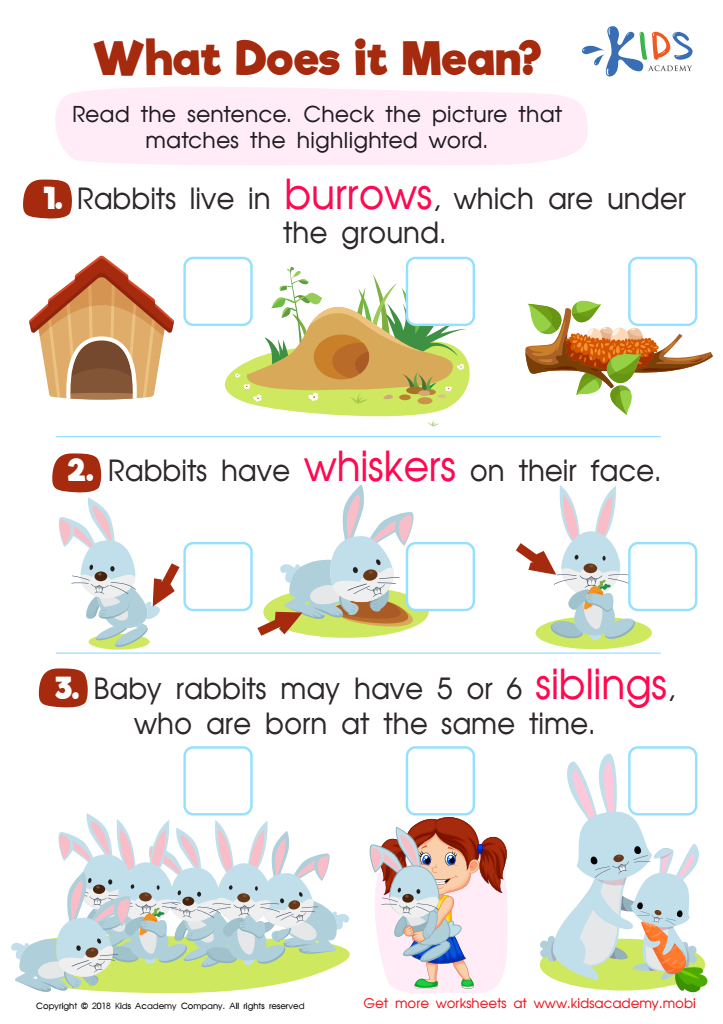
What Does It Mean? Worksheet
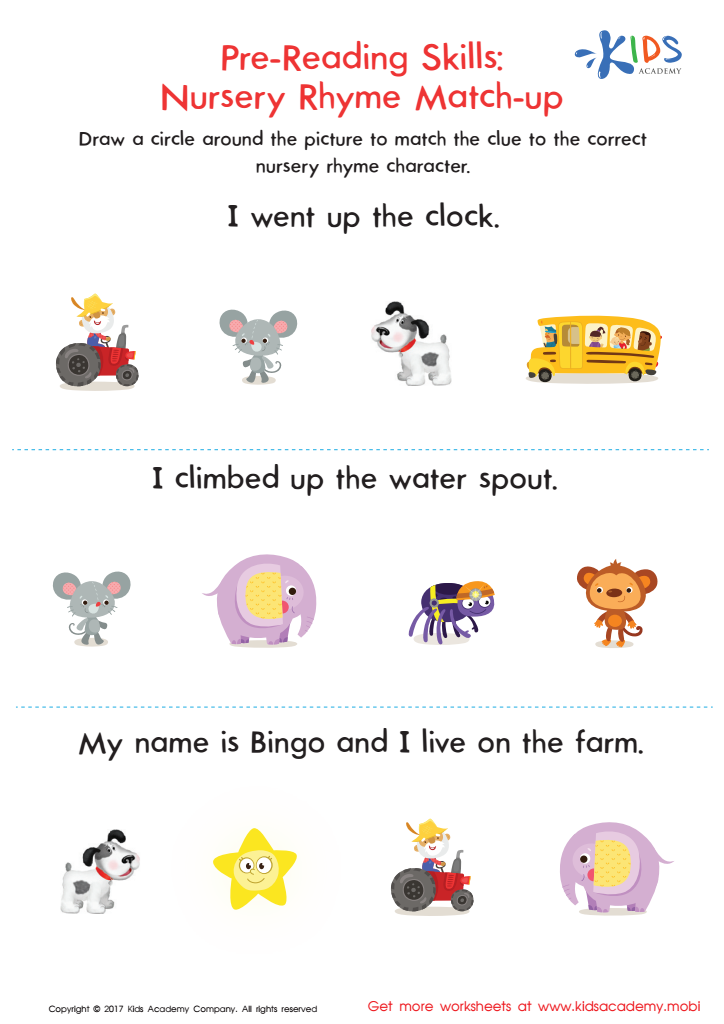
Nursery Rhyme Match–Up Worksheet
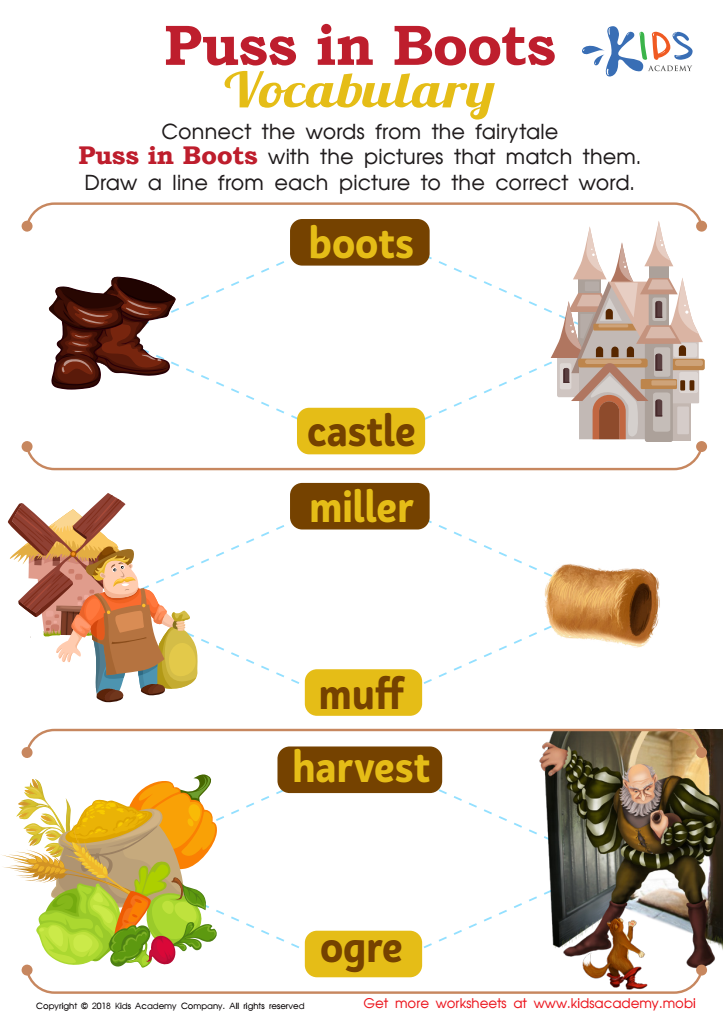
Puss in Boots Vocabulary Worksheet






.jpg)

Parents and teachers should prioritize vocabulary expansion through reading fiction for children aged 5-6 because it lays a crucial foundation for literacy and cognitive development. At this age, children's brains are incredibly receptive, and exposure to diverse vocabulary enhances their language skills, which are vital for effective communication. Engaging with fictional stories allows children to encounter new words within relatable contexts, making it easier for them to grasp meanings and uses.
Moreover, reading fiction promotes imagination and creativity. As children immerse themselves in various narratives, they not only enhance their vocabulary but also develop a deep appreciation for stories and characters. This can foster a love for reading that lasts a lifetime, which is essential for academic success.
Additionally, discussing the stories and their vocabulary with children cultivates critical thinking and comprehension skills. It encourages interactions that deepen understanding and retention of new words. By investing time in reading fiction, parents and teachers create nurturing environments that support emotional intelligence through empathy and perspective-taking, as children learn to connect with characters' feelings and experiences.
In summary, supporting vocabulary expansion through fiction enriches children's language skills, creativity, comprehension, and emotional growth, providing a solid foundation for their future learning journey.








