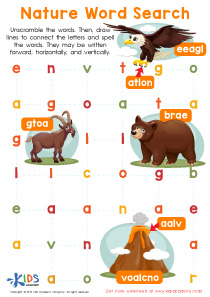
Recognizing numbers Sight Words Worksheets for Ages 5-6
3 filtered results
-
From - To
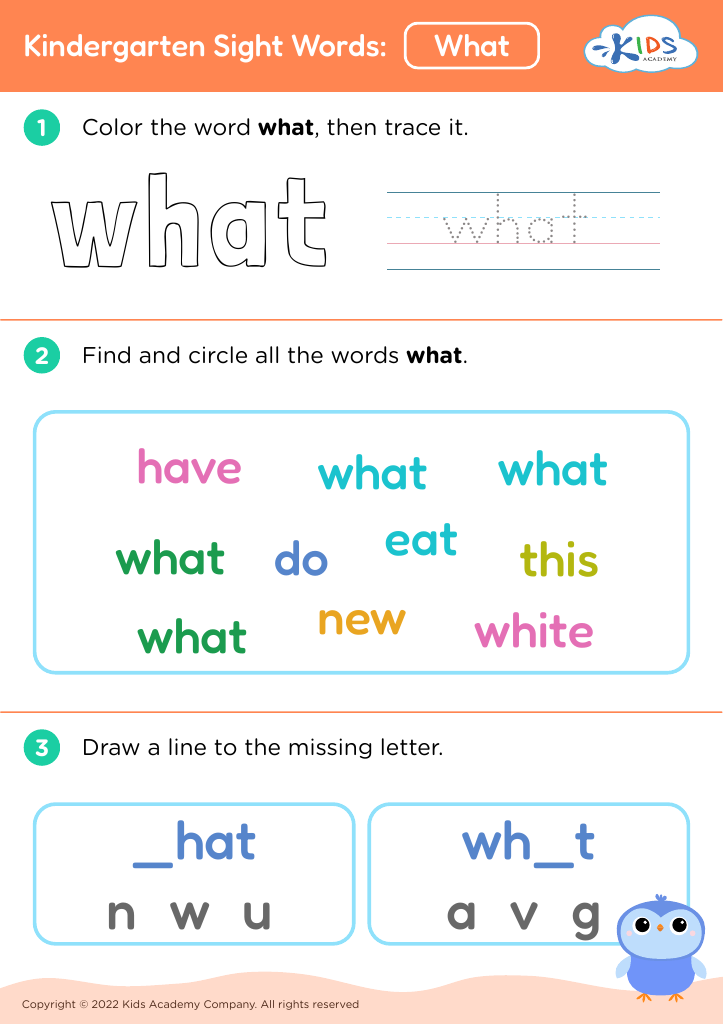
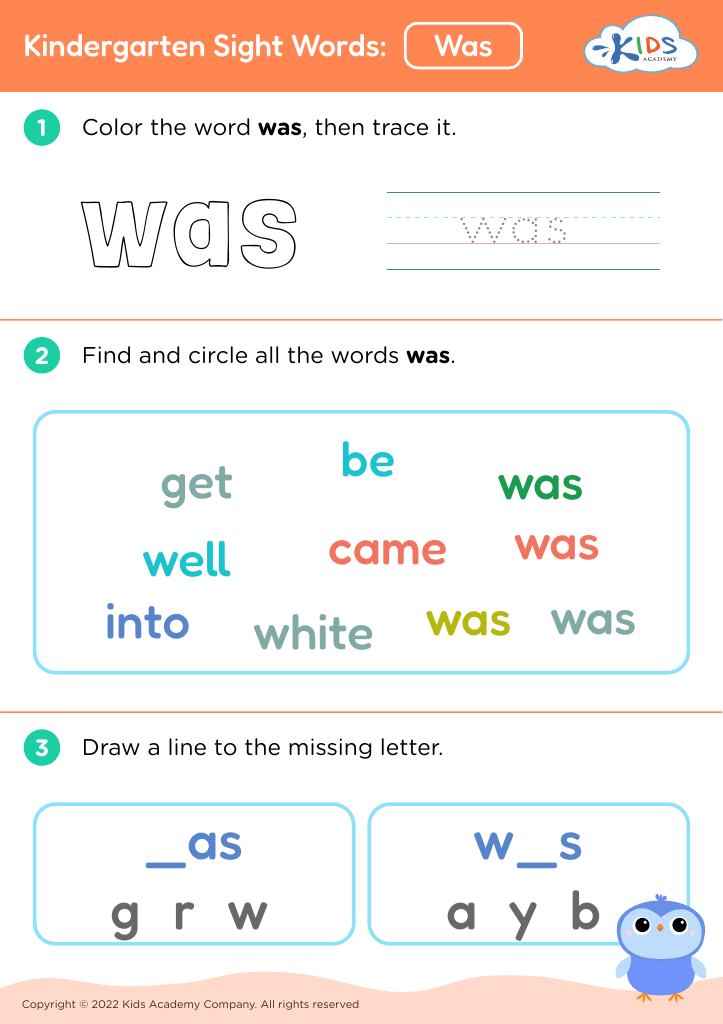
Explore our "Recognizing Numbers Sight Words Worksheets" designed specifically for children ages 5-6. These engaging worksheets help young learners identify and understand numbers through the context of sight words. Featuring fun activities and colorful illustrations, our resources promote essential literacy skills alongside early math comprehension. Children will enjoy interactive exercises that develop their ability to recognize numbers in everyday situations, improving their confidence as they learn. Perfect for classroom settings or at-home practice, these worksheets support foundational learning and make education enjoyable. Download and watch your child embark on an exciting journey to mastering number recognition today!
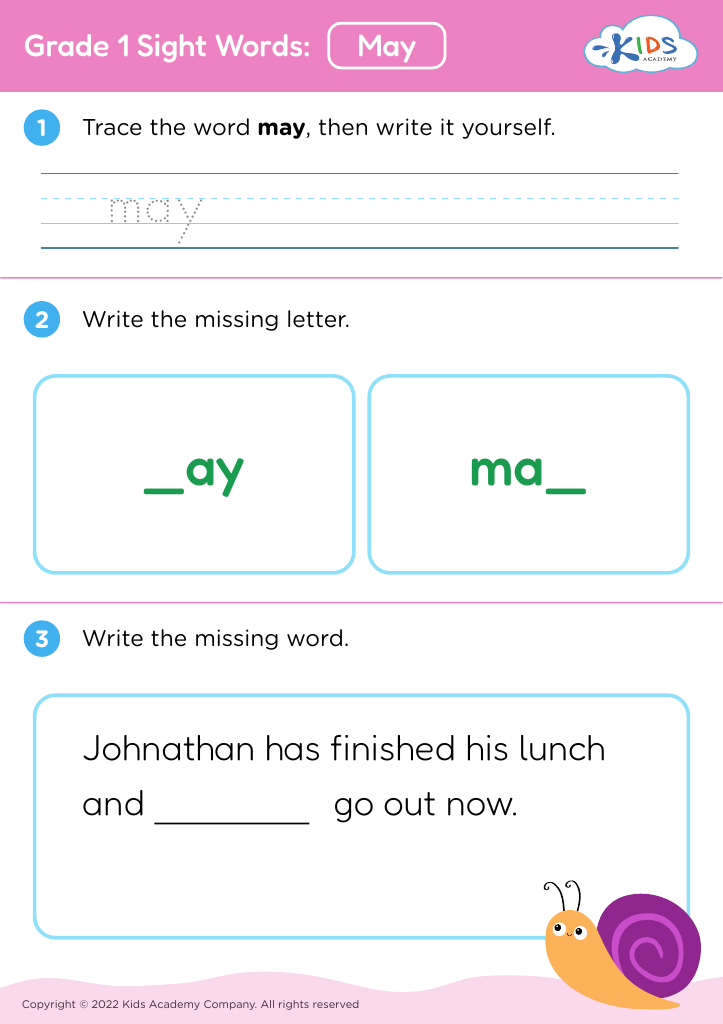













Recognizing numbers and sight words is crucial for children aged 5-6 as it forms the foundation for their literacy and numeracy skills. Early exposure to sight words—common words that children can recognize without needing to sound them out—enhances reading fluency and comprehension. Mastery of sight words allows young learners to shift their focus from decoding individual letters to understanding the meaning of sentences, fostering a love for reading and learning.
Similarly, recognizing numbers is essential for developing cognitive skills related to math. Awareness of numbers helps children grasp basic concepts such as counting, addition, and subtraction, which are vital for everyday problem-solving. When children identify numbers quickly, they build confidence and proficiency in math-related activities.
For parents and teachers, nurturing these skills is not just about academic achievement; it also supports overall cognitive development. Engaging children in activities that promote these areas encourages critical thinking and enhances their ability to engage with their environment. By prioritizing the recognition of sight words and numbers, adults can help ignite curiosity and motivation in children, laying a solid foundation for future educational success. Ultimately, the skills acquired at this age are key building blocks for lifelong learning.