Recognizing Patterns Sight Words Worksheets for Ages 5-6
3 filtered results
-
From - To
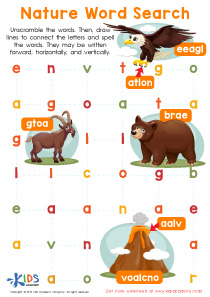
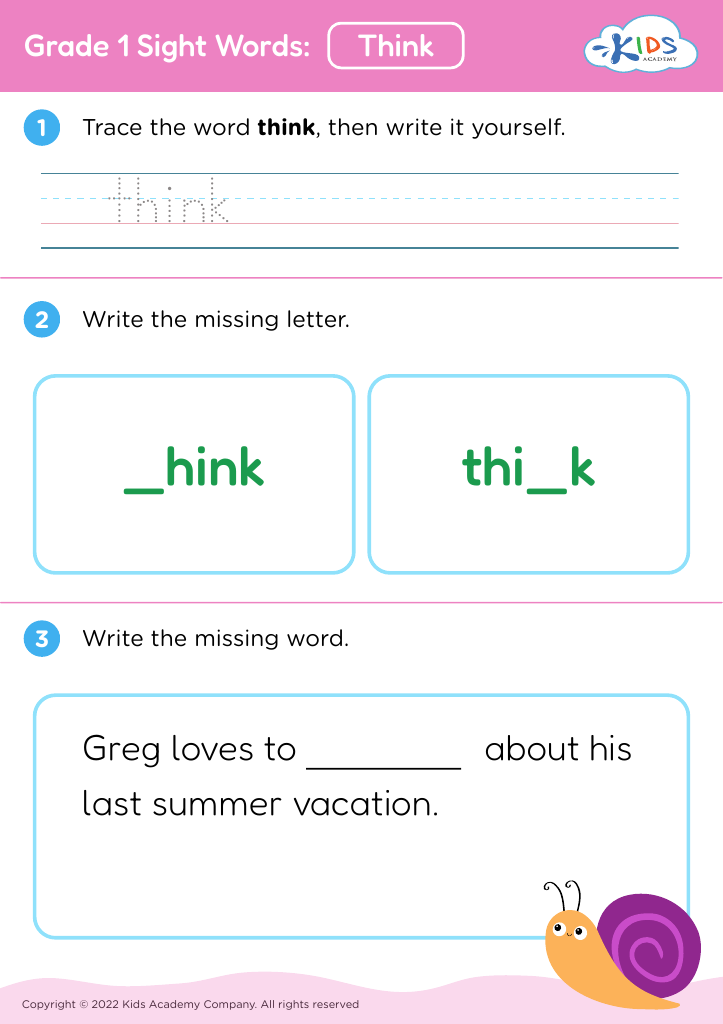
Explore our "Recognizing Patterns Sight Words Worksheets" designed for children aged 5-6! These engaging worksheets help young learners identify and reinforce sight words while recognizing patterns in language. Ideal for early literacy development, our activities are crafted to boost word recognition, enhance reading fluency, and build vocabulary in a fun, interactive way. With colorful visuals and captivating exercises, children will stay motivated as they practice essential skills. Perfect for classroom use or home learning, these worksheets make it easy to integrate important literacy concepts into everyday practice. Start your child’s reading journey with confidence by discovering our dynamic worksheets today!




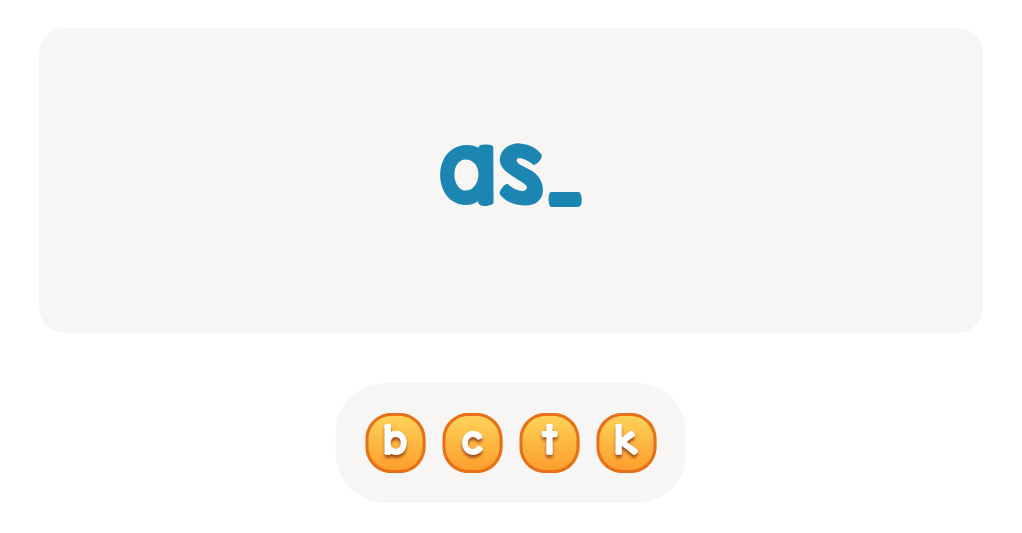
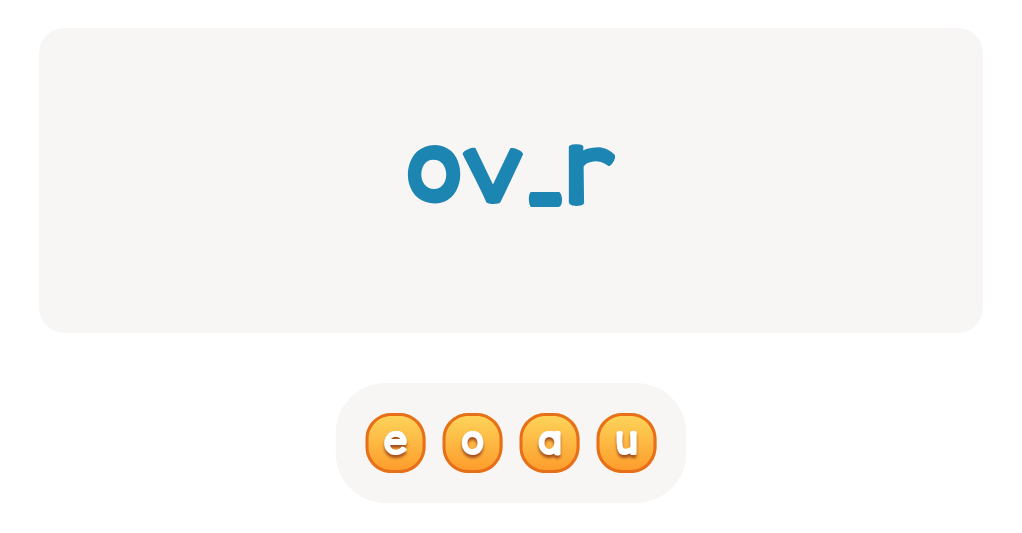
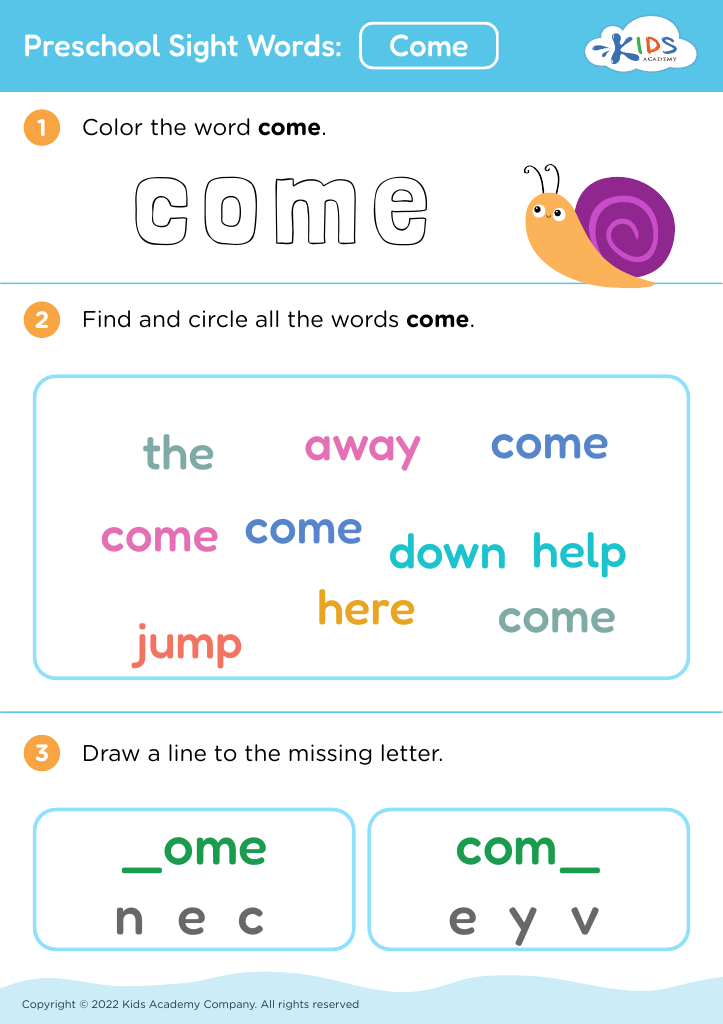
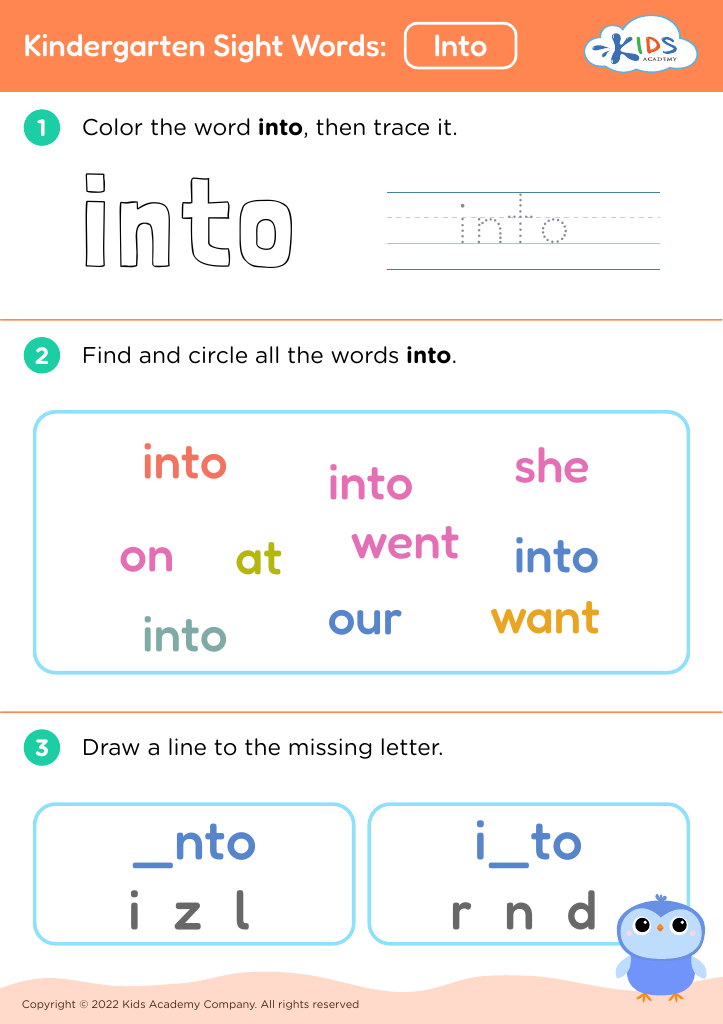








Recognizing patterns and sight words is crucial for children aged 5-6 as they serve as the building blocks for literacy development. For parents and teachers, understanding the importance of these skills can significantly enhance a child's reading abilities.
Firstly, recognizing patterns in language—such as rhymes and word families—helps children predict and decode new words, enhancing their reading fluency. When children understand these patterns, they are more confident in their reading, allowing them to tackle more complex texts.
Sight words, or high-frequency words, are commonly found in written language and cannot always be phonetically decoded. Mastering these words enables young readers to build their vocabulary and comprehension skills, promoting smoother reading experiences.
Furthermore, familiarity with sight words and patterns encourages a love for reading, making literacy enjoyable rather than daunting. Parents and teachers who emphasize these foundational skills are fostering positive attitudes towards reading, setting the stage for long-term educational success.
By focusing on recognizing patterns and sight words early on, we equip children with essential tools they need to navigate their educational journeys, ultimately leading to greater academic achievements and self-confidence in their abilities as readers.