Map reading skills Community Worksheets for Ages 5-6
3 filtered results
-
From - To
Discover engaging and educational Map Reading Skills Community Worksheets for Ages 5-6, designed to develop essential geography skills. These worksheets make learning fun with interactive activities, colorful illustrations, and age-appropriate challenges. Young learners explore directions, landmarks, and basic map symbols while enhancing their spatial awareness and problem-solving abilities. Ideal for classrooms and home schooling, our worksheets support early education standards and foster a sense of adventure in your little explorers. Equip your child with the foundational skills needed for future geographical understanding through our comprehensive, expertly crafted resources. Start your map reading journey today!
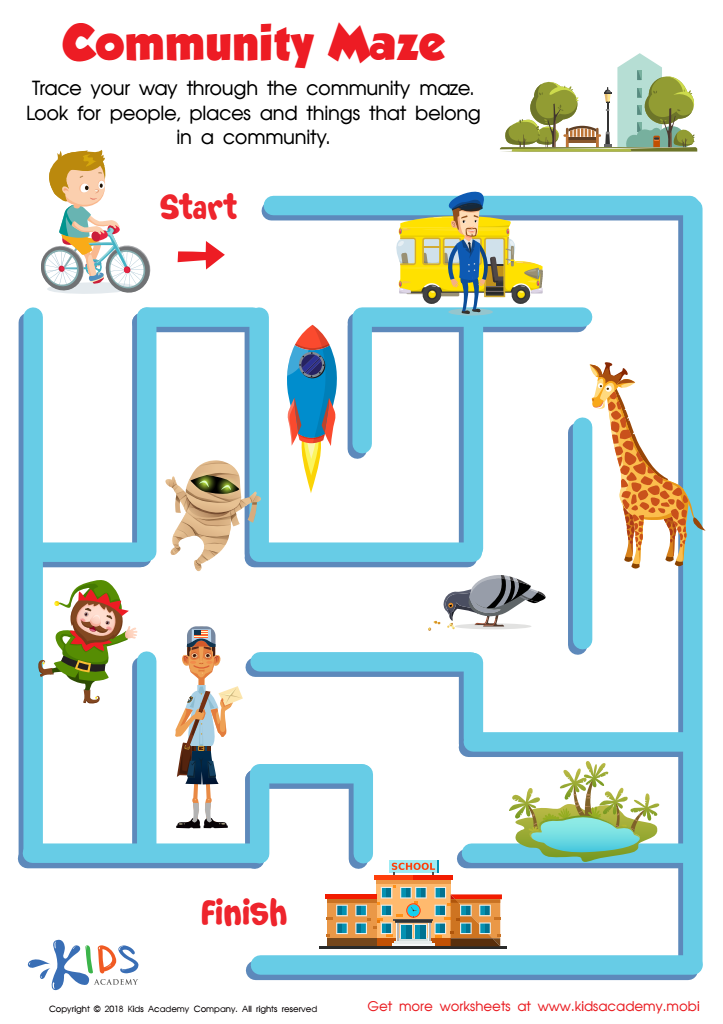
Community Maze Worksheet
 Assign to My Students
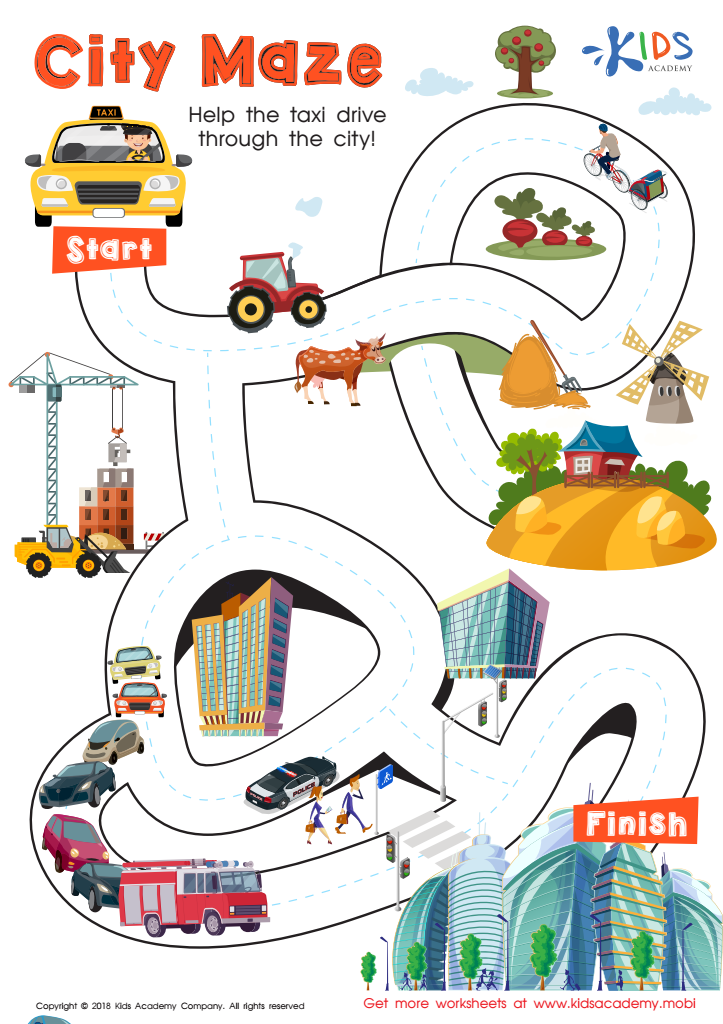
City Maze Worksheet

Towns Worksheet








Map reading skills are essential for young children, particularly those aged 5-6, as they lay the foundational understanding of spatial awareness, geography, and problem-solving. Parents and teachers should care about fostering these skills in this community for several reasons.
Firstly, learning to read maps encourages cognitive development. It enhances children's ability to visualize and interpret spatial information, understand directions (up, down, left, right), and grasp the concept of distance and scale. These skills are critical for everyday navigation and future learning in both academic and real-life contexts.
Secondly, map reading activities play a vital role in improving fine motor skills and hand-eye coordination. When children trace routes, mark locations, or draw their own maps, they refine the precise movements necessary for writing and other manual tasks.
Thirdly, engaging with maps fosters curiosity and a sense of exploration. It encourages children to ask questions about different places, understand their environment, and appreciate the diverse world they live in. This curiosity drives engagement and active learning.
Lastly, developing map-reading skills at an early age promotes independence and confidence. Children start recognizing landmarks, understanding how to travel from one place to another, and can navigate their immediate environment with greater assurance.
Investing in map-reading skills through supportive communities ensures children acquire early, holistic learning experiences, setting a solid groundwork for them to build upon as they grow.








