Letter recognition Writing Worksheets for Ages 5-6
4 filtered results
-
From - To
Enhance early literacy with our "Letter Recognition Writing Worksheets for Ages 5-6." Designed to build a strong foundation in reading and writing, these engaging activities help young learners identify and write both uppercase and lowercase letters. Through fun exercises and colorful illustrations, children will strengthen their understanding of the alphabet, improve hand-eye coordination, and develop fine motor skills. Perfect for classroom or home use, our worksheets are ideal for teaching essential pre-reading skills in an enjoyable and interactive way. Spark a love for learning and set the stage for academic success with these essential tools.
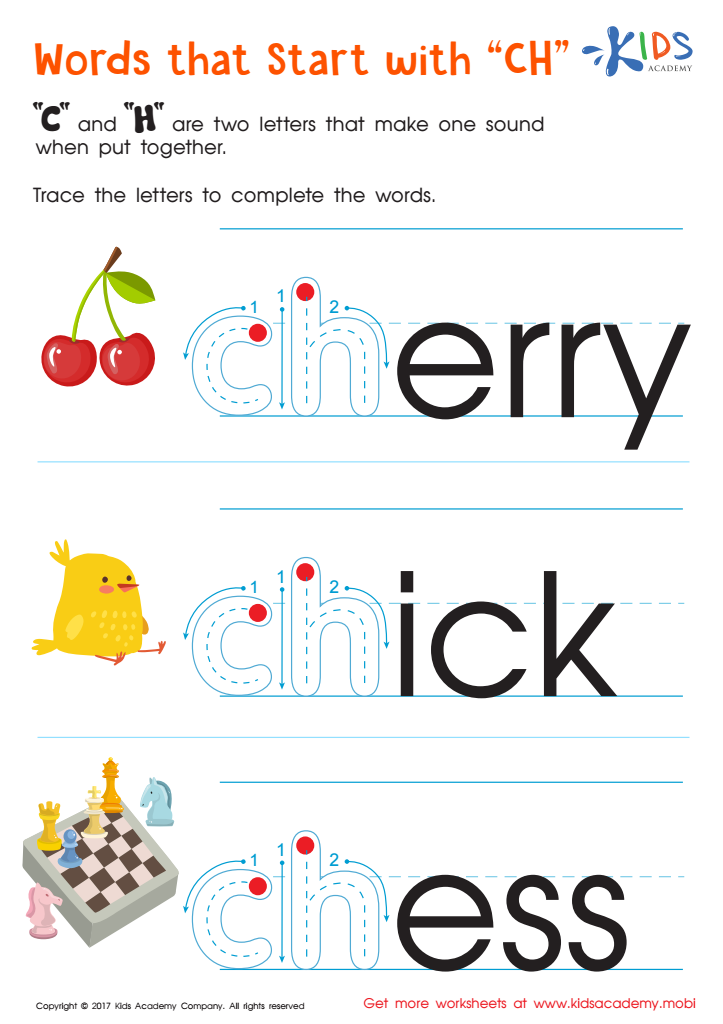
Words That Start with "ch" Spelling Worksheet
 Assign to My Students
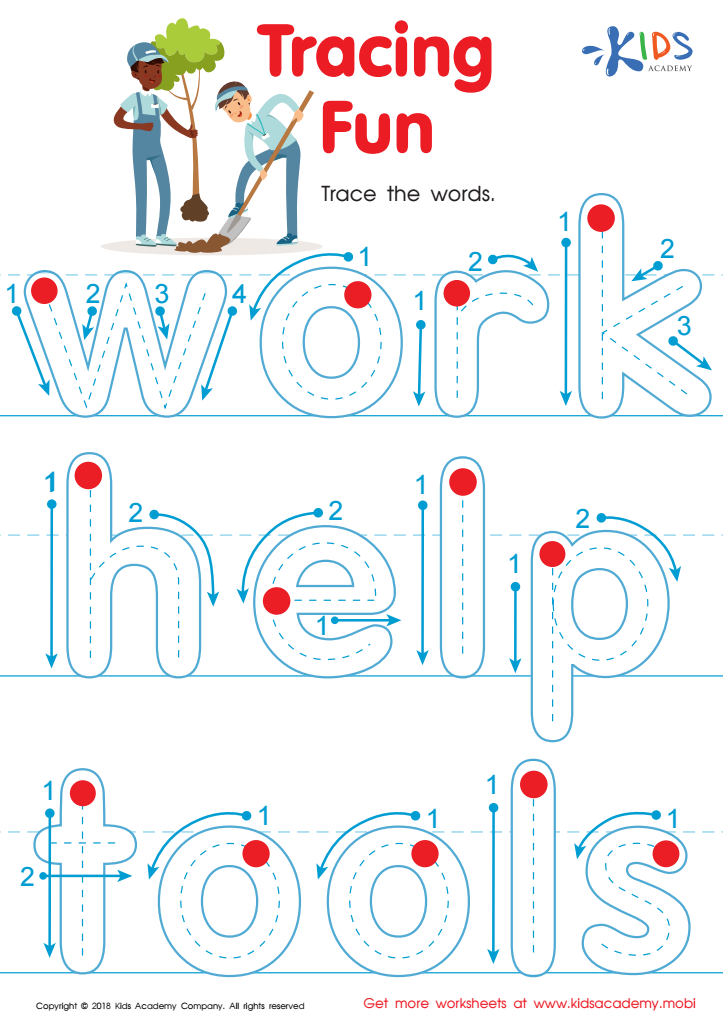
Tracing Fun Worksheet
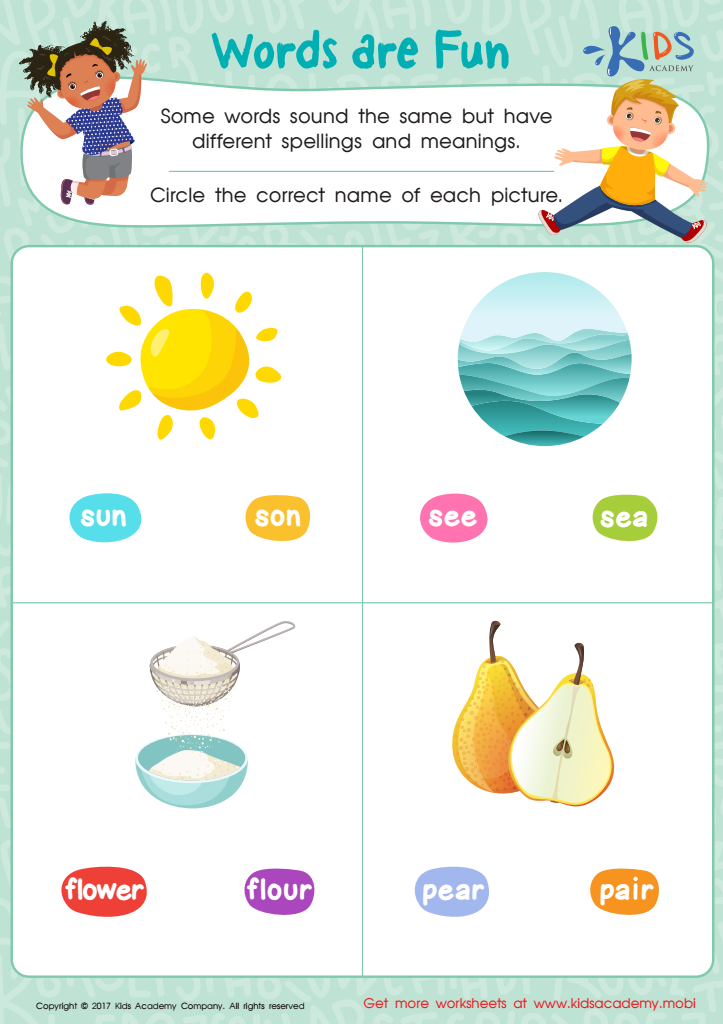
Words Are Fun Worksheet
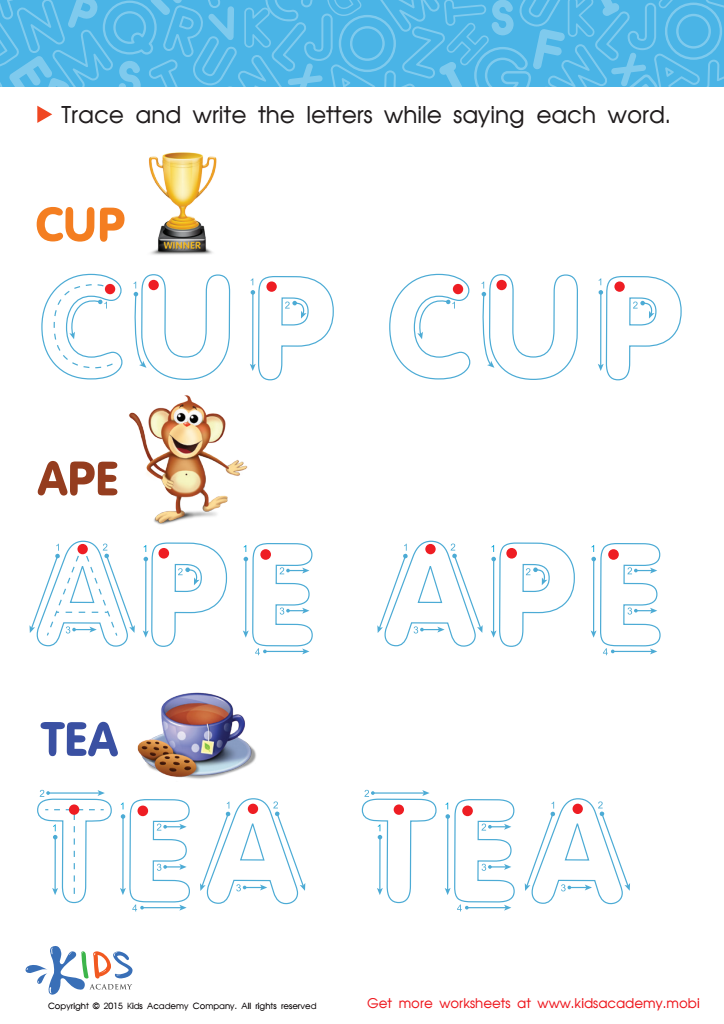
A Cup, an Ape and Tea Spelling Worksheet








Letter recognition and writing are foundational skills crucial for early childhood development, especially for children aged 5-6. At this formative stage, children are rapidly growing their cognitive abilities and learning new skills. Recognizing and writing letters form the building blocks of literacy, which is essential for their future academic success.
Firstly, letter recognition helps children understand the alphabet, an essential step in learning to read. Being able to identify letters by sight enables children to begin associating sounds with symbols, which is the basis of phonics. This paves the way for word formation and eventually fluent reading, fostering a lifelong love of learning.
Secondly, writing skills go hand-in-hand with letter recognition. Through writing, children develop fine motor skills, such as hand-eye coordination and dexterity, which are essential for other everyday tasks. Writing practice helps them recognize letter shapes and engrains the alphabet in their memory, making reading easier.
Furthermore, early proficient readers experience increased confidence and a greater motivation to learn. They are more likely to excel academically and develop critical thinking skills. By focusing on letter recognition and writing from an early age, parents and teachers set the stage for a child’s overall educational journey. Therefore, investing time and resources in this essential early skill benefits children for years to come.








