Understanding suffixes Writing Worksheets for Ages 5-6
3 filtered results
-
From - To
Discover our enriching "Understanding Suffixes Writing Worksheets" for ages 5-6, designed to enhance early writing skills and vocabulary development. These engaging worksheets introduce young learners to the concept of suffixes, helping them explore how adding specific endings to words can change their meaning. With fun activities and colorful illustrations, children will enjoy practicing suffixes in a playful way while improving their reading and writing abilities. Perfect for classroom use or at-home learning, these worksheets encourage creativity and reinforce linguistic concepts. Help your child embark on a joyful learning journey with our user-friendly materials that support their growth in language arts!
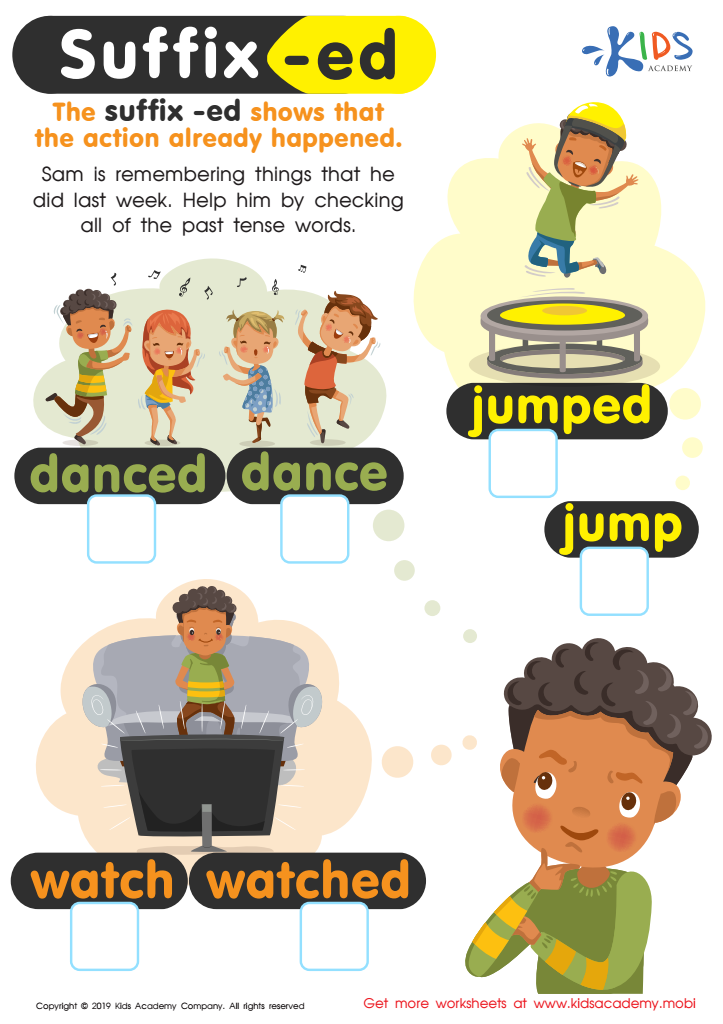
Suffix-ed Worksheet
 Assign to My Students
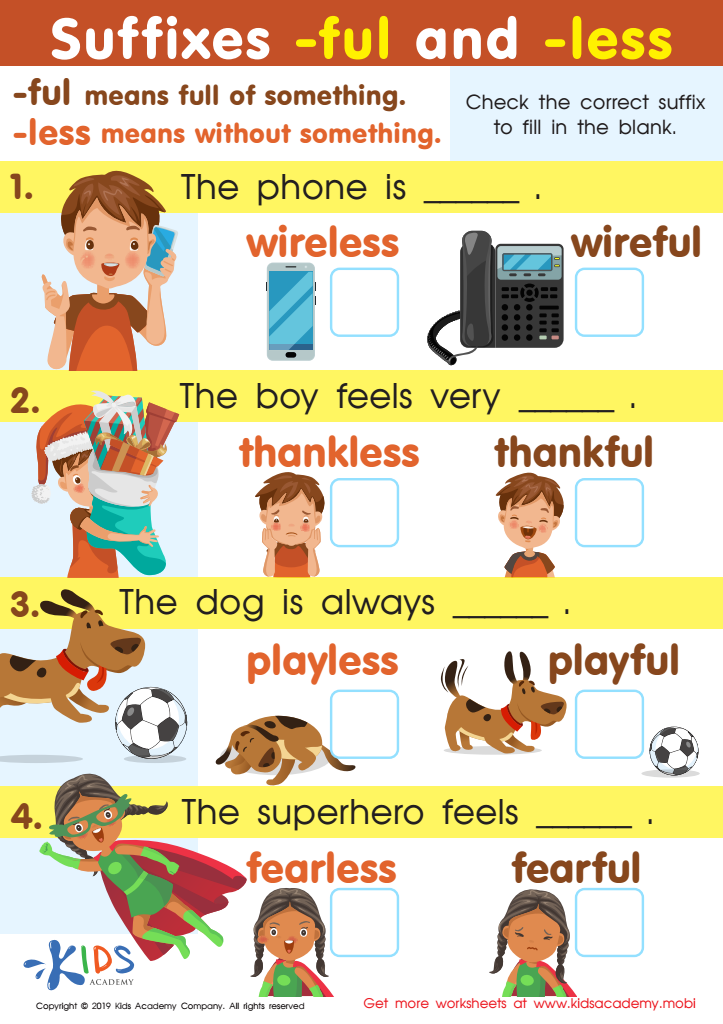
Suffixes –ful and –less Worksheet
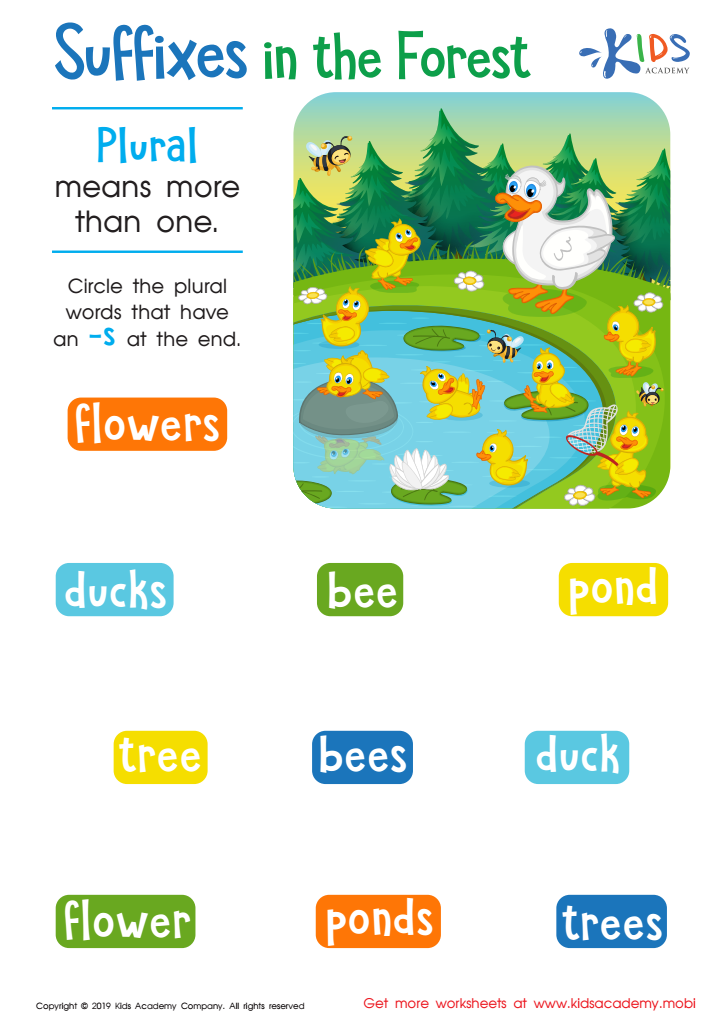
Suffixes in the Forest Worksheet








Understanding suffixes is crucial for early literacy development, especially for children aged 5-6. Suffixes—words added to the end of a base word—help young learners grasp the concept of word families, enabling them to expand their vocabulary significantly. This understanding enhances reading skills as children begin to decode unfamiliar words and make connections between similar words.
For parents and teachers, teaching suffixes encourages curiosity about language and empowers children to construct new words, thus fostering creativity in their writing. It provides young learners with tools to express themselves more effectively. For example, by adding the suffixes “-ing” or “-ed,” children can learn to transform verbs to indicate different actions and times, enriching their storytelling abilities.
Moreover, helping children recognize suffixes contributes to their phonemic awareness, a critical foundation for literacy. When educators and parents prioritize this understanding, they nurture confidence in children as they navigate reading and writing tasks. This foundational skill not only supports academic success but also fosters a lifelong love of language. As children master suffixes, they develop a greater ability to communicate, think critically, and engage with the world around them, thereby laying the groundwork for future learning.








