Punctuation understanding Punctuation Worksheets for Ages 5-6
3 filtered results
-
From - To
Explore our engaging "Punctuation Understanding Worksheets" designed specifically for ages 5-6! These worksheets introduce young learners to the fundamental concepts of punctuation, enhancing their reading and writing skills. Each activity encourages children to recognize and use punctuation marks like periods, commas, and question marks in sentences, making learning fun and interactive. With colorful illustrations and easy-to-follow instructions, these worksheets foster a strong foundation in grammar while boosting confidence. Ideal for classroom or at-home learning, our resources promote critical thinking and creativity in language use. Ignite your child’s passion for writing and help them master punctuation today!
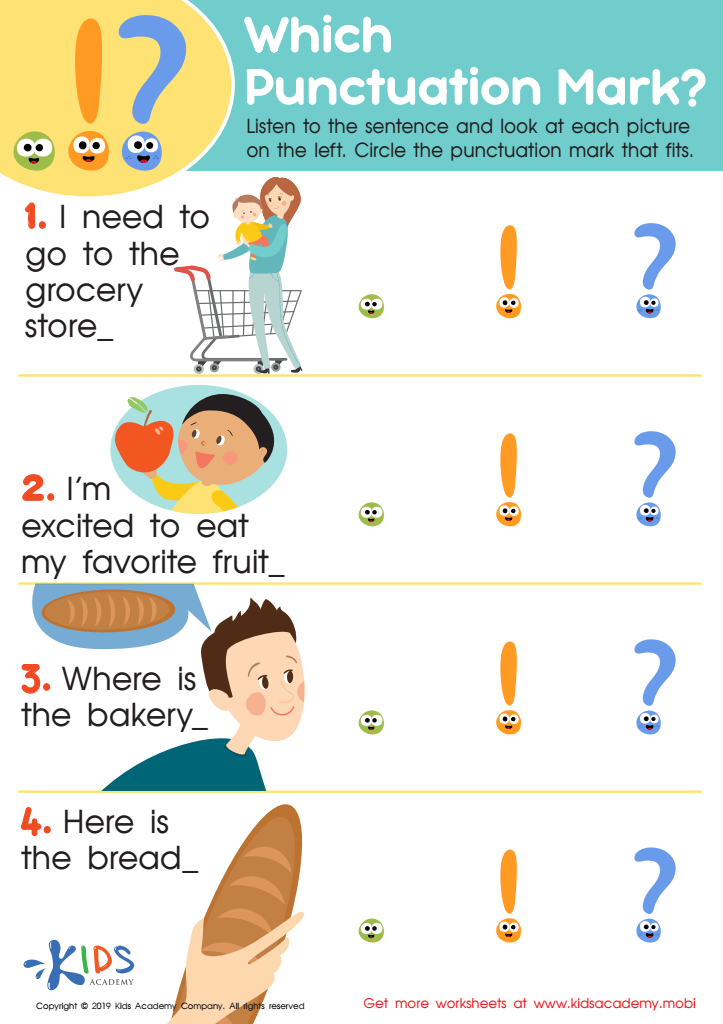
Which Punctuation Mark Worksheet
 Assign to My Students
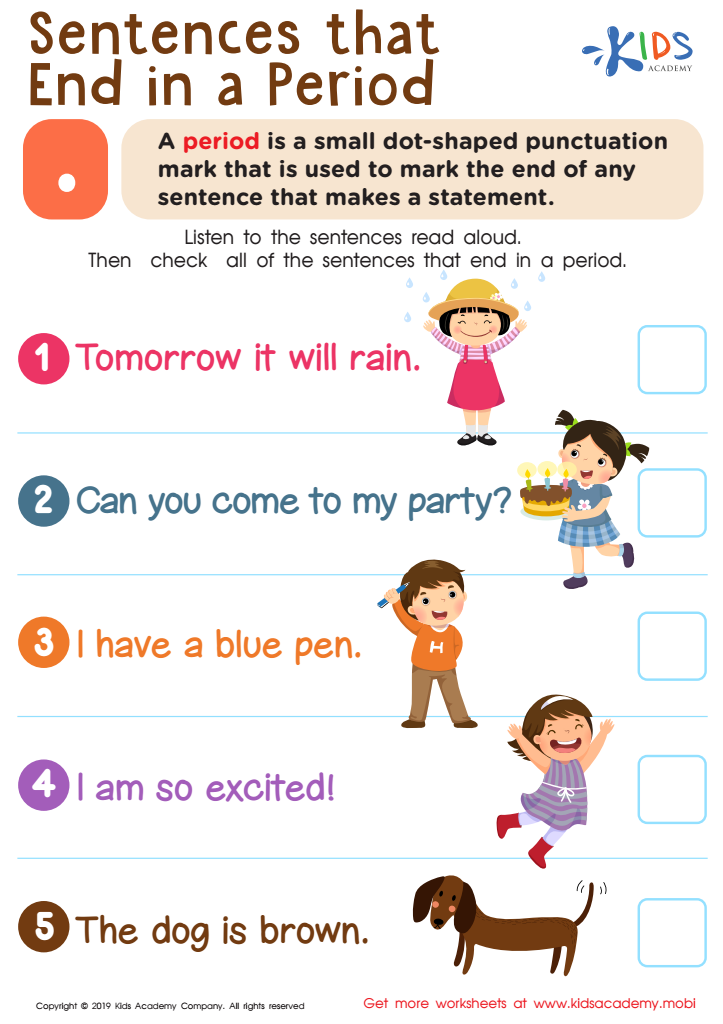
Sentences That End in a Period Worksheet
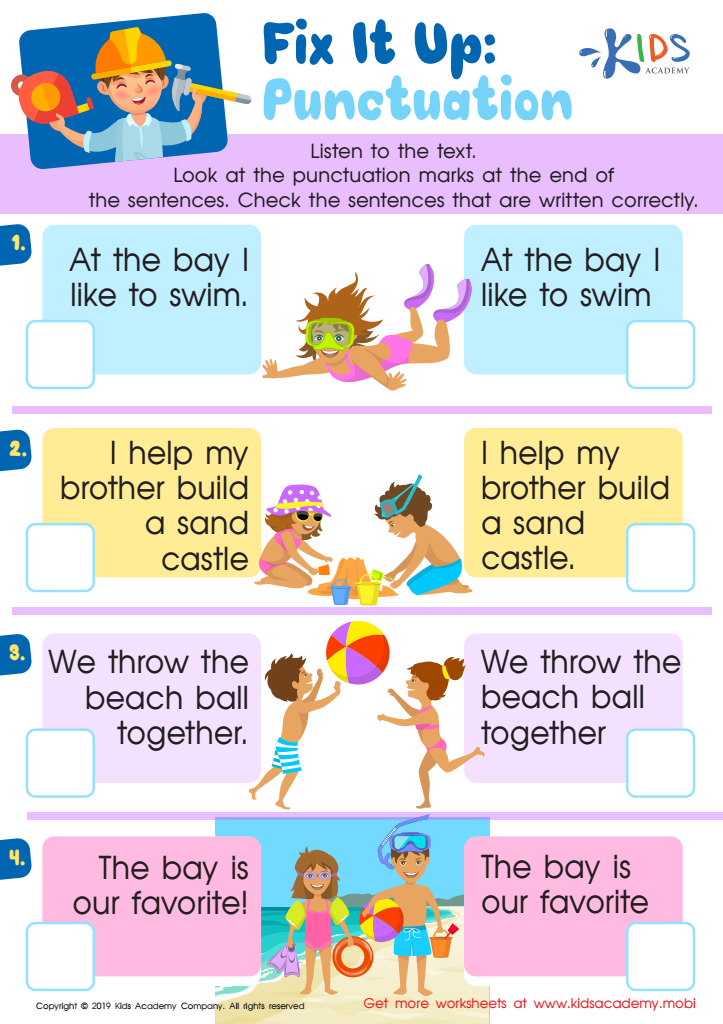
Fix Punctuation Worksheet






Understanding punctuation is essential for children aged 5-6 as it lays a crucial foundation for their reading and writing skills. At this age, children are beginning to decipher the written language, and punctuation acts as a guide that helps them understand the meaning of sentences. For example, knowing when a period signifies the end of a statement allows children to pause and recognize that a thought is complete. Similarly, understanding commas helps them learn how to break up information, making reading more fluid and comprehensible.
Parents and teachers should prioritize punctuation because it enhances children’s communication skills. When children comprehend punctuation, they can express their ideas more clearly and effectively while writing, which encourages creativity and self-expression. Punctuation also teaches kids about the structure of language, aiding in their grammar development.
Additionally, a solid grasp of punctuation can boost children's confidence in their literacy abilities. As they see themselves becoming more fluent readers and writers, they are likely to develop a love of learning and an eagerness to explore literature further. Thus, instilling punctuation knowledge at an early age enriches children's educational journeys and supports their overall cognitive development.








