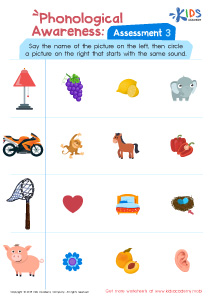
Phonics recognition Consonants Worksheets for Ages 5-9
4 filtered results
Difficulty Level
Grade
Age
-
From - To
Subject
Activity
Standards
Discover our engaging Phonics Recognition Consonants Worksheets, designed specifically for ages 5-9. These expertly crafted activities help young learners master consonant sounds, enhancing their reading skills and phonics comprehension. Our printable worksheets feature fun, interactive exercises that make learning enjoyable and effective. With targeted practice, children can confidently recognize and pronounce consonants, laying a strong foundation for their literacy journey. Ideal for both classroom and home use, these resources support teachers and parents in fostering a love for reading. Join us in empowering your child’s educational growth with our top-quality phonics worksheets!
Favorites
With answer key
Interactive
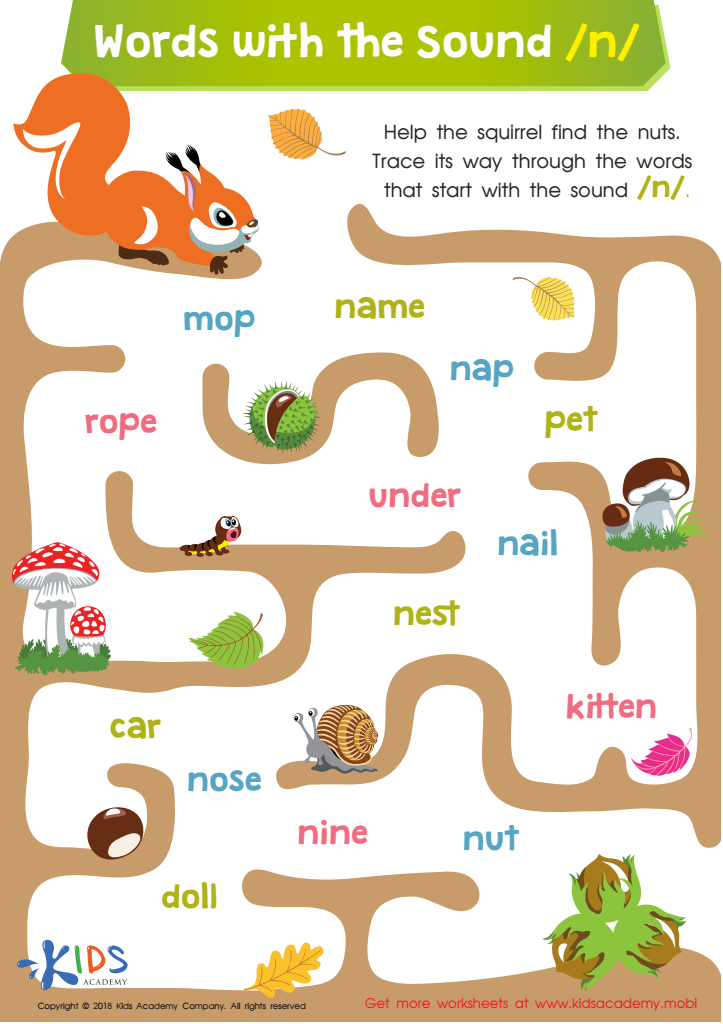
Words with Sound N Reading Worksheet
Young readers will love the colourful pictures and simple sight words on this download worksheet. They can trace their way through the maze as they help the cute squirrel reach his acorns, finding words with the sound "n" as they go. It's a fun way to work on reading skills - they won't even realise they're learning!
 Assign to My Students
Words with Sound N Reading Worksheet
Worksheet
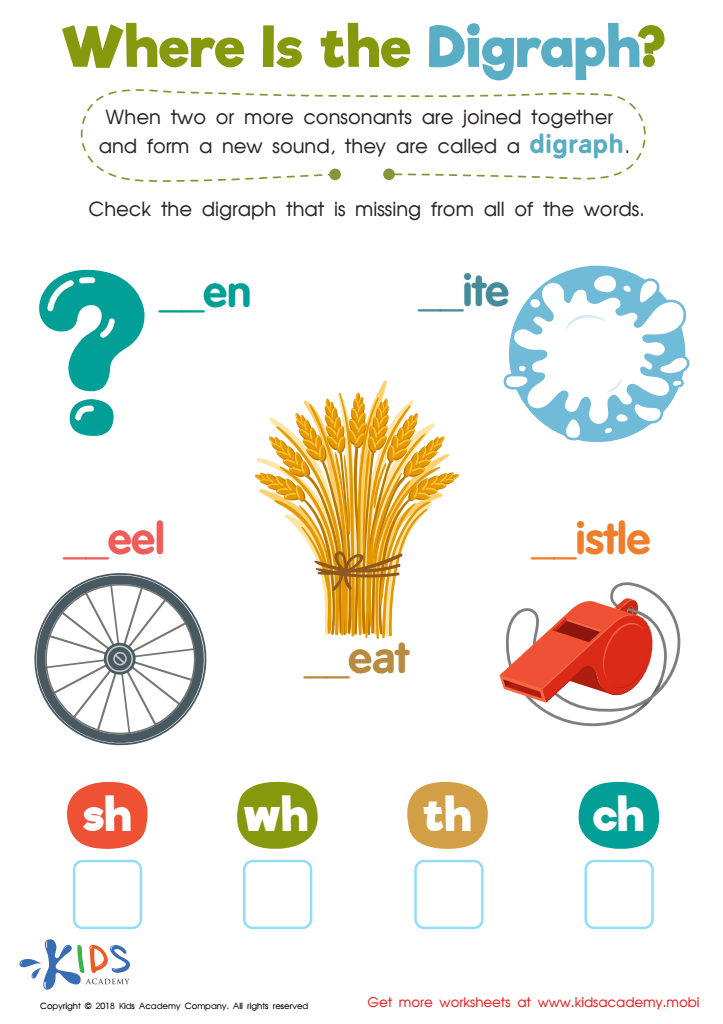
Where Is the Digraph? Worksheet
Teach your child about digraphs - two or more consonants that form one sound, like /wh/, /sh/, and /ch/. Show them words with these sounds and use this worksheet to help. Ask them which digraph is missing from the words and point out the pictures. 80 words.
Where Is the Digraph? Worksheet
Worksheet
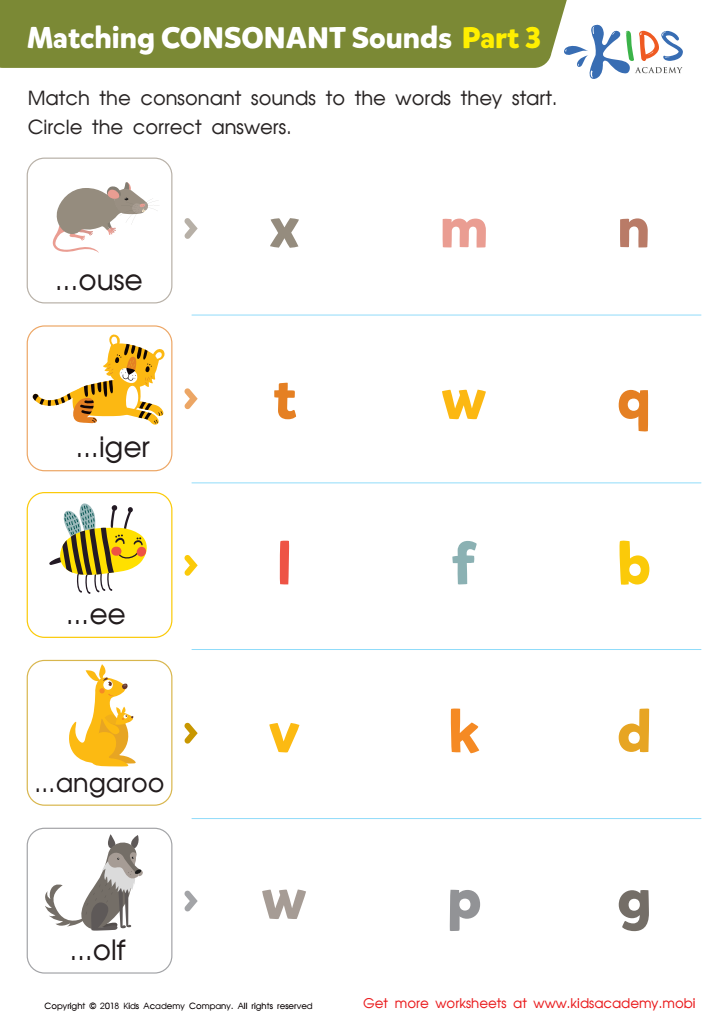
Matching Consonant Sounds: Part 3 Worksheet
Help your early learner match consonant sounds to words with this fun worksheet! Have them name the pictures and try out each letter in the corresponding column. When they hear the sound that matches, circle it. Have them write the letter in the box to complete the word. Work their way down the page until the critters' names all match with consonants!
Matching Consonant Sounds: Part 3 Worksheet
Worksheet
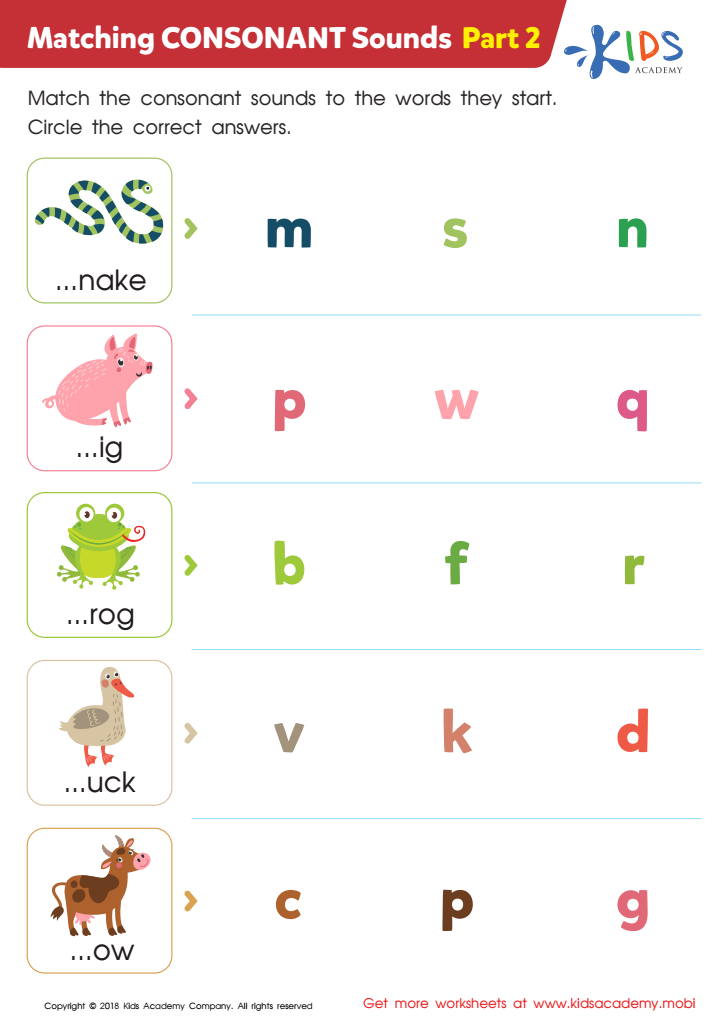
Matching Consonant Sounds: Part 2 Worksheet
Look at the picture, say the word and match the consonant sound with the letter. Coach your child to name the animal and complete the word. For extra challenge, write the missing letter in the box! This PDF worksheet helps kids learn to read words with familiar animal pictures.
Matching Consonant Sounds: Part 2 Worksheet
Worksheet
Join Kids Academy for Free
Who is primarily going to use this learning content?



Phonics recognition, especially for consonants, is vital for young learners aged 5-9 as it lays the foundation for reading and writing skills. Understanding phonics involves recognizing the relationship between letters and their sounds, which is essential for decoding words. When children grasp consonant sounds, they can blend these with vowel sounds to read simple words, enhancing their overall reading fluency and comprehension.
Effective phonics instruction helps children develop critical thinking skills by analyzing how sounds form words. This early literacy skill enables them to read independently, build a robust vocabulary, and improve their ability to learn in all subjects, not just language arts. Moreover, phonetics aids in proper pronunciation and spelling, contributing to clear and confident communication.
For teachers, a focus on phonics means structured, evidence-based instruction that aligns with typical cognitive development stages. Parents can support this learning by engaging in activities that reinforce consonant recognition at home, turning everyday moments into educational opportunities. Caring adults should prioritize phonics as it fosters a love for reading, nurtures academic growth, and promotes long-term educational success, forming a critical part of a child's early learning journey.