Lowercase letter writing Alphabet Worksheets for Ages 5-9
3 filtered results
-
From - To
Our "Lowercase Letter Writing Alphabet Worksheets for Ages 5-9" are designed to make learning the alphabet fun and effective. Tailor-made for young learners, these worksheets help children practice writing lowercase letters through engaging activities. Each sheet provides clear instructions and vibrant illustrations, ensuring kids remain captivated while improving their penmanship. With a focus on repetition and skill-building, these worksheets are perfect for home, school, or tutoring sessions. Encourage your child's early literacy and writing confidence with our expertly crafted resources. Unlock the door to reading and writing success today! Download now and watch their skills flourish.
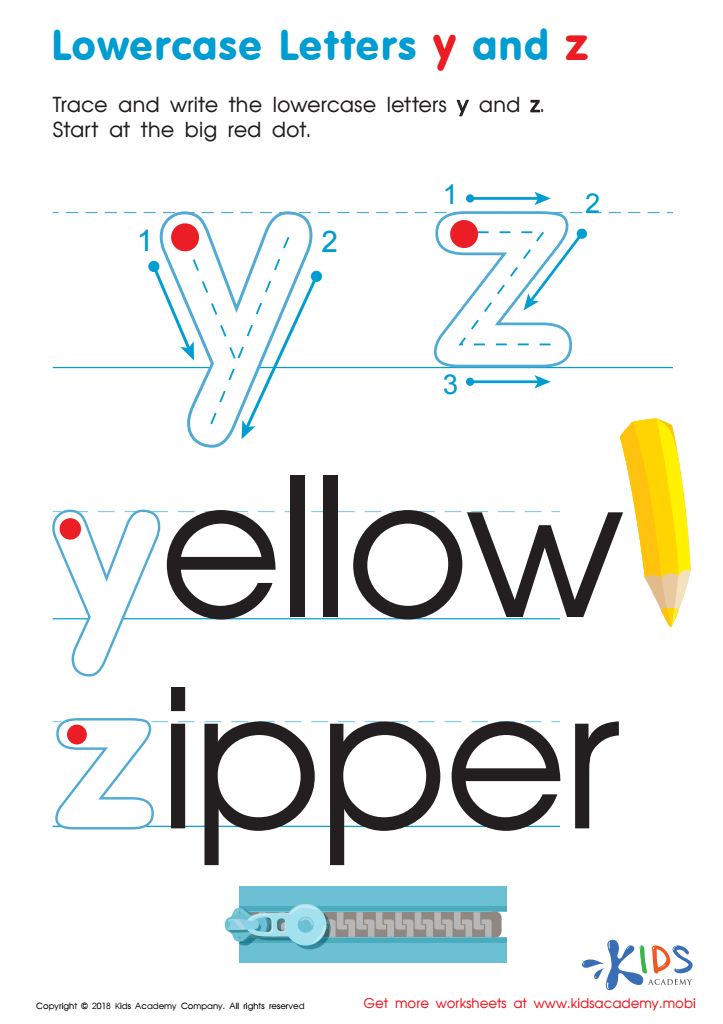
Lowercase Letters y z Worksheet
 Assign to My Students
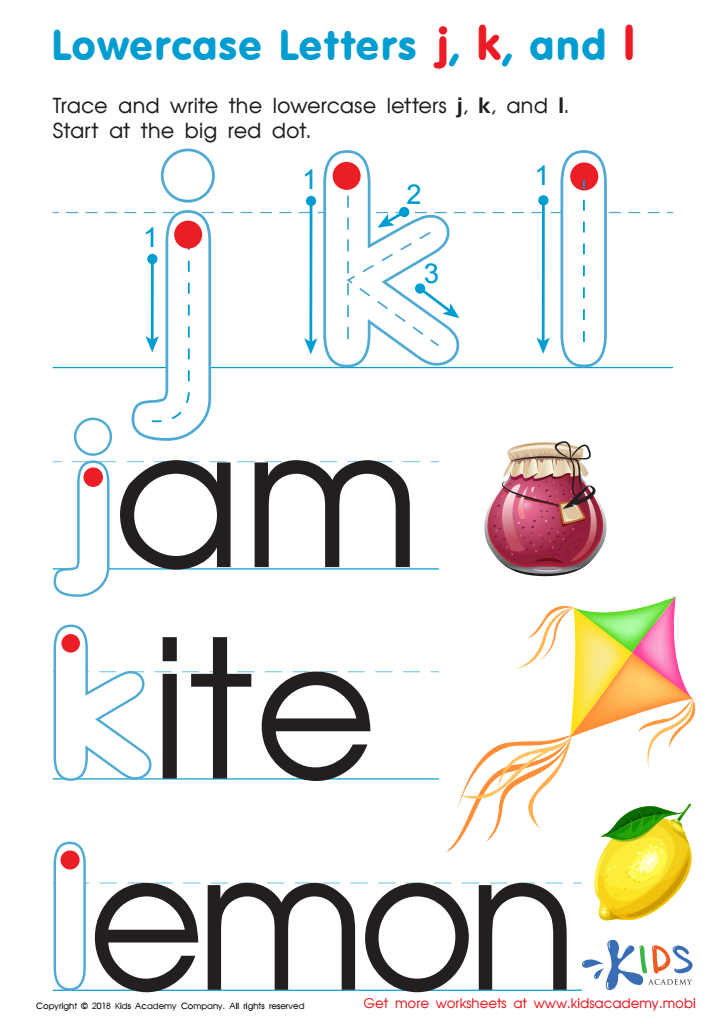
Lowercase Letters j k l Worksheet
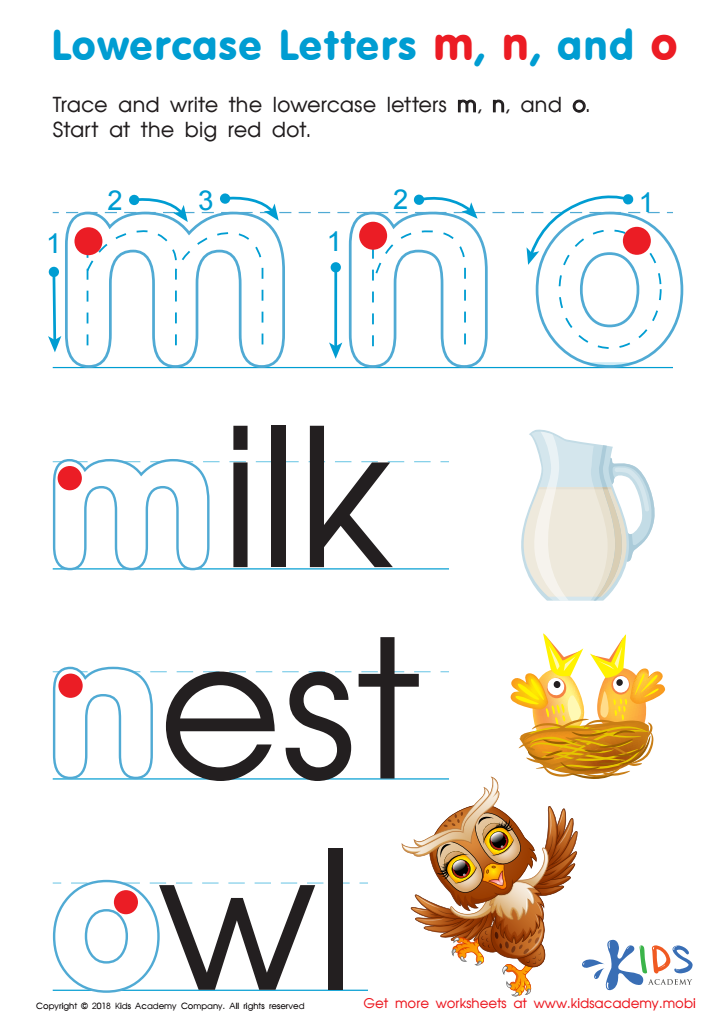
Lowercase Letters m n o Worksheet






Parents and teachers should prioritize teaching lowercase letter writing to children aged 5-9 because it lays the foundation for effective communication, literacy, and overall academic success. During early childhood, learning to write lowercase letters helps in developing fine motor skills, hand-eye coordination, and muscle memory. These skills are crucial for later academic tasks such as writing longer texts and taking notes efficiently.
Lowercase letters are more common in everyday reading and writing. By learning them early, children can more easily recognize and read words in books, signs, and other printed materials. This familiarity boosts their reading fluency and comprehension, core components of early literacy.
Mastering lowercase letters can also enhance children's self-esteem. As they become more proficient, their ability to express themselves clearly and creatively improves. This confidence transfers to other subjects, fostering a lifelong love for learning.
Finally, understanding lowercase letters is an essential stepping stone to more advanced writing skills. Script handwriting, cursive writing, and even digital literacy fundamentals all build on the ability to write and recognize lowercase letters. In essence, these skills form the cornerstone of a child's educational journey and development, making them indispensable for parents and teachers to focus on.







