Rhyming skills Alphabet Worksheets for Ages 5-9
5 filtered results
-
From - To
Enhance your child's language development with our engaging Rhyming Skills Alphabet Worksheets, tailored for kids aged 5-9. These printable activities are designed to make learning fun, combining alphabet practice with rhyming exercises. Children will enjoy identifying and matching rhyming words, helping them improve phonemic awareness and vocabulary. Each worksheet is crafted to stimulate their curiosity and reinforce essential reading skills. Ideal for both classroom and at-home learning, these worksheets provide a supportive, interactive way to boost your child's confidence in reading and writing. Download today and watch your child's literacy skills grow effortlessly!
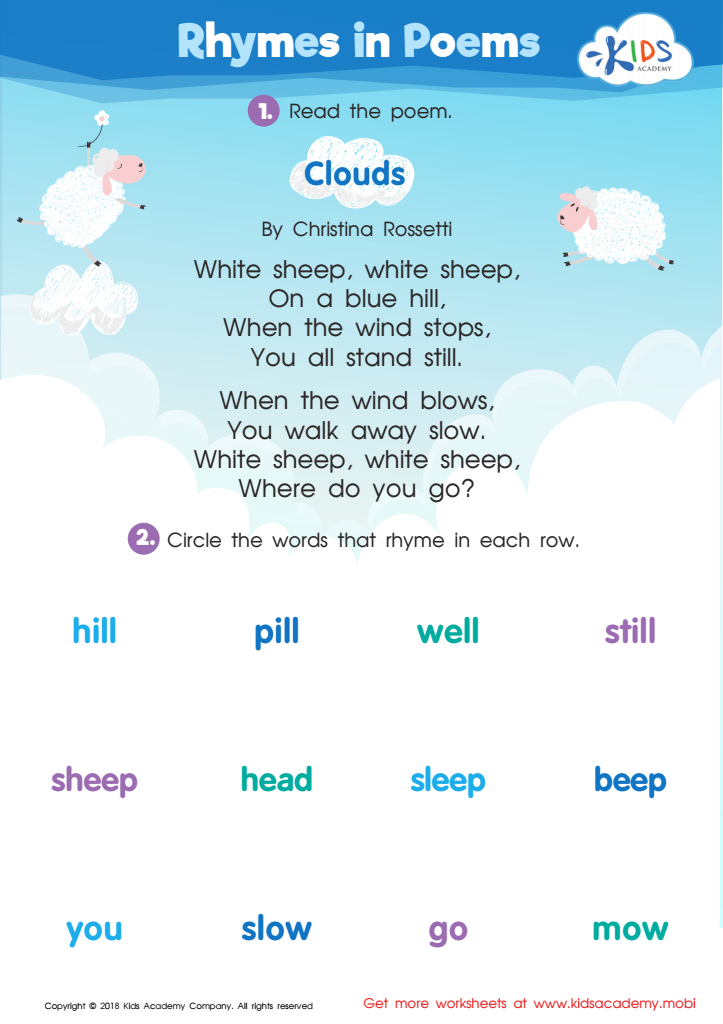
Rhymes in Poems Worksheet
 Assign to My Students
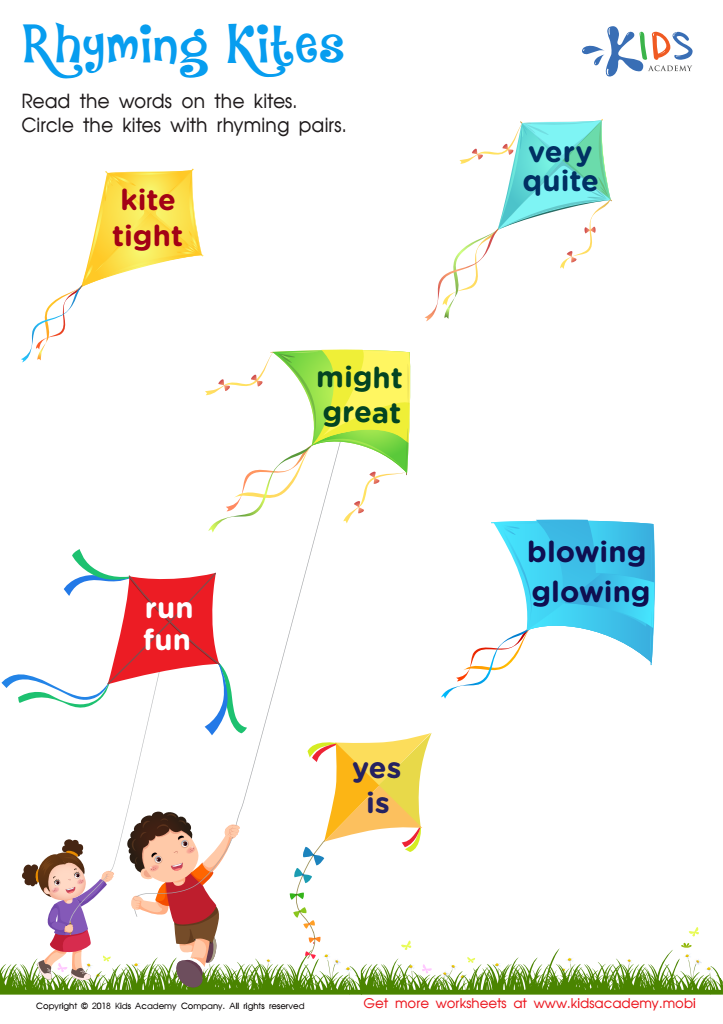
Rhyming Kites Worksheet
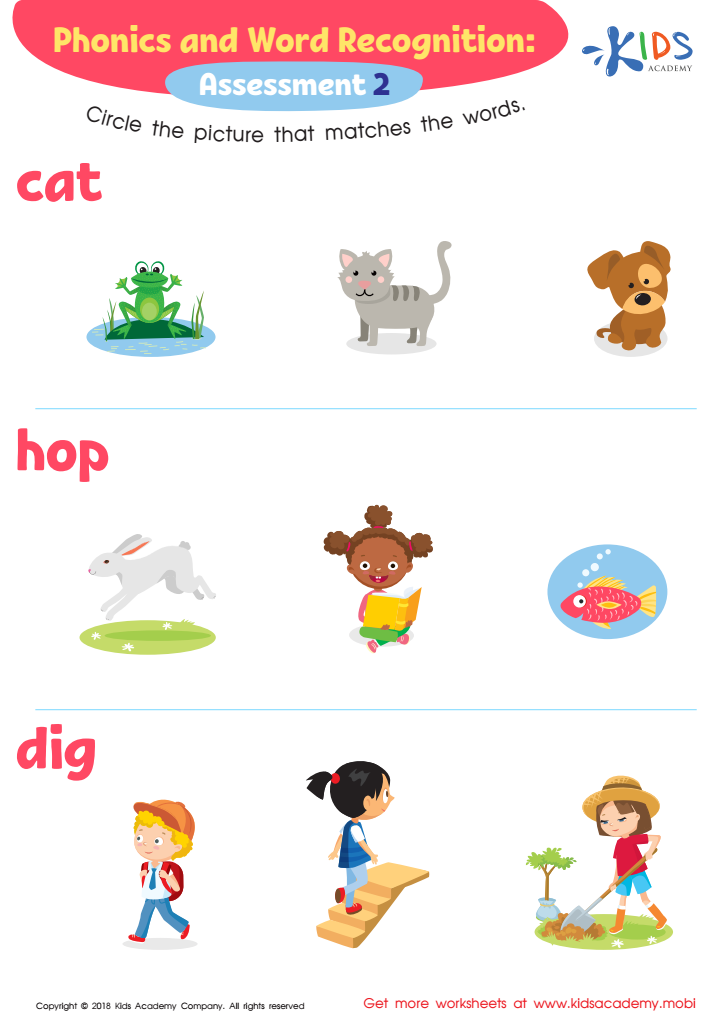
Phonological Awareness: Assessment 2 ELA Worksheet
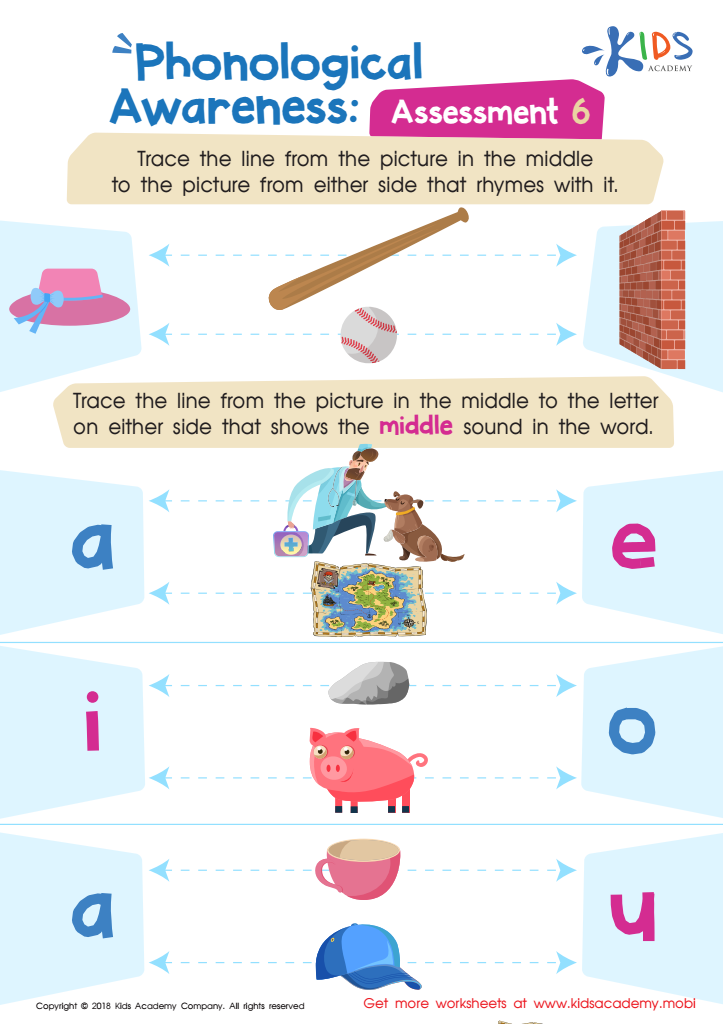
Phonological Awareness: Assessment 6 Worksheet
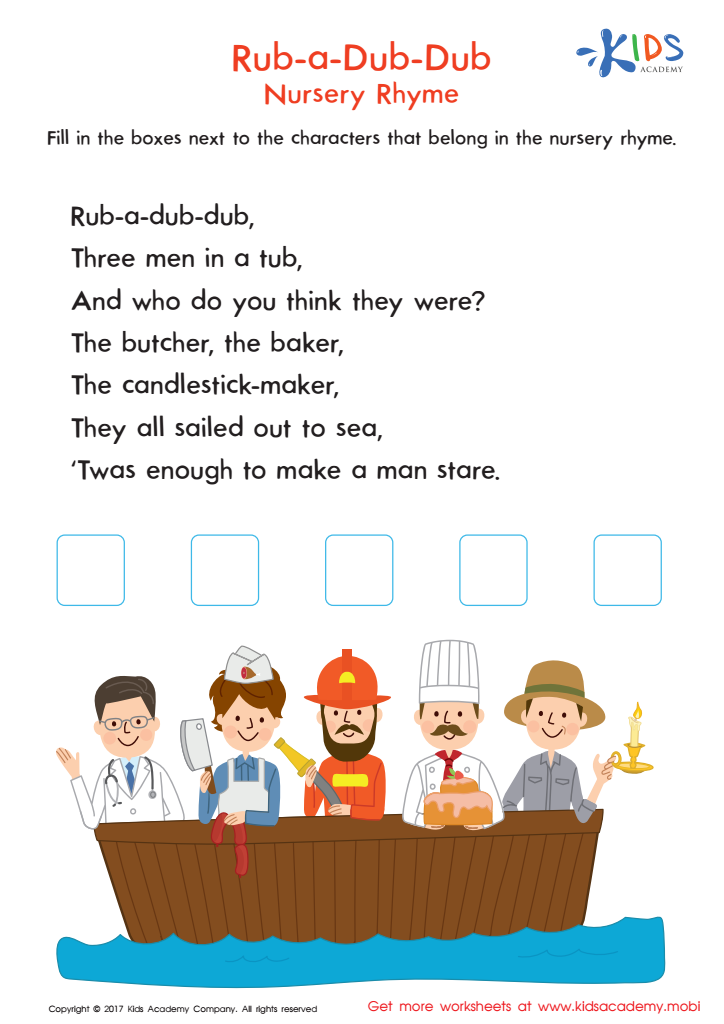
Rub a Dub Dub Printable






Parents and teachers should prioritize rhyming skills and alphabet knowledge for children ages 5-9 because these are foundational elements crucial for language development and literacy. Rhyming helps kids recognize patterns in sounds, which is essential for phonemic awareness. This skill allows them to identify and manipulate sounds within words, improving their reading and spelling abilities. When children practice rhyming, they become better at predicting words, understanding language nuances, and creating a stronger memory for word recognition.
Alphabet knowledge, on the other hand, is the bedrock of reading and writing. Knowing the letters and their corresponding sounds enables children to decode words and provides a pathway to fluent reading. This familiarity with the alphabet is linked with greater ease in learning to read, as it helps kids grasp the systematic nature of written language.
Moreover, both rhyming skills and alphabet knowledge promote critical thinking, problem-solving, and creativity. They aid in vocabulary development, enhance communication skills, and are highly enjoyable, making learning fun and engaging. By integrating rhyming and alphabet exercises early on, parents and teachers set children on a successful academic trajectory, bolstering their confidence and motivation in literacy-related activities. Hence, focusing on these skills during the early years is an investment in a child's educational and cognitive future.







