
Sight word recognition Alphabet Worksheets for Ages 5-9
5 filtered results
Difficulty Level
Grade
Age
-
From - To
Subject
Activity
Standards
Boost your child's reading confidence with our Sight Word Recognition Alphabet Worksheets, designed for ages 5-9. These engaging printables combine fun activities with effective learning strategies to help young readers swiftly recognize, understand, and remember sight words. By offering a variety of exercises that reinforce letter identification and word comprehension, our worksheets lay a solid foundation for fluent reading. Whether at home or in the classroom, these resources cater to different learning styles and keep kids motivated. Experience the joy of watching your child develop essential literacy skills through these interactive and educational worksheets!
Favorites
With answer key
Interactive
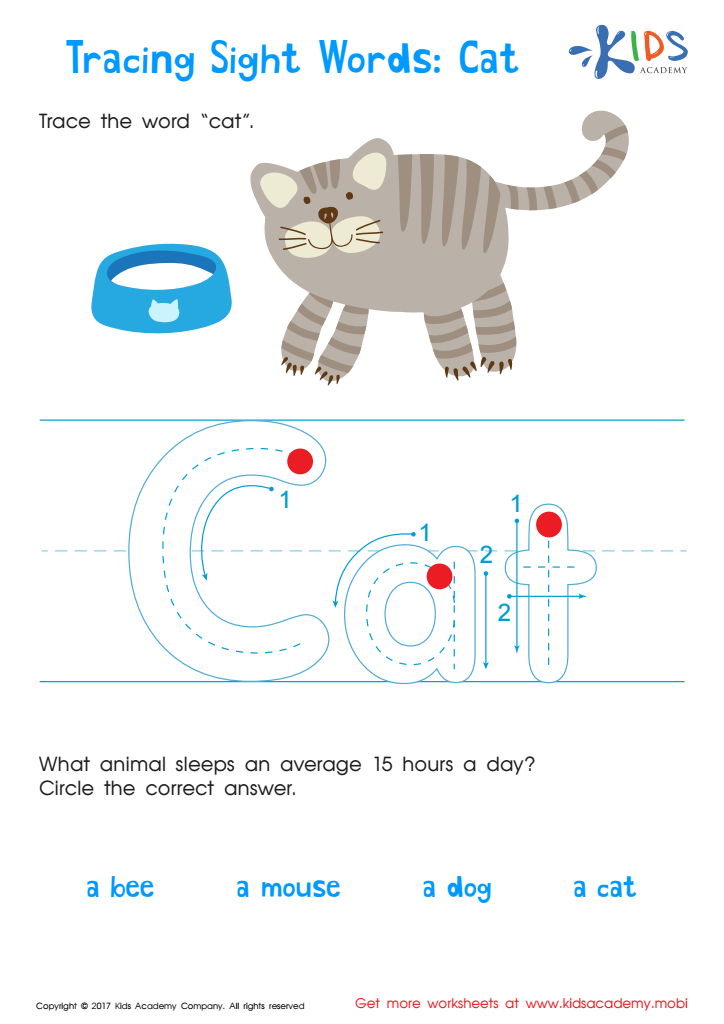
Cat Printable Sight Words Worksheet
Encourage your child's literacy with this fun sight words worksheet: cat PDF! It helps build a solid foundation for reading, featuring activities such as reading and tracing the word cat, and finding it amongst other sight words. With its cute cat, Kids Academy makes learning to read a delight!
Cat Printable Sight Words Worksheet
Worksheet
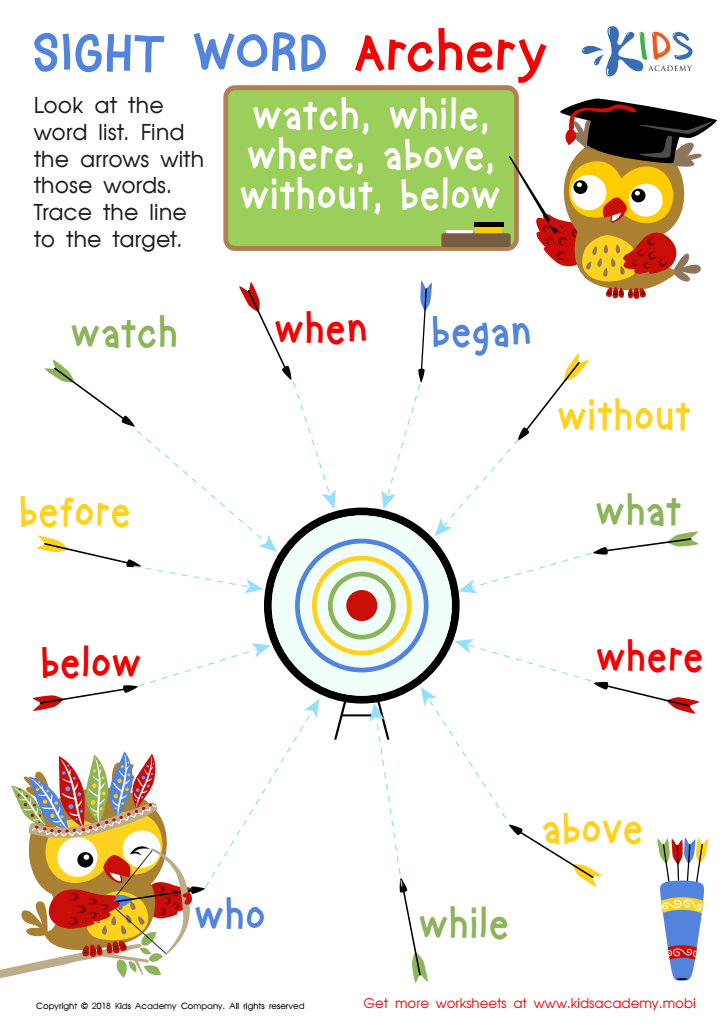
Sight Word Archery Worksheet
Read the words list with your kids, pointing at each one. Ask them to do the same. Help them find the arrows with those words and trace the line to the target in the centre.
Sight Word Archery Worksheet
Worksheet
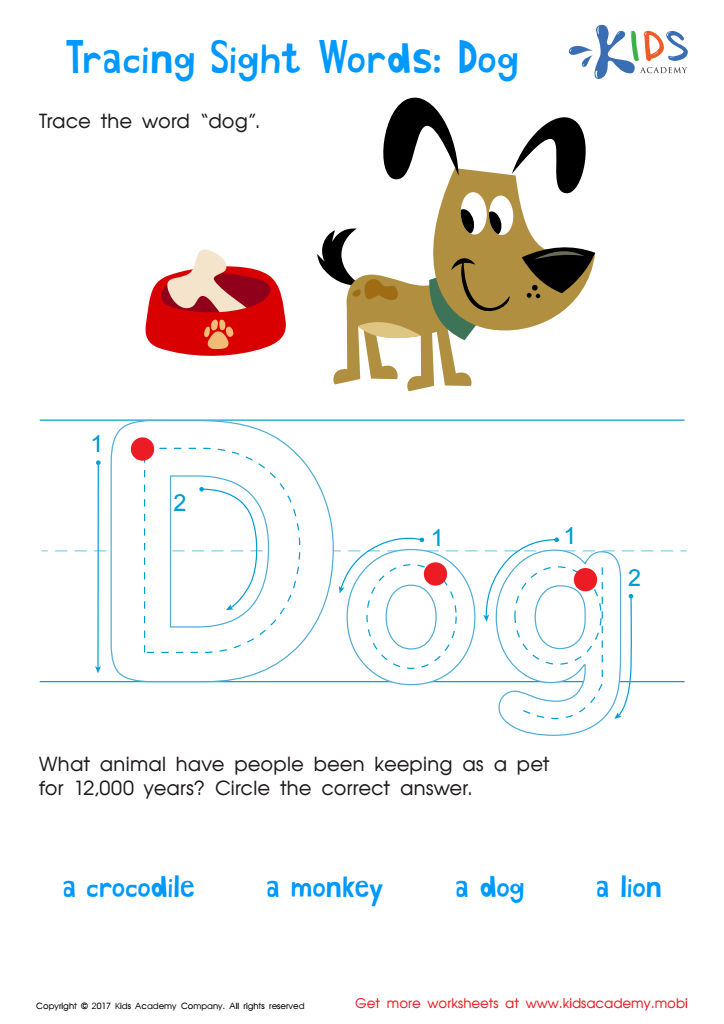
Dog Worksheet Sight Words Worksheet
Get your kids excited to read with our dog-themed sight words worksheet!
Excite your child to read with our sight words worksheet: dog edition! Featuring a lovable dog character to put a smile on any kid's face, this worksheet helps kids practice reading and writing the word "dog". Build a library of words they can read quickly and promote increasing literacy skills with early fluency! Get them ready for reading with our dog-themed sight words worksheet!
Dog Worksheet Sight Words Worksheet
Worksheet
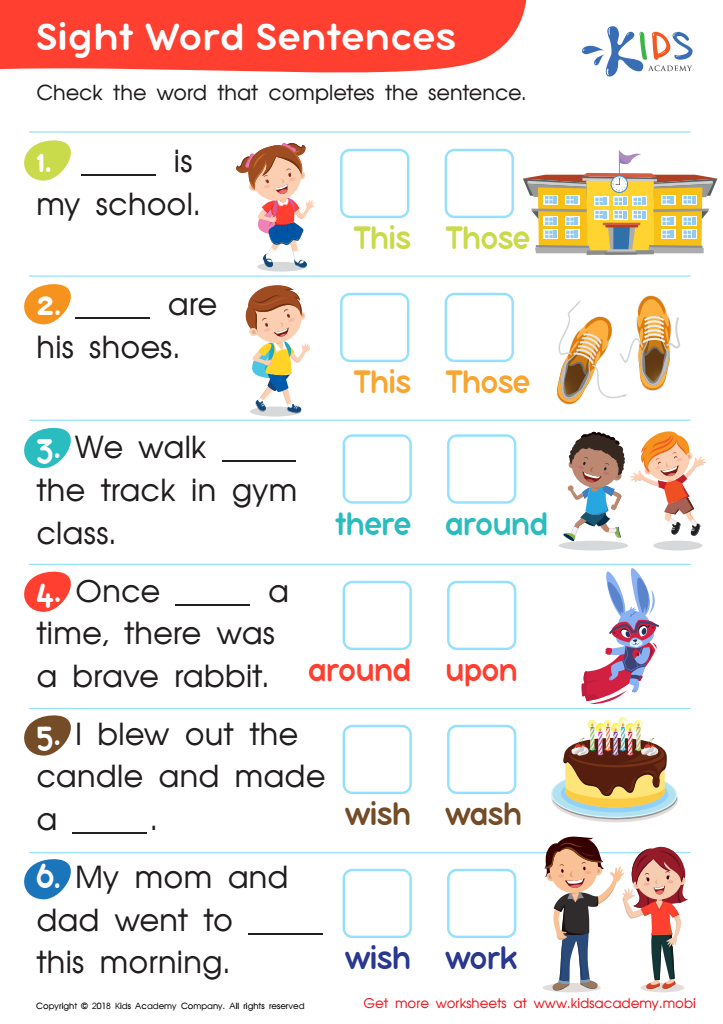
Sight Word Sentences Worksheet
Improve reading fluency! Have students fill in the blank with the correct sight word to complete sentences. Sight words are often tricky to decode - they don't follow phonics or spelling rules. To read smoothly, young learners must know them by memory. Use this printable and help kids master their sight words!
Sight Word Sentences Worksheet
Worksheet
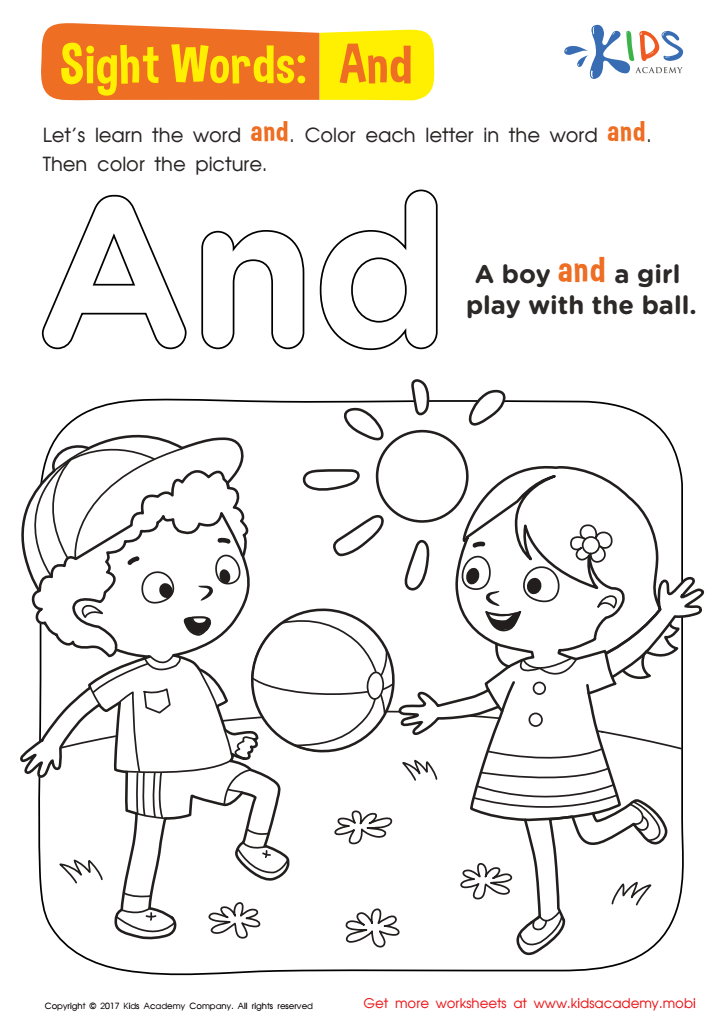
And Worksheet Sight Words Worksheet
Help your child get a jumpstart on reading with sight words! Print out this fun worksheet and get your child to read the sentence. Point out the word "and", then color the word and enjoy the rest of the scene! It's a great way to introduce sight words and get their early reading skills going!
Download (PDF)
 Assign to My Students
Assign to My Students
And Worksheet Sight Words Worksheet
Worksheet
Join Kids Academy for Free
Who is primarily going to use this learning content?








Sight word recognition and alphabet knowledge are essential building blocks for young learners aged 5-9. Firstly, these skills form the foundation for reading fluency and comprehension. Sight words are commonly used words that children must recognize instantly without decoding, such as "the," "and," and "is." Mastery of these words enables smoother, faster reading because children do not need to stop frequently to decode, thereby enhancing their understanding of the text's overall meaning.
Secondly, alphabet knowledge—including the ability to identify, name, and write letters—is fundamental for reading and writing development. It enables children to connect letters with their corresponding sounds, which is crucial for decoding new words. When children have a strong grasp of letter-sound correspondence, they can more easily sound out unfamiliar words, contributing to early reading success.
Moreover, research consistently shows a strong correlation between early literacy skills and later academic achievement. Without these foundational skills, children are likely to struggle with reading, which can affect their confidence and performance in all academic areas. Therefore, both teachers and parents should prioritize these skills to foster a love of reading and set children on a path to lifelong learning. Supporting practice through engaging, age-appropriate activities can make a significant difference in a child's educational journey.







