
Handwriting improvement Letter Recognition Worksheets for Ages 5-9
5 filtered results
Difficulty Level
Grade
Age
-
From - To
Subject
Activity
Standards
Boost your child's handwriting and letter recognition skills with our engaging Handwriting Improvement Letter Recognition Worksheets designed for ages 5-9. These worksheets help young learners develop essential motor skills while familiarizing themselves with the alphabet. With a variety of fun activities that promote writing practice, children can enhance their letter formation and recognition in an interactive way. Each worksheet is designed to be age-appropriate and encourages creativity, making learning enjoyable. Perfect for use at home or in the classroom, our resources are an excellent tool for nurturing young writers and building a strong foundation in literacy skills. Unlock your child’s potential today!
Favorites
With answer key
Interactive
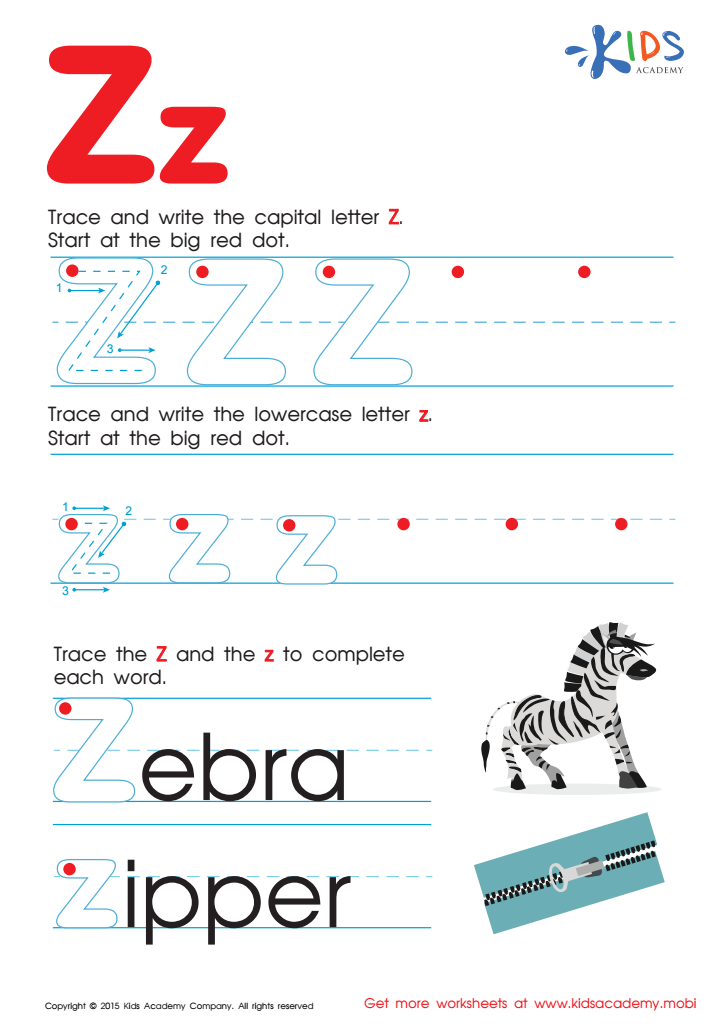
Letter Z Tracing Page
Trace and write capital "Z" and lowercase "z". Complete words "zebra" and "zipper". Be attentive and have fun! (80 words)
 Assign to My Students
Letter Z Tracing Page
Worksheet
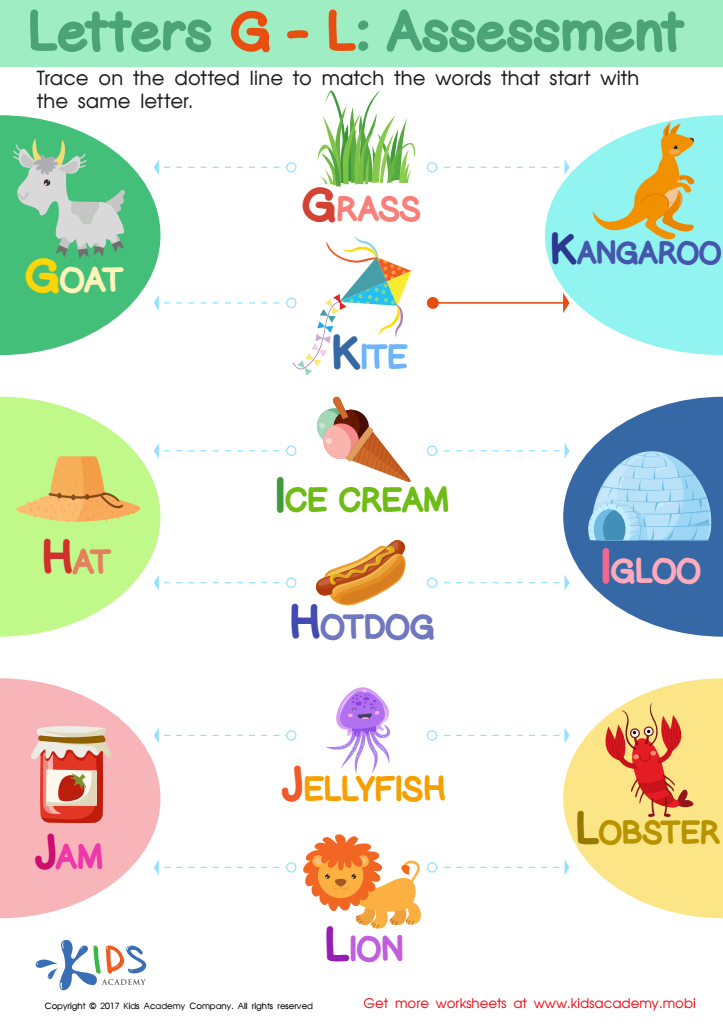
Letters G-L Worksheet
This fun worksheet helps preschoolers develop reading and phonics skills. It gets kids to match G-L words that start with the same letter, making it engaging and educational.
Letters G-L Worksheet
Worksheet
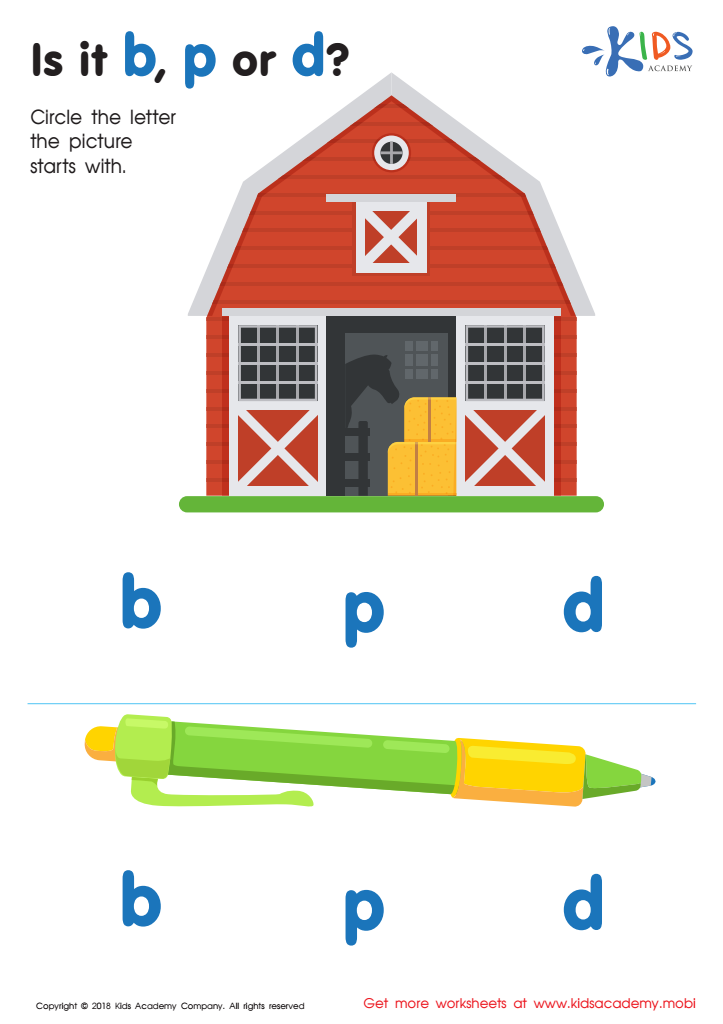
Is it b, p or d? Worksheet
Test your child's identification skills with this worksheet. They must identify the image and then circle the letter it begins with: 'b', 'p', or 'd' (e.g. an image of the sun would mean they circle 's').
Is it b, p or d? Worksheet
Worksheet
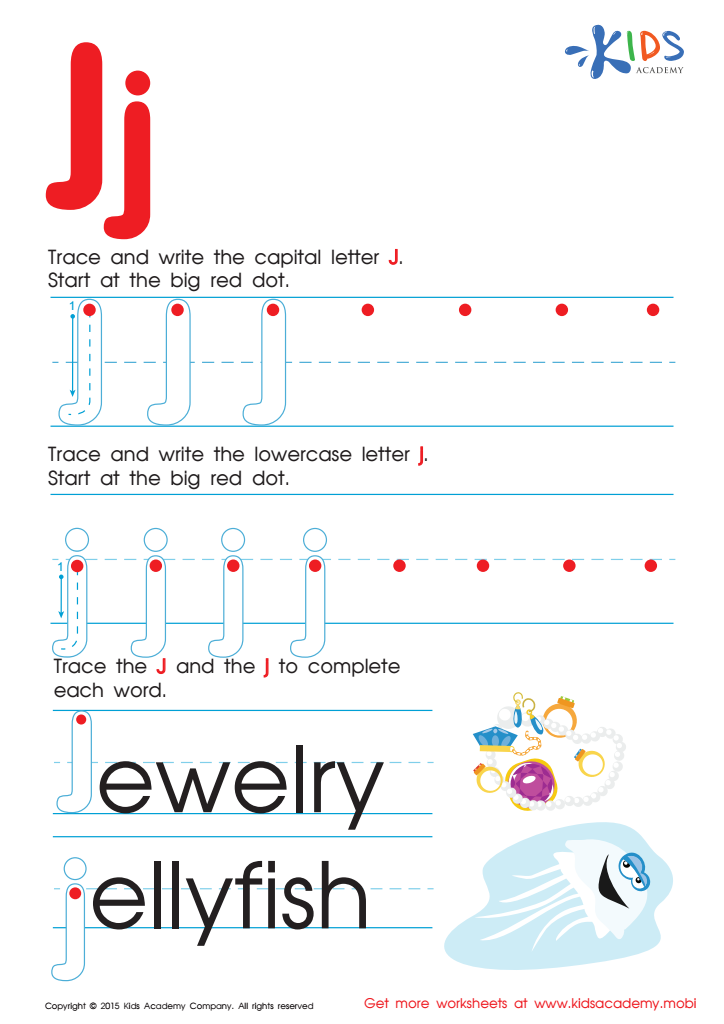
Letter J Tracing Page
Trace and write the letter "J" with our ABC worksheet - start at the big red dot! Have fun completing words like jewelry, jellyfish and more. Check out our kindergarten activities for more alphabet practice.
Letter J Tracing Page
Worksheet
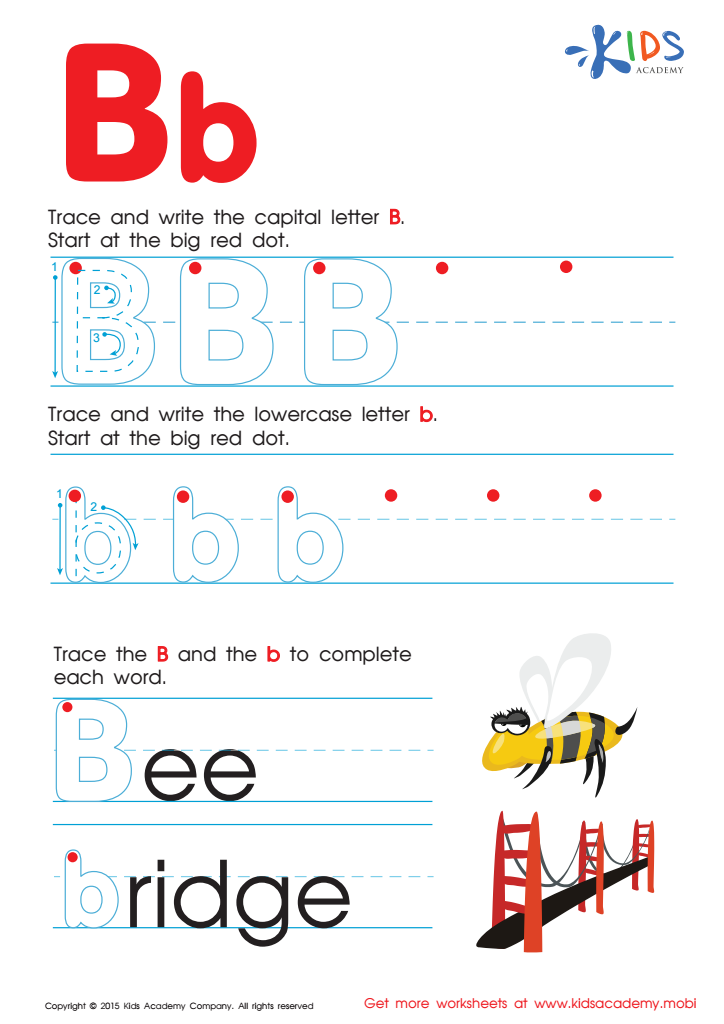
Letter B Tracing Page
Ready to learn the Alphabet? Put your pencil on the red dot and trace & write both capital & lowercase "B". Then have a look at the pictures. Catch the bee, cross the bridge & write the letters to complete the words. More ABC worksheets for kindergarten available!
Letter B Tracing Page
Worksheet
Join Kids Academy for Free
Who is primarily going to use this learning content?








Handwriting improvement and letter recognition are essential skills for children aged 5-9, significantly impacting their overall academic development. During these formative years, children are developing the foundational skills necessary for effective communication. Handwriting plays a crucial role in transmitting thoughts and ideas clearly; poor handwriting can hinder expression and lead to frustration.
Letter recognition is equally important, as it is the building block for reading and writing. Children who can recognize letters quickly and accurately are more likely to succeed in early literacy. This skill not only aids in reading comprehension but also boosts the child's confidence in their writing abilities.
For parents and teachers, nurturing these skills means fostering a love for learning and enhancing future academic success. Improved handwriting and letter recognition contribute to increased engagement in classroom activities and help establish a solid framework for future educational challenges.
Furthermore, early intervention in these areas can prevent potential issues in later grades, where writing assignments and reading comprehension become more complex. Ultimately, supporting handwriting and letter recognition cultivates a positive relationship with writing, setting a strong foundation for lifelong learning. Therefore, parents and teachers should prioritize these skills to ensure children thrive academically and personally.







