
Phonics enhancement Letter Recognition Worksheets for Ages 5-9
3 filtered results
Difficulty Level
Grade
Age
-
From - To
Subject
Activity
Standards
Discover our engaging Phonics Enhancement Letter Recognition Worksheets, designed specifically for children ages 5-9. These captivating resources help boost letter recognition skills while introducing fundamental phonics concepts. Tailored for early learners, our worksheets feature colorful visuals and interactive activities that make learning fun and effective. By enhancing letter-sound associations, children develop essential reading skills in an enjoyable way. Perfect for home or classroom use, these worksheets support child development by reinforcing literacy skills through play-based learning. Download our phonics enhancement worksheets today and watch your child's confidence and love for learning flourish! Explore a world of knowledge with Kids Academy.
Favorites
With answer key
Interactive
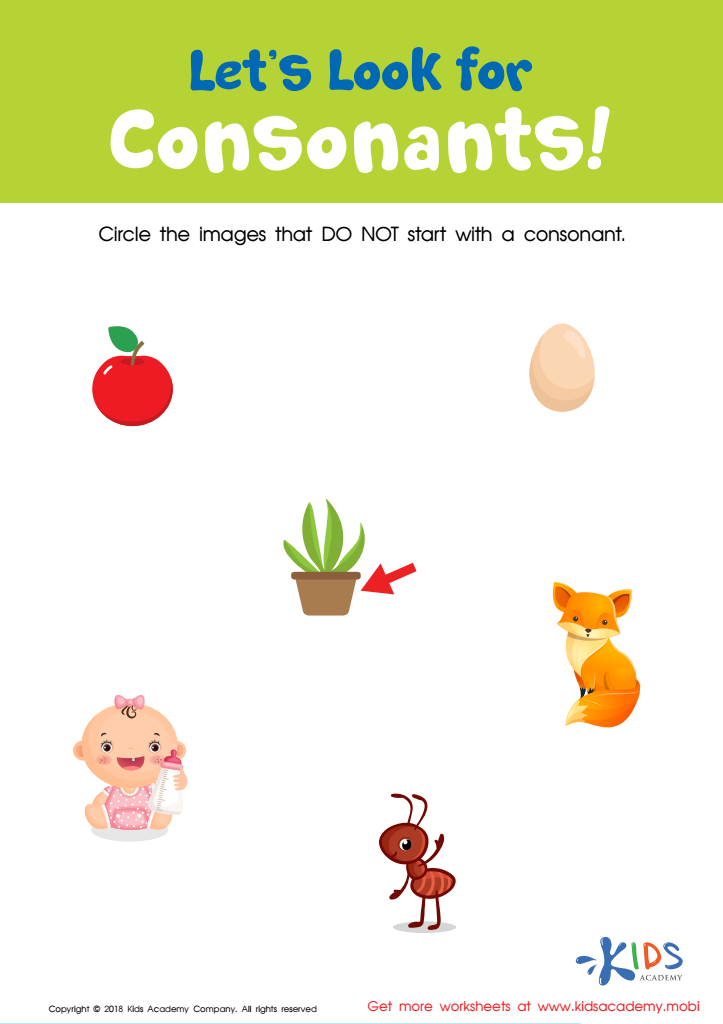
Let's Look for Consonants Worksheet
Help kids learn consonants and words that start with them. Ask them to recite the alphabet, then explain consonants are all letters but the 5 vowels. Use the worksheet to ask them to circle items without a consonant. Emphasize that's 21 consonants.
Let's Look for Consonants Worksheet
Worksheet
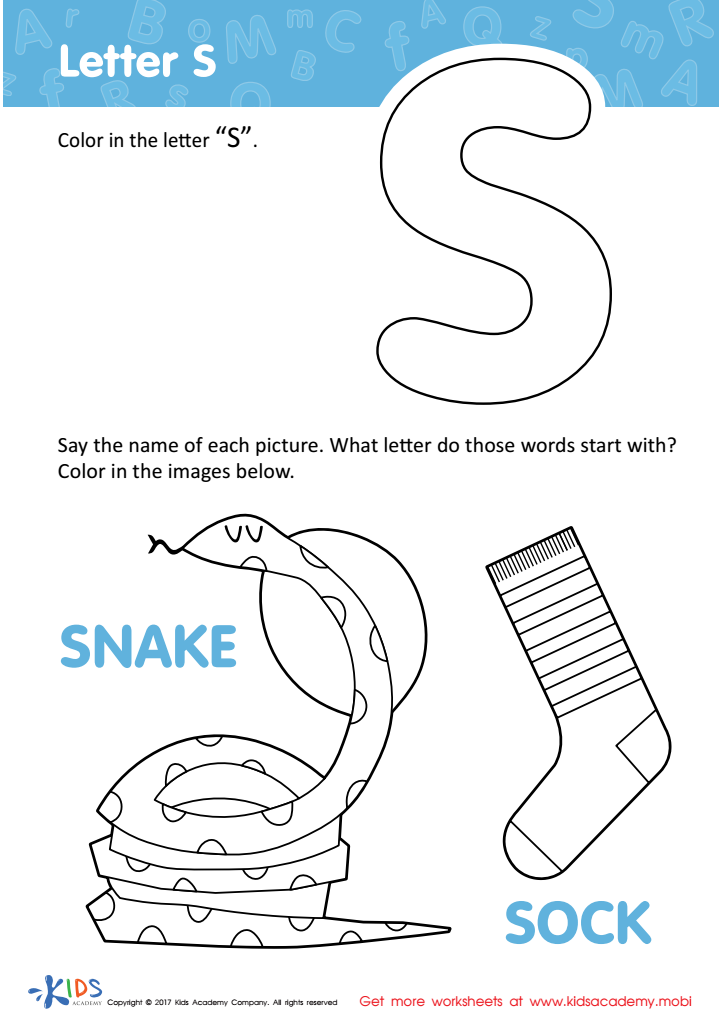
Letter S Coloring Sheet
Help your child practice recognizing the letter "S" and the sound it makes with this fun coloring page. It features a slippery snake, smelly sock and more! Give them extra practice by coming up with more "S" sounds and words.
Download (PDF)
 Assign to My Students
Assign to My Students
Letter S Coloring Sheet
Worksheet
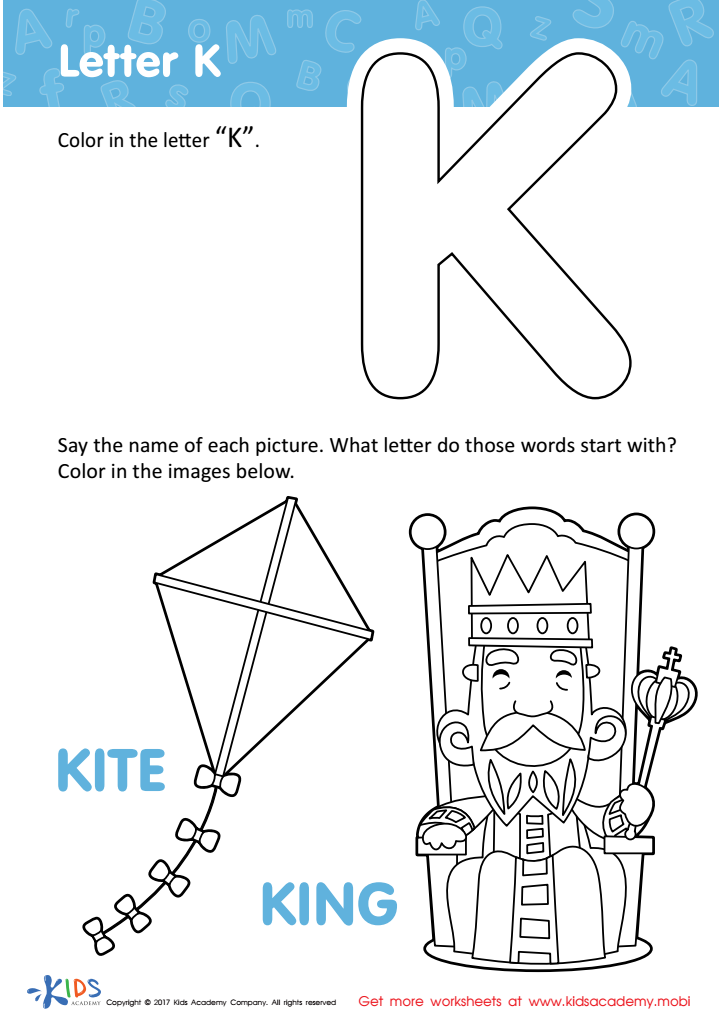
Letter K Coloring Sheet
This letter K coloring page captivates your child's creativity while learning the letter! Showcasing a king and kite, common words for their age group, it's sure to spark their imagination.
Download (PDF)
Assign to My Students
Assign to My Students
Letter K Coloring Sheet
Worksheet
Join Kids Academy for Free
Who is primarily going to use this learning content?








Phonics enhancement through letter recognition is crucial for children aged 5-9 as it lays the foundation for successful reading and writing skills. At this developmental stage, children are forming their understanding of the alphabet and the sounds letters make, which directly impacts their ability to decode words and comprehend text. By focusing on phonics enhancement, parents and teachers can help children master essential skills that support their reading fluency.
Moreover, effective letter recognition aids in building vocabulary and enhances spelling abilities, which are foundational for well-rounded literacy. Research indicates that students who develop strong phonemic awareness in early childhood are more likely to become proficient readers, leading to better academic performance in later grades.
Additionally, phonics-based instruction empowers children to tackle unfamiliar words independently, fostering confidence and a love for reading. When children engage with language through interactive strategies such as games and songs, they develop a positive attitude toward learning.
Ultimately, investing time and effort into phonics enhancement not only accelerates literacy development but also equips children with the tools necessary for lifelong learning, ensuring they have the competencies required to navigate an increasingly literate world.







