
Phonics practice Letter Recognition Worksheets for Ages 5-9
5 filtered results
Difficulty Level
Grade
Age
-
From - To
Subject
Activity
Standards
Boost your child's reading journey with our engaging Phonics Practice Letter Recognition Worksheets, tailored for ages 5-9. These expertly crafted resources focus on enhancing letter recognition, phonics, and early reading skills. Through captivating activities, children familiarize themselves with each letter, fostering a strong foundation for fluent reading and writing. Perfect for classroom or home use, these worksheets reinforce phonemic awareness and build confidence in young learners. Transform learning into a fun adventure as your child explores the alphabet, masters letter sounds, and develops essential literacy skills. Discover the joy of phonics practice and make learning to read an enjoyable experience!
Favorites
With answer key
Interactive
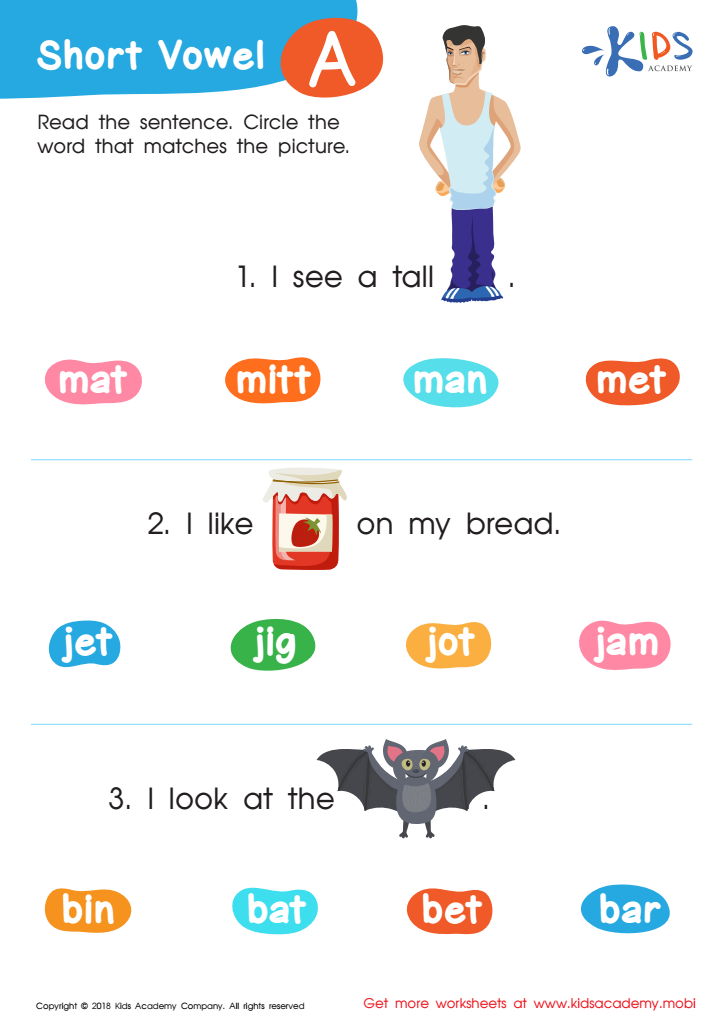
Short Vowel /a/ Worksheet
This free PDF helps new readers use sight words and pictures to read basic sentences. Then, they use accompanying word choices to find the correct word with the short a vowel sound. A key early reading skill, discriminating between short vowel sounds can be tricky in monosyllabic words, so use this PDF to help your reader reinforce it.
Short Vowel /a/ Worksheet
Worksheet
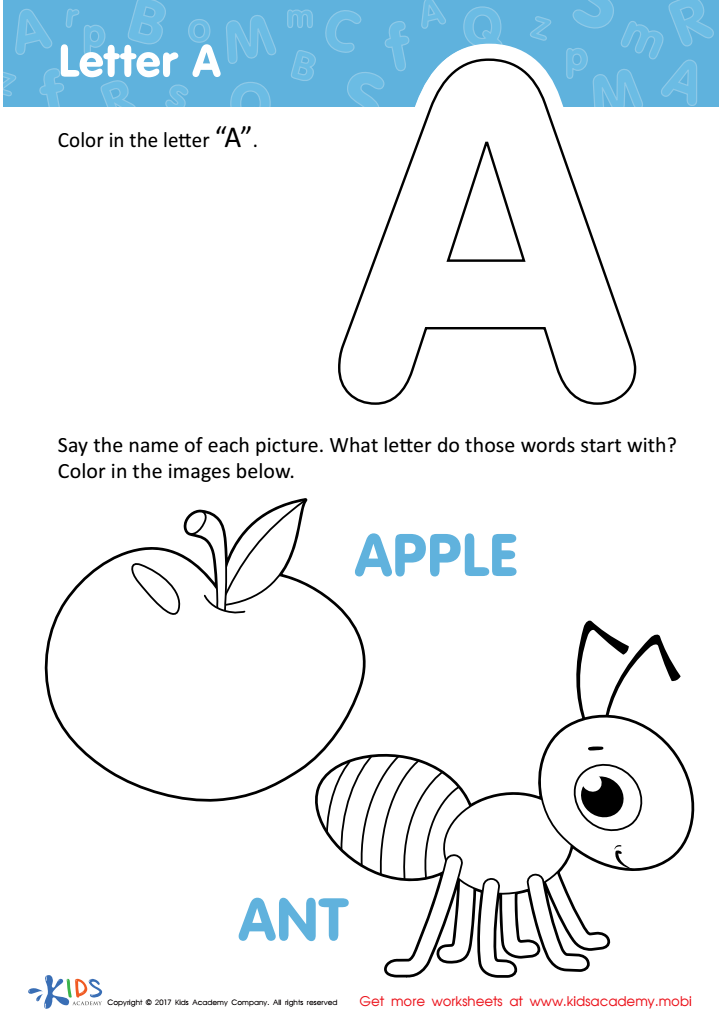
Letter A Coloring Sheet
This letter "A" coloring page is great for introducing kids to the alphabet! Let them exercise their creativity while they learn to recognize letters and sounds - it's a fun and easy way to help them get started.
Download (PDF)
 Assign to My Students
Assign to My Students
Letter A Coloring Sheet
Worksheet
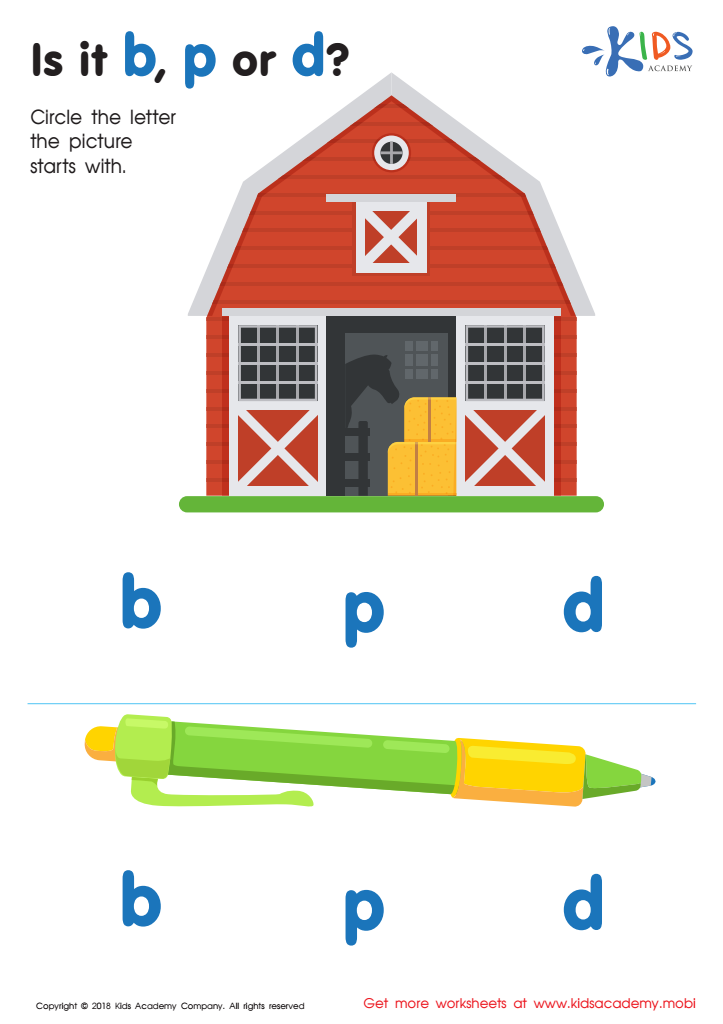
Is it b, p or d? Worksheet
Test your child's identification skills with this worksheet. They must identify the image and then circle the letter it begins with: 'b', 'p', or 'd' (e.g. an image of the sun would mean they circle 's').
Is it b, p or d? Worksheet
Worksheet
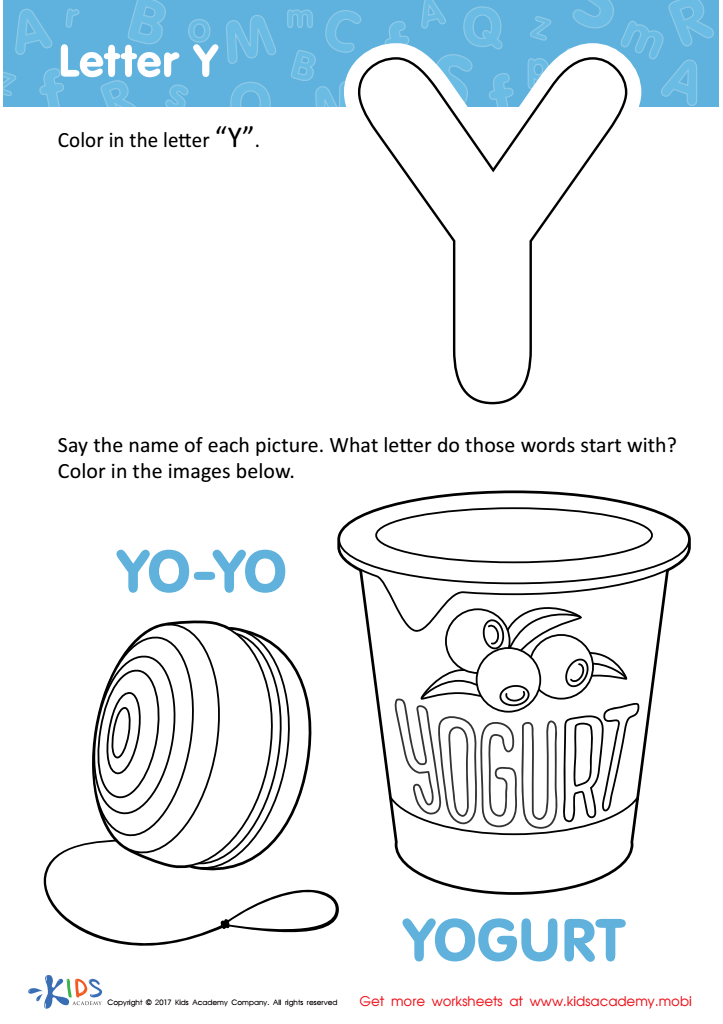
Letter Y Coloring Sheet
Let's celebrate letter "Y"! Here's a fun coloring page that'll help your child learn this end-of-the alphabet letter. It's packed with familiar objects that'll help build their art and literacy skills. So let's say "Yay"!
Download (PDF)
Assign to My Students
Assign to My Students
Letter Y Coloring Sheet
Worksheet
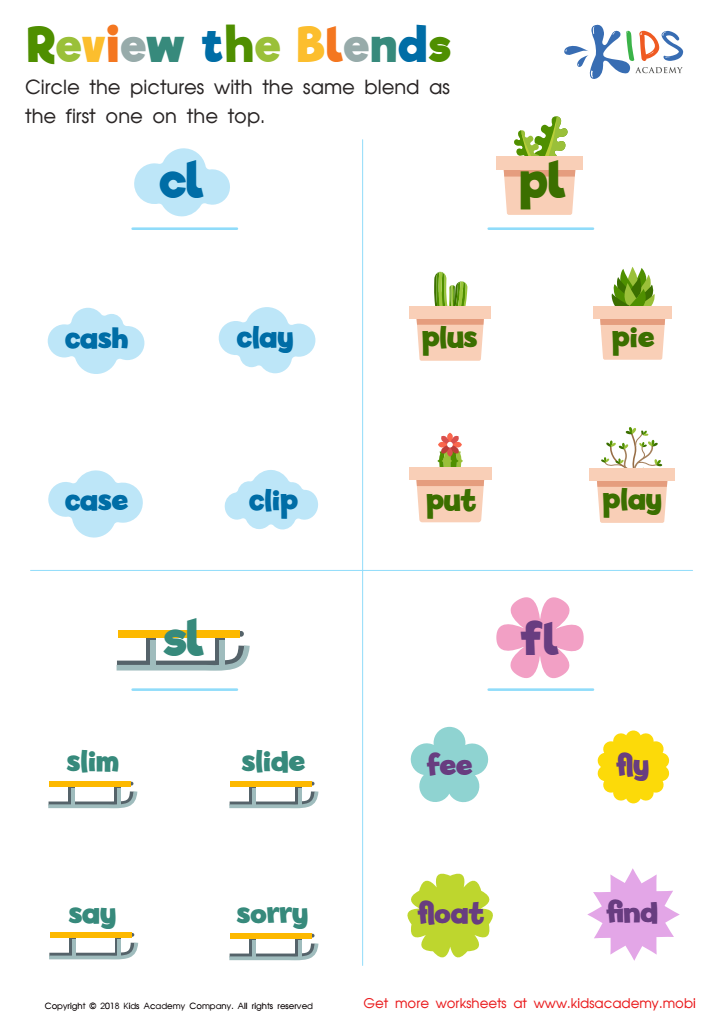
Review the Blends Worksheet
Consonant blends are two or three consonants that make a sound when pronounced together. L-blends like cl, bl, sl, fl and 3-letter blends like str, slp are common. This phonics worksheet helps early readers identify words containing two letter L-blends. Students must circle the words then read them aloud.
Review the Blends Worksheet
Worksheet
Join Kids Academy for Free
Who is primarily going to use this learning content?








Parents and teachers should care deeply about phonics practice and letter recognition for children aged 5-9 because these foundational skills are critical for reading and writing development. Phonics involves understanding the relationship between letters and sounds, while letter recognition involves the ability to identify and name letters accurately. These abilities are the building blocks for literacy.
First, strong phonics and letter recognition skills enable children to decode new words, facilitating early reading success. This ability leads to increased confidence and a positive attitude toward learning. When children can decode words, they are more likely to comprehend what they read, leading to enhanced understanding and greater academic achievement across all subjects, as literacy is fundamental to learning.
Second, early phonics practice helps prevent future reading difficulties. Children who struggle with letter recognition and phonetic principles risk falling behind, which can have long-term educational and emotional consequences.
Lastly, incorporating engaging phonics practices can make learning enjoyable, reinforcing the child's natural curiosity and love for reading. Fun activities like phonics games, sing-alongs, or manipulatives cater to diverse learning styles, ensuring that all children, regardless of their developmental stage, have the opportunity to succeed.
In summary, prioritizing phonics and letter recognition in early education sets children up for future schooling success, fosters a lifelong love for reading, and addresses potential literacy challenges before they become hurdles.







