
Uppercase identification Letter Recognition Worksheets for Ages 5-9
5 filtered results
Difficulty Level
Grade
Age
-
From - To
Subject
Activity
Standards
Introduce your child to the world of letters with our "Uppercase Identification Letter Recognition Worksheets" designed for ages 5-9. These engaging, colorful worksheets provide the perfect tool for young learners to recognize, match, and master uppercase letters. Each worksheet offers fun activities and exercises to reinforce letter recognition and improve reading readiness. Whether at home or in the classroom, our expertly crafted worksheets support early literacy skills, boost confidence, and make learning enjoyable. Explore our collection today and watch your child flourish in their early educational journey with Kids Academy!
Favorites
With answer key
Interactive
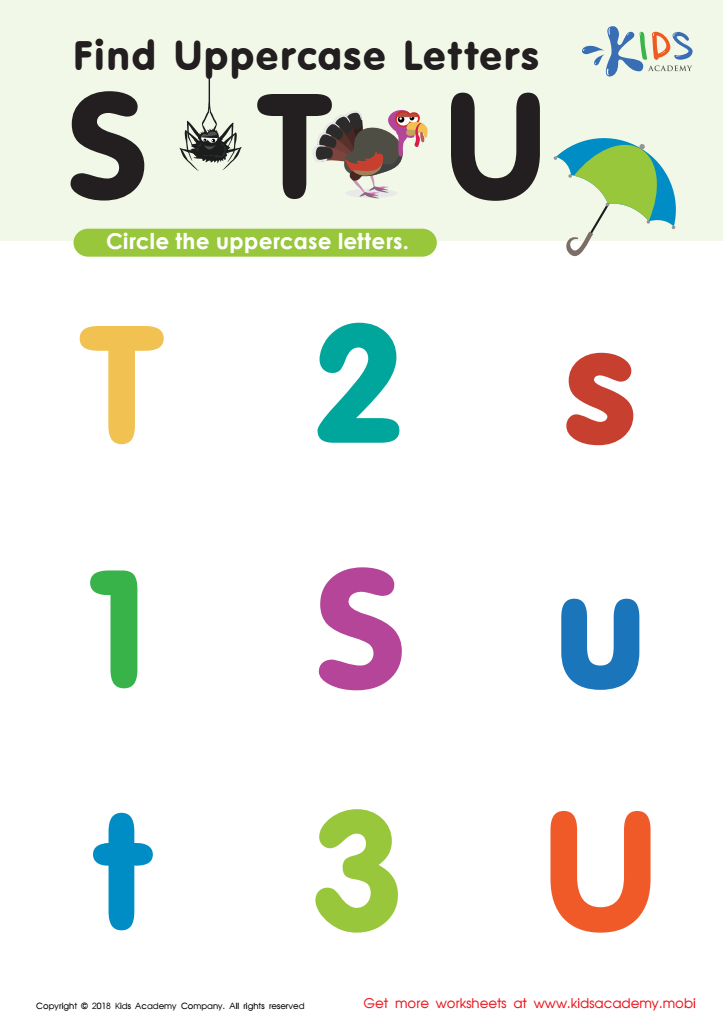
Find Uppercase Letters Worksheet
What level is your kid at now? Can they tell the difference between small and uppercase letters? Ask them to name words beginning with S, T and U, then help them find and circle the uppercase letters S, T and U in a mix of small letters, numbers and uppercase letters.
 Assign to My Students
Find Uppercase Letters Worksheet
Worksheet
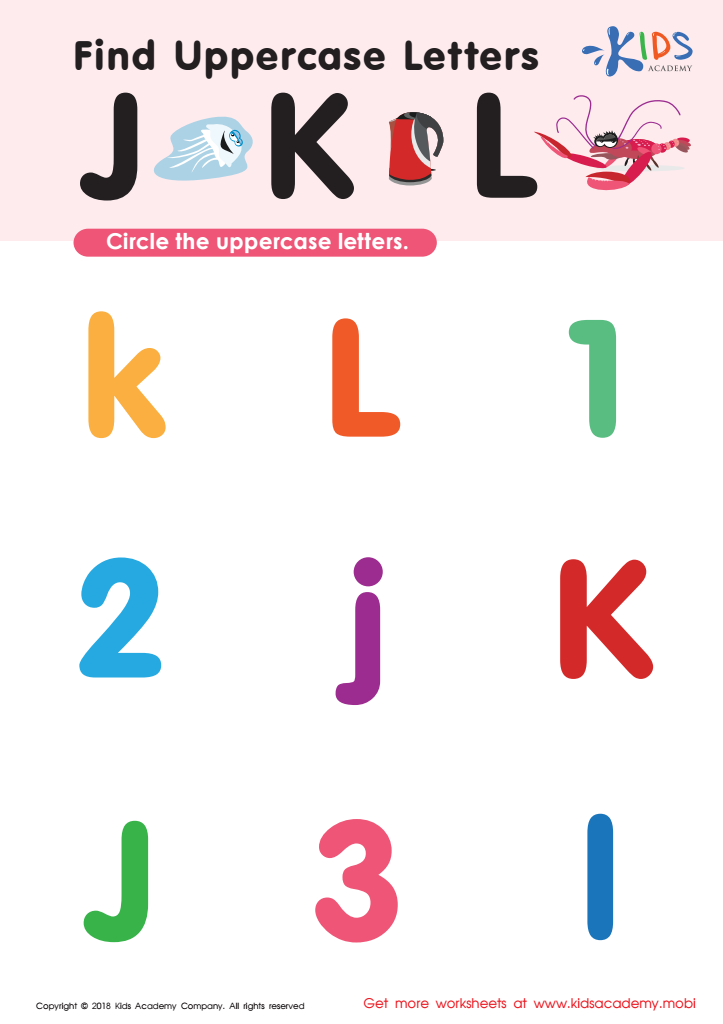
Find Uppercase Letters J, K, and L Worksheet
Search for the uppercase letters J, K, and L in this fun worksheet! Help your child identify the starting sound of each picture, then look for the letters. Keep an eye out for numbers that look like letters. Swim with the jellyfish and solve this delightful puzzle!
Find Uppercase Letters J, K, and L Worksheet
Worksheet
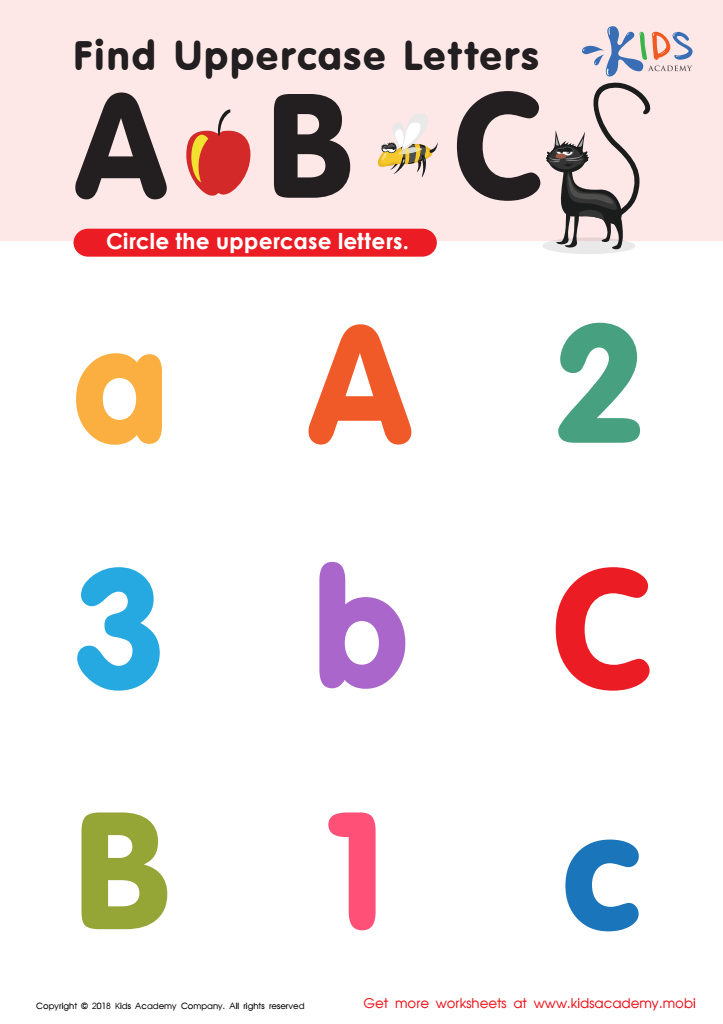
Find Uppercase Letters A, B, and C Worksheet
Check out this PDF worksheet and spot all the capital letters! Arranged as a puzzle, this exercise will test little learners to read and recognize uppercase letters and tell the difference between letters and numbers. To help them, use the pictures on top of the page to practice the sounds A, B and C make! 80 words.
Find Uppercase Letters A, B, and C Worksheet
Worksheet

Find Uppercase Letters V, W, X Worksheet
Ask your kids if they can spot the uppercase letters V, W and X hidden in the lowercase letters and numbers, then have them circle them. After that, ask them to give you examples of words beginning with those letters. This worksheet will help them get started.
Find Uppercase Letters V, W, X Worksheet
Worksheet
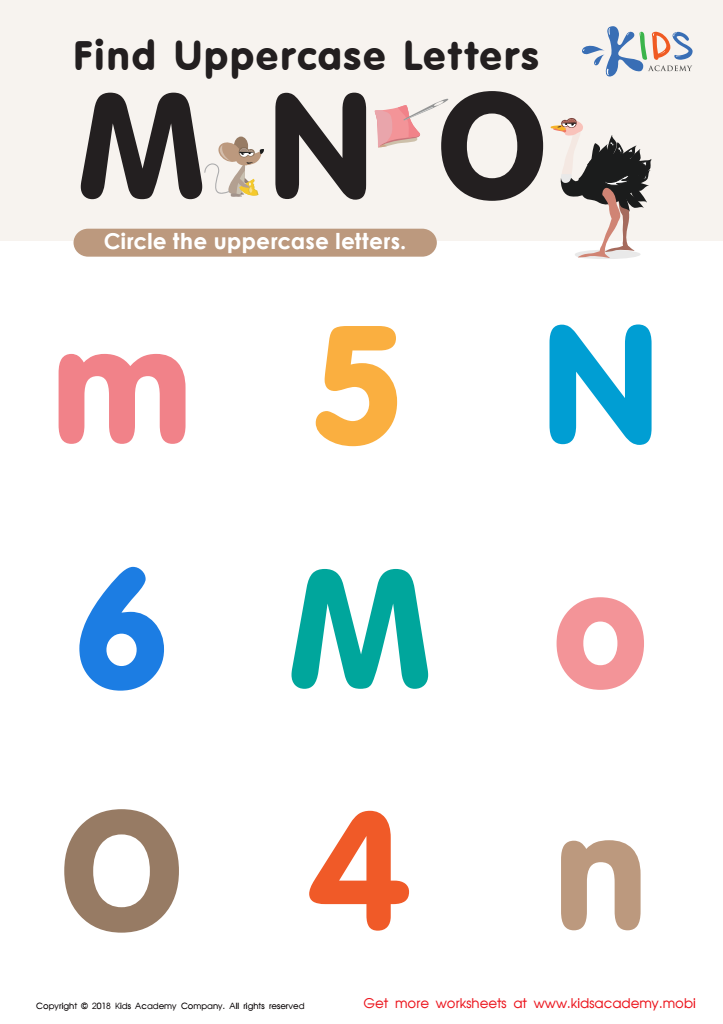
Find Uppercase Letters M, N, and O Worksheet
Kids love puzzles! This one scrambles up letters and numbers. Help your learner spot the capital letters, then search for the uppercase M, N, and O. For an extra challenge, cover the large letters and have kids circle the capitals using only beginning letter sounds.
Find Uppercase Letters M, N, and O Worksheet
Worksheet
Join Kids Academy for Free
Who is primarily going to use this learning content?








Uppercase letter recognition is a fundamental aspect of early childhood education critical for children aged 5-9. This skill is a cornerstone for developing proficient reading, writing, and overall literacy, which are essential for academic success. Recognizing uppercase letters helps children understand the alphabetic principle, where letters represent specific sounds and form the basis for decoding words.
At this age, children are rapidly developing cognitive abilities and are highly receptive to visual and linguistic inputs. Mastery of uppercase letters supports brain development by strengthening the neural pathways associated with memory, attention, and language.
Furthermore, knowing uppercase letters equips children to follow written instructions in various settings, from school to everyday situations like identifying road signs and reading labels. It fosters independence and self-confidence as they become aware of how letters form words and sentences.
For teachers and parents, emphasizing uppercase letter recognition paves the way for smoother transitions into more complex literacy skills. This competence allows for a more seamless integration of lowercase letters and advanced reading stages. Interactive and playful learning experiences, such as letter games or activities, can engage children and cultivate a lifelong interest in learning while ensuring they have a solid educational foundation.







