
Vowel Recognition Letter Recognition Worksheets for Ages 5-9
5 filtered results
Difficulty Level
Grade
Age
-
From - To
Subject
Activity
Standards
Enhance your child's literacy skills with our engaging Vowel Recognition Letter Recognition Worksheets, designed specifically for ages 5-9! These worksheets focus on helping young learners identify and differentiate between vowels and consonants, setting a solid foundation for reading mastery. Activity-based and colorful, our resources encourage interaction and make learning fun! Perfect for homeschoolers, teachers, or parents looking to supplement classroom learning, these worksheets assist in improving phonemic awareness, spelling, and vocabulary. Explore our array of printable activities, problem-solving exercises, and enjoyable challenges to cultivate a love for language and letters. Start your child's educational journey today!
Favorites
With answer key
Interactive
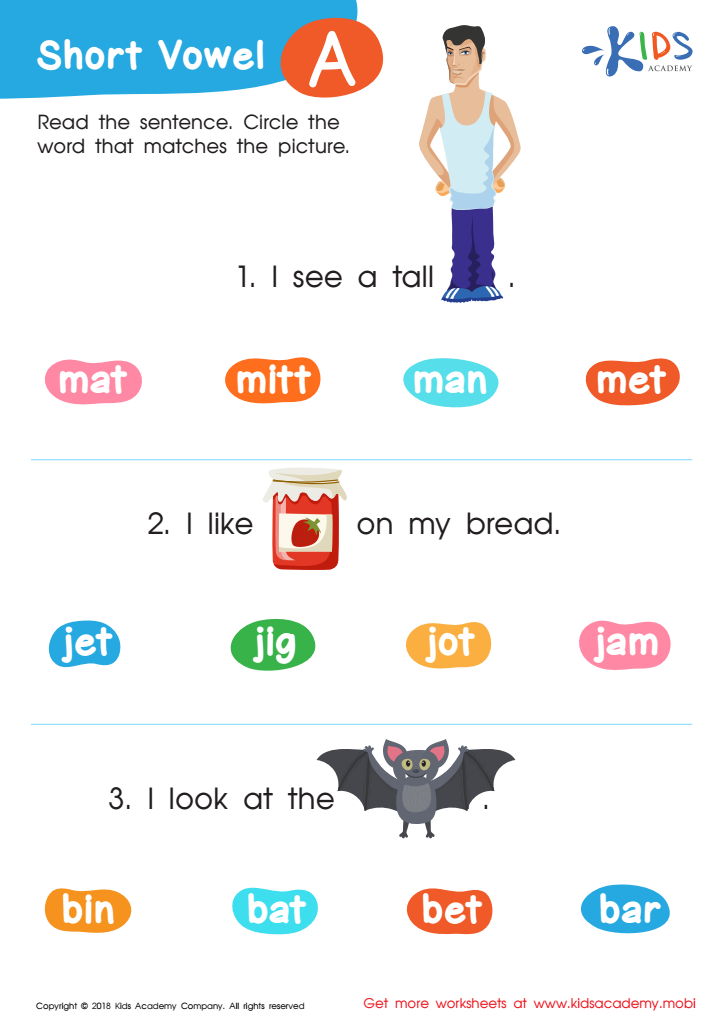
Short Vowel /a/ Worksheet
This free PDF helps new readers use sight words and pictures to read basic sentences. Then, they use accompanying word choices to find the correct word with the short a vowel sound. A key early reading skill, discriminating between short vowel sounds can be tricky in monosyllabic words, so use this PDF to help your reader reinforce it.
 Assign to My Students
Short Vowel /a/ Worksheet
Worksheet
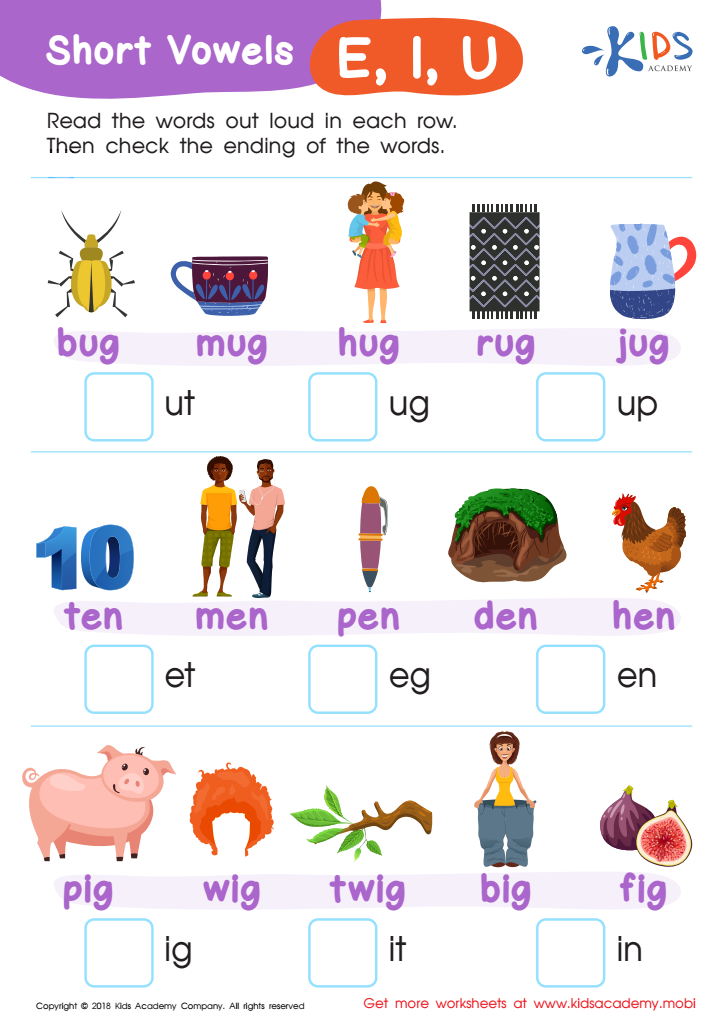
Short Vowels /e/, /i/, and /u/ Worksheet
Your emergent reader can have fun while practicing their short vowel sounds with this free, brightly colored worksheet. They'll identify one-syllable words by their pictures, then match the correct ending for each. They'll gain an understanding of how short vowel sounds vary in closed syllables with different endings, without even realizing it!
Short Vowels /e/, /i/, and /u/ Worksheet
Worksheet
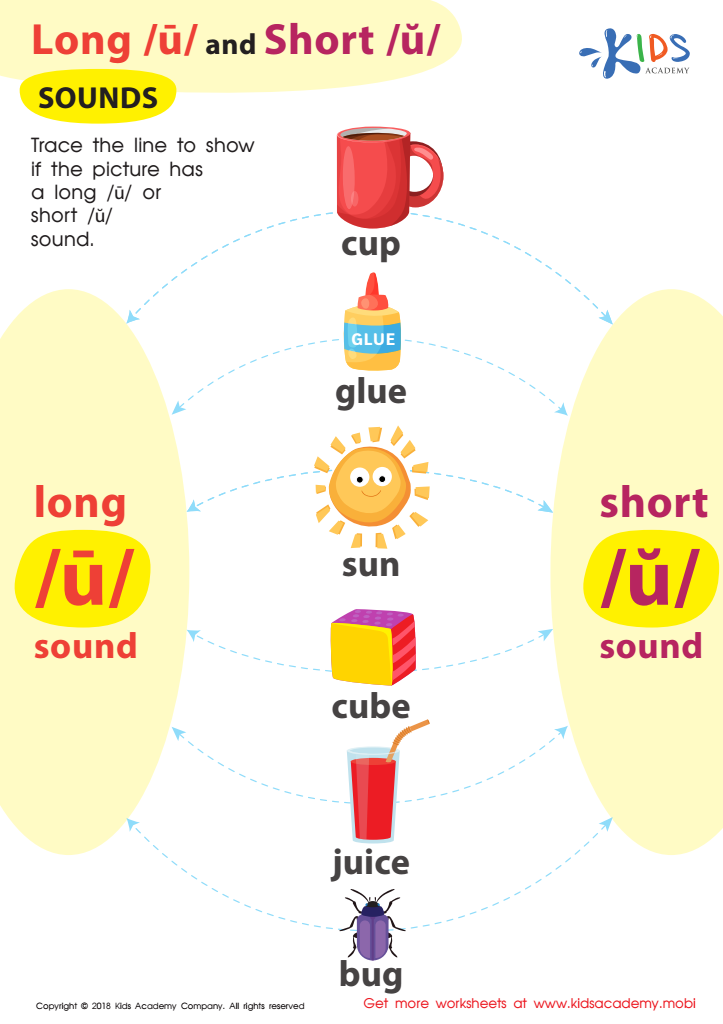
Reading: Long U and Short U Sounds Worksheet
Learning about long and short vowel sounds can be tricky, especially with the letter U. Extra practice with this worksheet is recommended for mastering this sound. Children read words with the different vowel sounds and categorize them. Great for instruction, practice and reteaching in reading classes.
Reading: Long U and Short U Sounds Worksheet
Worksheet
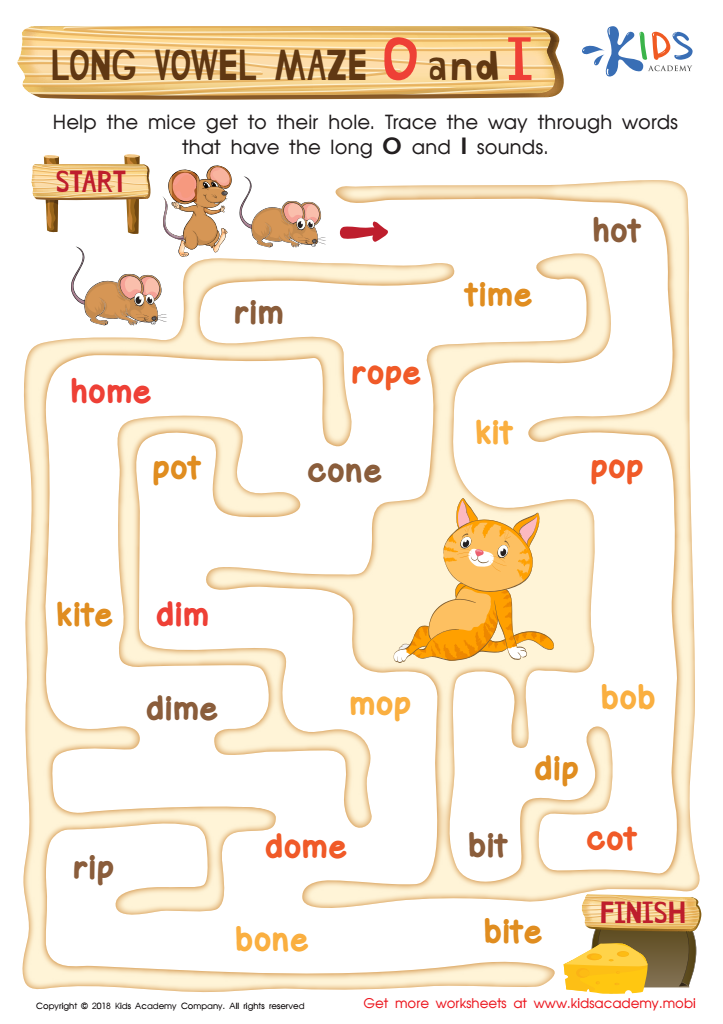
Long Vowel Maze /o/ and /i/ Worksheet
Help your new readers have fun and build their sight word vocabulary! Guide the mice to their prize cheese by having them trace the route on the worksheet, using words with the long o and long i sounds. But watch out for the kitty!
Long Vowel Maze /o/ and /i/ Worksheet
Worksheet
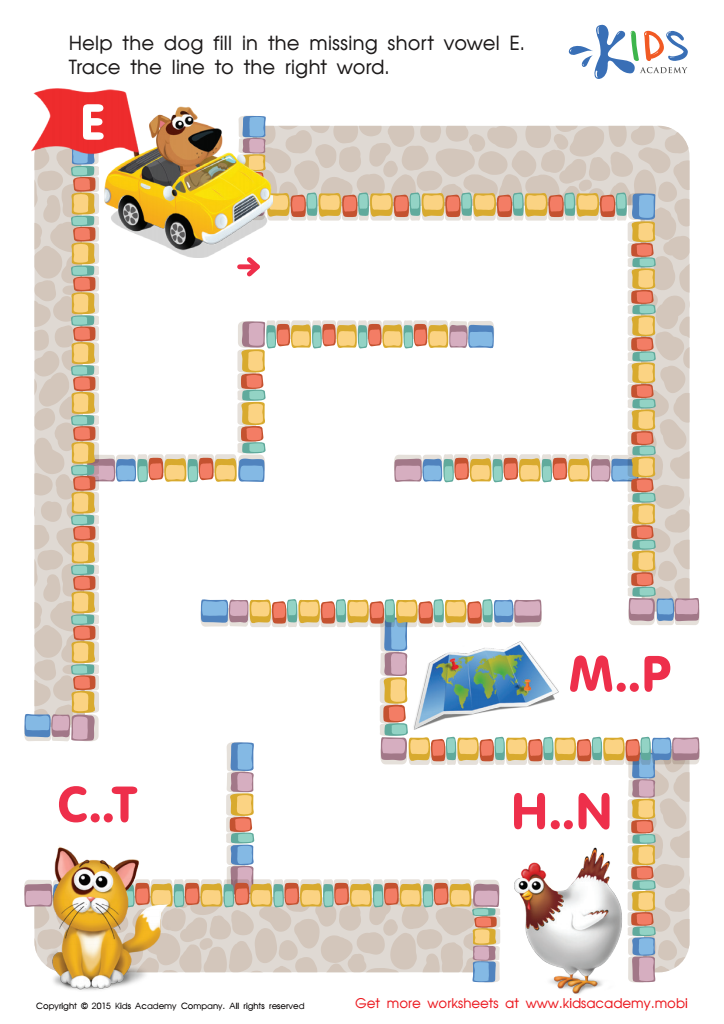
Short Vowel Sound E Worksheet
This free printable phonics worksheet helps kids learn the short vowel sound E. Kids need to help the dog complete the word “hen” by finding their way through a maze. It teaches kids to see the connection between letters and sounds and also strengthens their writing and spelling skills. Fun and educational, this phonics worksheet is great for kids. Want more? Check out here.
Short Vowel Sound E Worksheet
Worksheet
Join Kids Academy for Free
Who is primarily going to use this learning content?








Vowel recognition and letter recognition are foundational skills essential for early literacy development in children aged 5-9. Understanding vowels and letter identities lays the groundwork for reading and writing proficiency. Vowels are critical as they are integral to word formation; without them, children struggle to decode and spell. Recognizing letters, both in isolation and within words, fosters phonemic awareness, enabling children to sound out unfamiliar words and build their reading muscles.
For parents and teachers, nurturing these skills encourages a love for literacy and sets a positive trajectory for future academic success. Mastery in vowel and letter recognition facilitates smoother transitions into more complex language structures, impacting overall comprehension and communication skills.
Furthermore, strong literacy skills are correlated with confidence and academic motivation, which ripple into broader learning experiences. Awareness of letters and vowels aids memory recall, influences vocabulary development, and supports critical thinking. By prioritizing these skills for children aged 5-9, adults foster an environment where children can explore language creatively and intellectually, ultimately equipping them with the necessary tools to thrive in their educational journey and beyond. Thus, investing time and resources into teaching vowel and letter recognition can yield profound long-term benefits.







