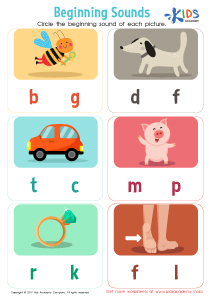
Rhyming skills development Rhyming Worksheets for Ages 5-9
4 filtered results
-
From - To
Boost your child's rhyming skills with our engaging rhyming worksheets, designed for ages 5-9. Developed with educational experts, these printable worksheets focus on identifying, matching, and creating rhymes to enhance phonemic awareness and early reading skills. Perfect for preschoolers and first-time readers, our activities include vivid illustrations and interactive exercises that make learning fun and effective. Help your child master the basics of sound patterns, improve vocabulary, and lay a strong foundation for future literacy success. Explore our collection and support your child's love for reading and poetry today!
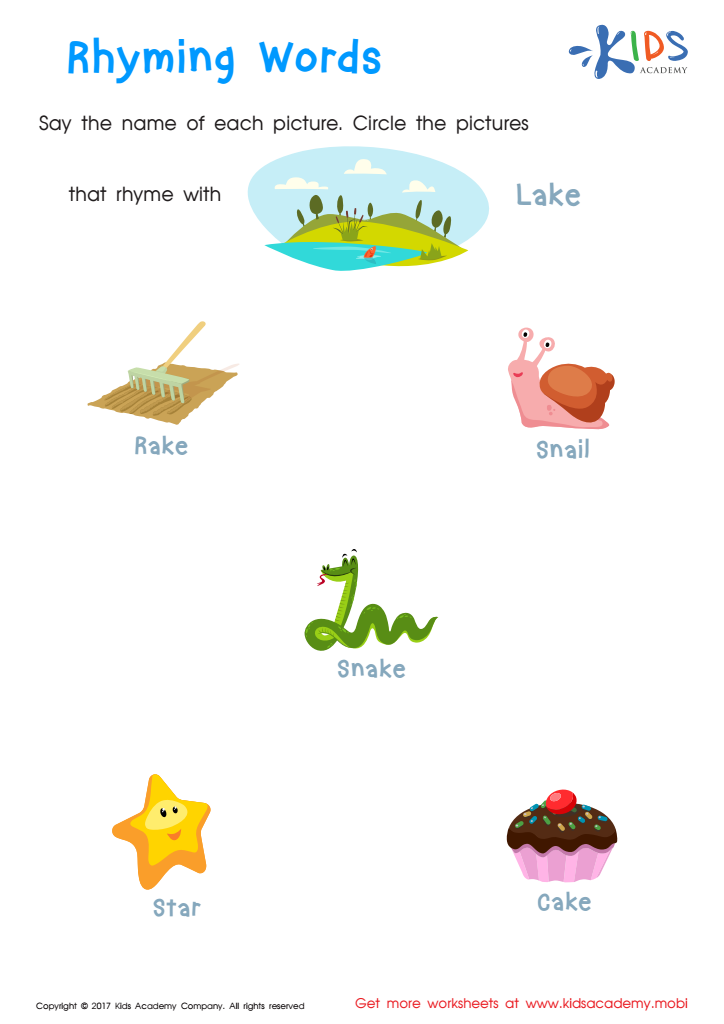
Rhyming Words Rhyming Worksheet
 Assign to My Students
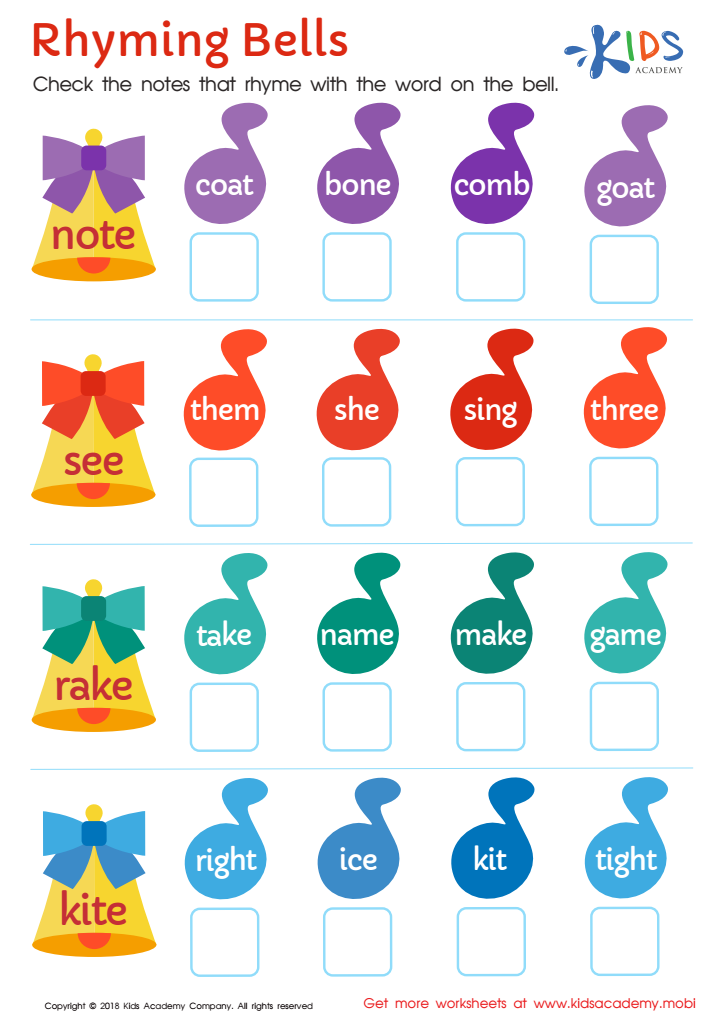
Rhyming Bells Worksheet
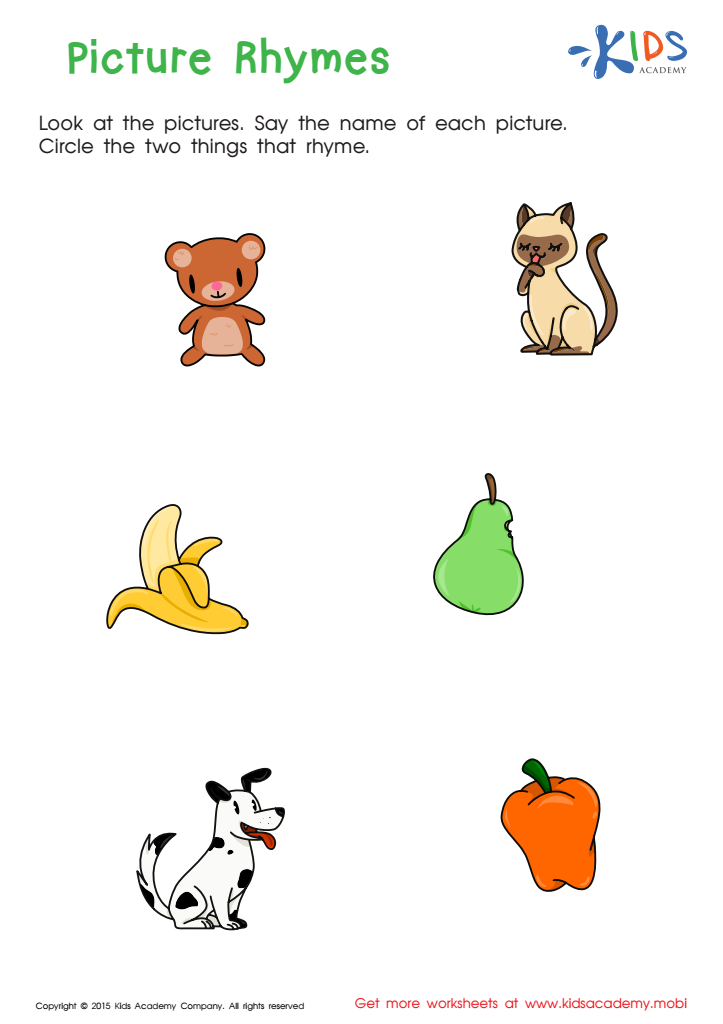
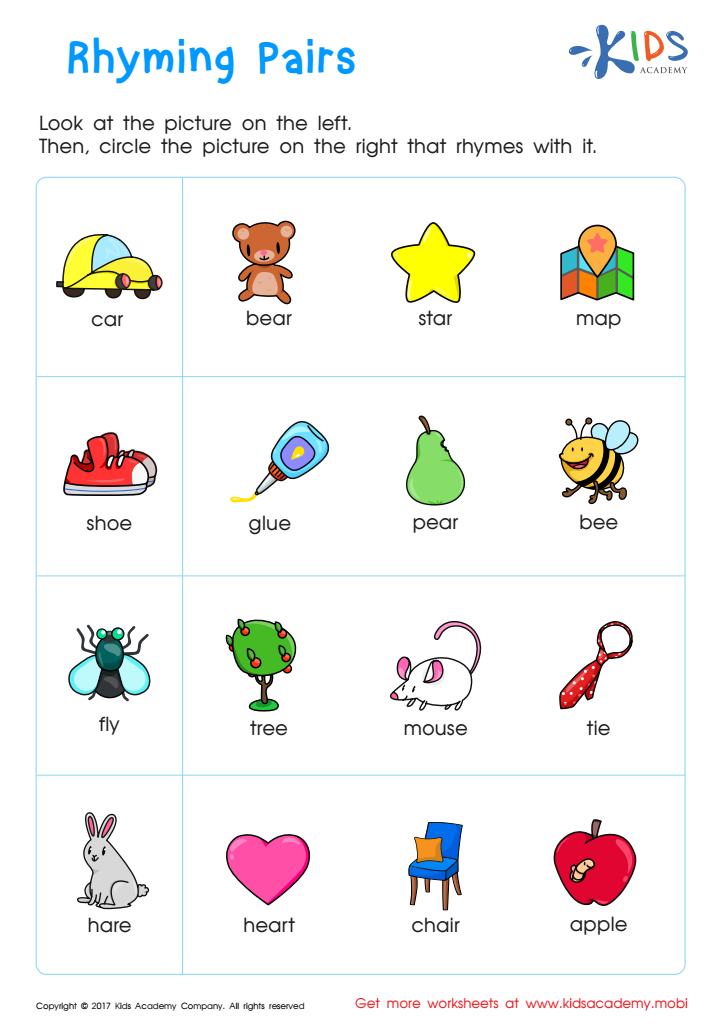
First Words: Picture Rhymes Worksheet








Parents and teachers should prioritize the development of rhyming skills in children aged 5-9 as it's foundational for literacy and language acquisition. Rhyming helps young learners recognize patterns in words, enhancing their understanding of phonemic awareness—the ability to hear, identify, and manipulate individual sounds in spoken words. This skill is crucial for decoding new words, which directly supports reading fluency.
Moreover, rhyming activities, such as reading rhyming books, singing nursery rhymes, and playing rhyming games, are engaging and fun. They build a child's vocabulary by introducing them to an array of words and their sounds. Rhyming also aids in memory retention, as the musical quality of rhymes makes it easier for children to remember and recall information.
Socially, the collaborative nature of rhyming games and activities encourages interaction, communication, and the development of social skills. Furthermore, rhymes often convey stories and cultural traditions, introducing children to different narratives and moral lessons.
Finally, strong rhyming skills help boost a child's confidence in both speaking and reading, laying a robust foundation for more advanced literacy and academic pursuits. Therefore, integrating rhyming into early childhood education is pivotal for holistic language development and future learning success.