Letter recognition Tracing Letters Worksheets for Ages 5-9 - Page 2
26 filtered results
-
From - To
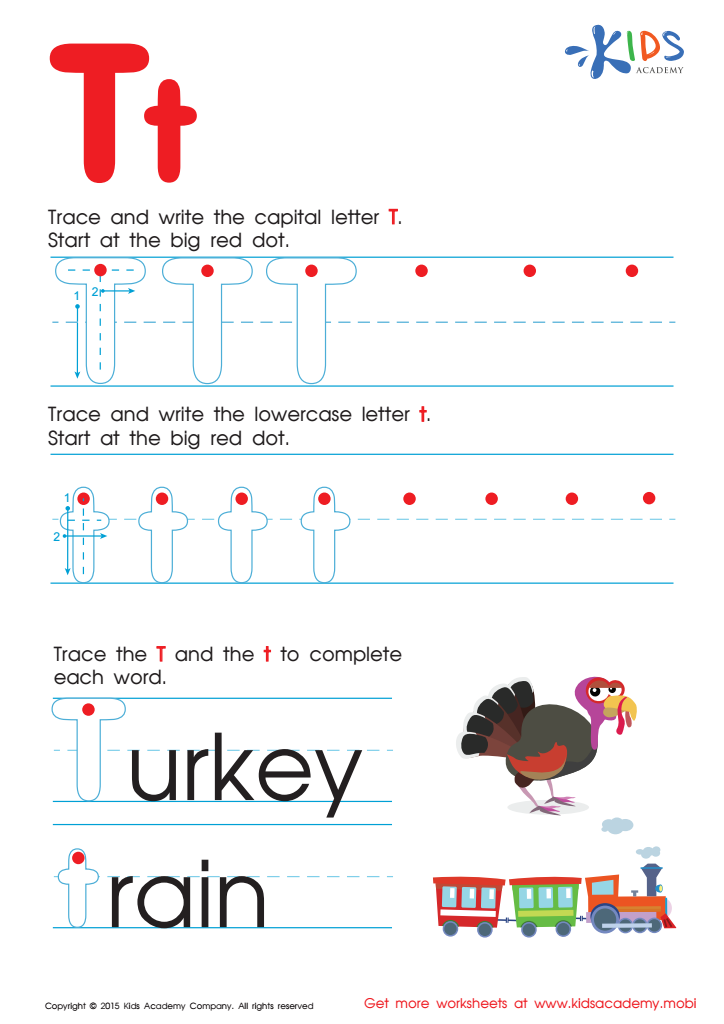
Letter T Tracing Page
 Assign to My Students
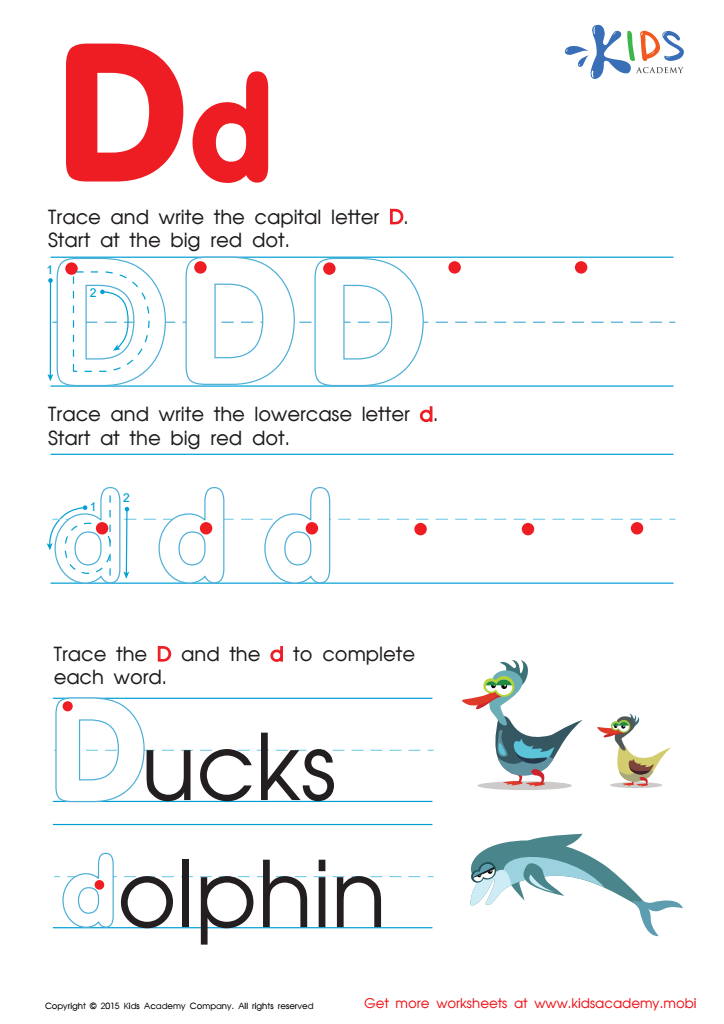
Letter D Tracing Page








Letter recognition and tracing activities are fundamental components in the early literacy development of children aged 5-9 years. Learning to recognize and write letters fluently supports not just reading and writing skills but also broader educational achievement. When children are able to identify individual letters confidently, they can begin to understand letter-sound relationships, an essential step in phonics and reading proficiency.
Tracing letters helps to solidify hand-eye coordination and fine motor skills, which are critical for writing fluency and legibility. Consistently practicing these skills enables children to develop muscle memory, making writing a more automatic and less frustrating task. This foundation is crucial because early literacy skills are strong predictors of future academic success.
Additionally, the process of tracing and recognizing letters can build a child's confidence and enthusiasm for learning. It makes the activities more engaging and interactive, transforming what could be a monotonous task into a fun and rewarding experience.
Moreover, structured tracing exercises ensure that children learn the correct form and technique from the start, preventing the development of poor writing habits that can be difficult to unlearn. Therefore, investing time in letter recognition and tracing activities sets children on a path toward academic success and a lifelong love for reading and writing.








