Uppercase identification Upper & Lowercase Letters Worksheets for Ages 5-9
5 filtered results
-
From - To
Discover engaging Uppercase and Lowercase Letters Worksheets designed for children aged 5-9! These fun and interactive resources help young learners master uppercase letter identification through a variety of activities. Each worksheet promotes recognition, reinforcing essential literacy skills in a playful manner. Ideal for classroom settings or home learning, our collection enhances reading readiness, fine motor development, and letter awareness. With vibrant visuals and age-appropriate challenges, these worksheets turn learning into an enjoyable experience. Help your child build a strong foundation in the alphabet with our thoughtfully crafted materials, designed to support early literacy and confidence in reading. Explore our dedicated resources today!
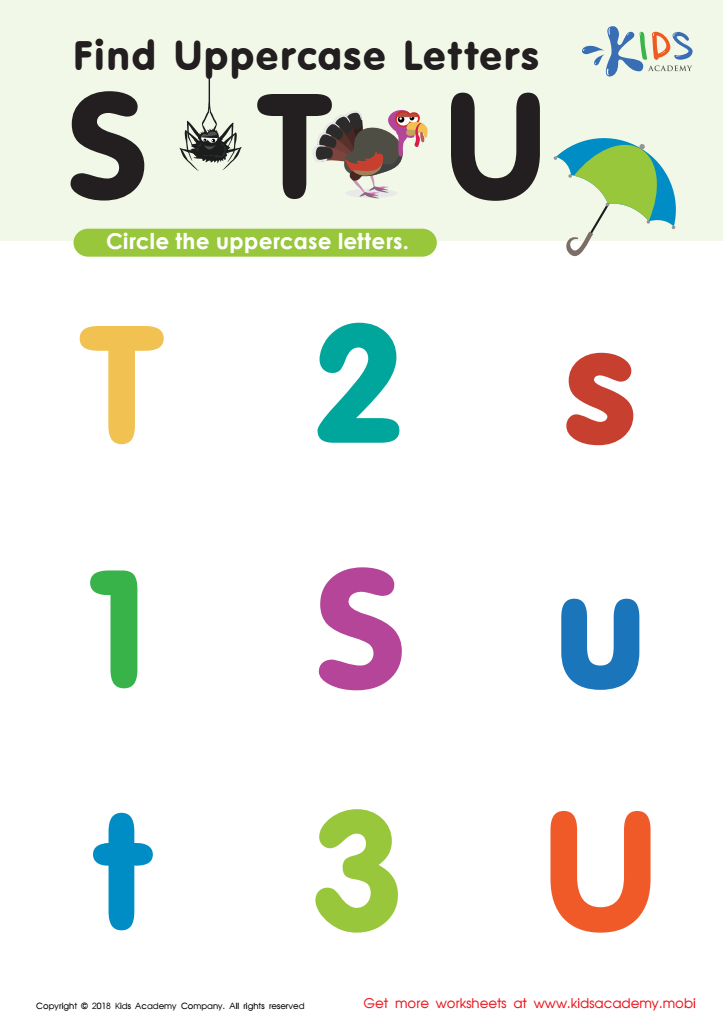
Find Uppercase Letters Worksheet
 Assign to My Students

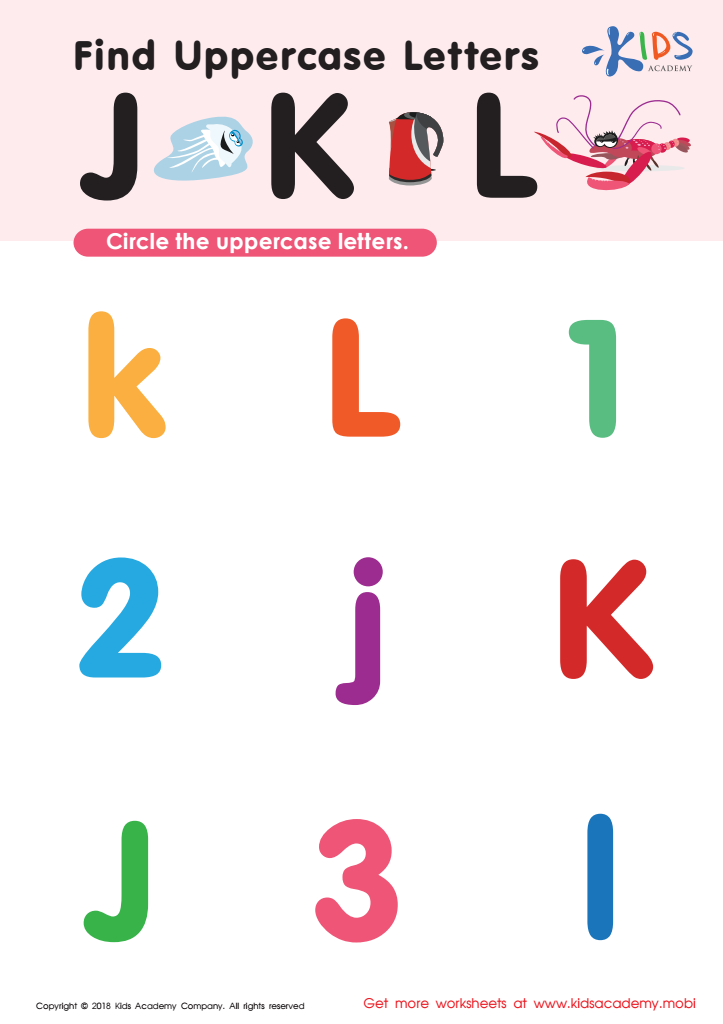
Find Uppercase Letters J, K, and L Worksheet

Find Uppercase Letters A, B, and C Worksheet
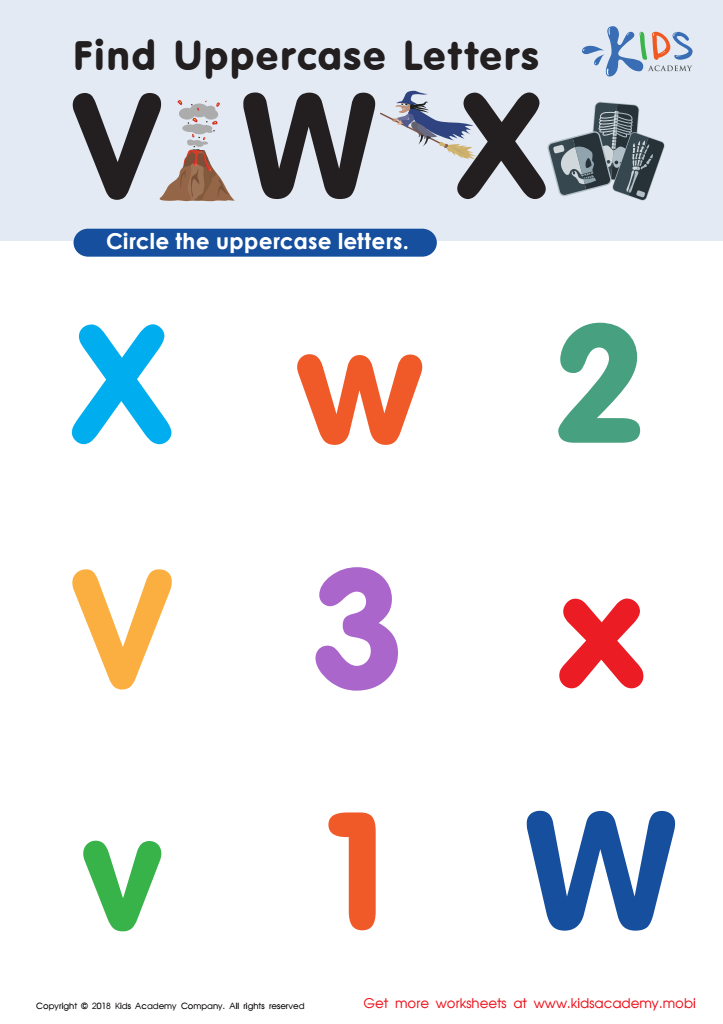
Find Uppercase Letters V, W, X Worksheet
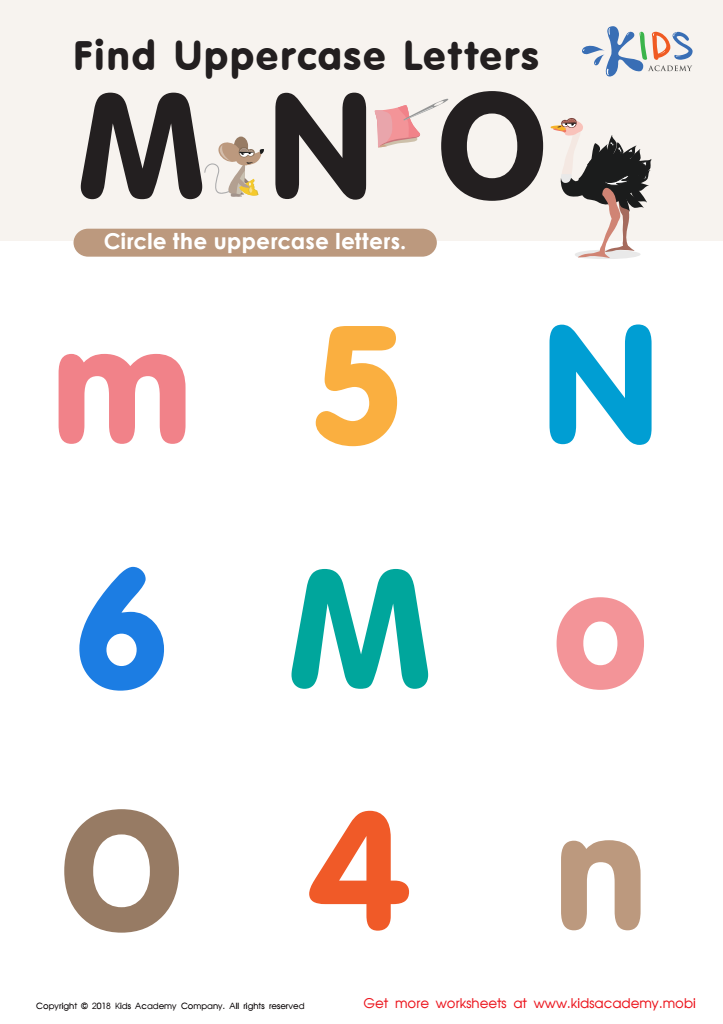
Find Uppercase Letters M, N, and O Worksheet






Understanding uppercase and lowercase letters is crucial for children aged 5-9, as it forms the foundation for literacy development. Parents and teachers should prioritize uppercase and lowercase letter identification for several reasons.
Firstly, mastery of these letters enhances reading skills. Children learn that uppercase letters typically mark the beginning of sentences and the names of people and places, fostering comprehension. Recognizing lowercase letters, which make up the majority of text, is essential for fluent reading.
Secondly, familiarizing children with both forms of letters supports writing skills. When children can identify and use uppercase letters correctly, such as in their names or at the start of sentences, they develop a sense of structure and organization in their writing.
Additionally, understanding the difference between uppercase and lowercase fosters phonics awareness. Children begin to see connections between letters and sounds, laying the groundwork for spelling and decoding words.
Finally, helping children identify and differentiate letters builds their confidence and self-esteem. Recognizing progress in literacy can empower them both academically and socially, leading to a lifelong love of reading and writing. Ultimately, parents and teachers play a vital role in nurturing these essential skills during early childhood development.







