Visual discrimination Upper & Lowercase Letters Worksheets for Ages 5-9
4 filtered results
-
From - To
Enhance your child's literacy skills with our engaging Visual Discrimination Upper & Lowercase Letters Worksheets, designed specifically for ages 5-9! These worksheets will help young learners differentiate between uppercase and lowercase letters, a crucial step in their reading development. Through fun activities and exercises, children will sharpen their visual perception and recognition skills while enjoying colorful illustrations and interactive challenges. Ideal for home or classroom use, our printable worksheets promote focus and enhance cognitive abilities. Support your child's journey to confident reading and writing with these specially crafted resources that make learning enjoyable and effective! Start their adventure in literacy today!
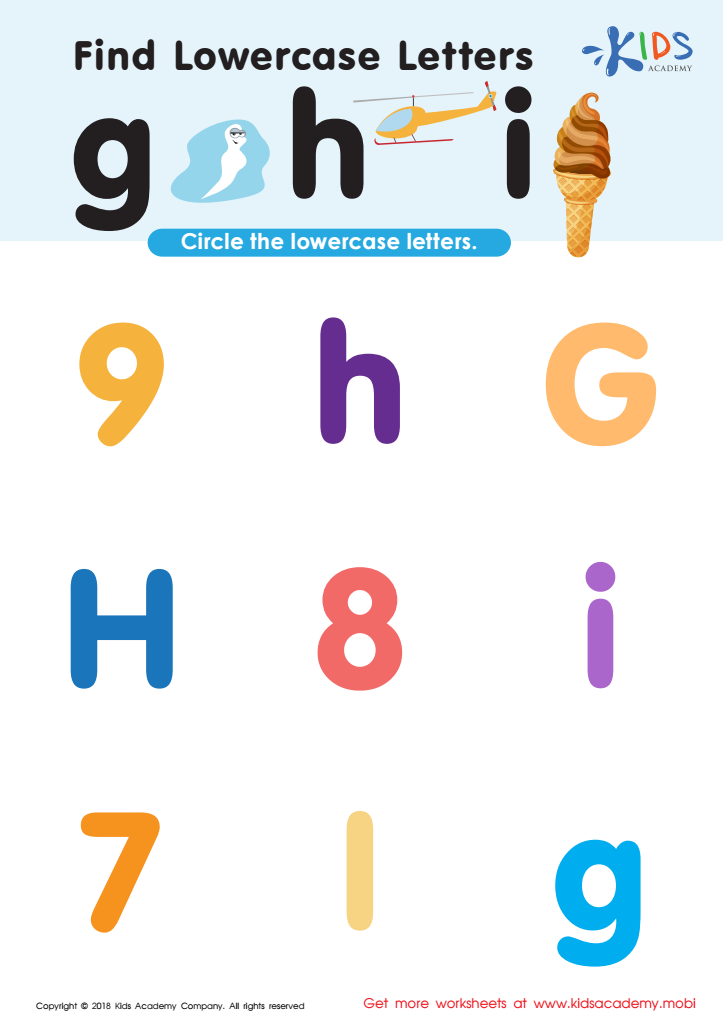
Find Lowercase Letters g h i Worksheet
 Assign to My Students

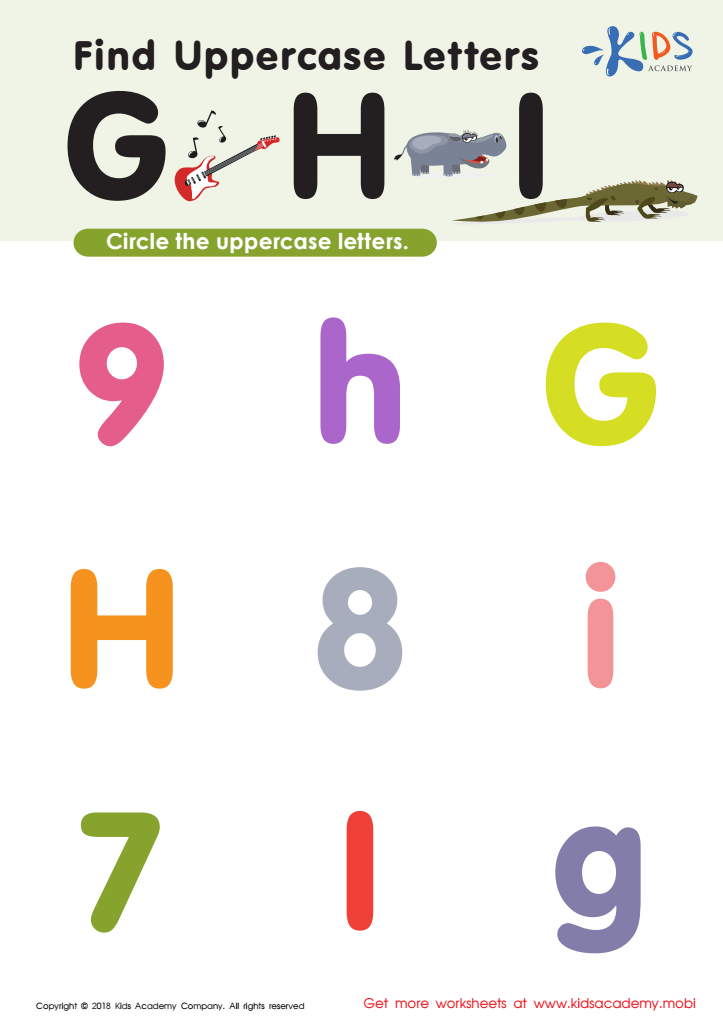
Find Uppercase Letters G, H, and I Worksheet
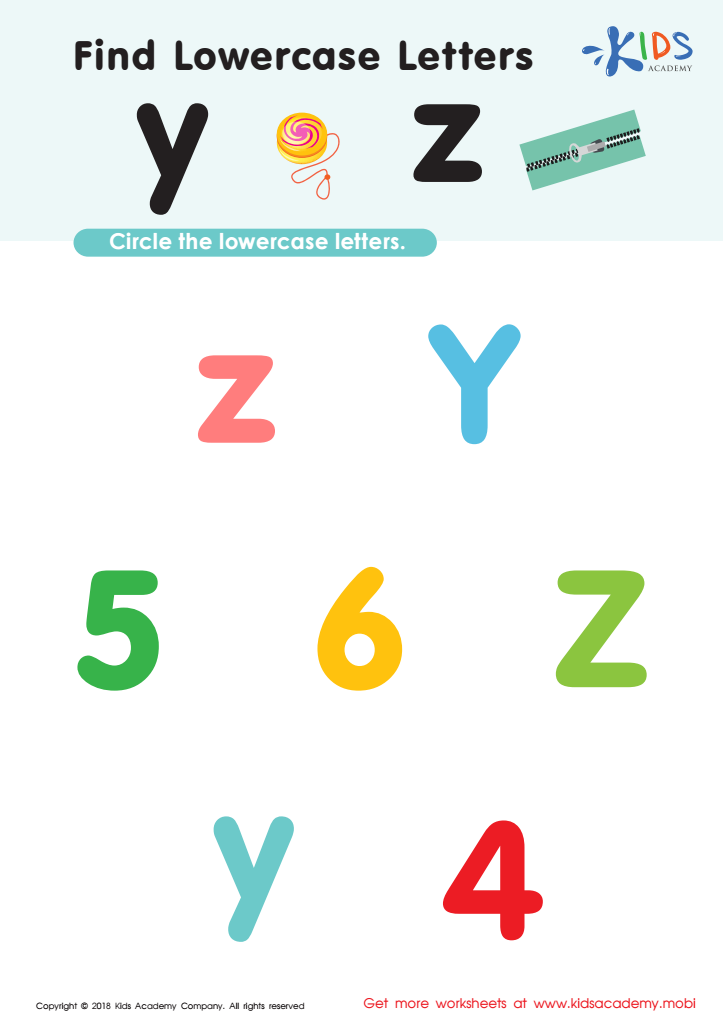
Find Lowercase Letters y z Worksheet
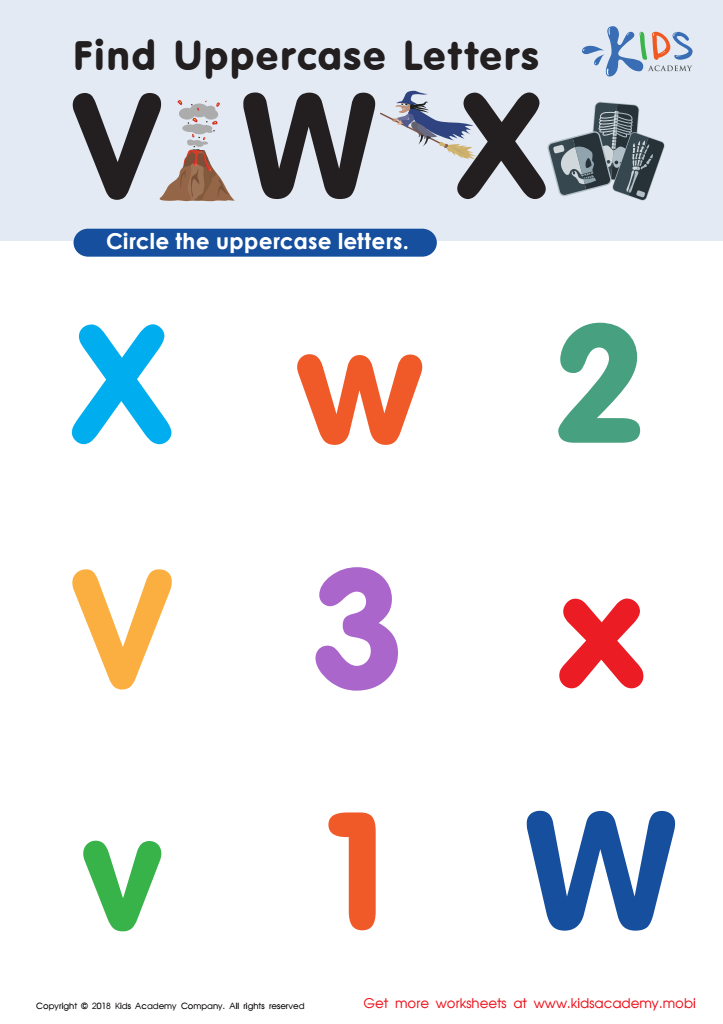
Find Uppercase Letters V, W, X Worksheet






Visual discrimination of upper and lowercase letters is crucial for children aged 5-9 because it forms the foundation for literacy development. At this age, children are learning to read and write, making the ability to distinguish between letters not just helpful but essential. Recognizing differences in shape and size, such as a capital “B” versus a lowercase “b,” is vital for spelling and comprehension.
Parents and teachers should care about reinforcing this skill as it directly impacts literacy success; difficulty with visual discrimination often leads to challenges in reading fluency and writing accuracy. Promoting these skills can enhance a child’s confidence and enthusiasm towards learning.
Additionally, using various engaging activities—such as letter sorting games or engaging worksheets—can make learning enjoyable and foster a supportive environment. By ensuring children develop strong visual discrimination skills, adults enable them to build critical literacy competencies early on, paving the way for future academic achievement. Understanding these skills' importance lays the groundwork for effective communication and cognitive development, key attributes necessary in today's information-rich world. Therefore, prioritizing these activities becomes a fundamental part of nurturing eager, capable learners ready to tackle more complex literacy challenges.







