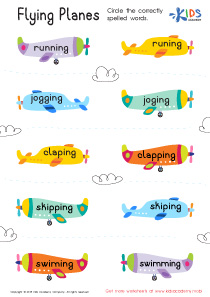
Sound Association Vowels Worksheets for Ages 5-9
3 filtered results
-
From - To
Discover our engaging Sound Association Vowels Worksheets designed specifically for children aged 5-9. These interactive resources help young learners connect vowel sounds with words, enhancing their phonemic awareness and boosting language skills. With vibrant illustrations and fun activities, kids will enjoy practicing vowel sound recognition and improving their reading abilities. Each worksheet is crafted to promote critical thinking and aid in retention, making learning enjoyable and effective. Ideal for homeschooling or classroom settings, these worksheets are perfect for any teacher’s toolkit. Support your child’s literacy journey today with our comprehensive sound association materials! Download now and watch their confidence grow!
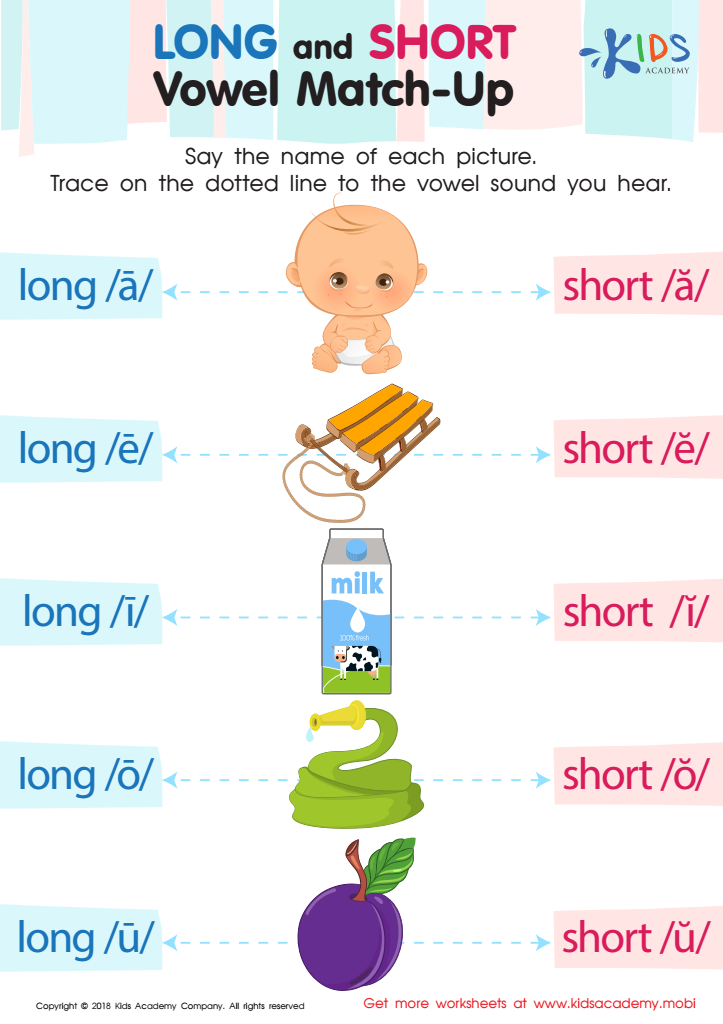
Long and Short Vowel Match up Reading Worksheet
 Assign to My Students
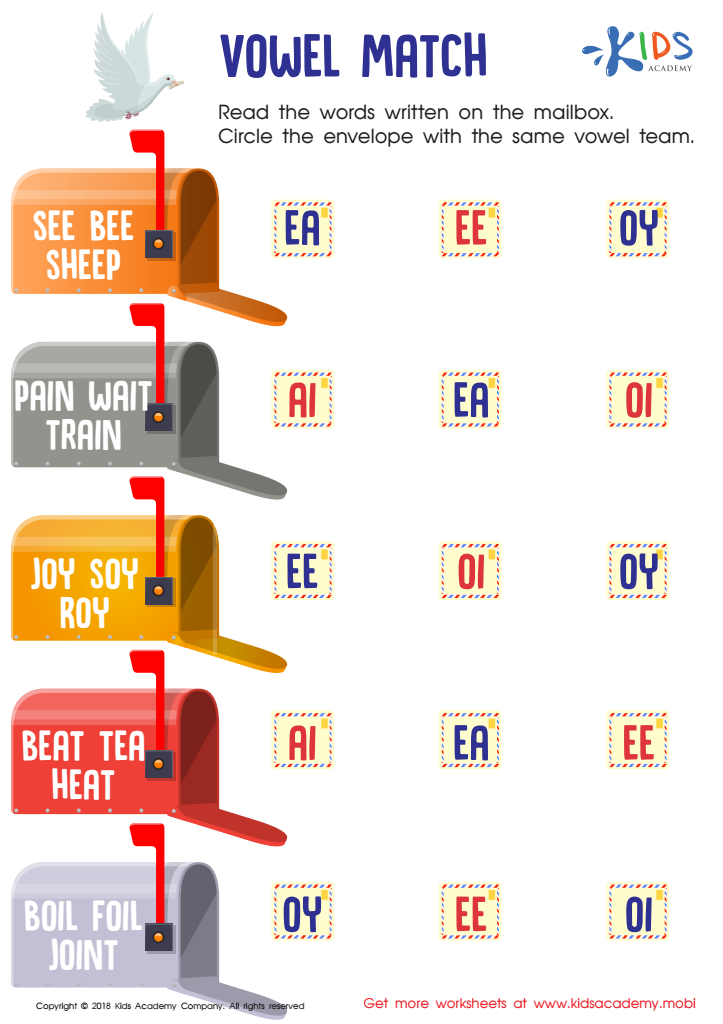
Vowel match Worksheet
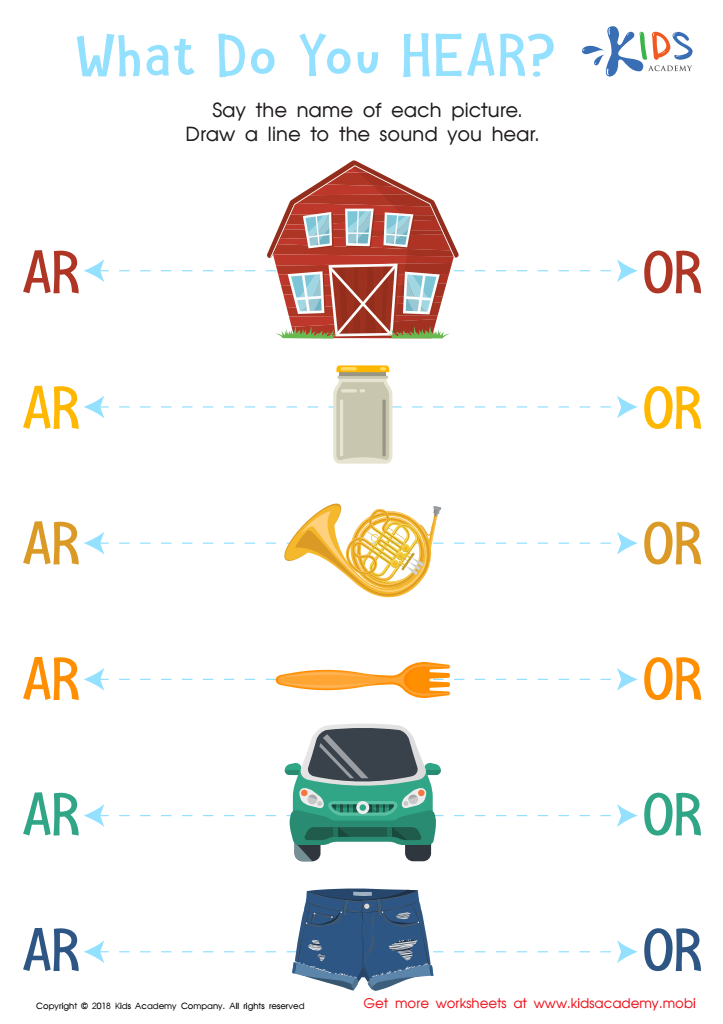
What do you hear Worksheet





Sound association with vowels is crucial for children aged 5-9 as it forms the foundation for early literacy skills. At this stage, children are beginning to understand the relationship between sounds and letters, which is essential for both reading and writing. Vowel sounds are particularly important because they are integral to word formation; understanding how vowels function helps children decode and blend sounds to form words.
Recognizing vowel sounds aids in phonemic awareness, influencing spelling and pronunciation. When children learn to associate sounds with corresponding vowel letters, they become more confident in sounding out unfamiliar words. This skill is vital as they transition from learning to read to reading to learn.
Furthermore, focusing on sound associations during these formative years can significantly benefit language acquisition and comprehension skills, supporting overall academic success. Parents and teachers should prioritize activities that reinforce these concepts, such as phonics games, rhymes, and songs. Engaging children in this way not only promotes literacy but also fosters a love for reading, setting a strong educational foundation that will benefit them throughout their academic journey. By supporting sound association with vowels, educators and caregivers empower children to become proficient, enthusiastic readers.