Phonics Skills English for Beginners Worksheets for Ages 5-9
3 filtered results
-
From - To
Discover our engaging "Phonics Skills English for Beginners Worksheets," designed specifically for ages 5-9. These interactive worksheets help young learners grasp the fundamental building blocks of reading and writing in English. Each activity focuses on phonemic awareness, letter-sound correspondence, and blending sounds to form words, making learning both fun and effective. Tailored for children who are new to the language, these resources offer vibrant illustrations and age-appropriate exercises that capture attention and foster a love for learning. Enhance your child’s phonics skills today and set them on the path to reading success! Perfect for teachers and parents alike.
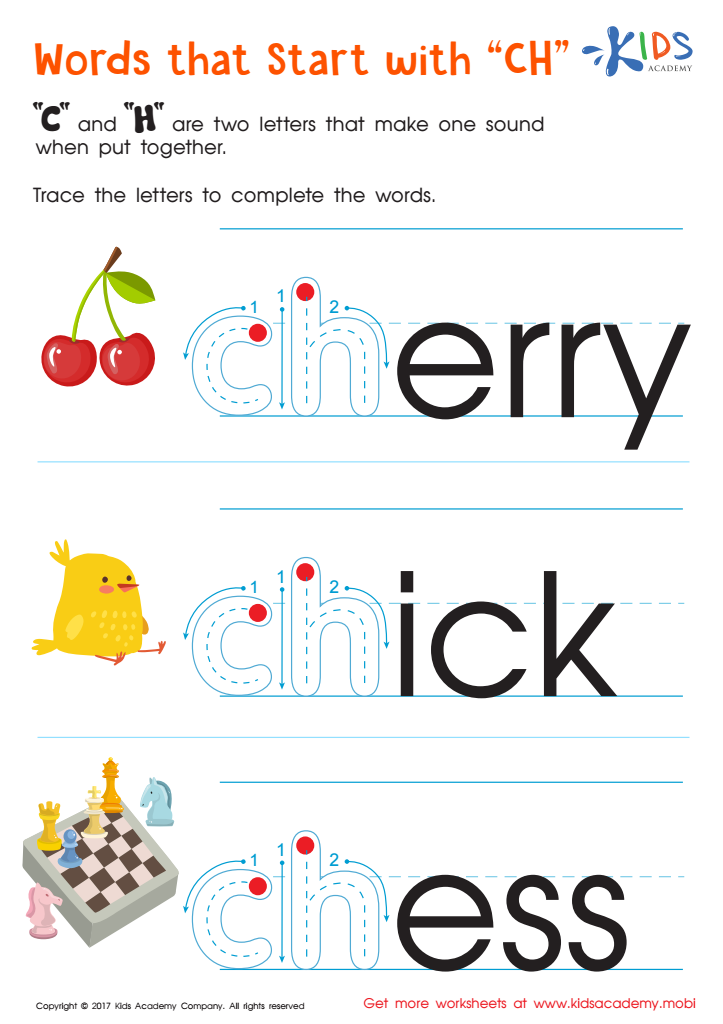
Words That Start with "ch" Spelling Worksheet
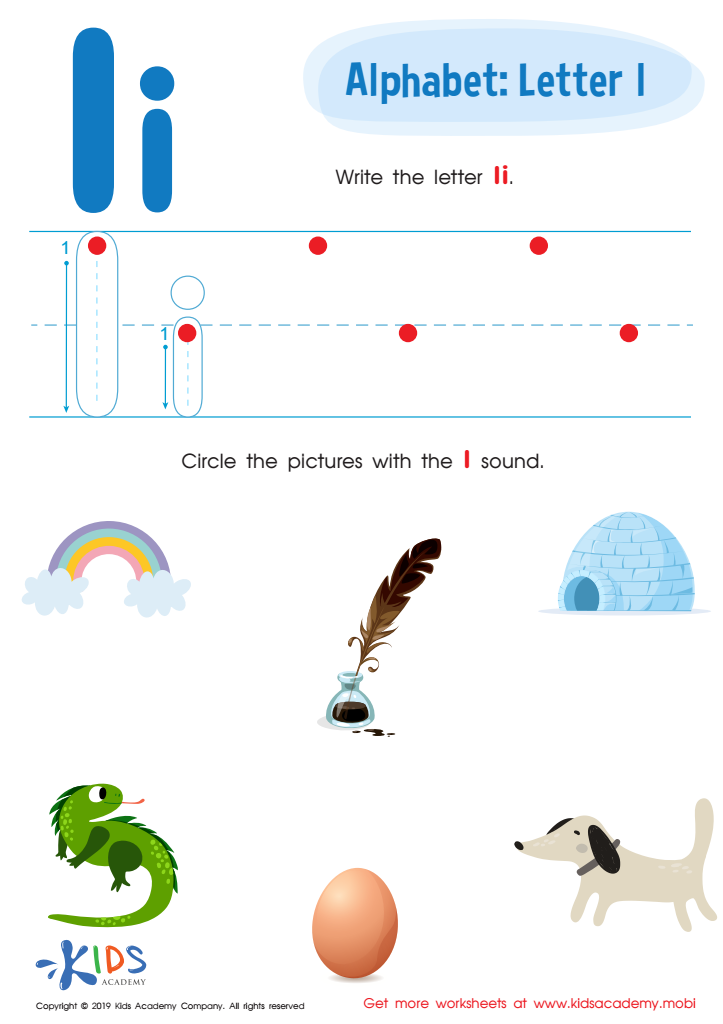
Letter I Tracing Worksheet
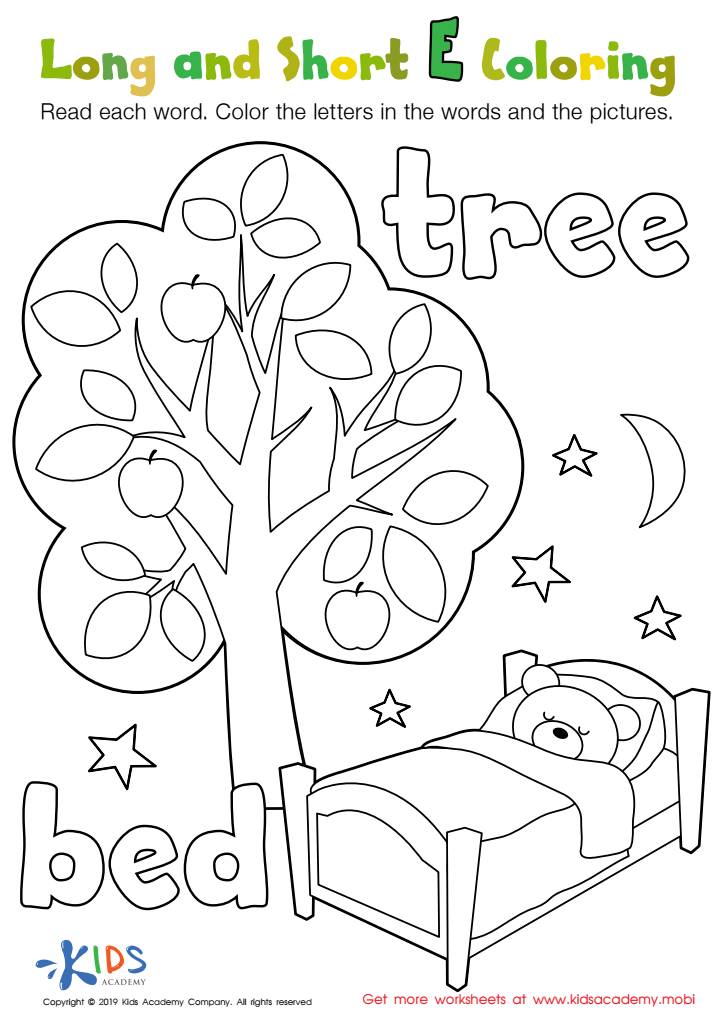
Long and Short E Worksheet
 Assign to My Students





Phonics skills are fundamental to reading and literacy development, making them crucial for parents and teachers working with children aged 5-9. Understanding phonics helps children decode words by linking sounds (phonemes) to letters (graphemes). This early reading skill not only builds confidence but also establishes a strong foundation for future learning.
When children grasp phonics, they can more readily decode unfamiliar words, facilitating independent reading. This enhances their vocabulary, comprehension, and overall language skills, all of which are essential for academic success. Furthermore, early phonics instruction nurtures a love for reading, a vital component in lifelong learning and cognitive development.
Parents and teachers should also recognize that phonics education promotes effective learning strategies. By introducing systematic phonics instruction, children learn to approach reading and writing with joy and enthusiasm. Teachers can use engaging methods, such as songs, games, and interactive activities, to captivate young learners’ attention.
Ultimately, by prioritizing phonics skills, parents and teachers equip children with the tools they need for effective communication, critical thinking, and a lifelong love of reading. This foundation sets the stage for academic achievement and personal growth, making it an essential focus in early education.