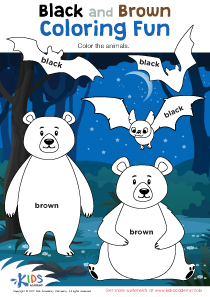
Reading comprehension Vocabulary Coloring Pages Worksheets for Ages 5-9
4 filtered results
Difficulty Level
Grade
Age
-
From - To
Subject
Activity
Standards
Enhance your child's reading comprehension skills with our engaging vocabulary coloring pages, specially designed for ages 5-9! These worksheets seamlessly blend learning and creativity, giving young learners the opportunity to explore new words while expressing themselves artistically. Each coloring page focuses on key vocabulary relevant to their reading level, ensuring they can connect meaning to visuals. With easy-to-follow instructions and fun activities, children will develop essential skills in a playful manner. Perfect for home or classroom use, our vocabulary coloring pages foster a love for learning while boosting confidence in reading. Download these vibrant worksheets today and watch your child's vocabulary thrive!
Favorites
With answer key
Interactive
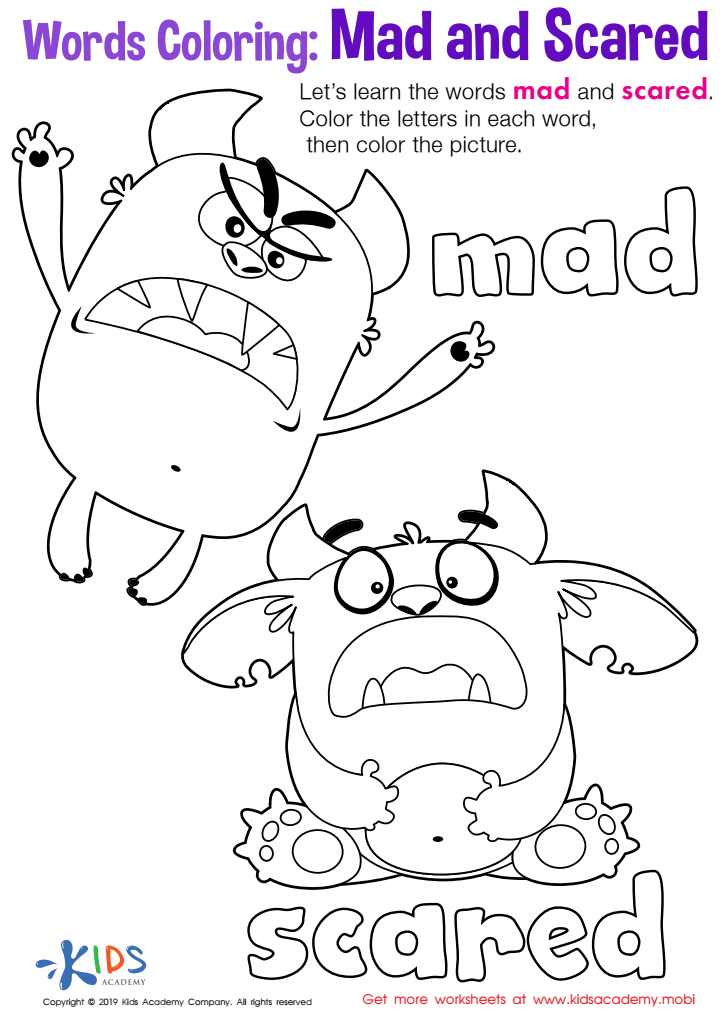
Mad and Scared Words Coloring Worksheet
This worksheet teaches "mad" and "scared" with fun monster pictures to color. Helping students learn by sight, it encourages sharing what makes them feel those strong emotions. Perfect for social studies, it expands student's vocabulary in an entertaining way.
Download (PDF)
 Assign to My Students
Assign to My Students
Mad and Scared Words Coloring Worksheet
Worksheet
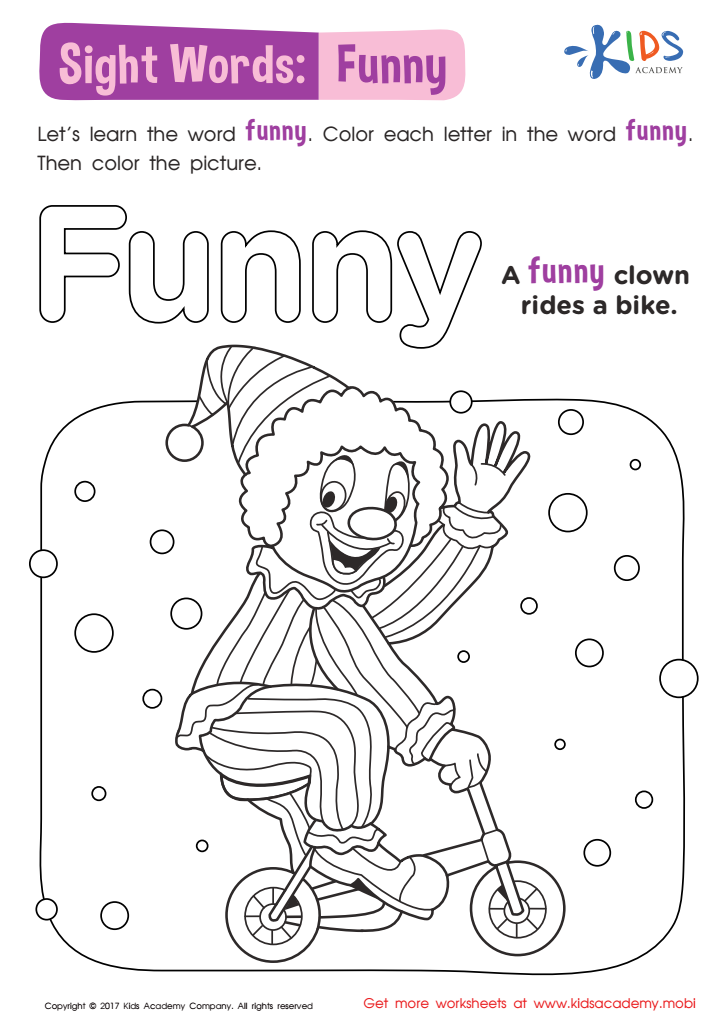
Funny Worksheet Sight Words Worksheet
Love humor? Introduce "funny" as a sight word with this fun worksheet! Have your child read the sentence then color the word in the center. Let them use their imagination to color the silly clown in any way they like!
Download (PDF)
Assign to My Students
Assign to My Students
Funny Worksheet Sight Words Worksheet
Worksheet
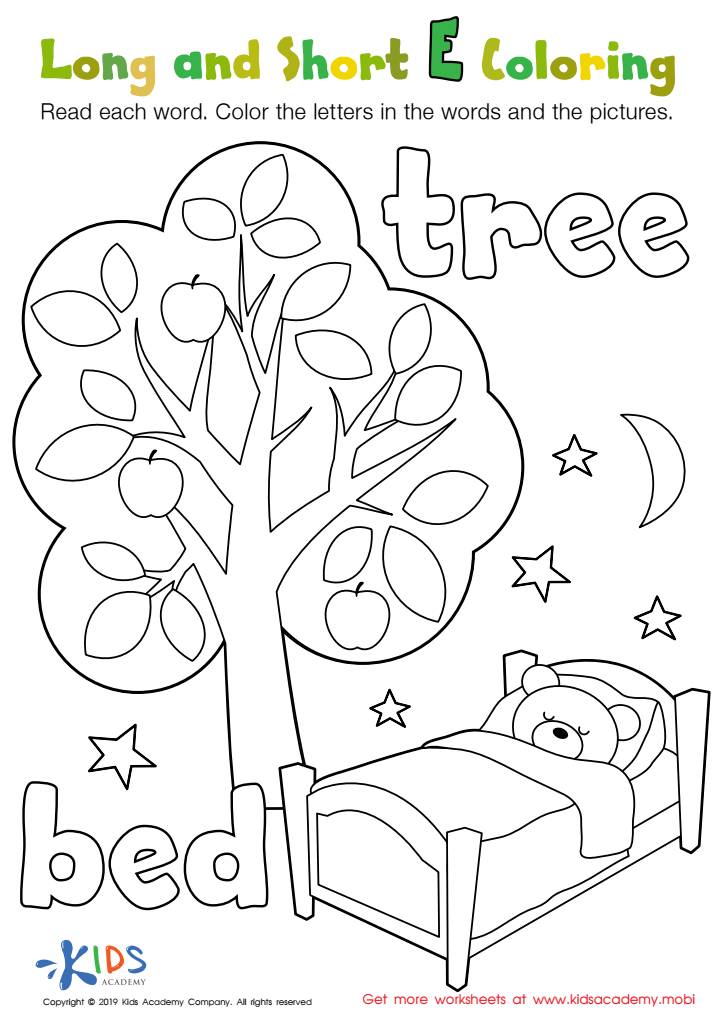
Long and Short E Worksheet
This fun printout makes learning phonics enjoyable for Grade 3 students. Get them to read the words “tree” and “bed” to recognize the different sounds of the letter “E”. After hearing the words they can color the words and the pictures to understand differences between long and short vowels.
Download (PDF)
Assign to My Students
Assign to My Students
Long and Short E Worksheet
Worksheet
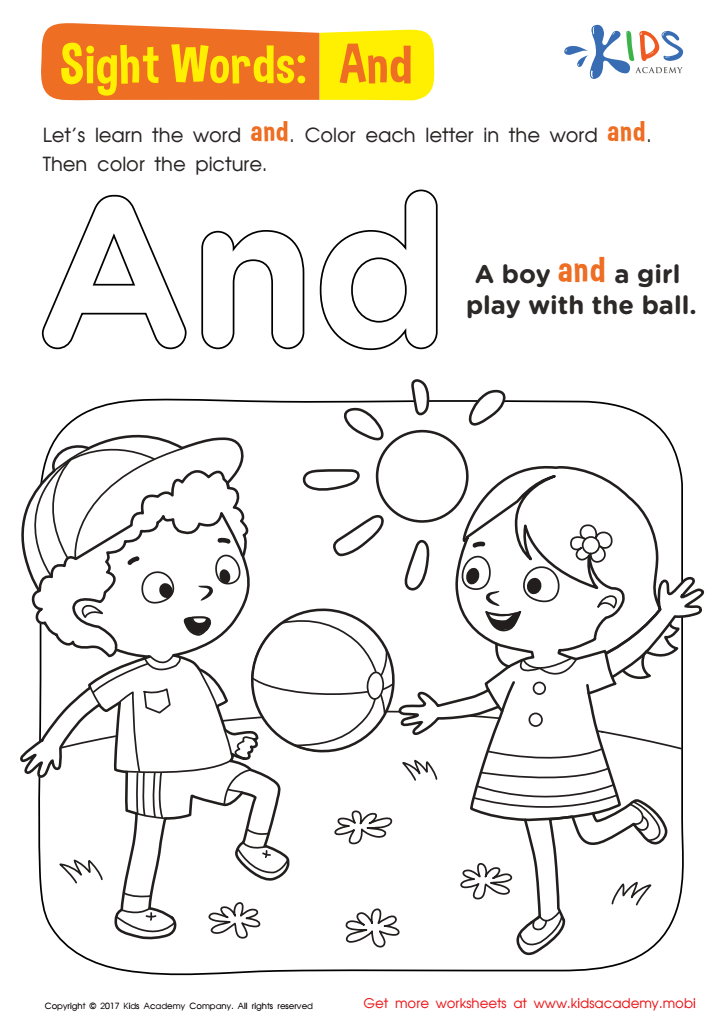
And Worksheet Sight Words Worksheet
Help your child get a jumpstart on reading with sight words! Print out this fun worksheet and get your child to read the sentence. Point out the word "and", then color the word and enjoy the rest of the scene! It's a great way to introduce sight words and get their early reading skills going!
Download (PDF)
Assign to My Students
Assign to My Students
And Worksheet Sight Words Worksheet
Worksheet
Join Kids Academy for Free
Who is primarily going to use this learning content?


Reading comprehension is crucial for a child's academic success and overall development, and integrating vocabulary coloring pages into the learning process serves as an engaging tool for young learners aged 5-9. First, these coloring pages help to enhance vocabulary acquisition in a fun and interactive way. By associating words with colorful images, children are more likely to understand and remember new terms.
Furthermore, coloring activities stimulate creativity and fine motor skills, which are essential for writing and other academic tasks. As they color and engage with the visuals, children begin to make connections between words and their meanings, reinforcing comprehension. This multi-sensory approach caters to different learning styles, making it accessible for diverse classrooms.
Moreover, these coloring pages can foster meaningful family interactions. They provide opportunities for parents to discuss new vocabulary and encourage the usage of words in sentences, thus reinforcing comprehension through dialogue, which can lead to improved language skills.
In summary, reading comprehension vocabulary coloring pages are a valuable educational tool that not only make learning enjoyable but also support cognitive and emotional development, helping young learners build a strong foundation in language and literacy. Teachers and parents should embrace this innovative approach to foster a love of learning.