Analog Clock Understanding Worksheets for Ages 5-9
3 filtered results
-
From - To
Discover our engaging Analog Clock Understanding Worksheets designed specifically for children aged 5-9! These interactive resources help young learners develop essential time-telling skills using analog clocks. With vibrant visuals and age-appropriate activities, your child will grasp concepts like telling time to the hour and half-hour, identifying clock hands, and understanding AM/PM distinctions. Our worksheets promote critical thinking as kids solve problems and complete fun exercises, making learning about time enjoyable and effective. Perfect for home or classroom use, these printables ensure children build a strong foundation in time management while fostering their confidence and independence. Start your journey to mastery today!
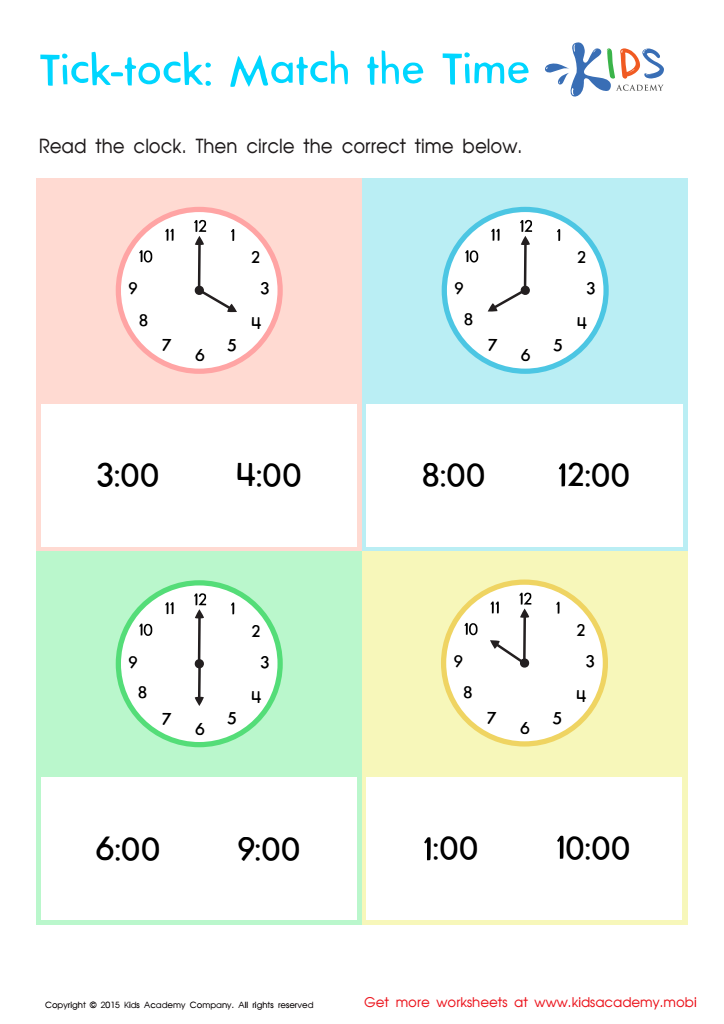
Telling The Time Worksheet: Part 4
 Assign to My Students
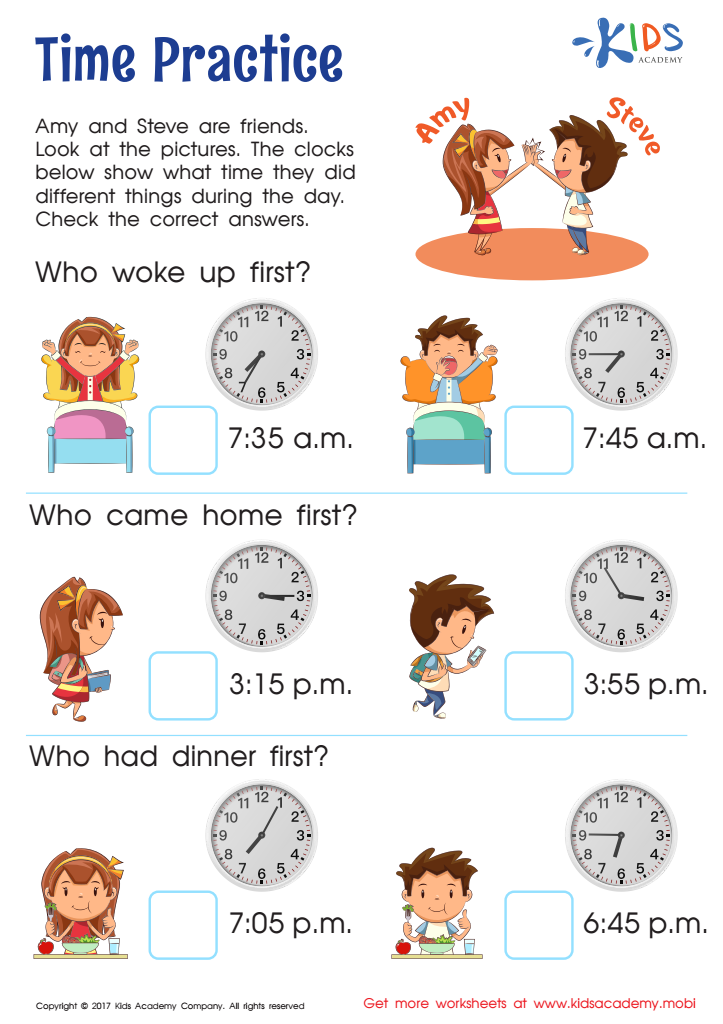
Time Practice Worksheet
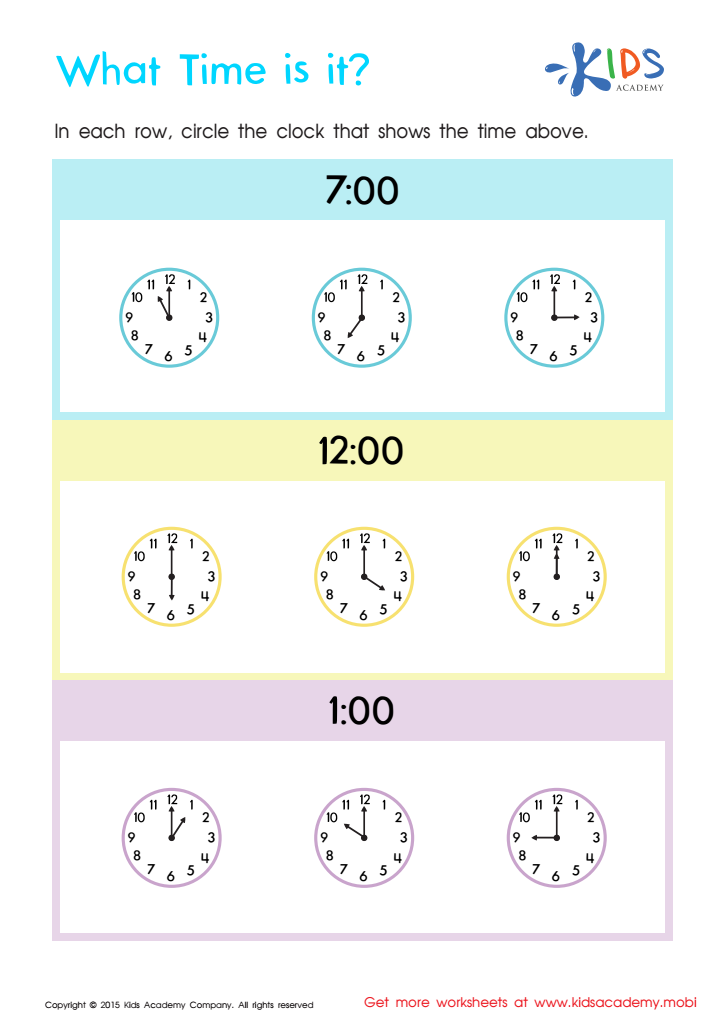
Telling The Time Worksheet: Part 3







Understanding analog clocks is an essential skill for children aged 5-9, and both parents and teachers should prioritize this learning. First, analog clocks provide a fundamental grasp of time concepts, helping children understand the division of time into hours and minutes. This foundational skill aids in developing time management abilities, an essential skill for school life and beyond.
Moreover, learning to read an analog clock enhances cognitive skills by encouraging children to visualize and interpret information. It strengthens their understanding of mathematical concepts such as fractions and angles, as they learn to identify the positions of the hour and minute hands.
Additionally, understanding analog time fosters independence. Children who can read an analog clock can make decisions about when to complete tasks, enhancing their self-management and responsibility. Furthermore, connecting with traditional timekeeping methods builds critical thinking, as it requires active engagement and problem-solving.
Lastly, competence in reading analog clocks allows children to connect with older generations, creating opportunities for meaningful conversations between parents and grandparents about time-telling experiences. By nurturing this skill, we help shape well-rounded, confident individuals who can navigate the complexities of everyday life.








