Check out this FREE "Basic Addition Skills" Trial Lesson for age 5-9!

Enrichment

Favorites
With answer key
Interactive
  • 5-9
  • Basic Addition Skills
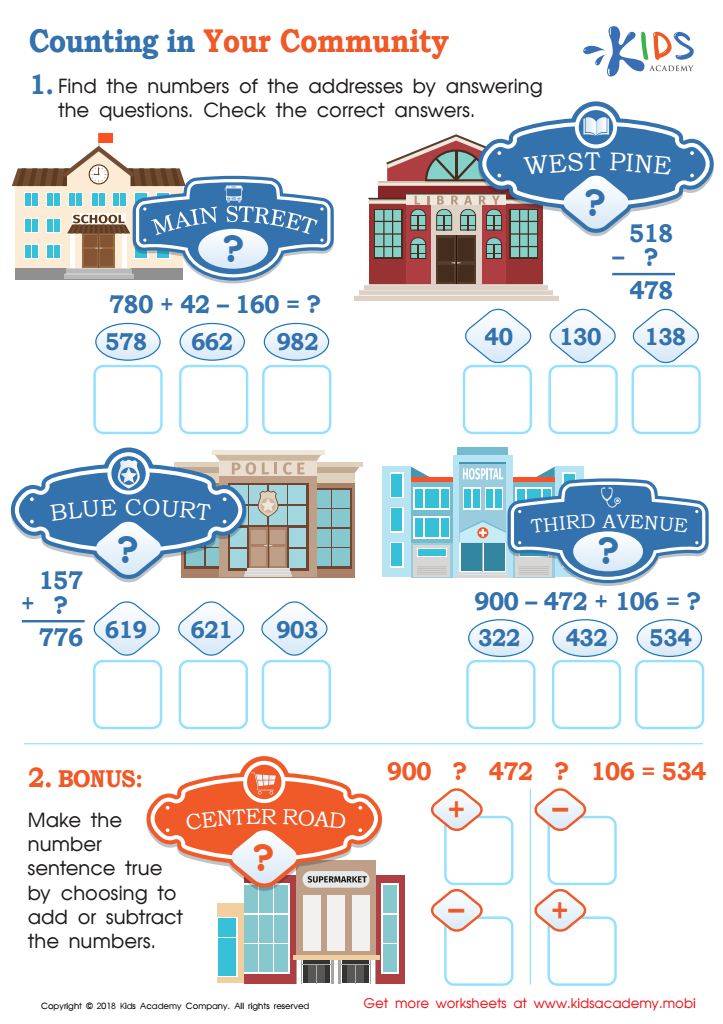
Counting in Your Community Worksheet

Counting in Your Community Worksheet

Introduce your kids to the idea of a community, where different people and buildings co-exist, each playing their part for the community's progress. Ask them to name the buildings they see in their community. Then work through this worksheet to find the numbers of the addresses by answering the questions. Check the answers once they've solved the equations.
Counting in Your Community Worksheet
Worksheet
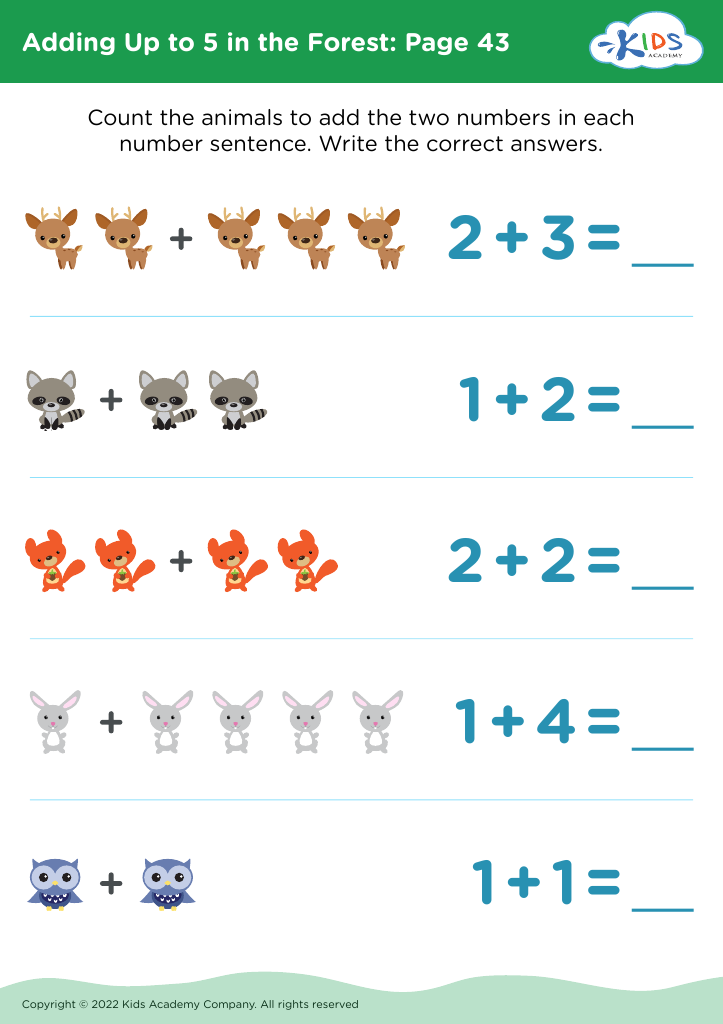
Adding Up to 5 in the Forest: Page 43
Worksheet
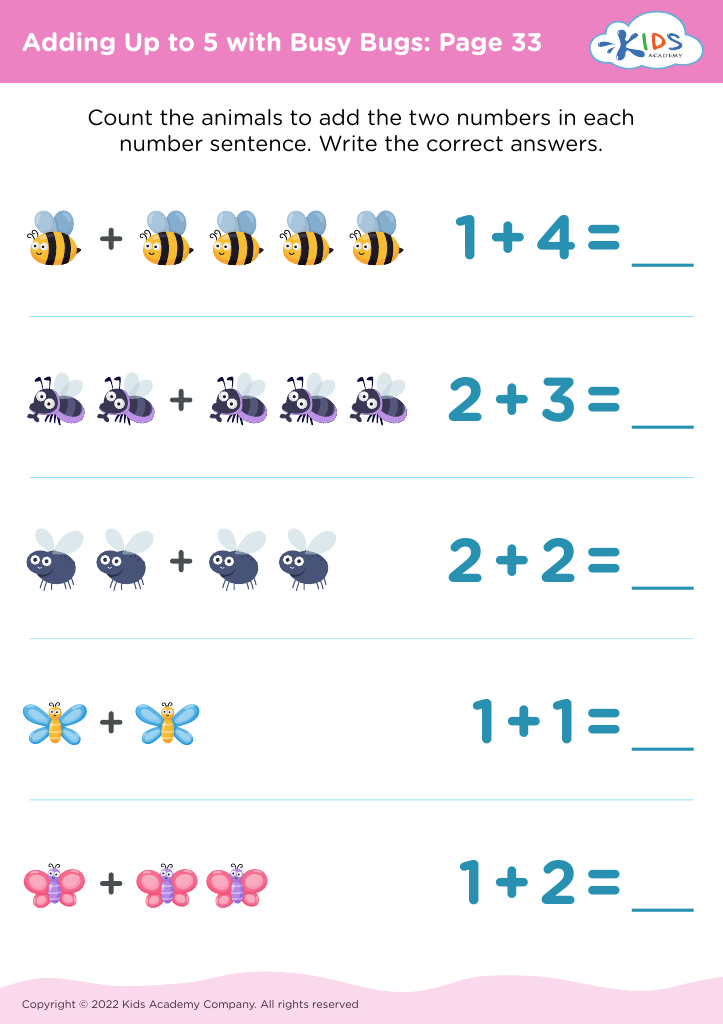
Adding Up to 5 with Busy Bugs: Page 33
Worksheet
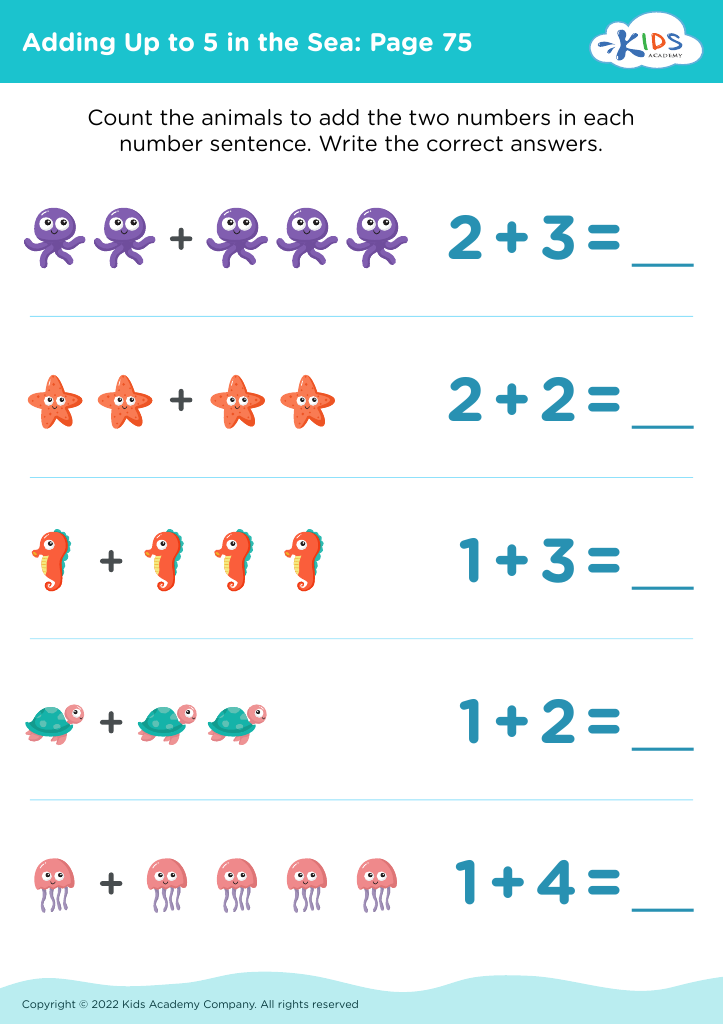
Adding Up to 5 in the Sea: Page 75
Worksheet
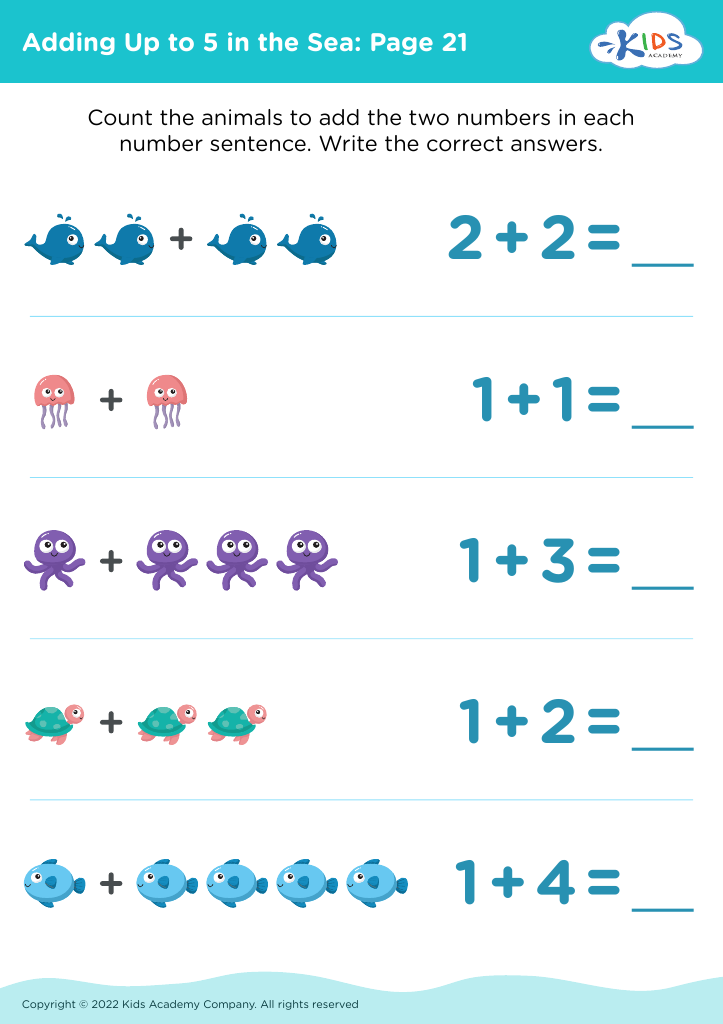
Adding Up to 5 in the Sea: Page 21
Worksheet
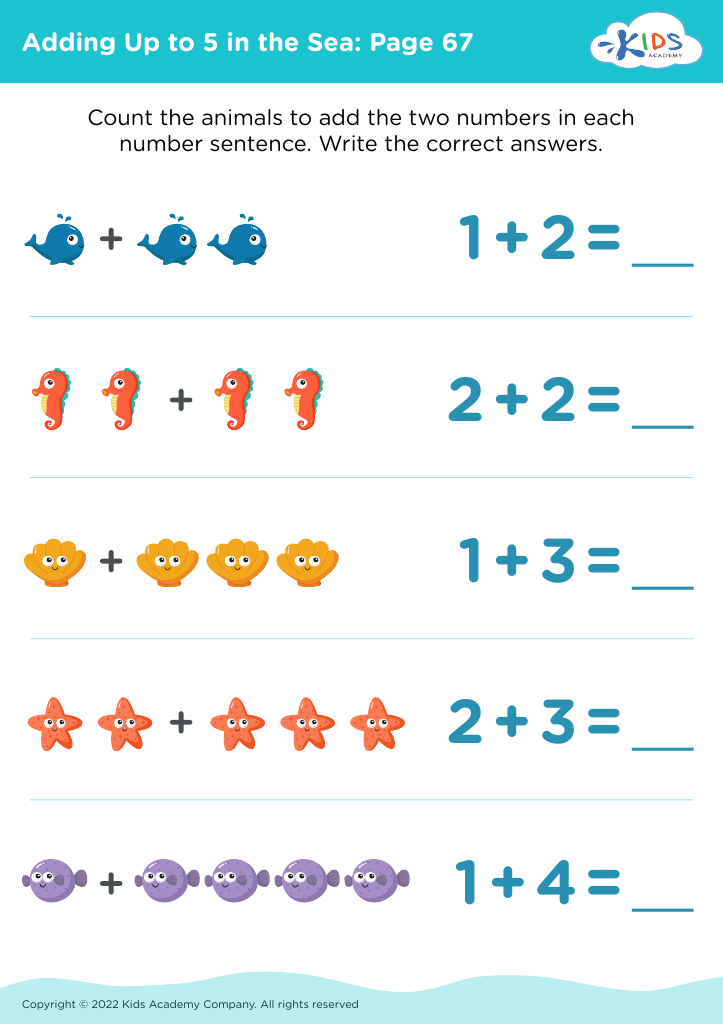
Adding Up to 5 in the Sea: Page 67
Worksheet
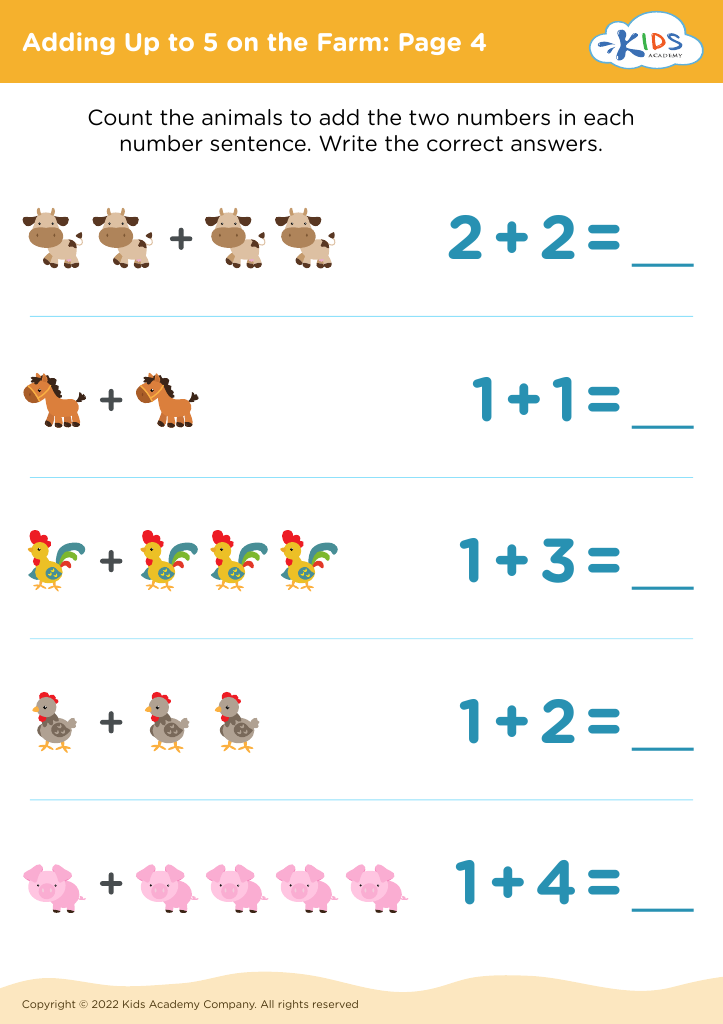
Adding Up to 5 on the Farm: Page 4
Worksheet
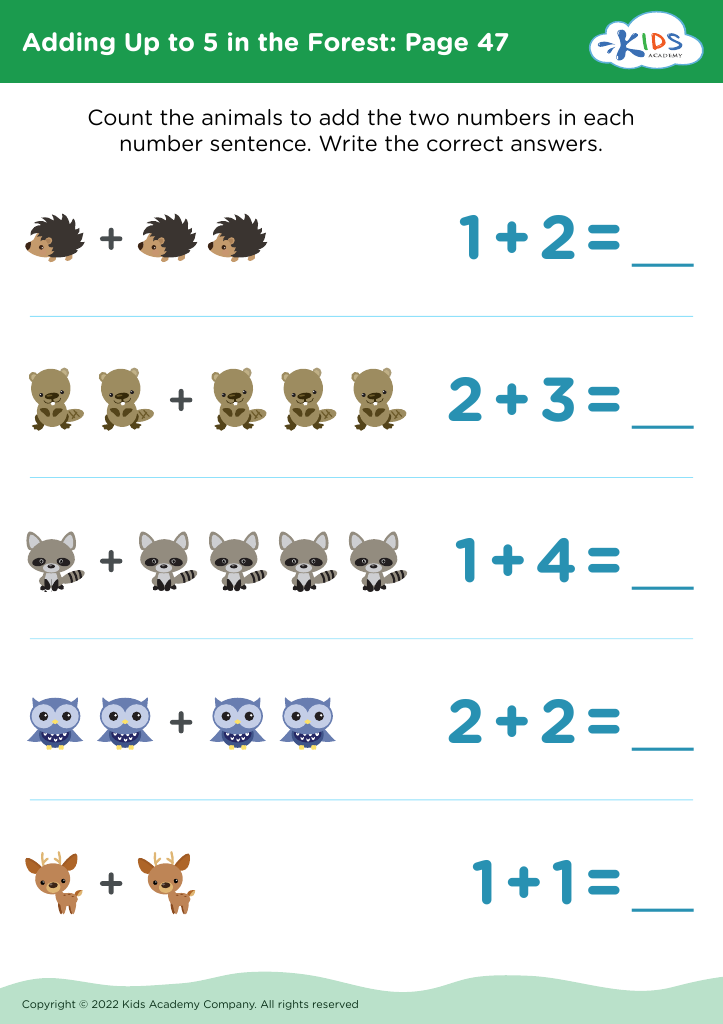
Adding Up to 5 in the Forest: Page 47
Worksheet
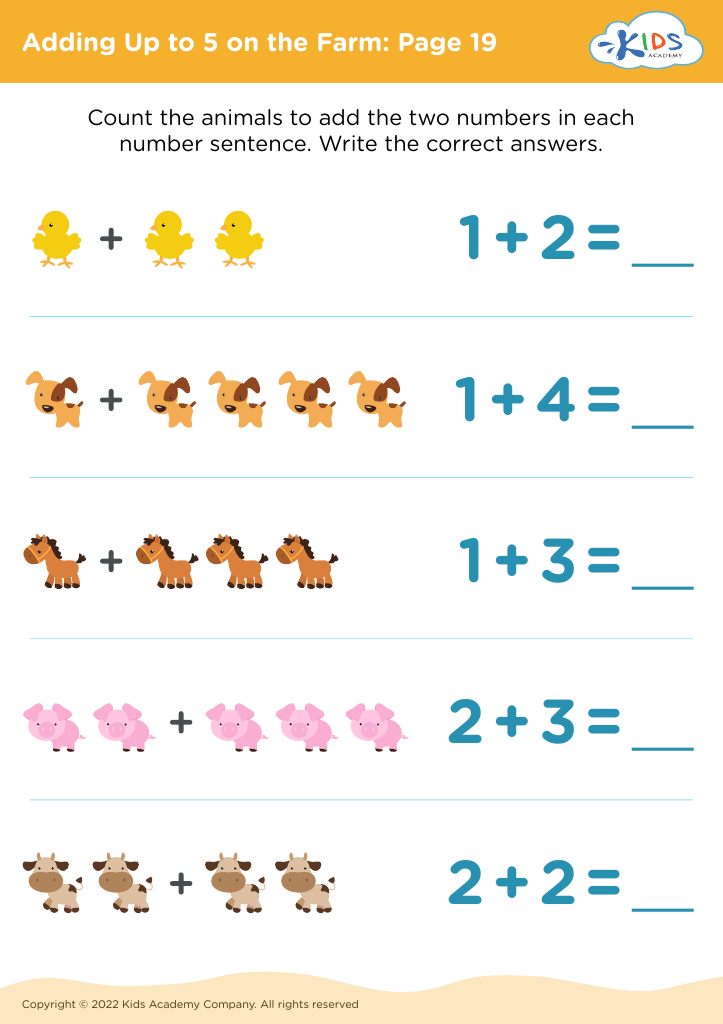
Adding Up to 5 on the Farm: Page 19
Worksheet
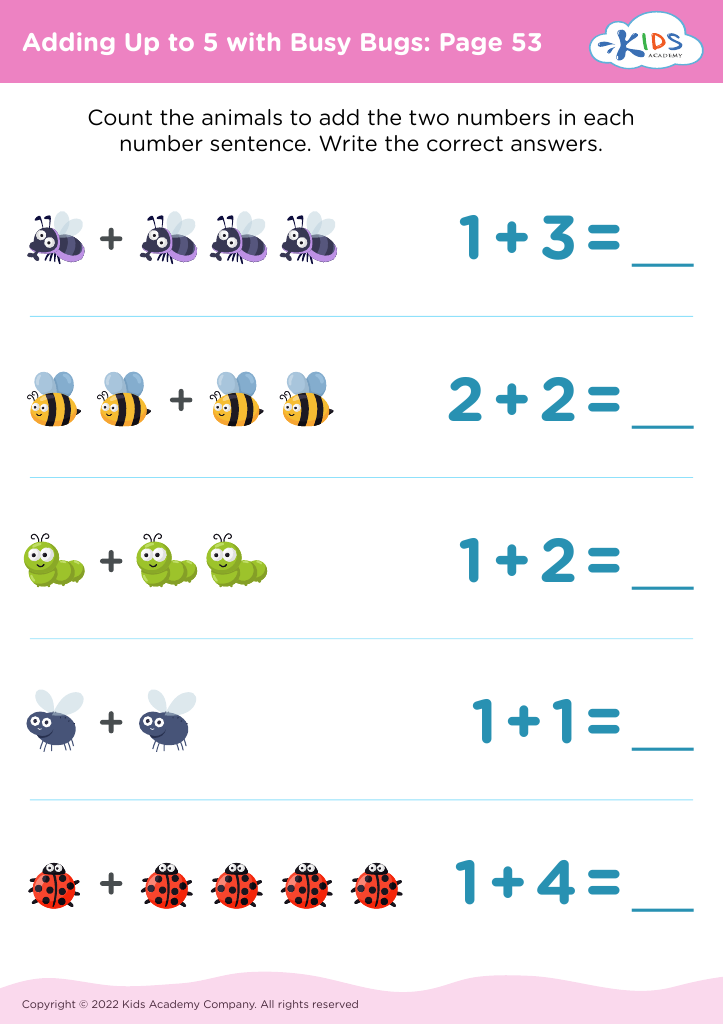
Adding Up to 5 with Busy Bugs: Page 53
Worksheet
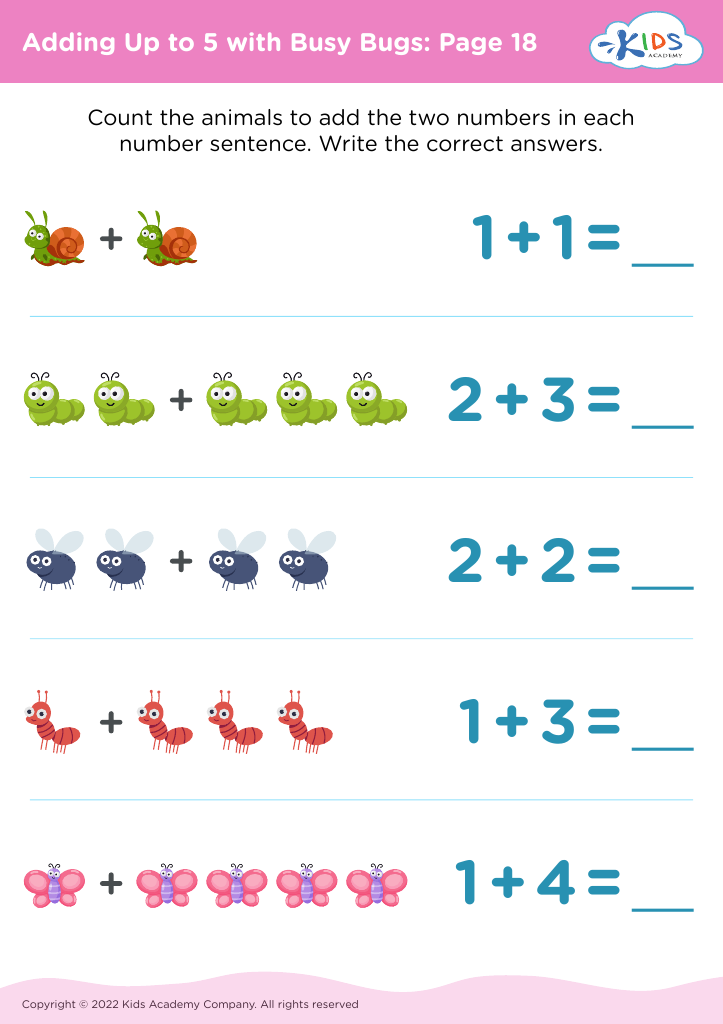
Adding Up to 5 with Busy Bugs: Page 18
Worksheet
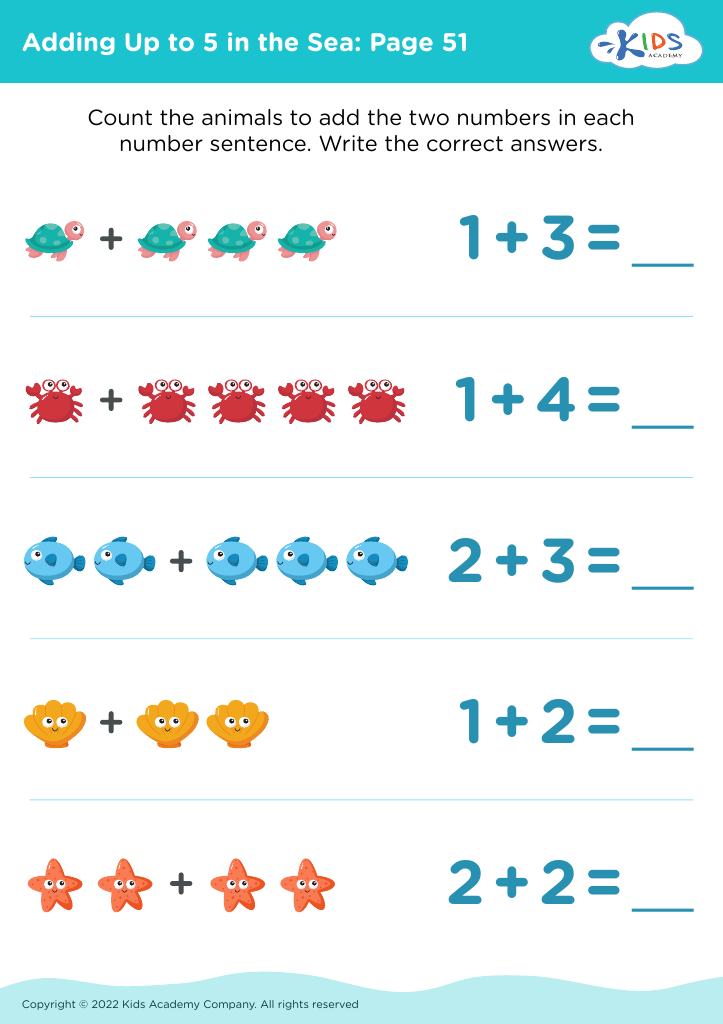
Adding Up to 5 in the Sea: Page 51
Worksheet
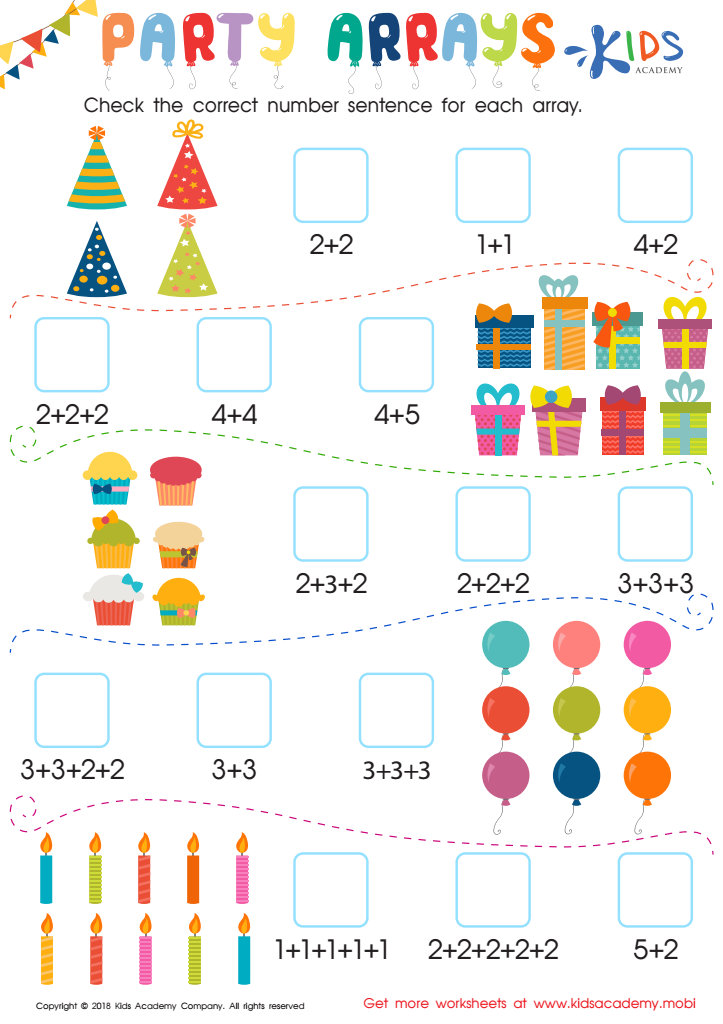
Party Arrays Worksheet
Party Arrays Worksheet
Help your child count the objects in each of the five arrays, then check the correct number sentence for each. This exercise will test their math skills and understanding of number sentences. Guide them to select the appropriate boxes.
Party Arrays Worksheet
Worksheet
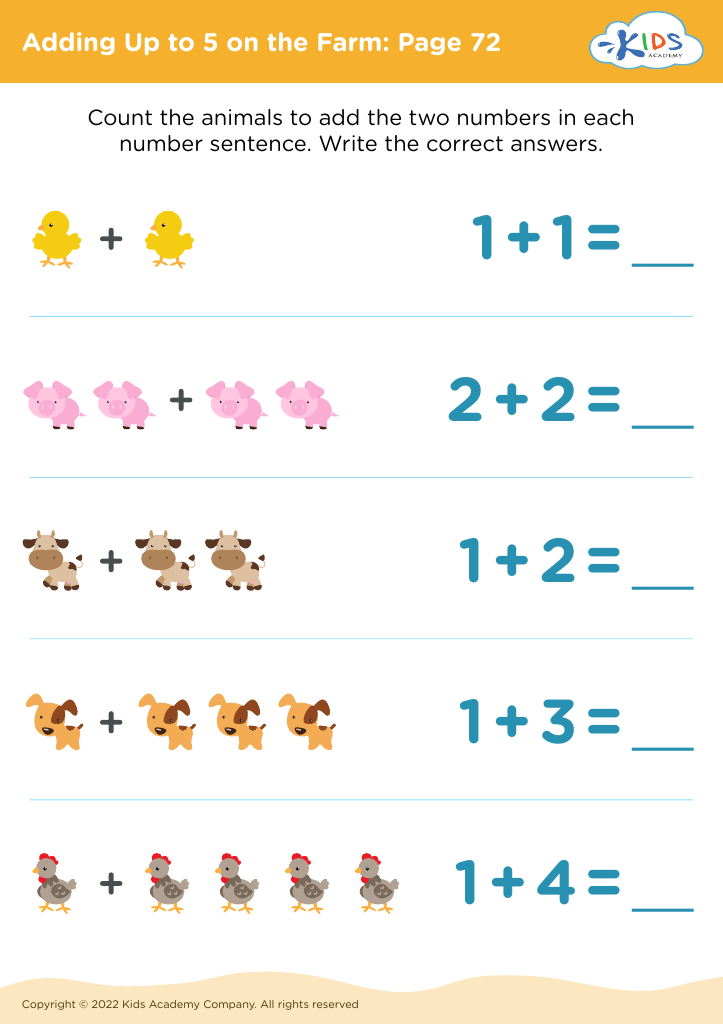
Adding Up to 5 on the Farm: Page 72
Worksheet
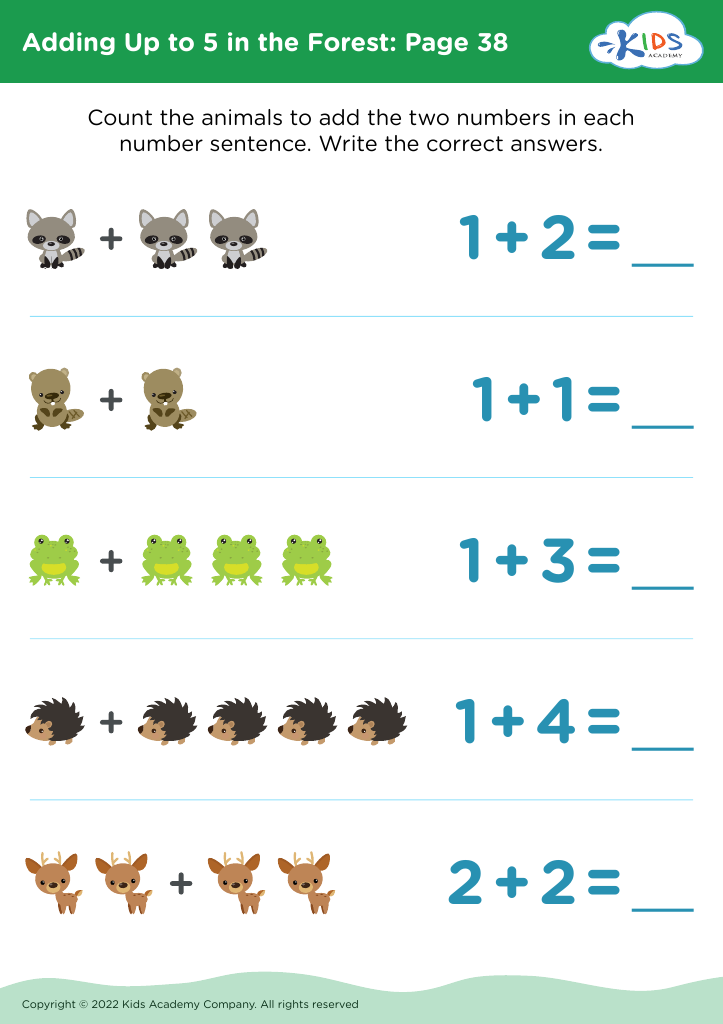
Adding Up to 5 in the Forest: Page 38
Worksheet
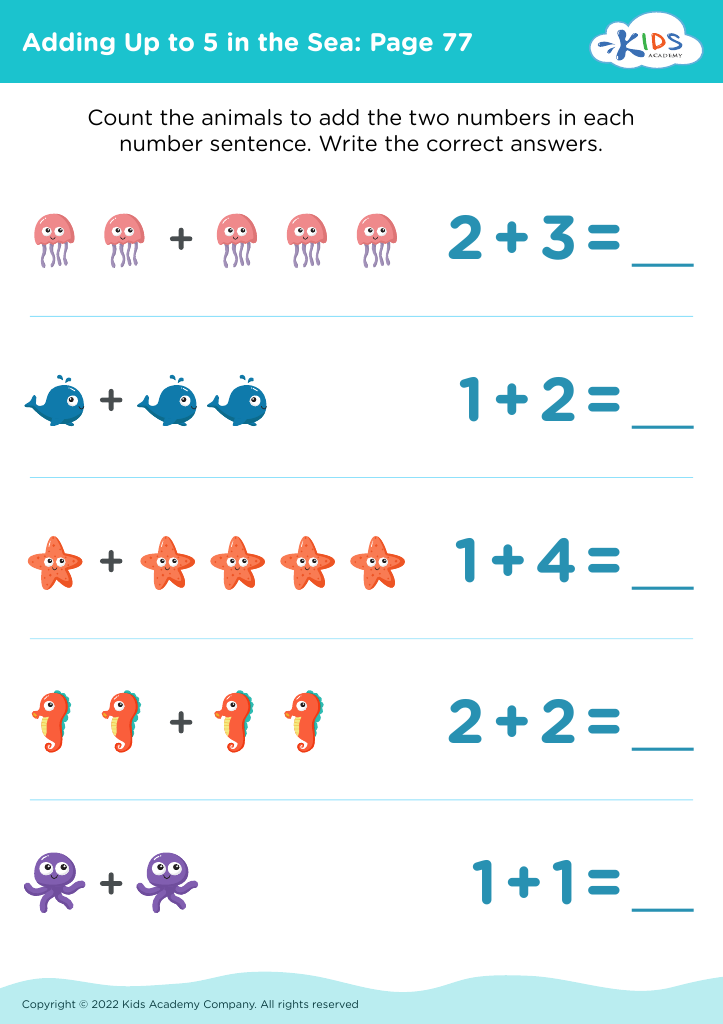
Adding Up to 5 in the Sea: Page 77
Worksheet
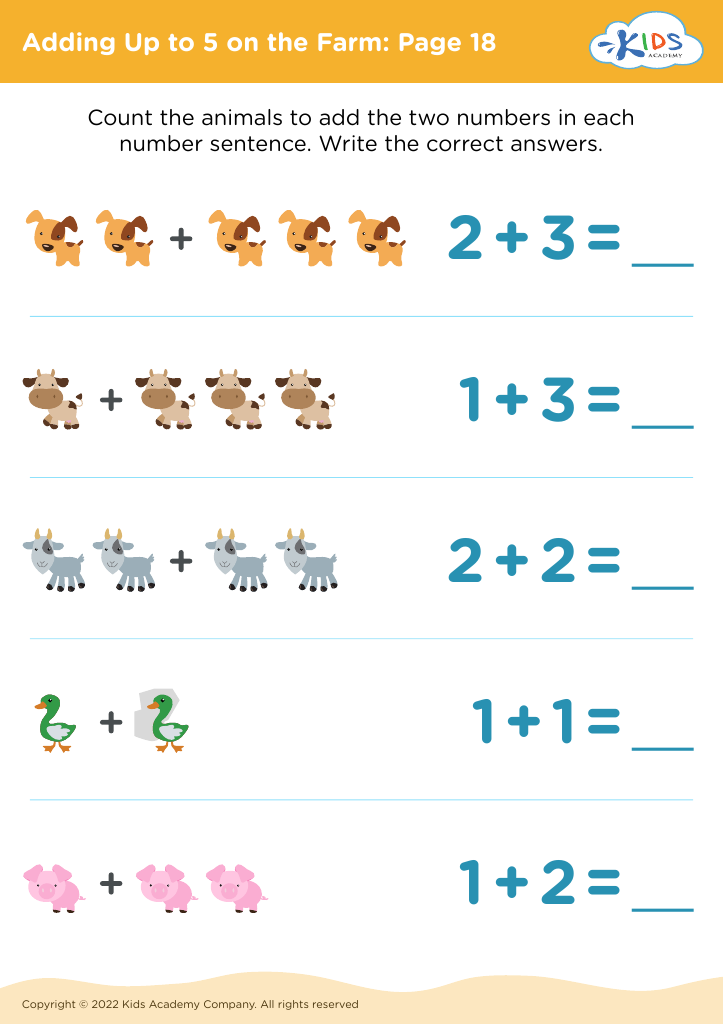
Adding Up to 5 on the Farm: Page 18
Worksheet
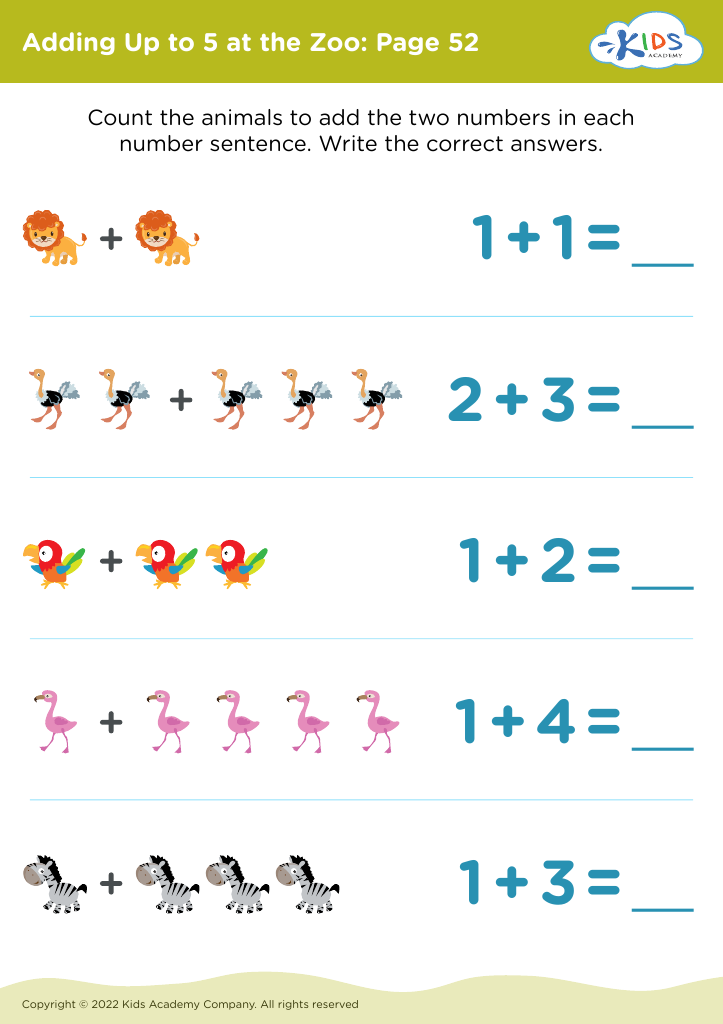
Adding Up to 5 at the Zoo: Page 52
Worksheet
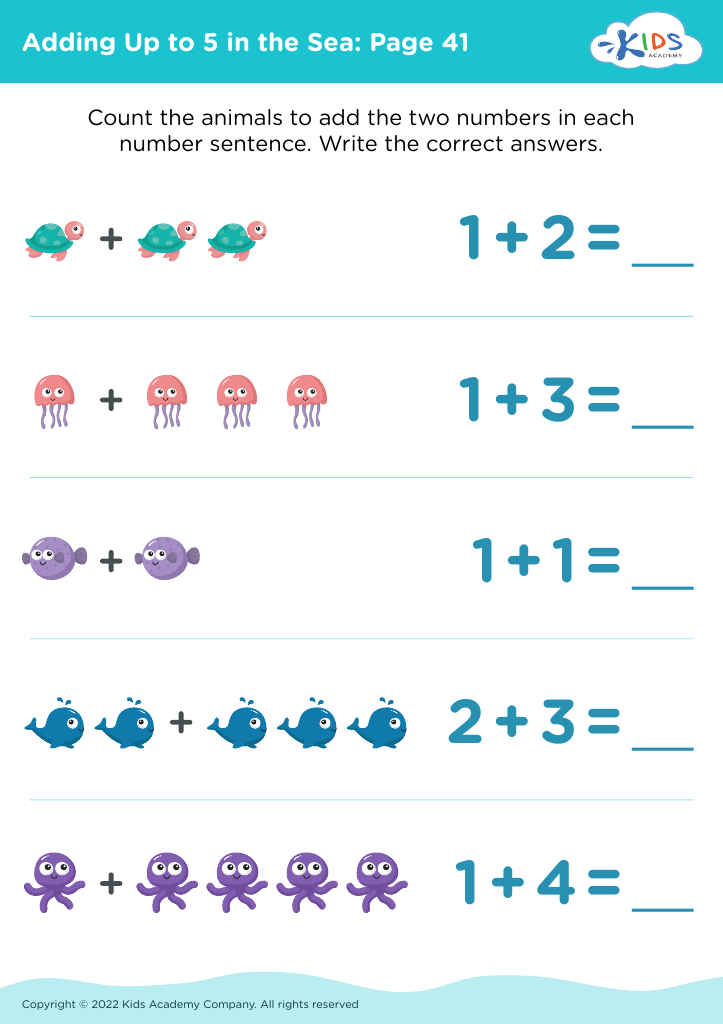
Adding Up to 5 in the Sea: Page 41
Worksheet
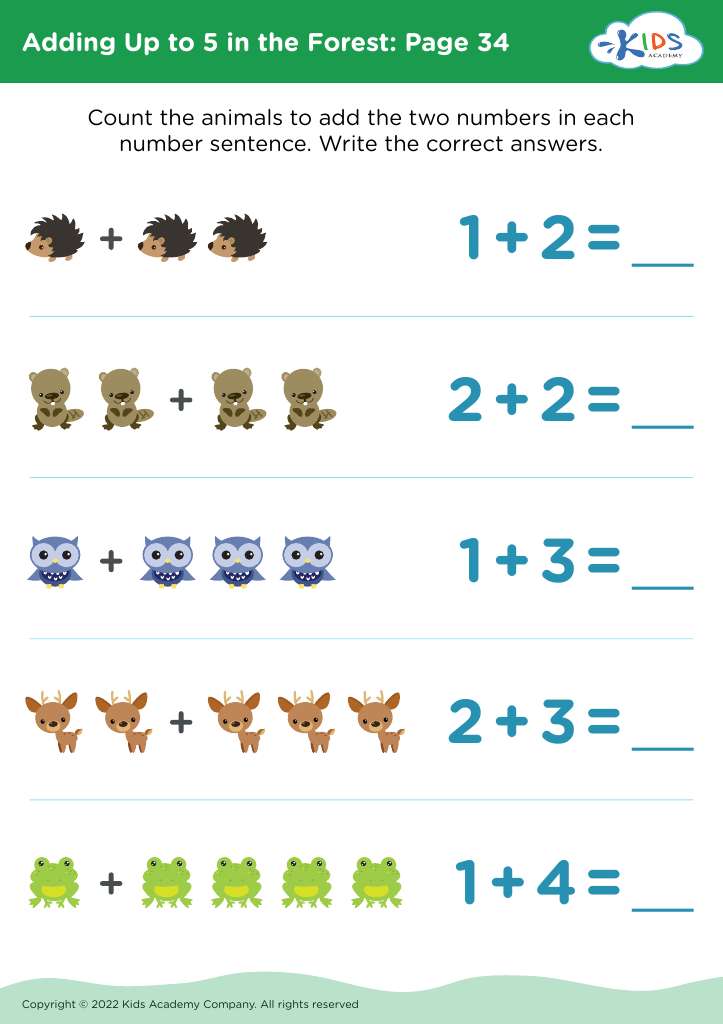
Adding Up to 5 in the Forest: Page 34
Worksheet
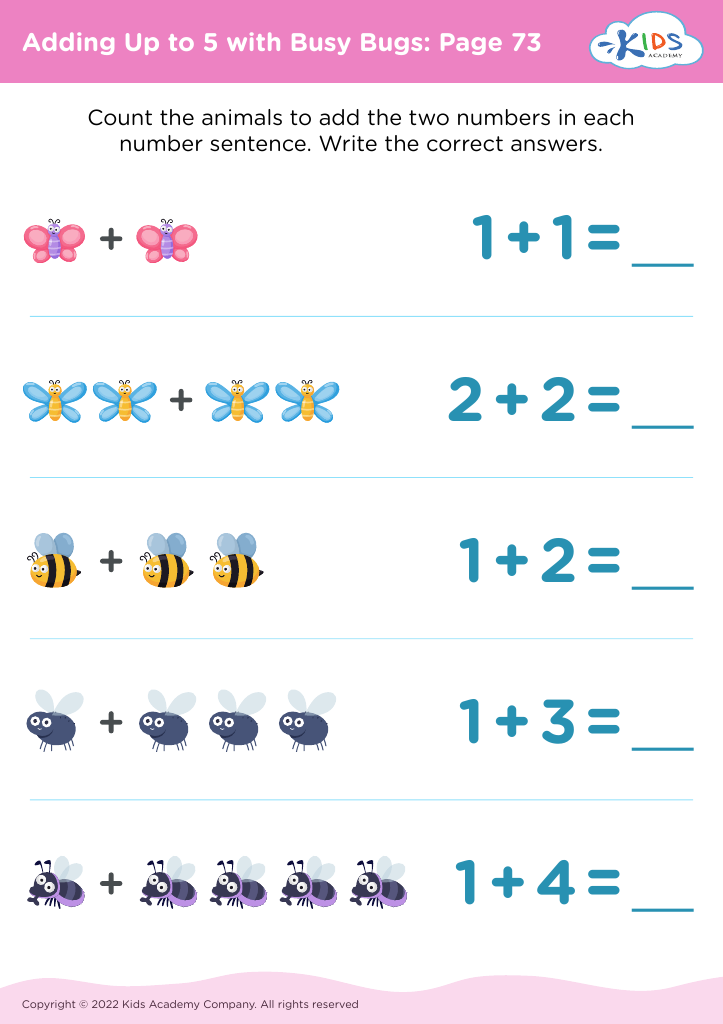
Adding Up to 5 with Busy Bugs: Page 73
Worksheet
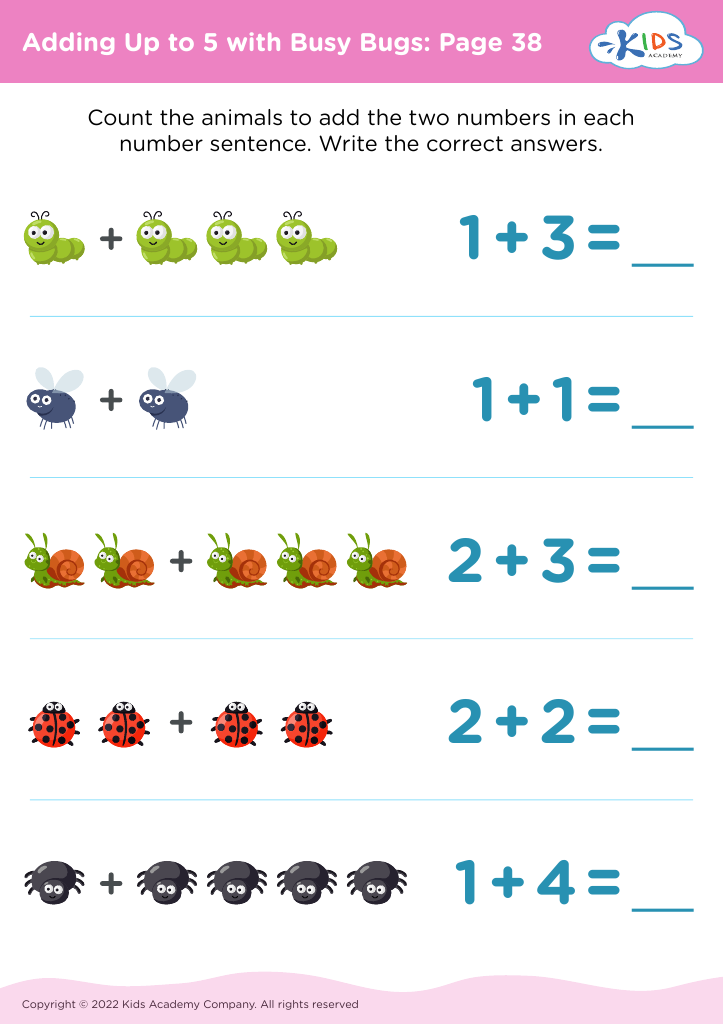
Adding Up to 5 with Busy Bugs: Page 38
Worksheet
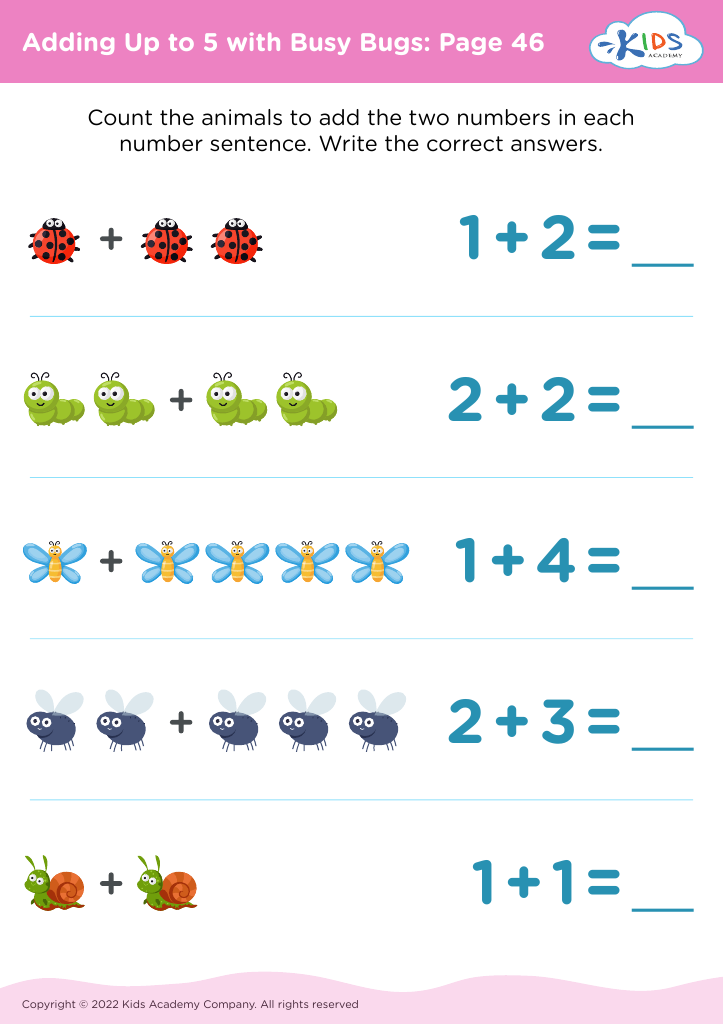
Adding Up to 5 with Busy Bugs: Page 46
Worksheet
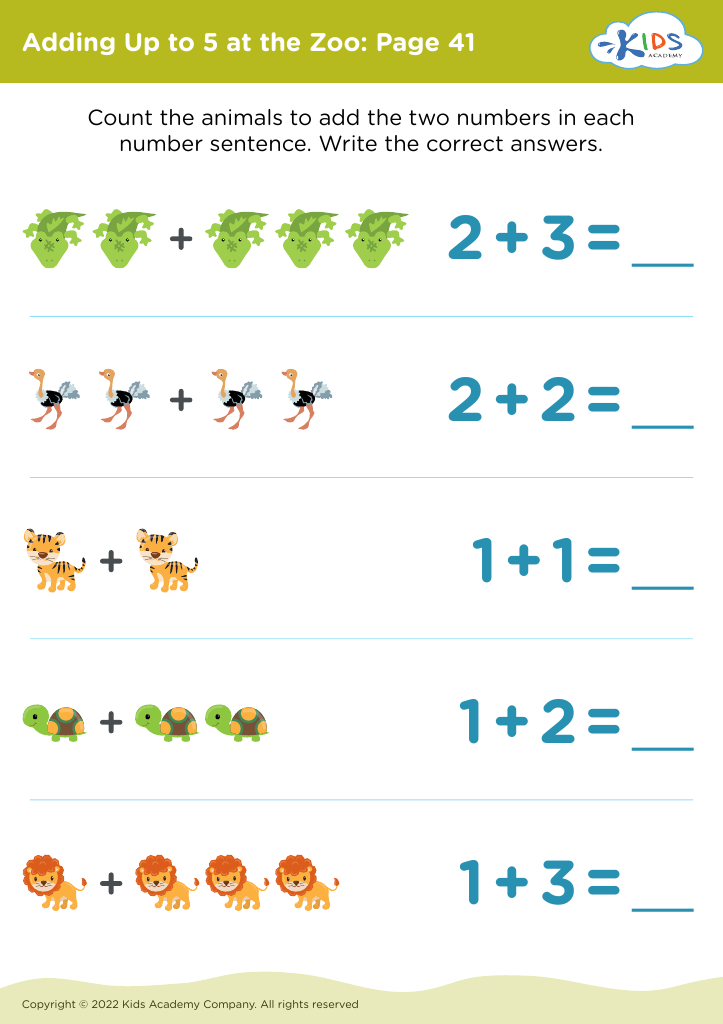
Adding Up to 5 at the Zoo: Page 41
Worksheet


Basic addition skills form the cornerstone of early mathematics education, a fundamental part of overall cognitive development for children aged 5-9. Mastery of basic addition goes beyond simple arithmetic; it cultivates strong numerical awareness, logical reasoning, and problem-solving abilities. Children who develop strong addition skills at an early age are more likely to excel in advanced math topics and other academic disciplines later on.

For parents and teachers, fostering a child's ability to add builds confidence and reduces math anxiety. Performing basic addition tasks successfully gives children a sense of accomplishment and encourages a positive attitude towards learning. Early arithmetic success also aids in developing critical thinking and helps in real-world scenarios, such as understanding time, money, and measurement.

Moreover, foundational math skills, like addition, are interconnected with literacy and other cognitive skills. They help children understand patterns, sequences, and structures, which is crucial not just in math but also in reading and science.

Investing in teaching basic addition equips children with essential life skills, laying a solid groundwork for academic success and lifelong learning. By valuing these early mathematics skills, parents and teachers help to ensure that children build the confidence and capability to tackle increasingly complex educational challenges.