Comparing weights Worksheets for Ages 5-9
4 filtered results
-
From - To
Welcome to our Comparing Weights Worksheets for Ages 5-9! These engaging, interactive worksheets are designed to help young learners understand the concept of weight comparison. Featuring colorful visuals and fun activities, children can practice identifying heavier and lighter objects, enhancing their critical thinking and observational skills. Our resources support foundational math learning while making the process enjoyable. Perfect for classroom use or at-home practice, these worksheets encourage independent learning and reinforce essential math paradigms. Download now to empower your children with the tools they need to confidently compare weights and develop their early math skills in a playful and imaginative way!
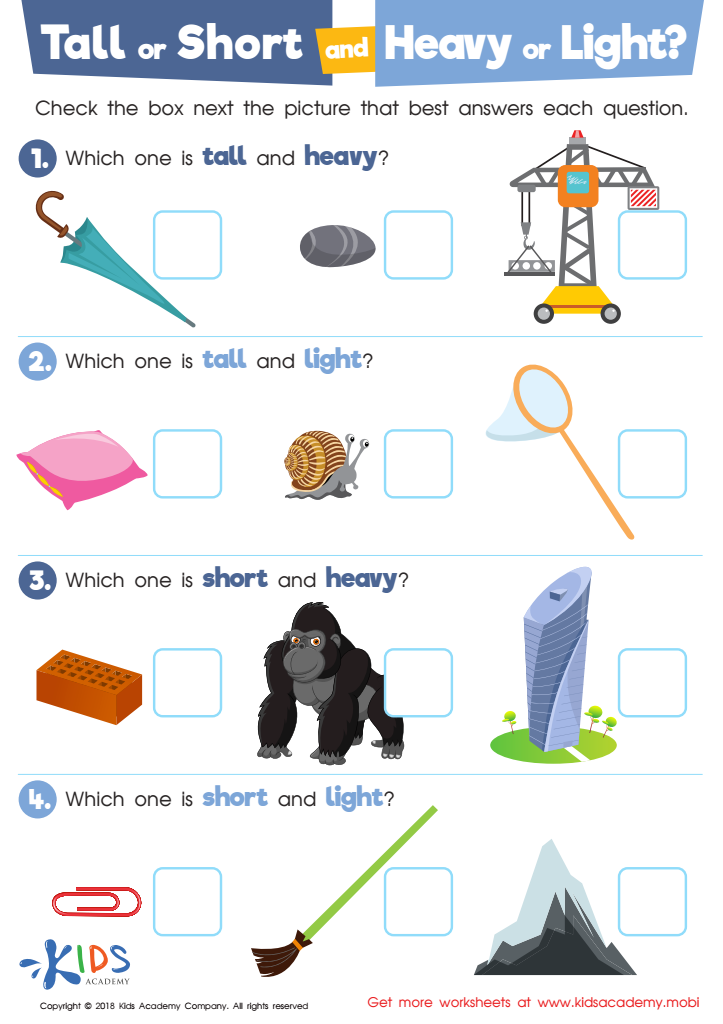
Tall or Short and Heavy or Light? Worksheet
 Assign to My Students
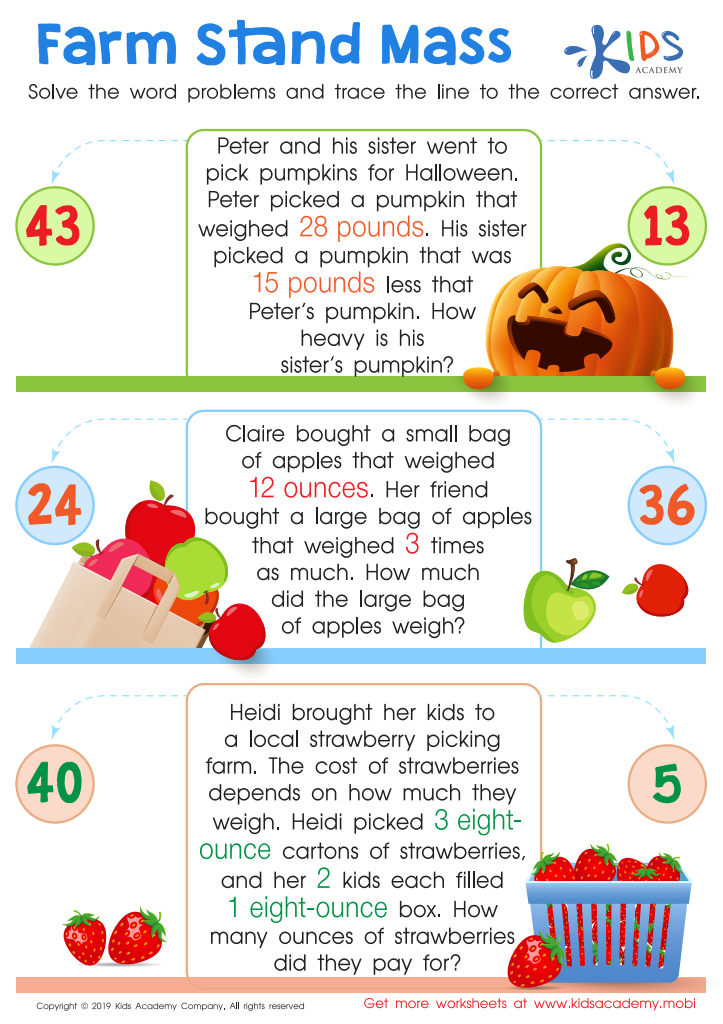
Farm Stand Mass Worksheet
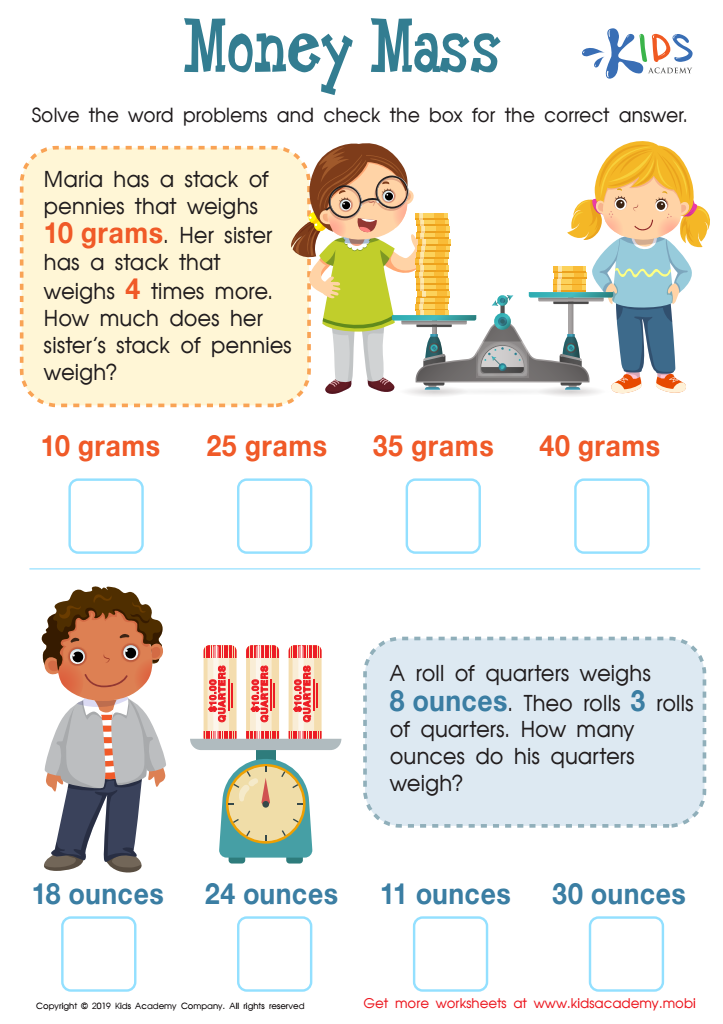
Money Mass Worksheet







Comparing weights is an essential early math skill for children aged 5-9, offering numerous cognitive and practical benefits. First and foremost, it promotes the development of critical thinking and problem-solving skills. As children engage in comparing weights, they learn to make observations, hypothesize outcomes, and draw conclusions, which fosters analytical abilities that are vital in academic success.
Moreover, exploring weights allows children to understand the concept of measurement, a foundational aspect of math. This understanding lays the groundwork for more complex mathematical concepts, such as addition, subtraction, and eventually, building their knowledge in units and conversions.
Additionally, weighing objects offers a hands-on experience that enhances engagement and retention. Parents and teachers can utilize everyday objects to create a relatable learning environment, encouraging curiosity and exploration. This interactive learning can strengthen the parent-child or teacher-student relationship as they work together on activities.
Finally, discussing weights ties in essential life skills, such as making healthy choices regarding food and understanding differences in size and volume. Parents and teachers should prioritize comparing weights in education to support holistic child development, ensuring they gain valuable skills that extend beyond the classroom.








