Developing problem-solving abilities Worksheets for Ages 5-9
9 filtered results
-
From - To
Enhance your child's critical thinking skills with our engaging "Developing Problem-Solving Abilities Worksheets" designed specifically for ages 5-9. These meticulously crafted worksheets encourage young learners to explore different problem-solving strategies through fun and interactive activities. From puzzles to logical questions, each worksheet fosters creativity and self-confidence while promoting analytical thinking. With easy-to-follow instructions, children will develop essential skills at their own pace, making learning a delightful experience. Ideal for use in the classroom or at home, our resources aim to build a strong foundation in problem-solving that prepares your child for future challenges. Explore the joys of learning today!
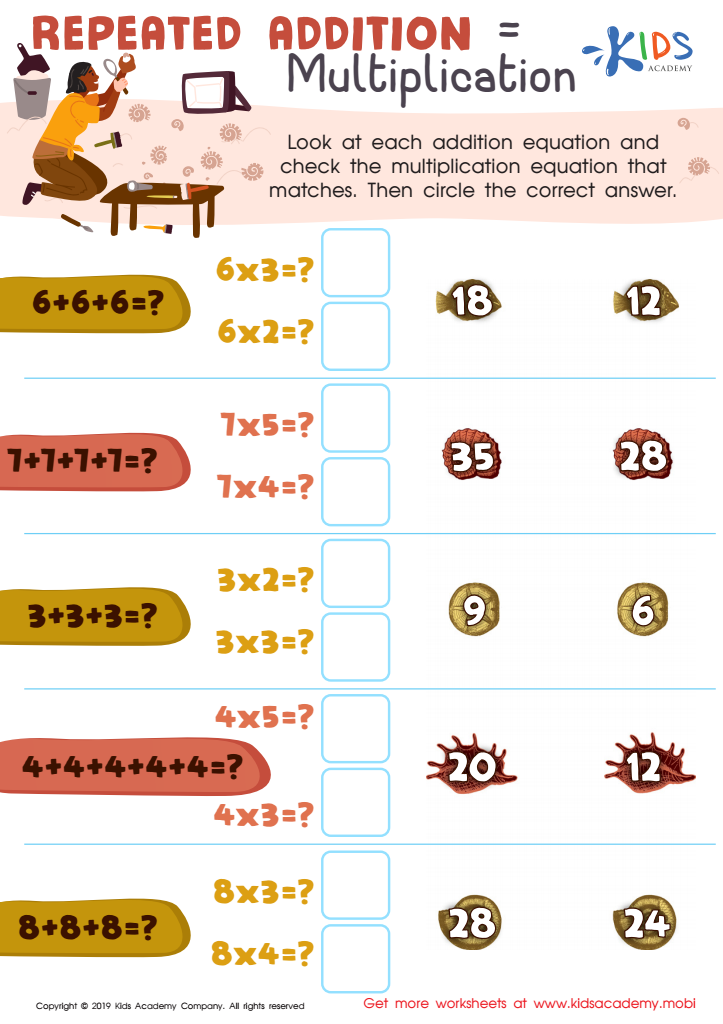
Repeated Addition = Multiplication Worksheet
 Assign to My Students
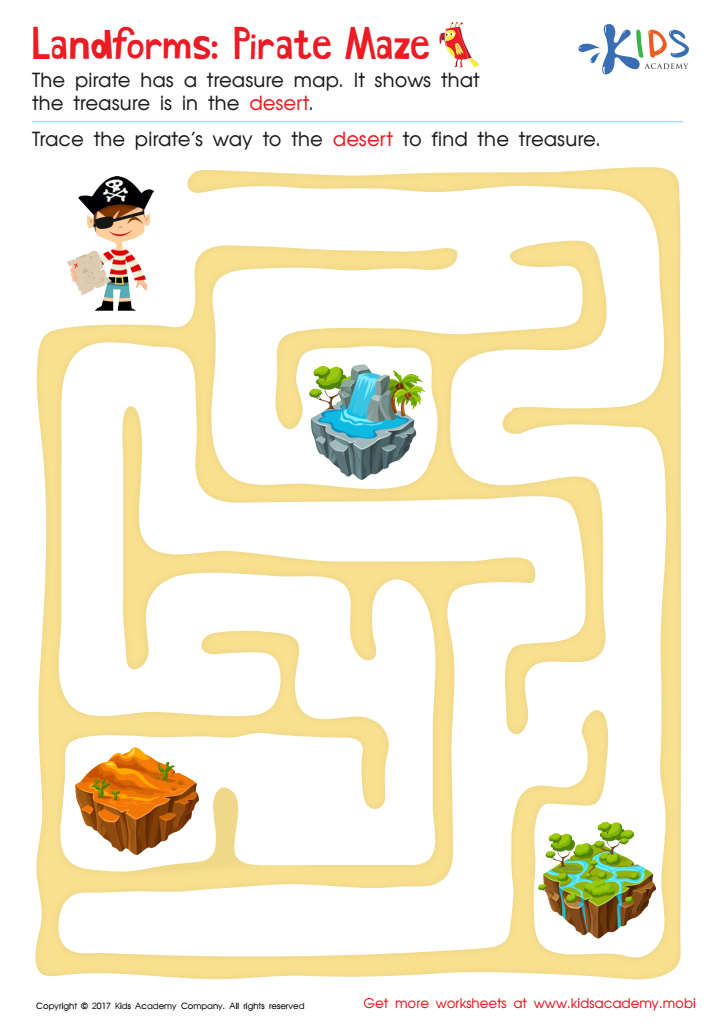
Landforms: Pirate Maze Printable
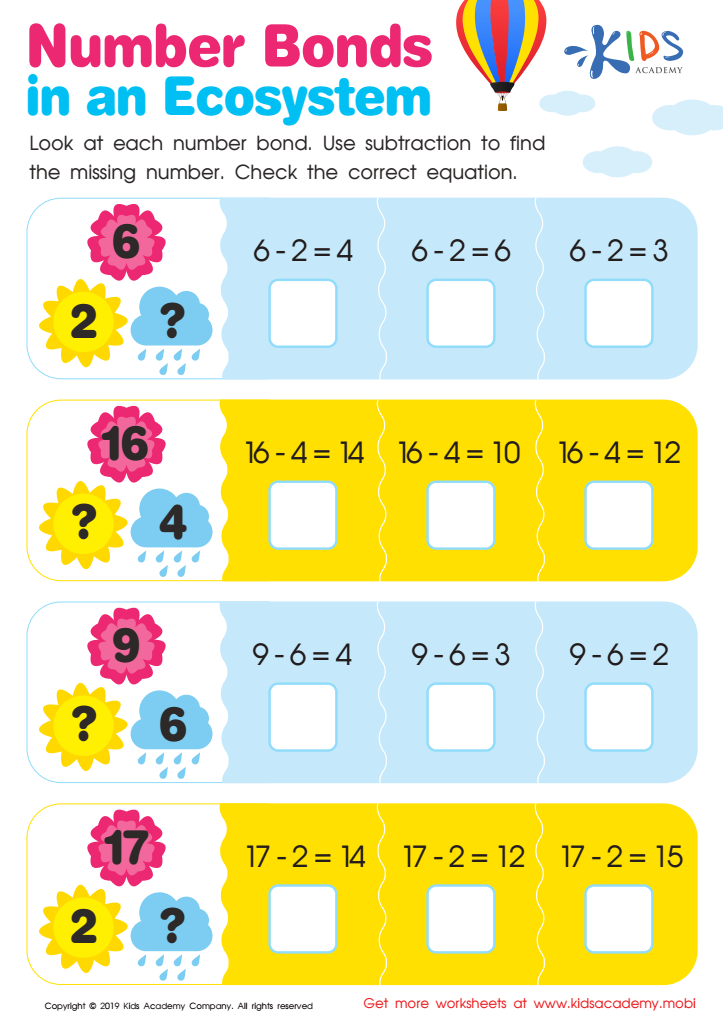
Number Bonds in an Ecosystem Worksheet
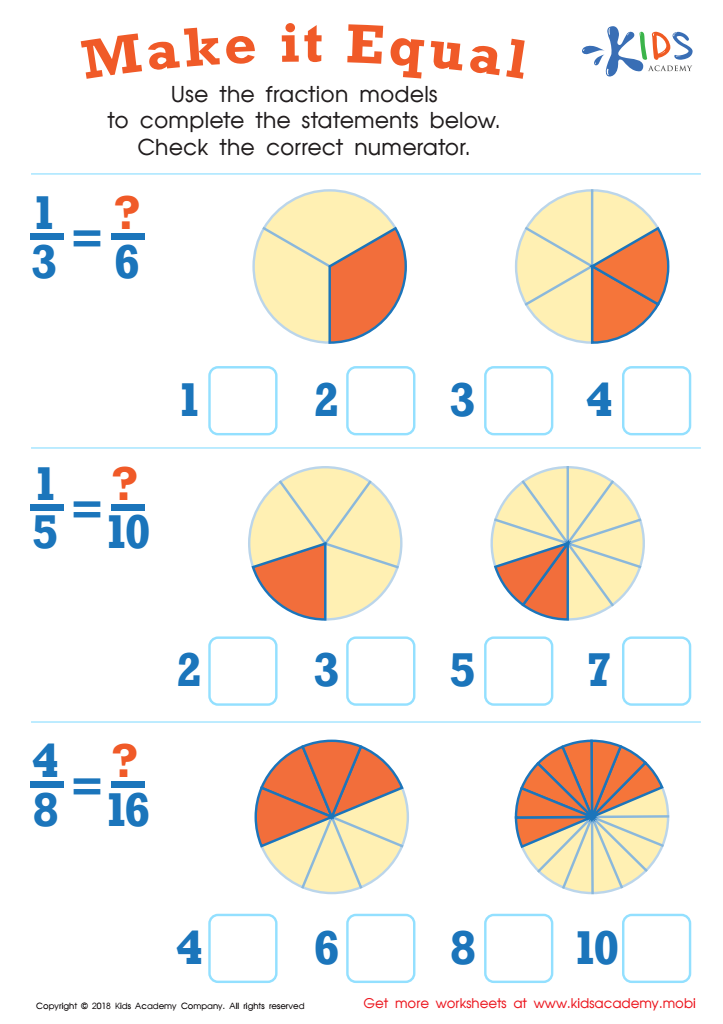
Make It Equal Worksheet
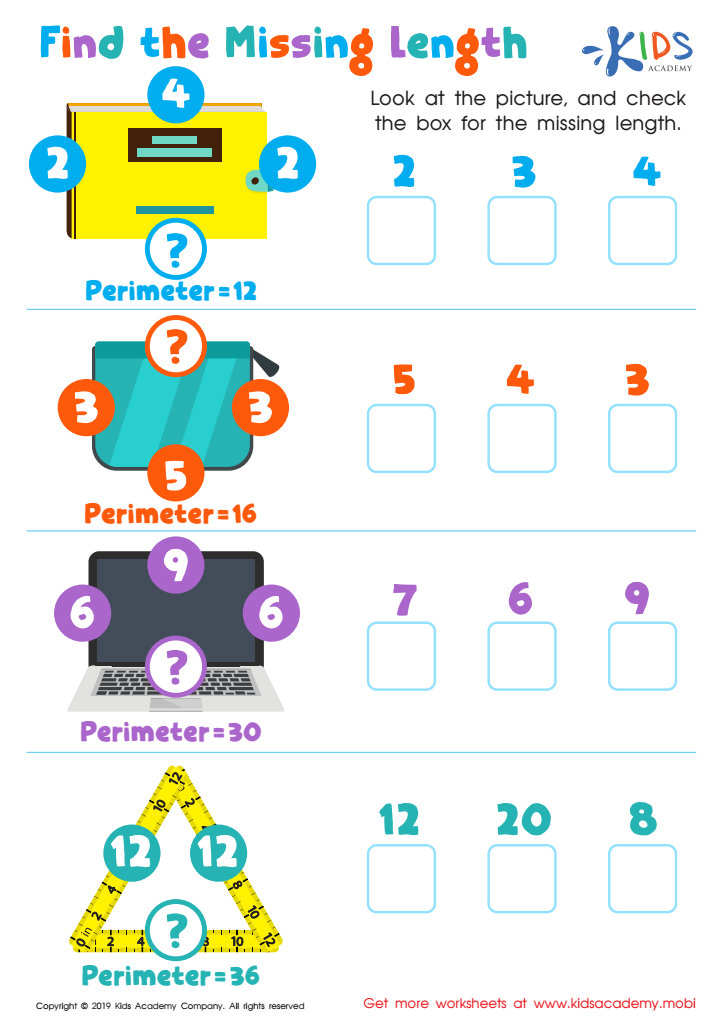
Find the Missing Length Worksheet
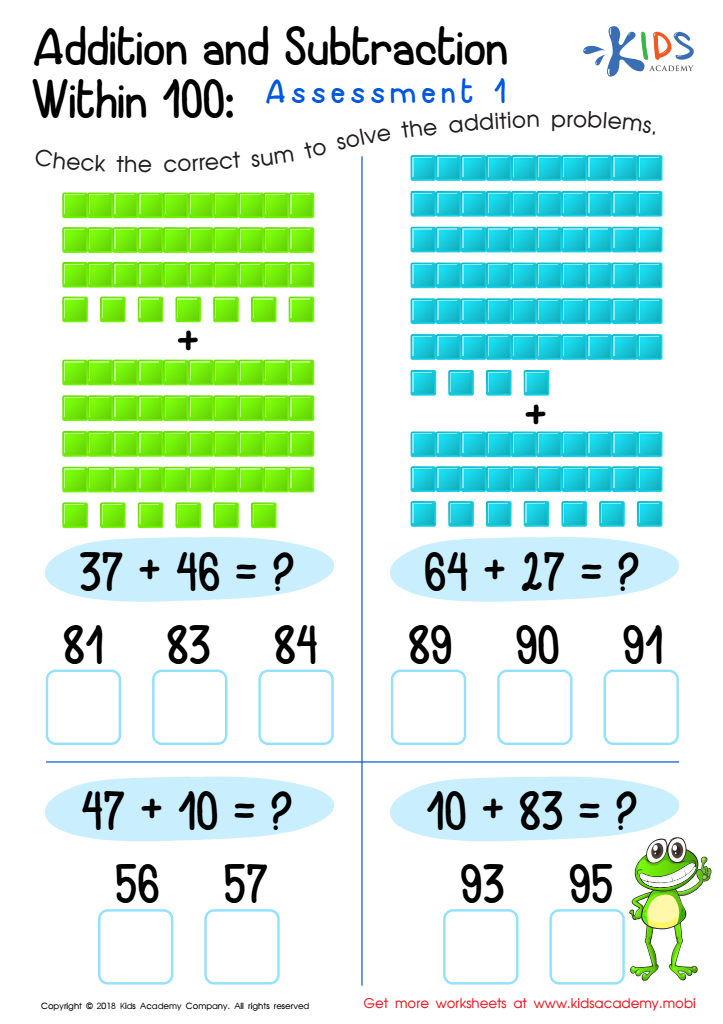
Addition and Subtraction Within 1: Assessment 1 Worksheet
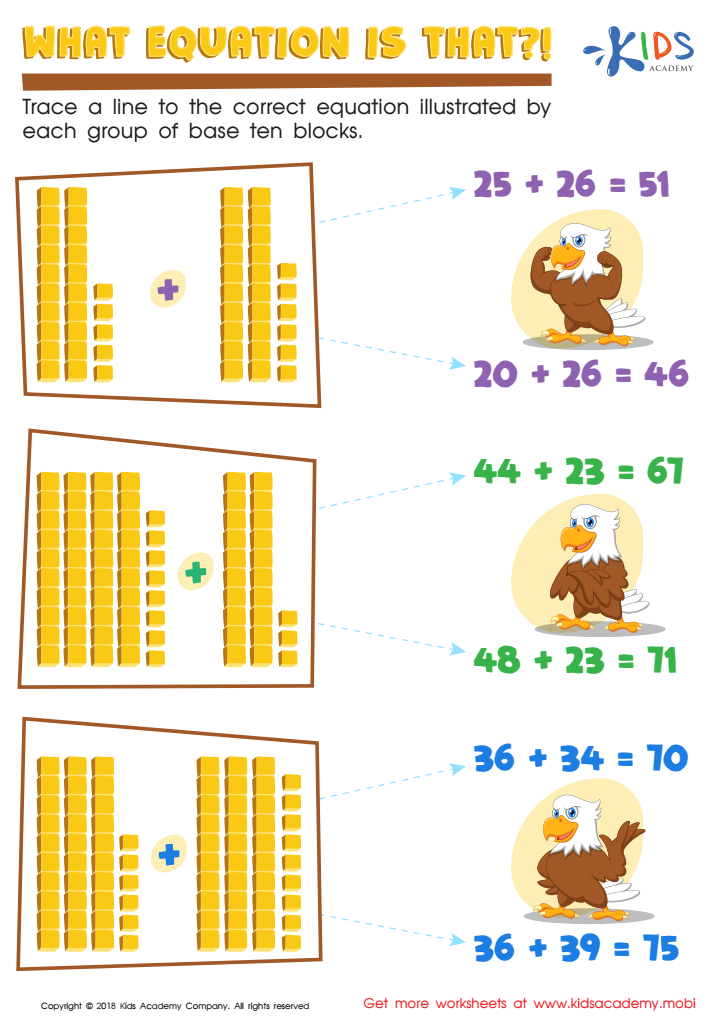
What Equation Is That? Worksheet








Developing problem-solving abilities in children aged 5-9 is crucial for several reasons. At this age, children are naturally curious and eager to explore their surroundings. Encouraging problem-solving enhances their cognitive development, enabling them to think critically and make informed decisions. This foundational skill not only boosts their intellectual growth but also fosters creativity, as children learn to approach challenges from multiple angles.
Moreover, developing problem-solving skills supports social and emotional development. As children work through problems, they practice perseverance and resilience, learning that failure is a stepping stone to success. These skills are essential for building self-confidence and independence.
Importantly, problem-solving lays the groundwork for future academic achievements. In subjects such as math and science, the ability to analyze situations and identify solutions is paramount. Additionally, in our increasingly complex world, being an effective problem solver prepares children for real-life challenges, from navigating friendships to tackling community issues.
In essence, parents and teachers play a critical role in nurturing these abilities. By incorporating engaging activities and fostering a supportive environment, they can help children become confident and capable problem solvers, equipped for both present scenarios and future endeavors.








