Differentiating shapes Worksheets for Ages 5-9
5 filtered results
-
From - To
Discover our engaging Differentiating Shapes Worksheets designed specifically for children ages 5 to 9! These creative resources help young learners identify, compare, and differentiate between various shapes in an enjoyable way. Each worksheet offers fun activities that encourage hands-on learning, such as_shape sorting, matching games, and color-coded exercises. By incorporating visual aids and interactive tasks, children will strengthen their shape recognition and classification skills. Perfect for classrooms or at-home learning, these worksheets foster critical thinking and problem-solving abilities while keeping students engaged. Start empowering your young learners today with our dynamic Differentiating Shapes Worksheets!
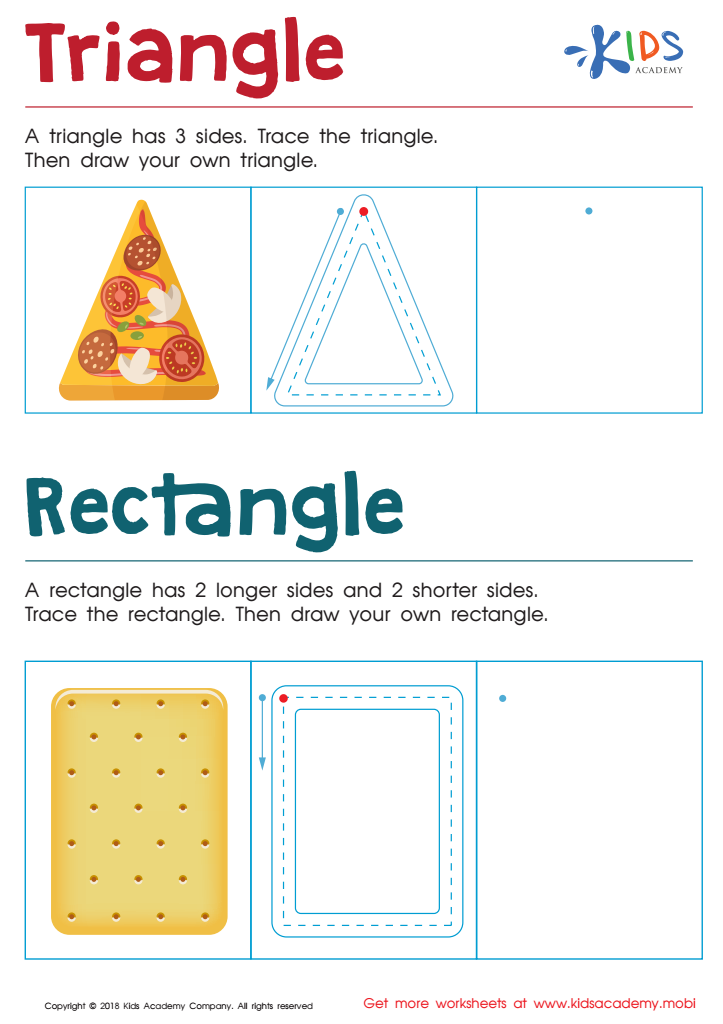
Triangle Rectangle Worksheet
 Assign to My Students
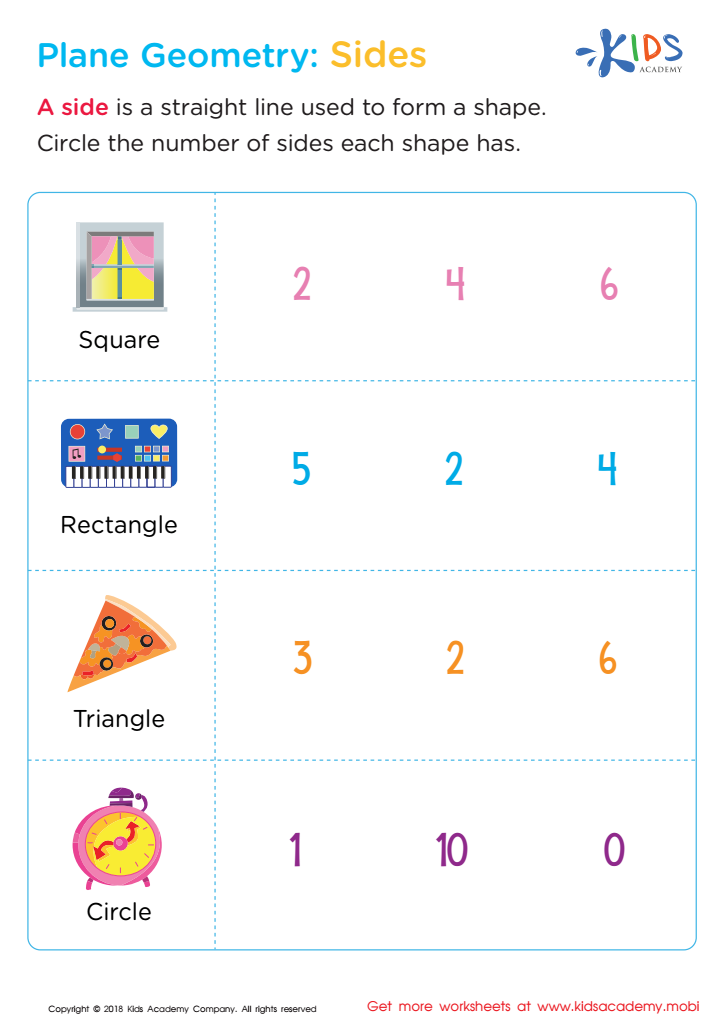
Plane Geometry: Sides Worksheet
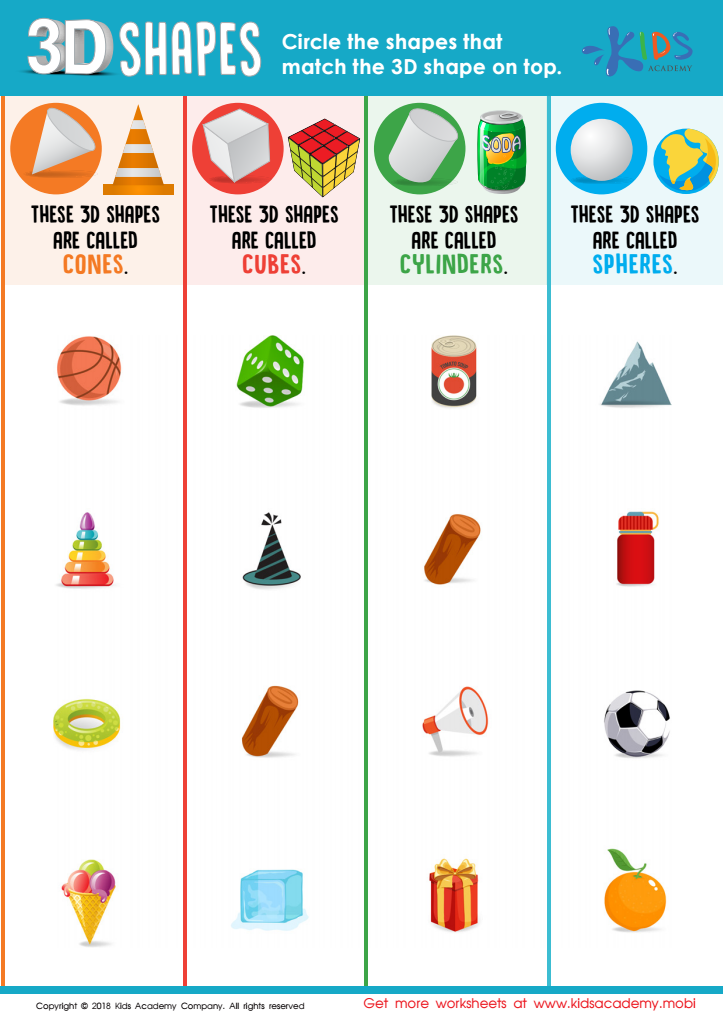
3D Shapes Worksheet
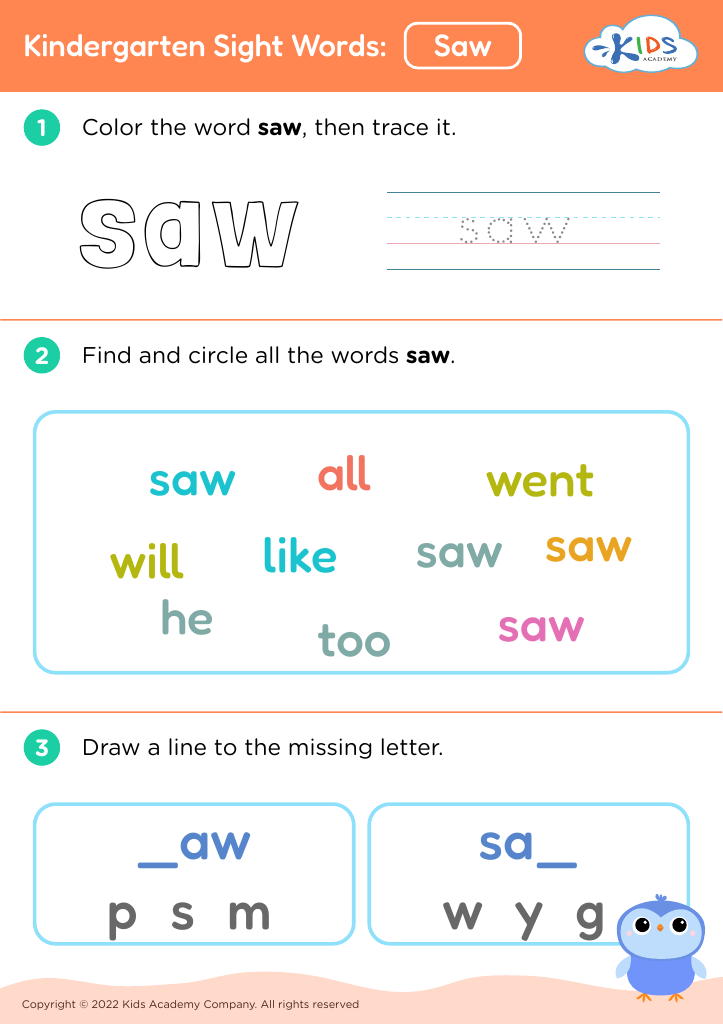








Differentiating shapes for children aged 5-9 is crucial in their cognitive and spatial development, promoting not just mathematical understanding, but also critical thinking skills. At this early age, children are naturally curious and eager to explore the world around them. Shape differentiation helps them categorize and interpret their environment, which ultimately aids in the development of their observational skills.
Furthermore, understanding shapes lays a foundational understanding of geometry, leading to more advanced mathematical competence as they progress in school. It also enhances language skills as children learn to describe, compare, and articulate the properties of different shapes, such as identifying triangles, circles, squares, and complex shapes.
Involving parents in the shape differentiation process enriches their child's learning experience, providing authentic contexts for exploration. By engaging in shape-related activities at home or in the classroom, adults foster an interactive learning environment that encourages curiosity and engagement.
Moreover, when parents and teachers adopt differentiated instruction — tailoring activities to meet varied learning styles — they ensure that all children, regardless of their initial skill levels, can grasp these concepts effectively. Ultimately, the understanding of shapes contributes not only to STEM education but to overall critical thinking and problem-solving abilities essential for lifelong learning.








