
Drawing conclusions Worksheets for Ages 5-9
3 filtered results
Difficulty Level
Grade
Age
-
From - To
Subject
Activity
Standards
Unlock your child's critical thinking skills with our Drawing Conclusions Worksheets for ages 5-9! These engaging activities are designed to help young learners infer information and articulate their thoughts based on illustrations and text. Each worksheet encourages children to analyze scenarios and draw logical conclusions, fostering creativity and comprehension. Tailored to align with early education standards, our easy-to-use resources cater to various learning styles. With vibrant graphics and age-appropriate challenges, your little ones will enjoy enhancing their reasoning abilities while having fun! Explore our worksheets and watch your child's confidence grow as they become confident thinkers and problem solvers!
Favorites
With answer key
Interactive
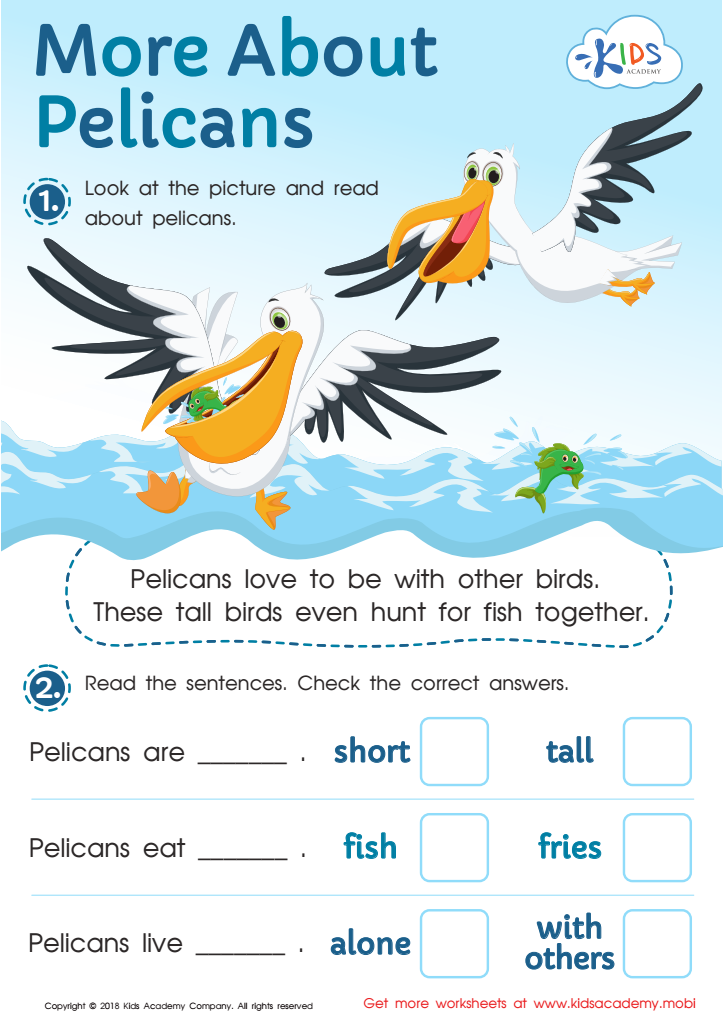
More About Pelicans Worksheet
Train your reader to look for clues in words with this fun worksheet about pelicans! As they read each sentence, they'll learn more about these majestic birds. Once they finish, answer the questions and explore even more!
 Assign to My Students
More About Pelicans Worksheet
Worksheet
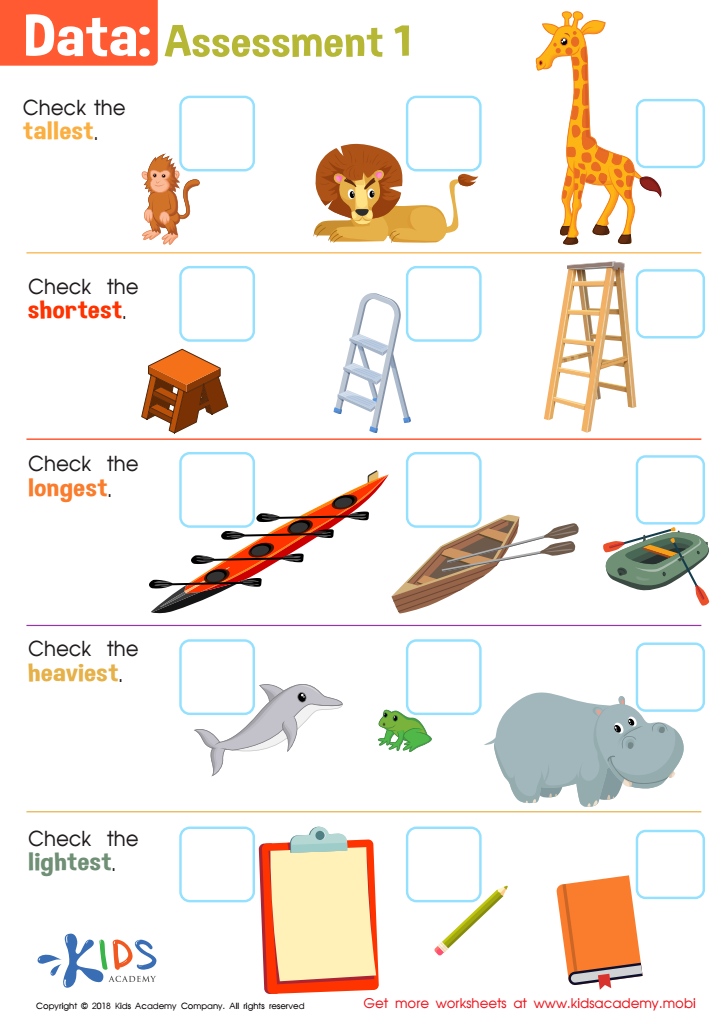
Data: Assessment 1 Worksheet
This free worksheet helps you assess where your young students are with measurement superlatives like tallest, shortest, heaviest, longest and lightest. It features cute, colorful pics of familiar objects so your kids have a reference, and helps you identify areas to work on.
Data: Assessment 1 Worksheet
Worksheet
Join Kids Academy for Free
Who is primarily going to use this learning content?



.jpg)



Drawing conclusions is a critical skill for children aged 5-9, as it plays a fundamental role in their cognitive development and understanding of the world. Parents and teachers should care about fostering this skill because it enhances critical thinking and comprehension abilities. When children learn to draw conclusions, they can make informed decisions based on evidence, underlying patterns, and observations, which are essential skills not only for academic success but also for everyday problem-solving.
At this age, children are beginning to interact with various texts and real-life scenarios that require them to synthesize information. Encouraging discussions around story conclusions, such as asking "What do you think will happen next?" fosters prediction skills and helps children connect the dots between different pieces of information. This practice enhances language development by expanding their vocabulary and storytelling capabilities.
Additionally, drawing conclusions nurtures emotional intelligence as children learn to read social cues and understand others' feelings. Parents and teachers can create engaging activities, such as reading prompts or puzzles that stimulate imaginative thinking and reasoning. When children master this skill early on, they build a strong foundation for more complex analytical skills they will need later in school and life. Thus, supporting this process is vital for holistic child development.








