
Geometry understanding Worksheets for Ages 5-9
3 filtered results
Difficulty Level
Grade
Age
-
From - To
Subject
Activity
Standards
Unlock the world of shapes and spatial understanding with our Geometry Understanding Worksheets for ages 5-9! Tailored to build foundational math skills, these engaging worksheets help young learners explore key geometric concepts through fun and interactive activities. From recognizing shapes and patterns to understanding symmetry and spatial reasoning, our carefully crafted exercises promote critical thinking and problem-solving. Perfect for classroom use or at-home learning, these downloadable worksheets support a solid math foundation while keeping kids captivated and eager to learn more. Give your child a head start in math with our expert-designed geometry resources!
Favorites
With answer key
Interactive
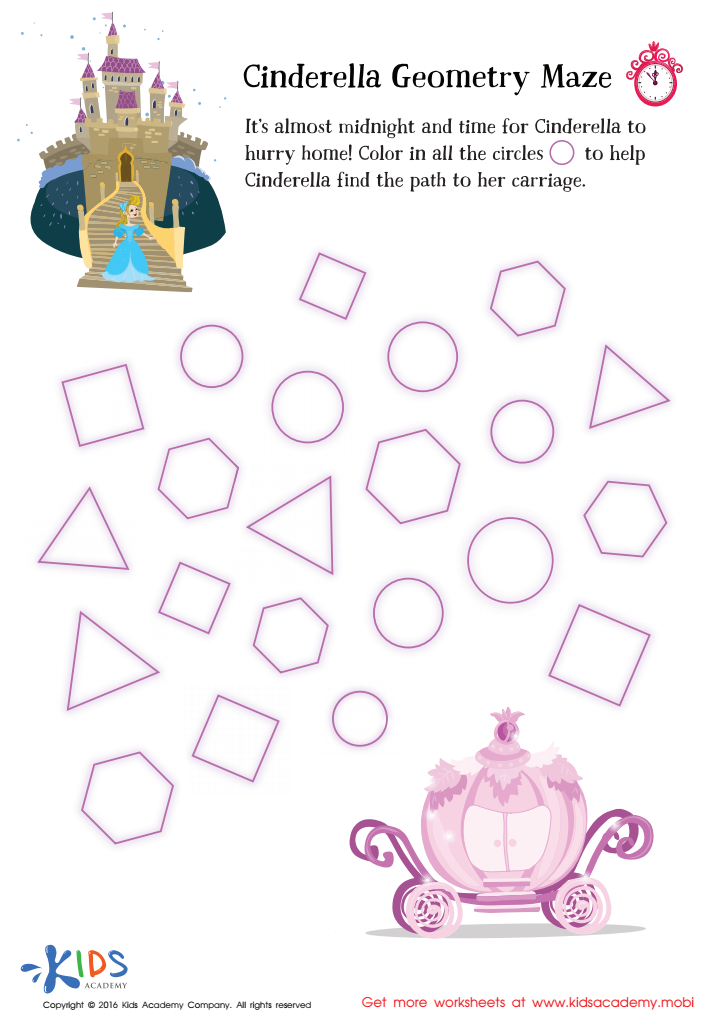
Cinderella Geometry Maze Worksheet
Help Cinderella hurry home! Your preschooler will have fun problem-solving and sorting shapes in this geometric maze. As they shade in the circles, they'll be helping their favorite princess reach her carriage on time. Not only that, but they'll strengthen their logic skills in the process. Get this and other fairy tale mazes to keep them entertained while learning.
 Assign to My Students
Cinderella Geometry Maze Worksheet
Worksheet
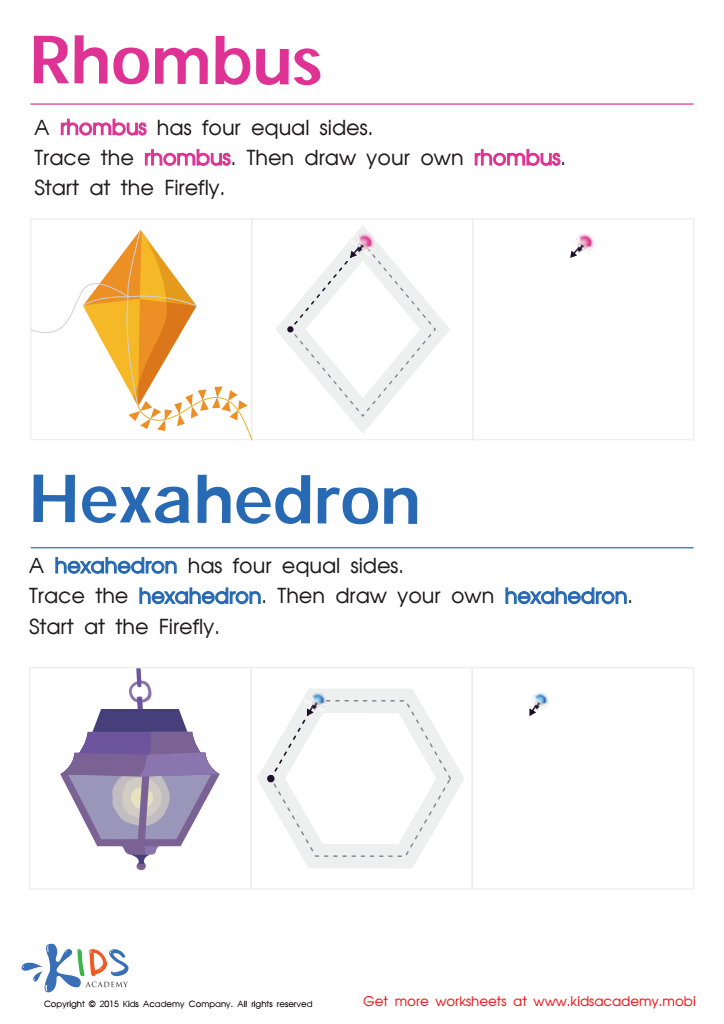
Draw a Rhombus And a Hexahedron Printable
Trace, draw and recognize shapes like rhombus, hexahedron and more! Start with the firefly to trace a rhombus, then use the yellow kite to remember the shape. Use the light to trace and draw a hexahedron. Learn with the best!
Draw a Rhombus And a Hexahedron Printable
Worksheet
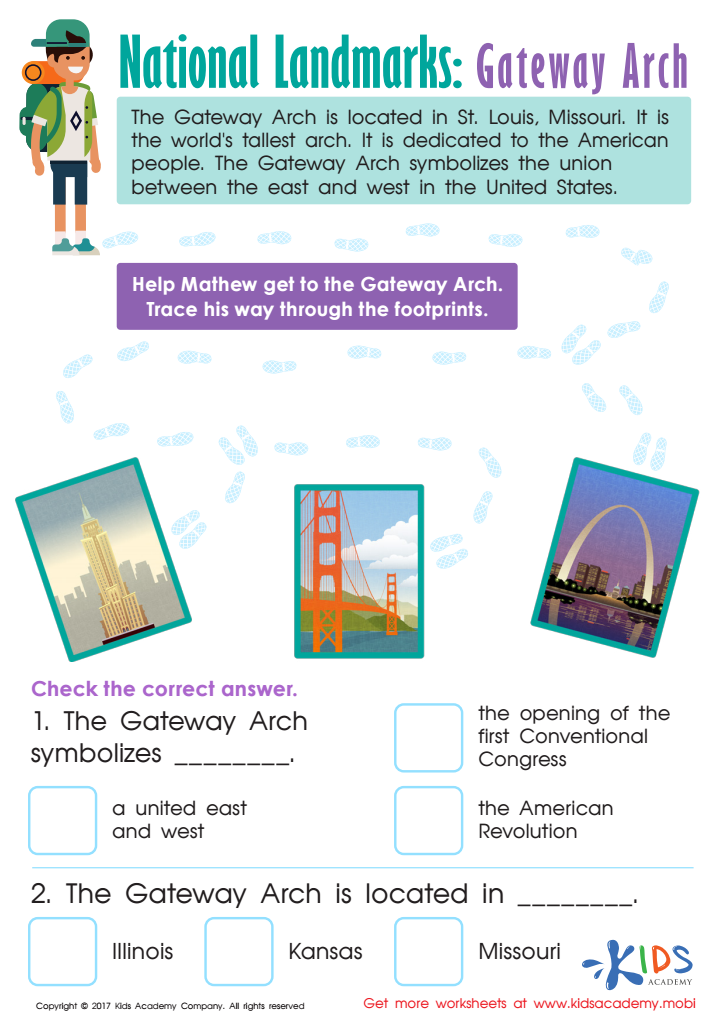
Gateway Arch Printable Worksheet
Explore America with your child! This printable worksheet takes them to St. Louis, Missouri's iconic Gateway Arch. As they learn about its history, they'll be quizzed with fun-filled facts. A great way to discover and appreciate this amazing national landmark! (80 words)
Gateway Arch Printable Worksheet
Worksheet
Join Kids Academy for Free
Who is primarily going to use this learning content?







.jpg)
Geometry is a cornerstone of early childhood education because it helps young children develop crucial cognitive and spatial skills. For ages 5-9, grasping basic geometric principles can dramatically enhance a child's ability to think critically and solve problems. Learning about shapes, sizes, patterns, and spatial relationships lays the foundation for more complex mathematical and scientific concepts.
Additionally, geometry is intrinsically linked to real-world applications. Understanding spatial relationships helps children navigate their environments, such as knowing how to follow directions, organize their space, and even understand maps. This practical knowledge extends into everyday activities and can aid in safety, such as reasoning about traffic patterns while walking or biking.
Young learners also engage their fine motor skills when playing with geometric toys, like building blocks and puzzle games. These activities benefit hand-eye coordination, which is vital as they learn to write and perform other manual tasks.
Moreover, the process of studying geometry inherently fosters creativity. Children use imagination to manipulate shapes and recognize patterns, forming the building blocks for artistic endeavors.
Educators and parents who prioritize geometry ensure that children build a well-rounded skill set that supports academic achievement and overall development. Early geometry engagement sets a path for lifelong learning and critical thinking.








