Identifying shapes Worksheets for Ages 5-9
40 filtered results
-
From - To
Unlock your child's potential with our engaging "Identifying Shapes" worksheets tailored for ages 5-9. These printable activities are designed to help young learners recognize and identify various shapes while enhancing their cognitive and fine motor skills. Perfect for both classroom and home use, our worksheets support foundational geometry lessons through fun and interactive exercises. Whether your child is just starting to learn basic shapes or moving on to more complex figures, Kids Academy offers an array of activities to ensure a comprehensive understanding. Download now to give your child a head start in math and geometry skills!
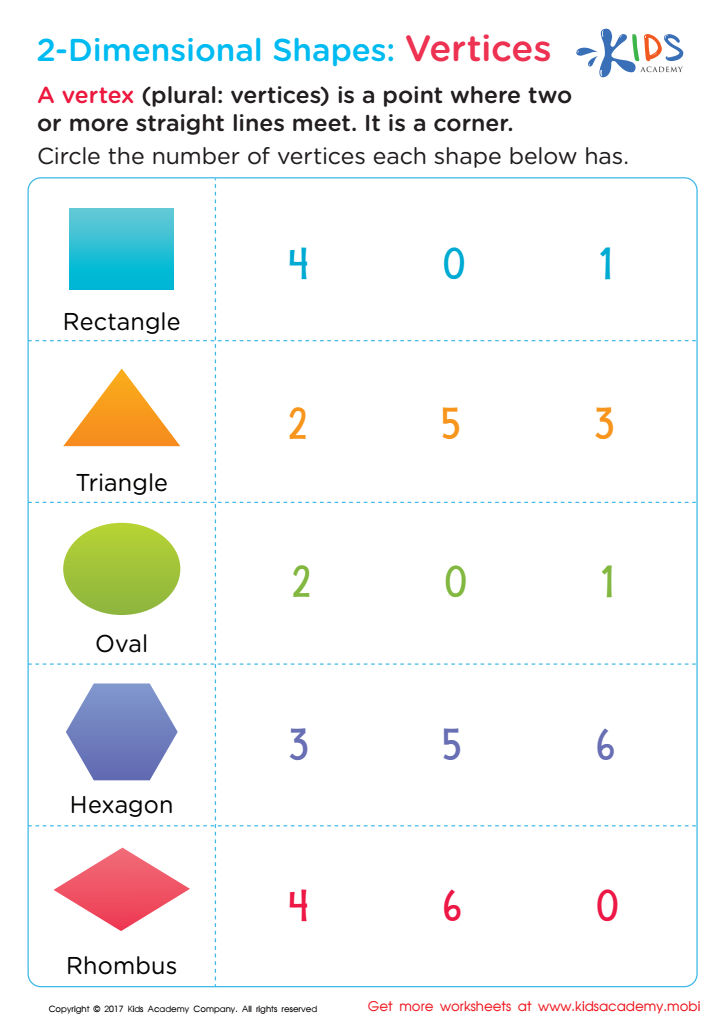
Two–Dimensional Shapes: Vertices Printable
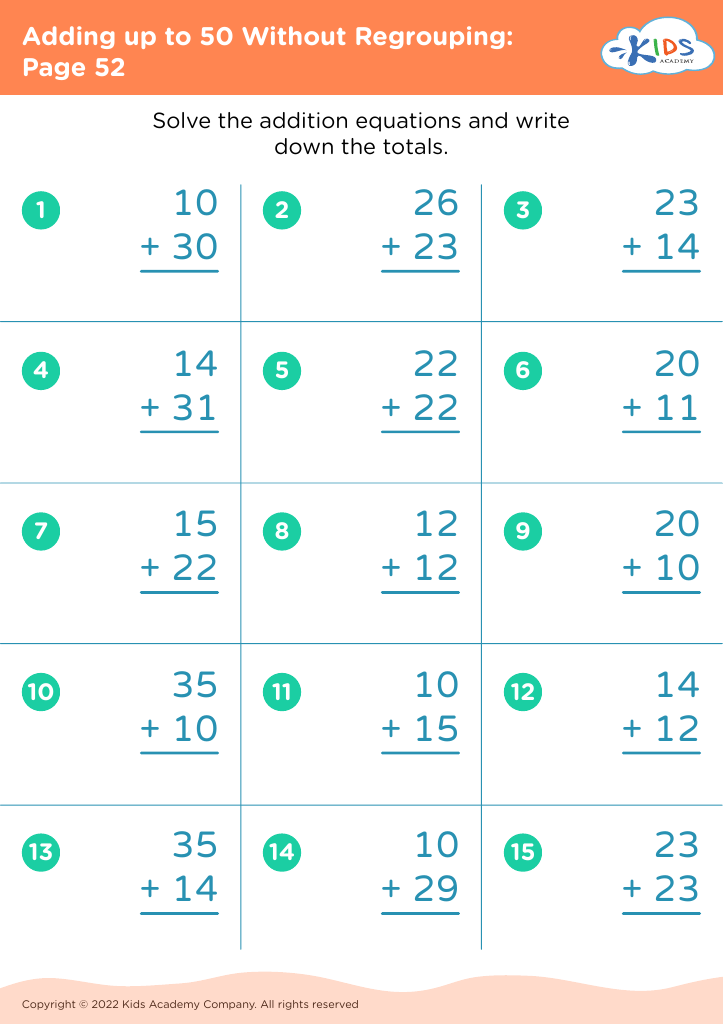
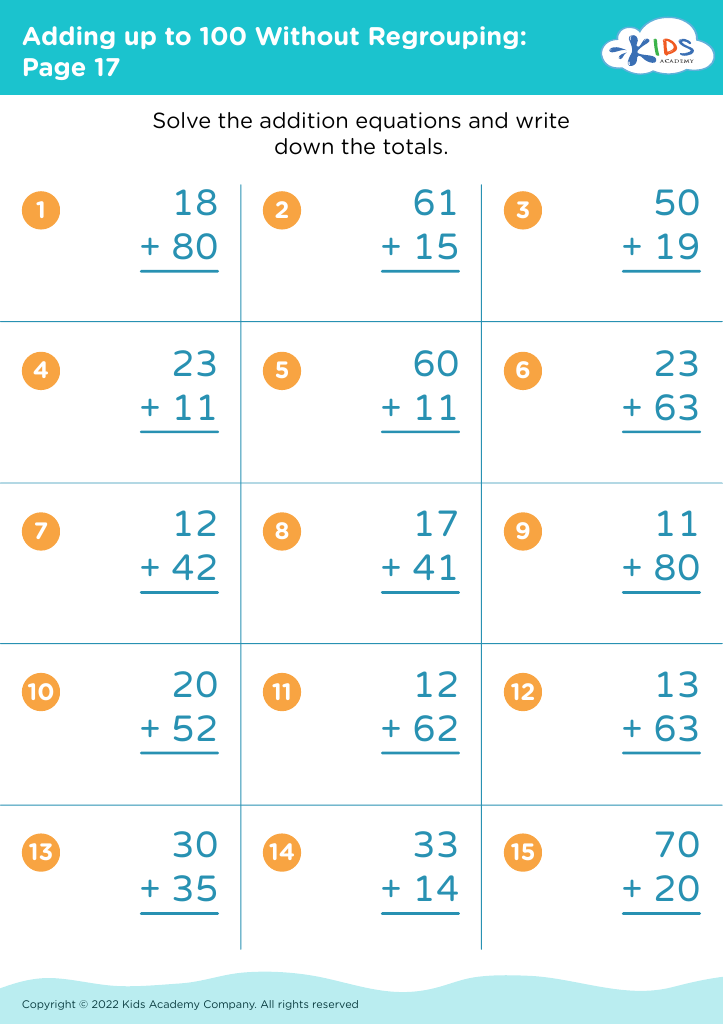
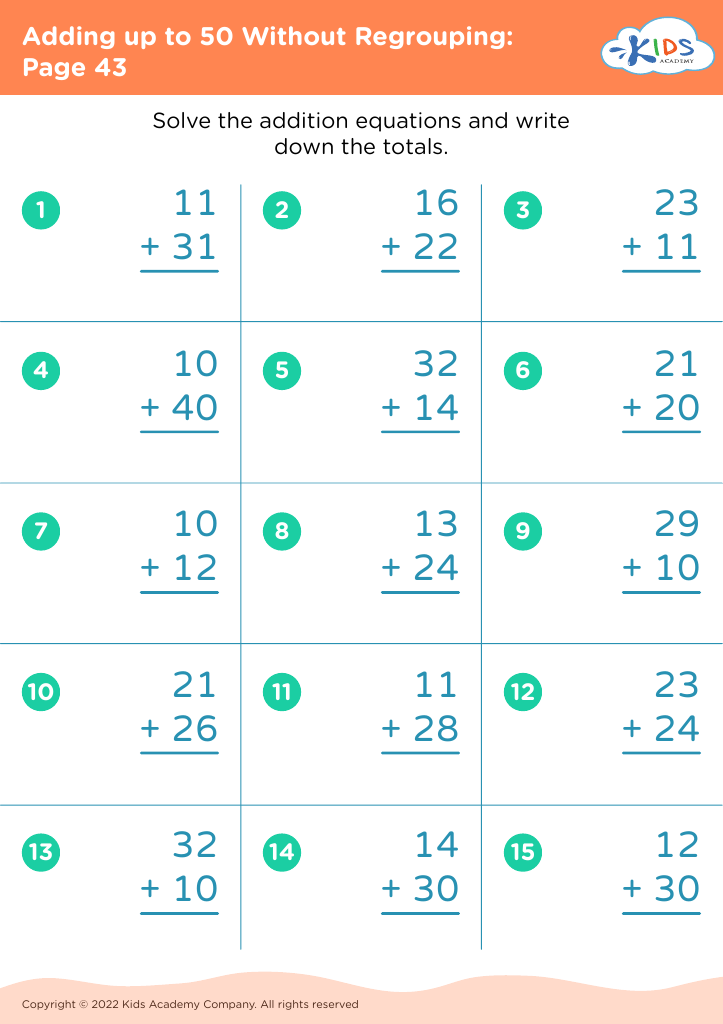
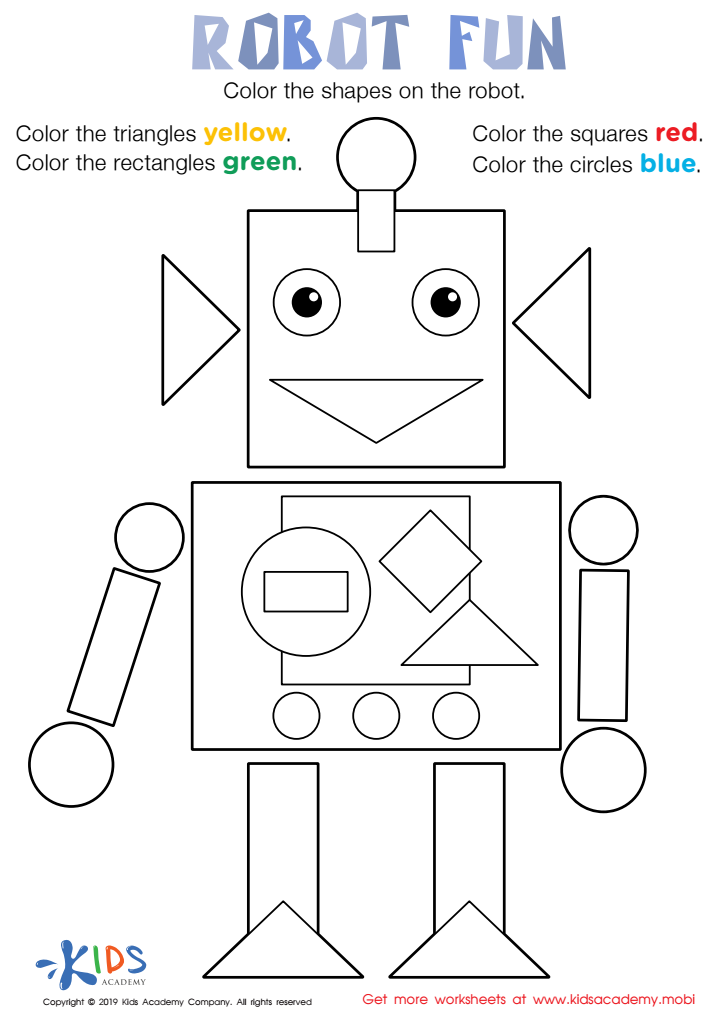
Robot Fun Worksheet
 Assign to My Students
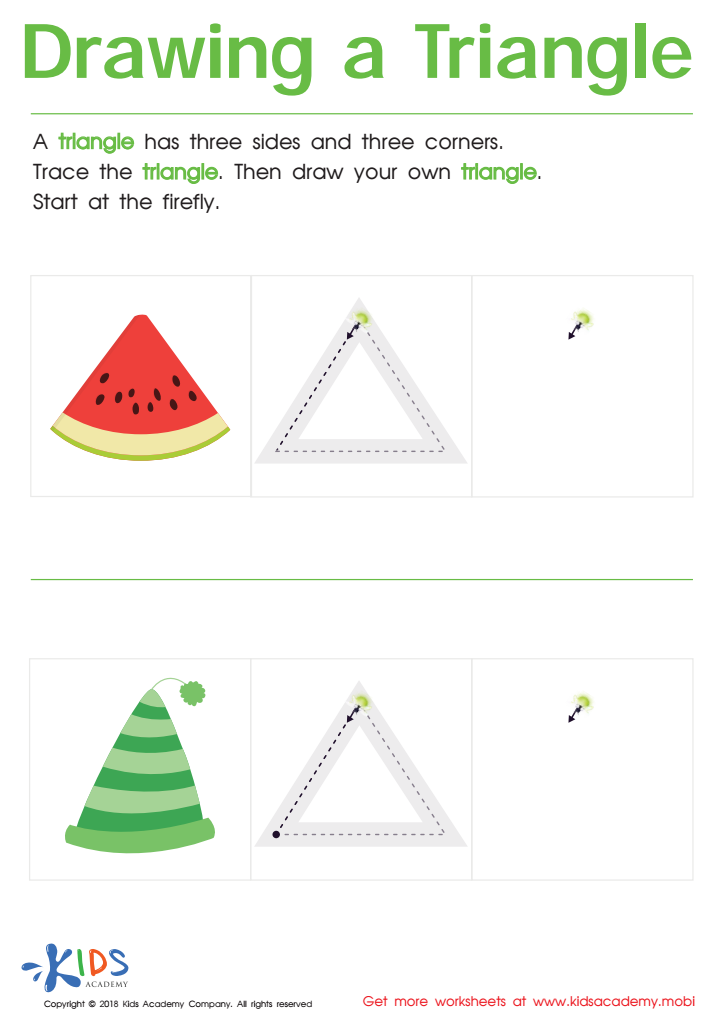
Drawing a Triangle Worksheet
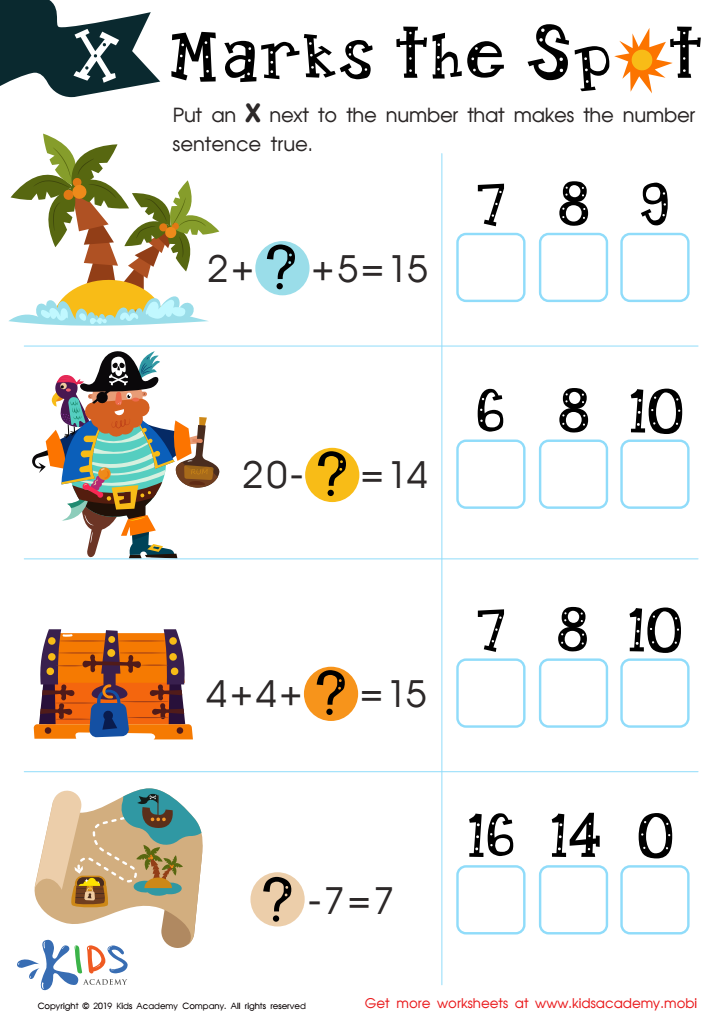
X Marks the Spot Worksheet
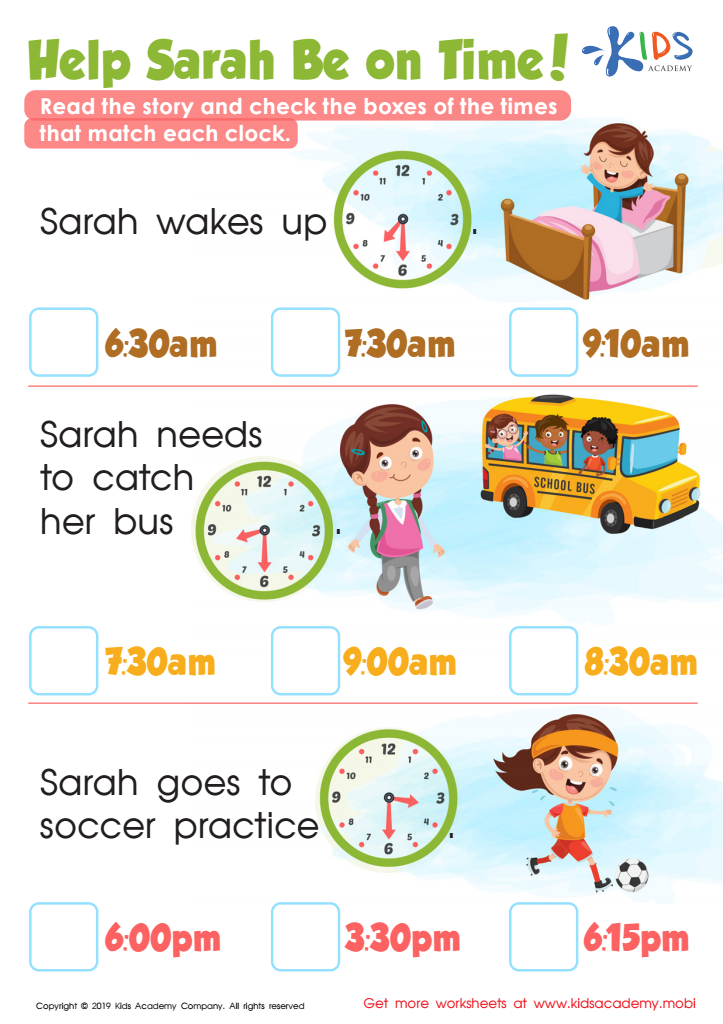
Help Sarah Be on Time! Worksheet
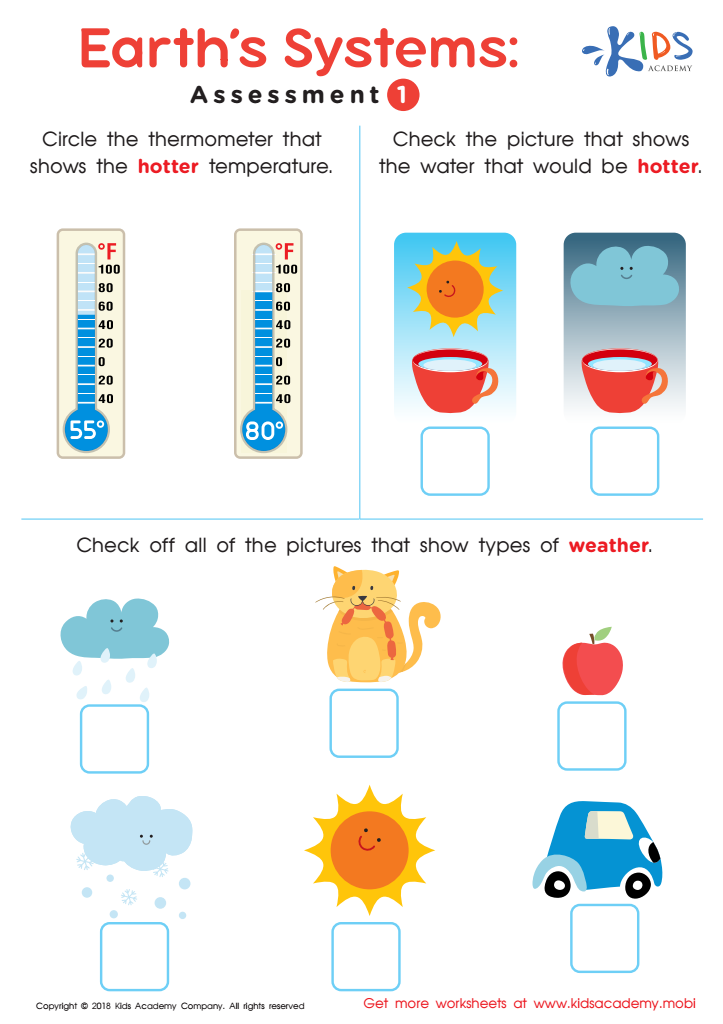
Earth's Systems: Assessment 1






.jpg)
Identifying shapes is a foundational skill that significantly impacts a child's cognitive development and academic success. For children aged 5-9, understanding shapes goes beyond simple recognition; it's about forming the building blocks for more complex mathematical and spatial reasoning skills. This age group is at a crucial stage where their brains absorb and categorize visual information efficiently. Learning to identify shapes enhances their ability to recognize patterns, essential for problem-solving in mathematics and everyday life.
Shapes also play a pivotal role in developing language and literacy skills. When children describe shapes using terms like "sides," "corners," or "symmetry," they are practicing descriptive vocabulary, which boosts their overall language development. This descriptive language and spatial awareness translate into better reading comprehension and writing abilities.
Moreover, shaping identification cultivates fine motor skills. Activities like drawing, cutting, and assembling shape-related projects improve hand-eye coordination and dexterity. For older kids in this range, it sets the groundwork for geometry and trigonometry, making future learning more accessible.
Emotionally and socially, working with shapes can be a collaborative and enjoyable activity, enhancing teamwork and sharing skills during group projects. Therefore, parents and teachers should prioritize shape identification to holistically boost a child's intellectual, linguistic, and motor development.








