Improve observational skills Worksheets for Ages 5-9
3 filtered results
-
From - To
Enhance your child's observational skills with our engaging worksheets designed for ages 5-9. These carefully crafted activities encourage children to notice details, make comparisons, and enhance their focus through fun tasks. By exploring various picture-based exercises, children will learn to identify objects, colors, and patterns while developing critical thinking abilities. Ideal for both classroom and home use, our worksheets provide a playful learning experience while fostering essential cognitive skills. As kids complete each activity, they will build confidence in their ability to observe and interpret the world around them. Start your child's journey to sharper observation skills today!
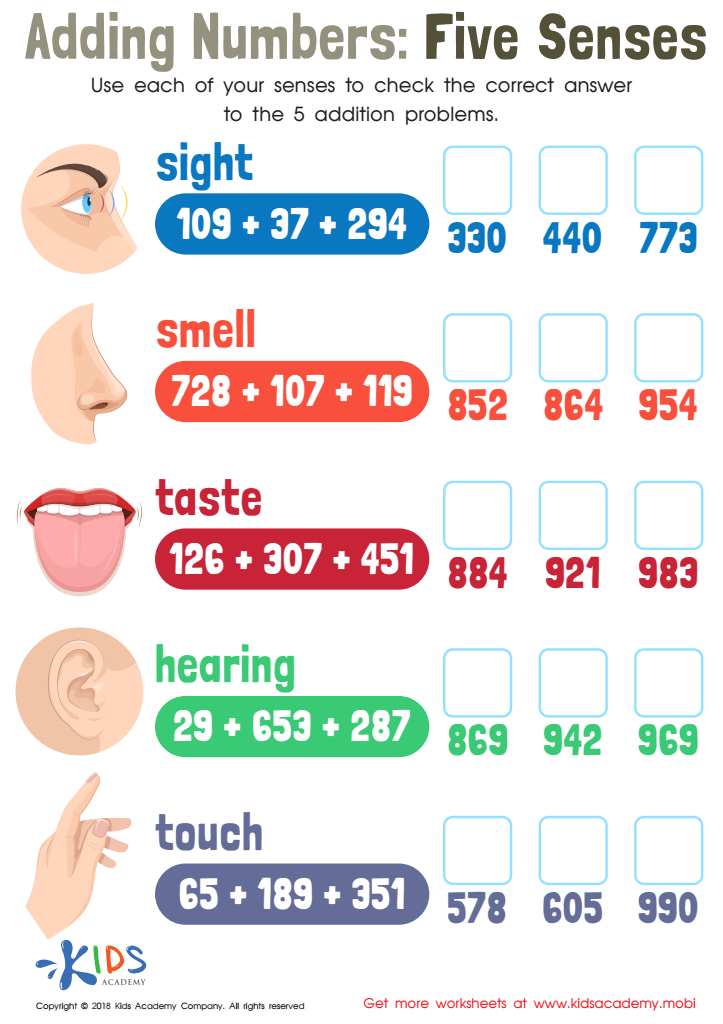
Adding Numbers: Five Senses Worksheet
 Assign to My Students
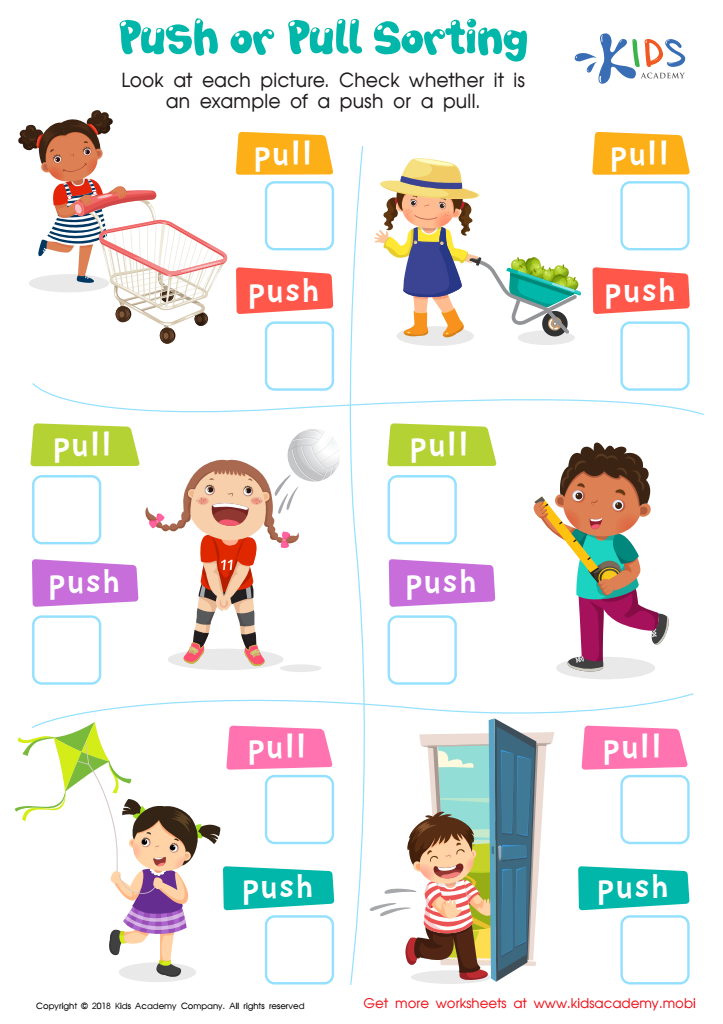
Push or Pull Sorting Worksheet







Improving observational skills in children aged 5 to 9 is essential for their overall cognitive and social development. At this formative stage, children are naturally curious and eager to explore their surroundings. By honing their observational skills, they learn to notice details, recognize patterns, and make connections, which are critical components of critical thinking and problem-solving.
Effective observation encourages active learning. When children learn to observe closely, they engage more meaningfully with their environment, enhancing their comprehension of academic subjects such as science, art, and language. For instance, noticing the colors and shapes of leaves during a nature walk can lead to discussions about biology and seasonal changes, blending play with learning.
Additionally, strong observational skills foster social interactions. Children who observe cues in body language and facial expressions develop empathy and emotional intelligence. They learn to navigate relationships and communicate effectively with peers.
For parents and teachers, supporting the enhancement of observational skills means empowering children to become independent thinkers and lifelong learners. This can be achieved through activities that encourage exploration, inquiry, and reflection, laying the groundwork for future academic and social success. Emphasizing these skills now will benefit children in and out of the classroom for years to come.








