
Improves attention to detail Worksheets for Ages 5-9
3 filtered results
Difficulty Level
Grade
Age
-
From - To
Subject
Activity
Standards
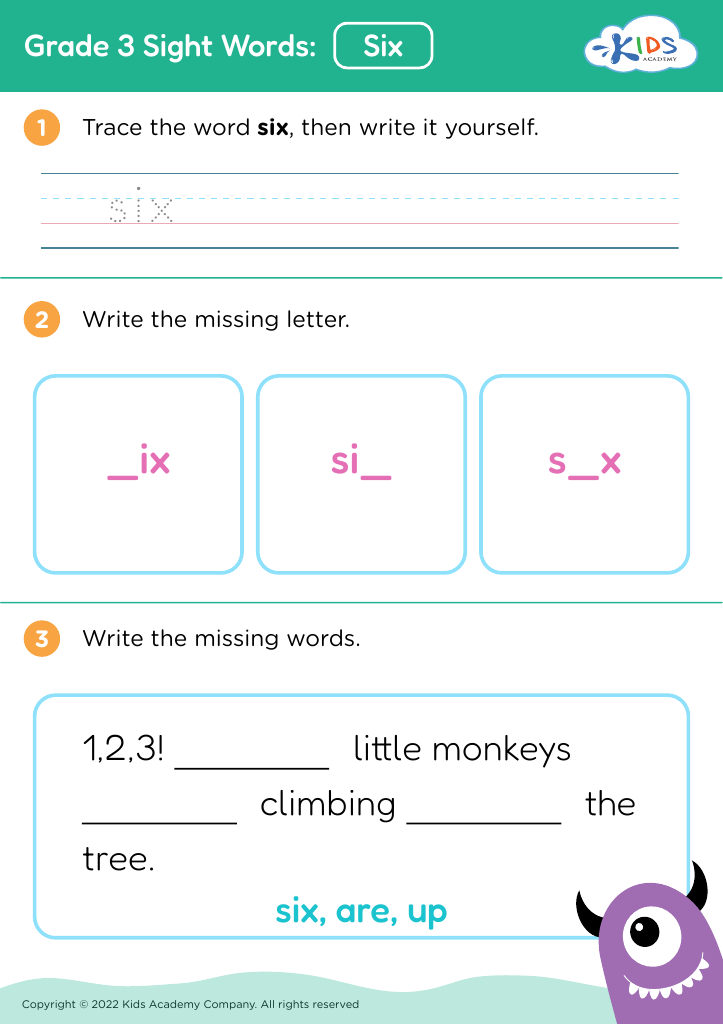
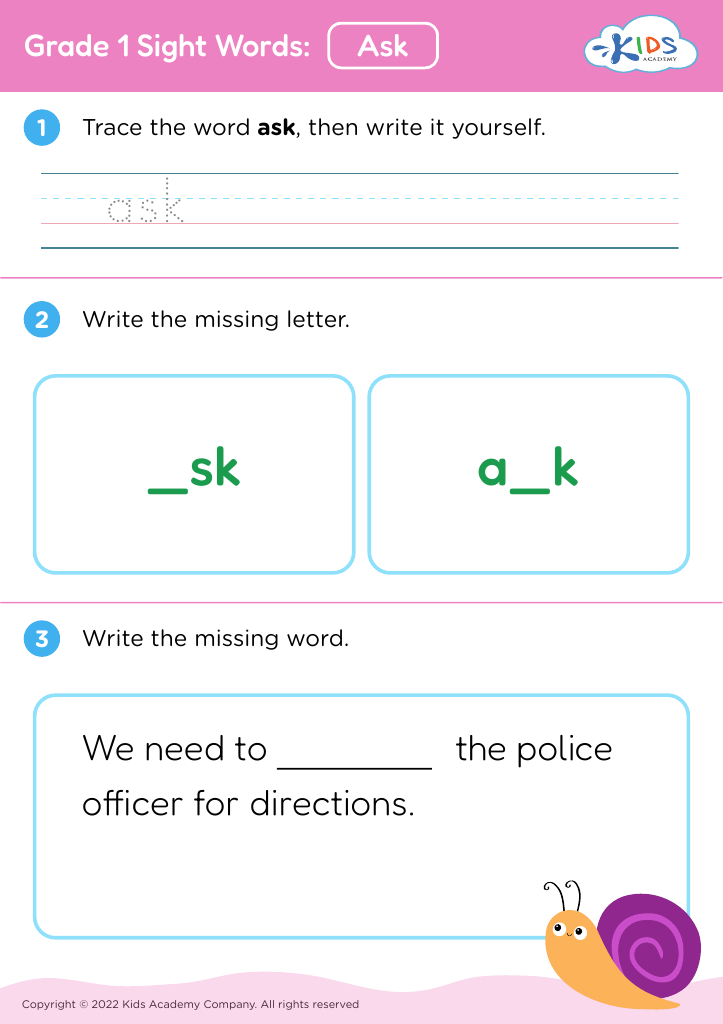
Nurture your child's focus and precision with our "Improves Attention to Detail Worksheets for Ages 5-9." Designed by experienced educators, these engaging and fun activities enhance your child's ability to notice and remember details. Ideal for young learners, each worksheet develops critical thinking and fine motor skills while supporting various subjects. Whether at home or in the classroom, our worksheets provide an excellent resource to boost your child's academic performance and concentration. Start today to help your child excel with carefully crafted exercises that make learning delightful and effective! Explore our collection for a brighter educational journey.
Favorites
With answer key
Interactive

Join Kids Academy for Free
Who is primarily going to use this learning content?






Improving attention to detail in children aged 5-9 is crucial since this developmental stage lays the foundation for future learning, cognitive development, and academic success. At this age, children are developing critical thinking skills, basic numeric and literacy competence, and their capacity to understand instructions. Encouraging attentiveness to details helps them become more efficient learners, as it fosters persistent, focused behavior and quality output in their tasks.
Parents and teachers who emphasize attention to detail can help children avoid careless mistakes, understand core concepts more thoroughly, and achieve a sense of accomplishment in their endeavors. For instance, in reading, it improves comprehension, leading to better academic performance and encouraging a love for learning. In mathematics, it minimizes errors and aids in developing problem-solving skills.
Additionally, attentiveness enhances their organizational skills and assures heightened observational abilities, which are necessary for both academic pursuits and daily living activities. By fostering an environment that nurtures these skills, parents and teachers equip children with lifelong positive habits, including responsibility, time management, and a meticulous approach toward their goals, all of which are essential not only for academic success but for their future personal and professional lives.








