
Improving comprehension skills Worksheets for Ages 5-9
3 filtered results
Difficulty Level
Grade
Age
-
From - To
Subject
Activity
Standards
Enhance your child's reading and understanding with our "Improving Comprehension Skills Worksheets for Ages 5-9." Designed to engage young learners, these worksheets focus on developing critical thinking, vocabulary, and analytical skills. Each exercise is carefully crafted to suit different proficiency levels, ensuring gradual and consistent improvement. Our worksheets promote a love for reading through engaging stories and exercises that pinpoint essential comprehension strategies. Ideal for home or classroom use, they provide a fun and educational way to strengthen foundational skills. Give your child the tools they need to succeed in reading with Kid's Academy’s expertly-designed resources.
Favorites
With answer key
Interactive
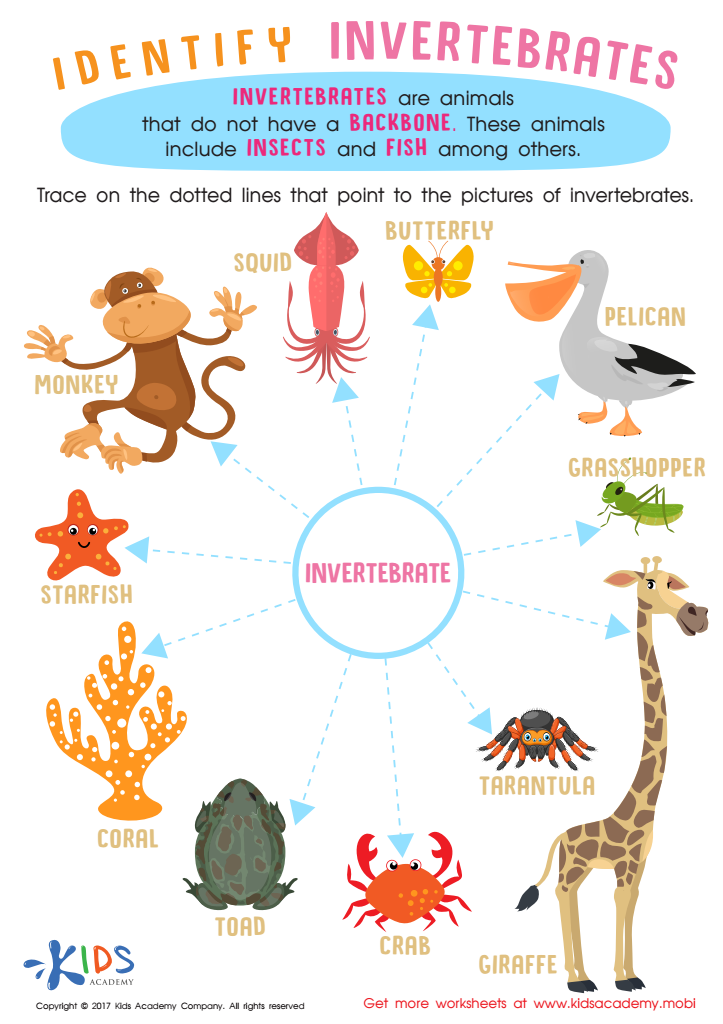
Invertebrates Worksheet for Grade 3
Kids explore the world of invertebrates with this worksheet for grade 3. Invertebrates are animals without a backbone, such as fish and insects. Kids must identify and select them from a group of animals. This activity is sure to stimulate their curiosity and help them discover more about these remarkable creatures.
 Assign to My Students
Invertebrates Worksheet for Grade 3
Worksheet
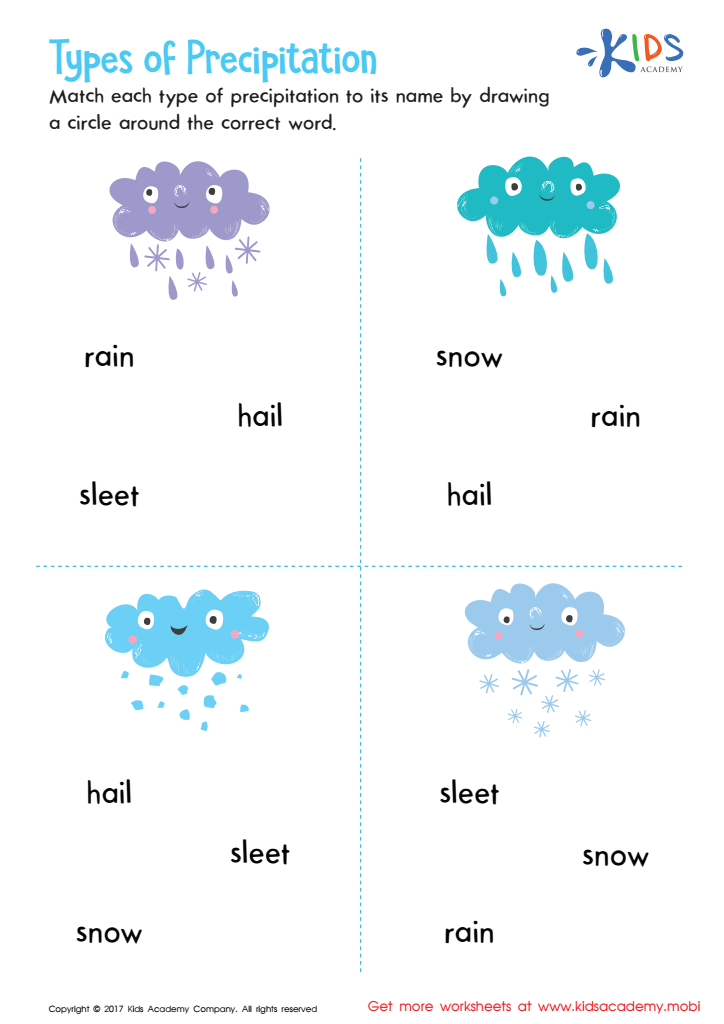
Types of Precipitation Printable
Science has a big impact on our world, and teaching kids about weather helps them understand how their learning applies to their lives. Our worksheet reviews different types of weather, so kids can look out the window and know what's happening. It covers familiar types of precipitation and more challenging ones like sleet or hail. Kids can use this to build a mental library of scientific knowledge for the future, even from places that don't get much snow.
Types of Precipitation Printable
Worksheet
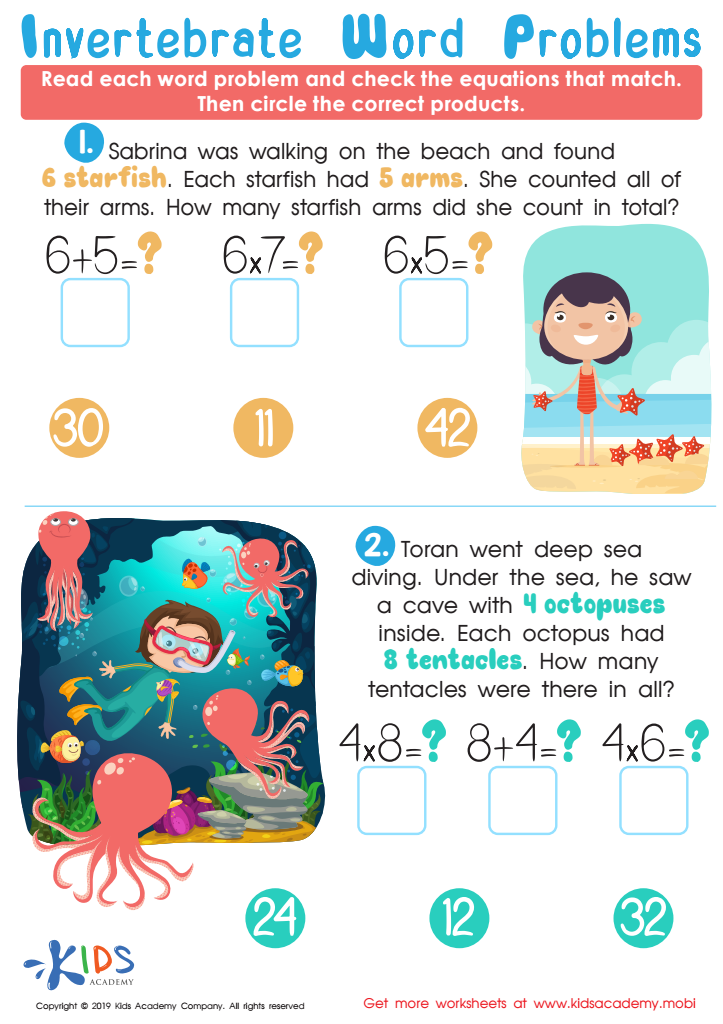
Invertebrate Problems Worksheet
Mix math and science with fun word problems to explore invertebrates under the sea. Animals like starfish and octopus that don't have a backbone are invertebrates. Read word problems with your kids and use multiplication to work out the answer and see how many arms or tentacles they spotted!
Invertebrate Problems Worksheet
Worksheet
Join Kids Academy for Free
Who is primarily going to use this learning content?






Improving comprehension skills for children aged 5-9 is crucial for their educational success and overall cognitive development. At this formative stage, comprehension influences how kids understand and process information, affecting all areas of learning. Strong comprehension enables children to make sense of what they're reading, fostering a love for books and enhancing imagination. This skill also supports critical thinking, allowing young minds to ask questions, make inferences, and draw conclusions based on context.
For parents and teachers, focusing on comprehension in early childhood lays a solid foundation for future academic achievement. Comprehension is integral to mastering other subjects such as math, science, and social studies. When children understand the material, they are more likely to stay engaged and perform better academically, reducing frustrations and increasing their confidence.
Moreover, improving comprehension skills helps in social interactions. Understanding the subtleties of language and communication aids in better relationships and effective conflict resolution. Since comprehension is closely linked to listening skills, it enhances children’s ability to follow instructions and complete tasks efficiently.
By prioritizing activities that enhance comprehension—like reading aloud, asking open-ended questions, and encouraging storytelling—parents and teachers equip children with essential tools that will benefit them throughout their lives, both in and out of the classroom.








