
Mathematical understanding Worksheets for Ages 5-9
3 filtered results
Difficulty Level
Grade
Age
-
From - To
Subject
Activity
Standards
Enhance your child's mathematical skills with our engaging Mathematical Understanding Worksheets, designed specifically for ages 5-9. These comprehensive worksheets cater to various learning styles, helping young learners grasp essential concepts such as counting, addition, subtraction, and basic geometry. Our carefully crafted activities encourage problem-solving, critical thinking, and number recognition, making math fun and accessible. Parents and teachers can easily print these worksheets for at-home or classroom use, ensuring a versatile learning experience. With colorful designs and age-appropriate challenges, these worksheets foster a love for math while building a strong foundation for future academic success. Explore the world of numbers today!
Favorites
With answer key
Interactive
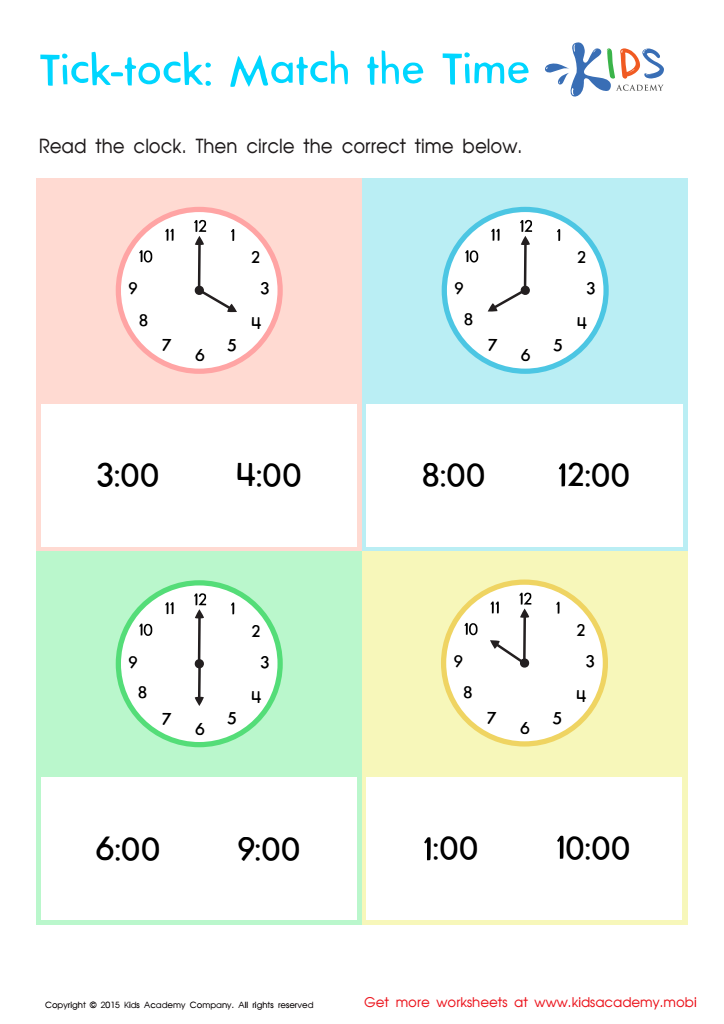
Telling The Time Worksheet: Part 4
Test your skills in telling the time! Circle the right time on 4 analog clock faces.
 Assign to My Students
Telling The Time Worksheet: Part 4
Worksheet
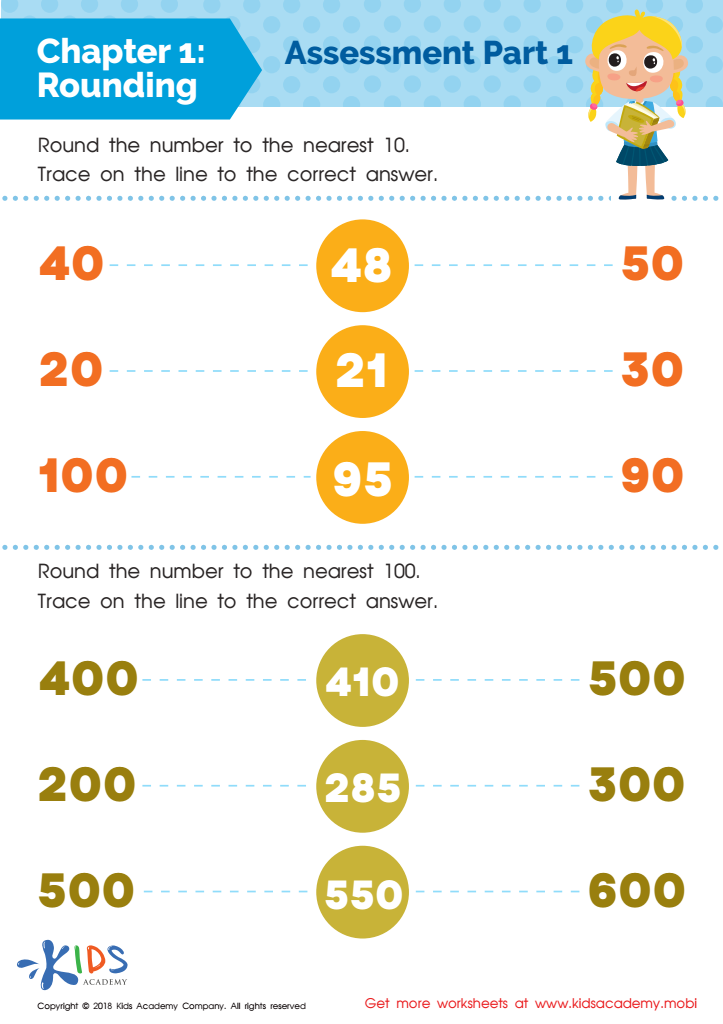
Rounding Worksheet 3rd Grade
Practice and refresh your child's 3rd grade rounding skills with this quick worksheet! Have them round each set of numbers to the nearest 10s or 100s. This simple exercise will help maintain math fluency.
Rounding Worksheet 3rd Grade
Worksheet
Join Kids Academy for Free
Who is primarily going to use this learning content?





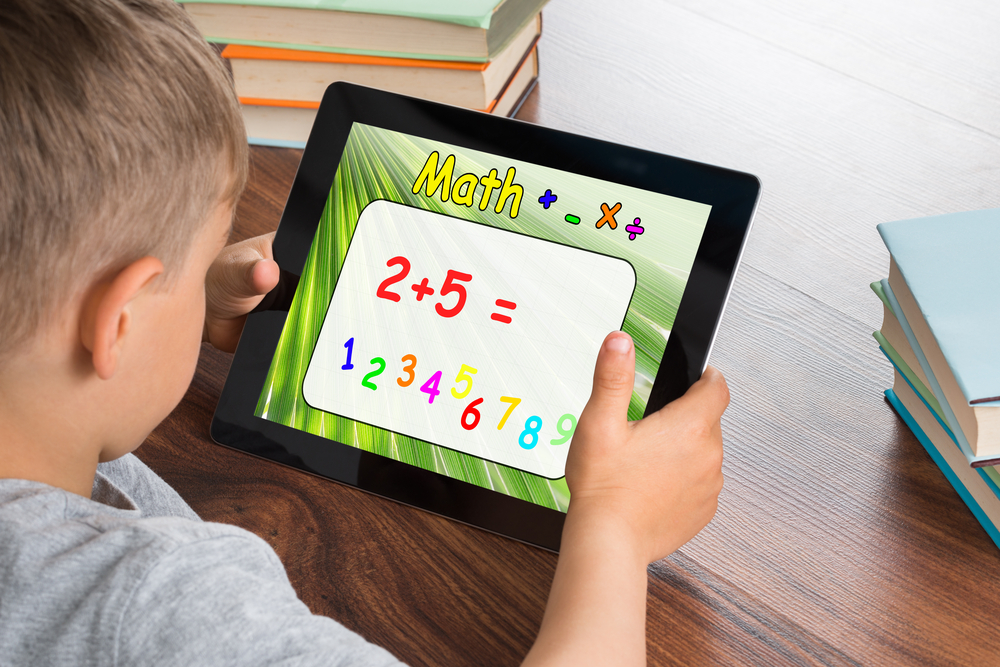
Mathematical understanding in children ages 5-9 lays the foundation for future academic success and critical thinking skills. During this formative period, children develop essential skills such as counting, number recognition, and basic operations, all of which are integral to advanced mathematical concepts later on. When parents and teachers prioritize this understanding, they foster a love for mathematics, making it less daunting and more accessible.
Mathematics plays a key role in everyday life, from budgeting allowance to measuring ingredients in cooking. By nurturing these skills, caregivers help children see the practical applications of math, increasing their engagement and curiosity. Furthermore, robust mathematical understanding enhances cognitive development by promoting problem-solving and logical reasoning.
Early engagement with mathematical concepts also sharpens a child's ability to think critically and independently, which translates into success not only in math but across various disciplines. As trends indicate declining math scores, the importance of proactive involvement in children's mathematical learning becomes even more apparent. Parents and teachers can create supportive, enriched environments that invite exploration and creativity in math, ultimately empowering children to become confident, competent individuals both in academics and everyday situations.








