
Money calculation skills Worksheets for Ages 5-9
3 filtered results
Difficulty Level
Grade
Age
-
From - To
Subject
Activity
Standards
Enhance your child's financial literacy with our "Money Calculation Skills Worksheets for Ages 5-9." Designed to make learning fun, these engaging exercises teach young learners essential math skills, such as counting money, making change, and recognizing currency. Our worksheets incorporate real-life scenarios, colorful illustrations, and age-appropriate challenges, ensuring a solid foundation in money management. Perfect for classroom use or at-home practice, these printable resources are tailored to fit a range of learning styles. Equip your child with the tools they need for future financial success with Kids Academy’s user-friendly worksheets!
Favorites
With answer key
Interactive
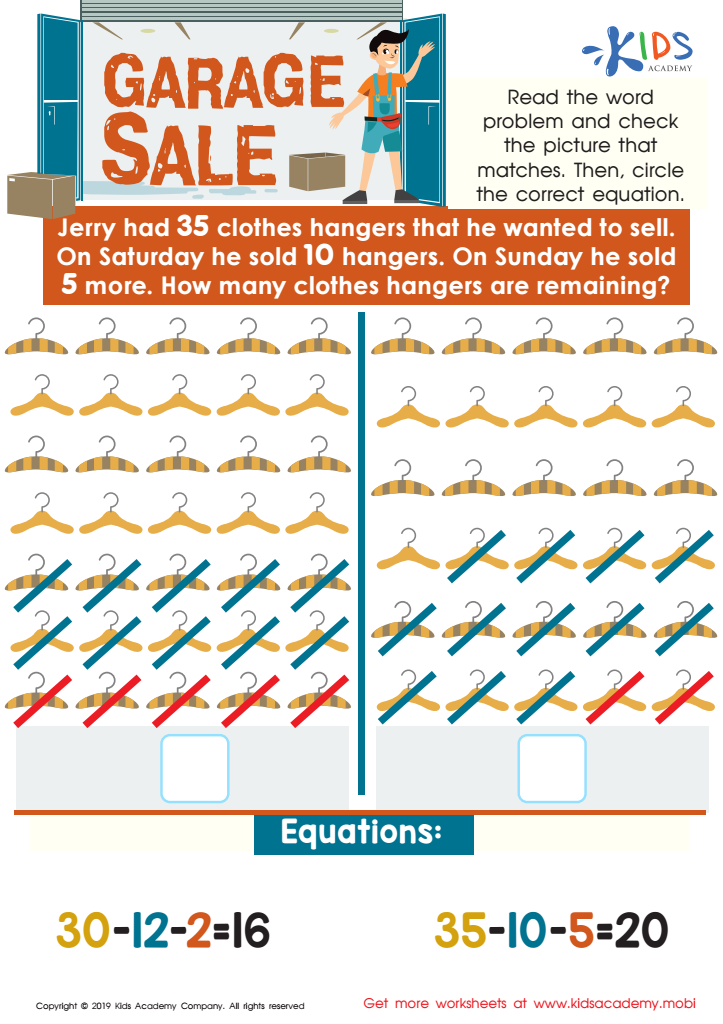
Garage Sale Worksheet
Help Jerry at his garage sale! With this worksheet, your child can practice subtraction word problems with multiple subtrahends. They'll read the problem, identify important info, circle the equation and solve it. Let your little math star have fun while helping Jerry out!
 Assign to My Students
Garage Sale Worksheet
Worksheet
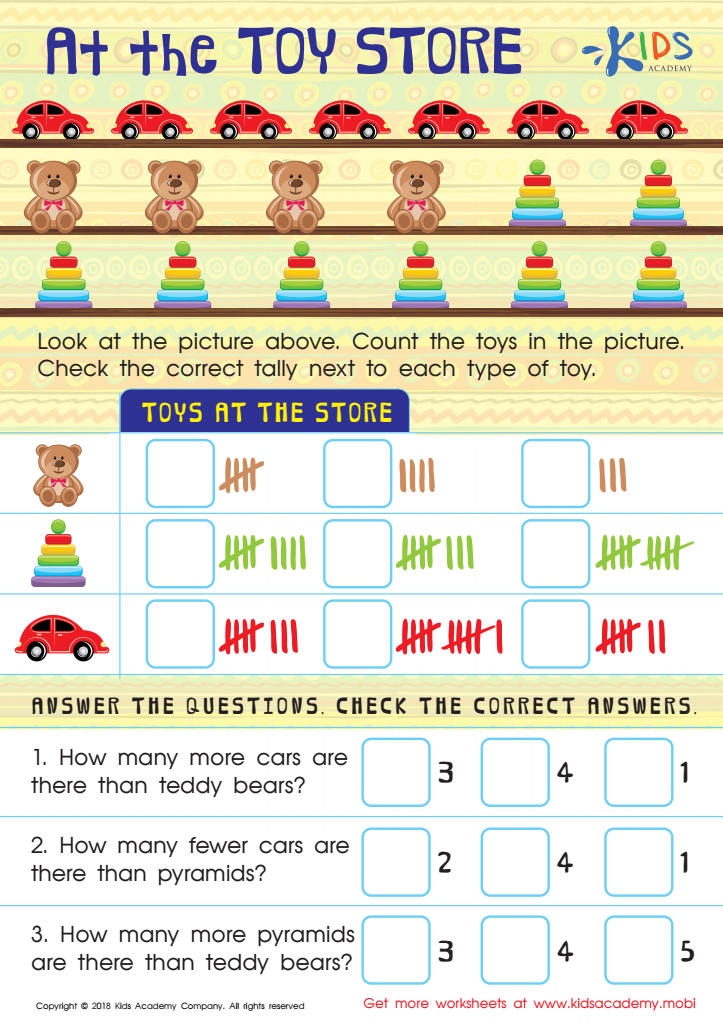
Tally Chart: At the Toy Store Worksheet
Kids Academy has a fun worksheet to help kids practice counting and using tally marks! They can think about the number of toys and compare them. At the bottom, help them answer the questions about the toys on this math page. It's an easy way to learn that one tally mark equals one item.
Tally Chart: At the Toy Store Worksheet
Worksheet
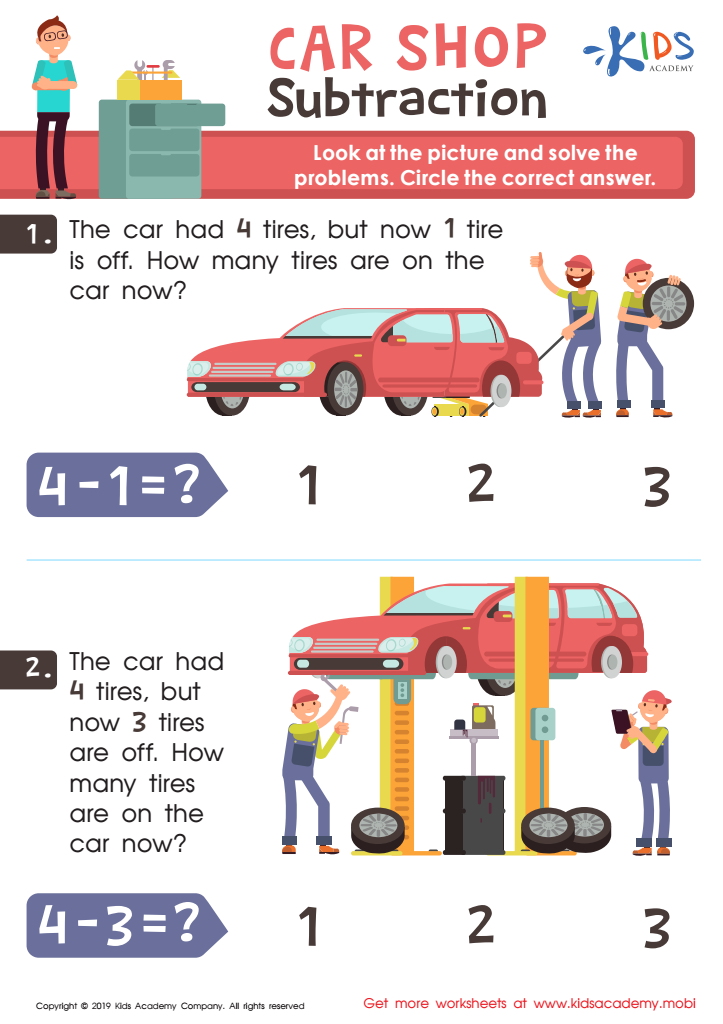
Car Shop Subtraction Worksheet
Encourage your kids to practice addition and subtraction with this worksheet. Read the word problems aloud, help them solve and check the answer from the provided options. With enough exercises and guidance, this task should be fairly easy.
Car Shop Subtraction Worksheet
Worksheet
Join Kids Academy for Free
Who is primarily going to use this learning content?







Parents and teachers should prioritize money calculation skills for children aged 5-9 because they lay the foundation for essential life skills. During these formative years, children are highly receptive to learning basic mathematical concepts that will later influence their financial literacy and decision-making abilities. Introducing money-related activities, such as counting coins and making small transactions, helps to solidify their understanding of numbers, addition, and subtraction in a practical context.
Understanding money isn't just about math; it teaches children the value of things, the importance of saving, and even the concept of earning and budgeting. These are critical skills needed for managing an allowance later on or saving for a desired item. Early exposure reduces the risk of future financial difficulties and fosters responsible attitudes towards spending and saving.
Additionally, money skills can boost a child's confidence and independence. When children grasp basic money calculations, they feel more competent and are better prepared to navigate real-world situations, such as paying at a store or understanding how much they owe. This hands-on learning approach can make math fun and engaging, encouraging a positive attitude towards the subject. By weaving money-related lessons into daily activities, parents and teachers can provide children with a practical and enjoyable mathematical learning experience.








