Musical instruments recognition Worksheets for Ages 5-9
3 filtered results
-
From - To
Introduce your young learners to the enchanting world of music with our engaging "Musical Instruments Recognition Worksheets for Ages 5-9." Expertly crafted to blend fun with education, these printable worksheets help children identify various musical instruments while enhancing their cognitive skills. Through vibrant illustrations and interactive activities, kids can explore and recognize different sounds and shapes of instruments, fostering a deeper appreciation for music. Perfect for both classroom and at-home learning, these worksheets support auditory discrimination, memory reinforcement, and vocabulary expansion, making them an invaluable resource for any early grade educator or parent. Let the musical adventure begin!
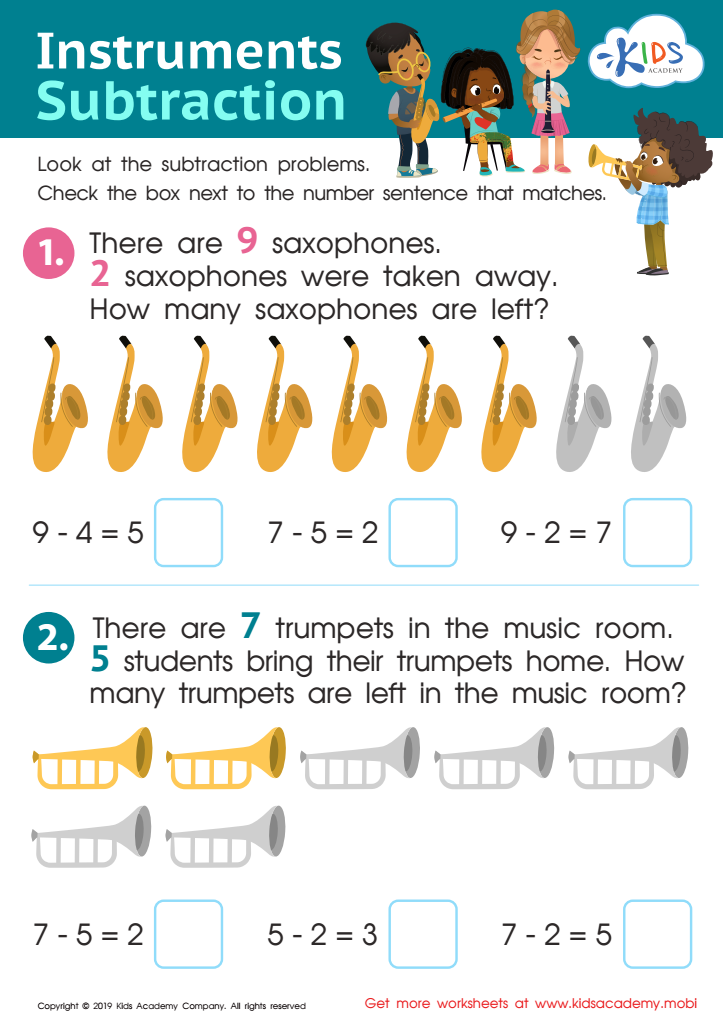
Instrument Subtraction Worksheet
 Assign to My Students
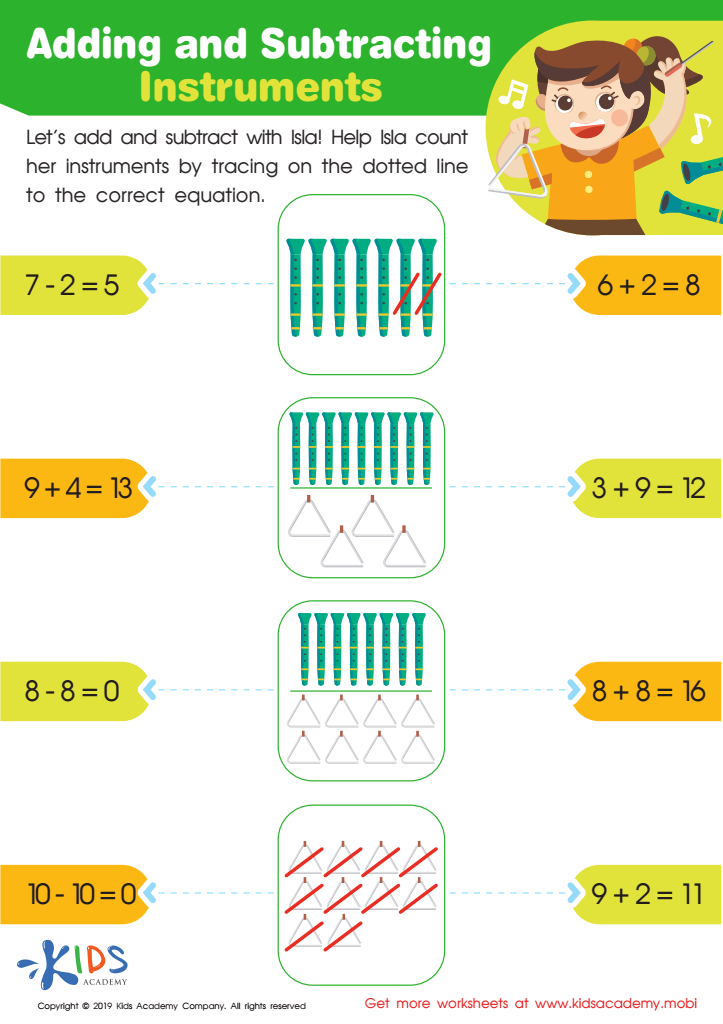
Adding and Subtracting: Instruments Worksheet
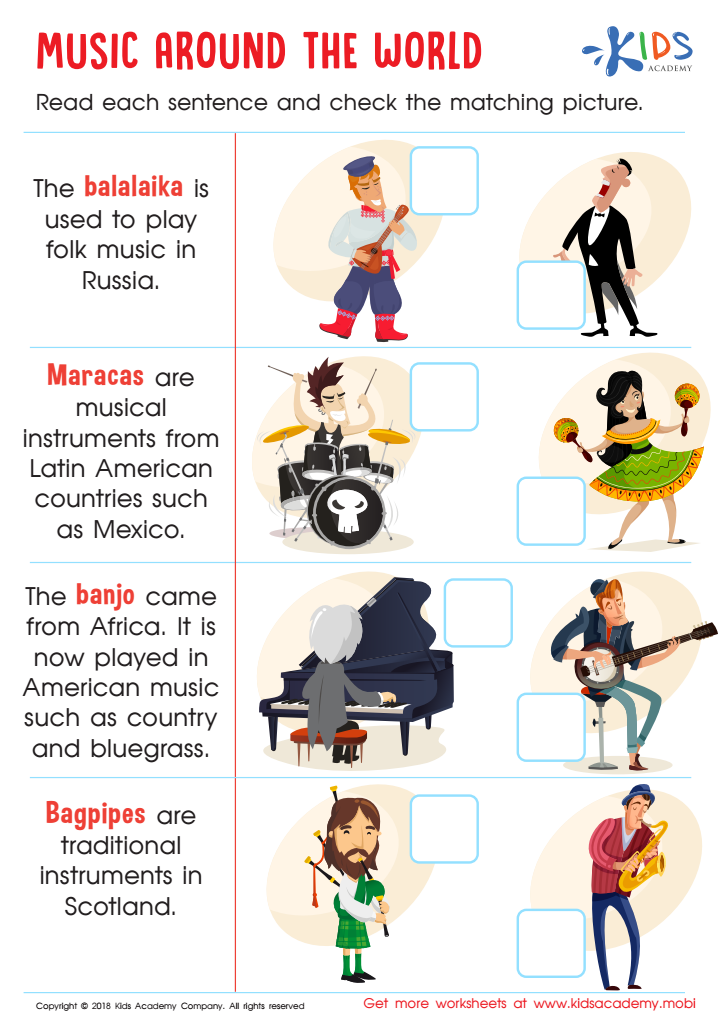
Music Around the World Worksheet







Introducing musical instrument recognition to children aged 5-9 can offer a myriad of benefits that both parents and teachers should highly regard. Music can play an integral part in a child's cognitive development, emotional well-being, and social skills.
Understanding different musical instruments can enhance cognitive abilities such as memory, attention, and pattern recognition. Learning to identify and differentiate between instruments helps children sharpen their listening skills and heighten auditory discrimination, which is foundational for literacy and numeracy skills. It also fosters creativity and imagination as children explore various sounds and rhythms, laying a groundwork for potential future musical endeavors or appreciation.
Emotionally, exposure to musical instruments can teach children about expressiveness and help them regulate their emotions through music. This emotional articulation is valuable for developing empathy, managing stress, and overall mental health.
Socially, playing and recognizing musical instruments promotes teamwork and cooperation. Whether participating in a classroom activity or collaborating in a music ensemble, children learn valuable lessons about communication and group dynamics. Group music activities necessitate patience, listening, and respecting others' contributions—skills that are beneficial in all areas of life.
In essence, recognizing musical instruments is more than just a fun activity for young children; it cultivates essential skills that contribute profoundly to their all-rounded development.








