
Number comparison skills Worksheets for Ages 5-9
3 filtered results
Difficulty Level
Grade
Age
-
From - To
Subject
Activity
Standards
Enhance your child’s number comparison skills with our engaging worksheets designed for ages 5-9! These resources provide fun and interactive exercises that help children understand greater than, less than, and equal to concepts. Through colorful visuals and age-appropriate challenges, kids will develop essential math skills while boosting their confidence. Perfect for homeschooling, classroom activities, or supplementary learning at home, our worksheets foster a playful learning environment. Whether your child is just starting to explore numbers or needs extra practice, our diverse activities cater to all levels. Download our printable worksheets today and watch your child excel in number comparisons!
Favorites
With answer key
Interactive
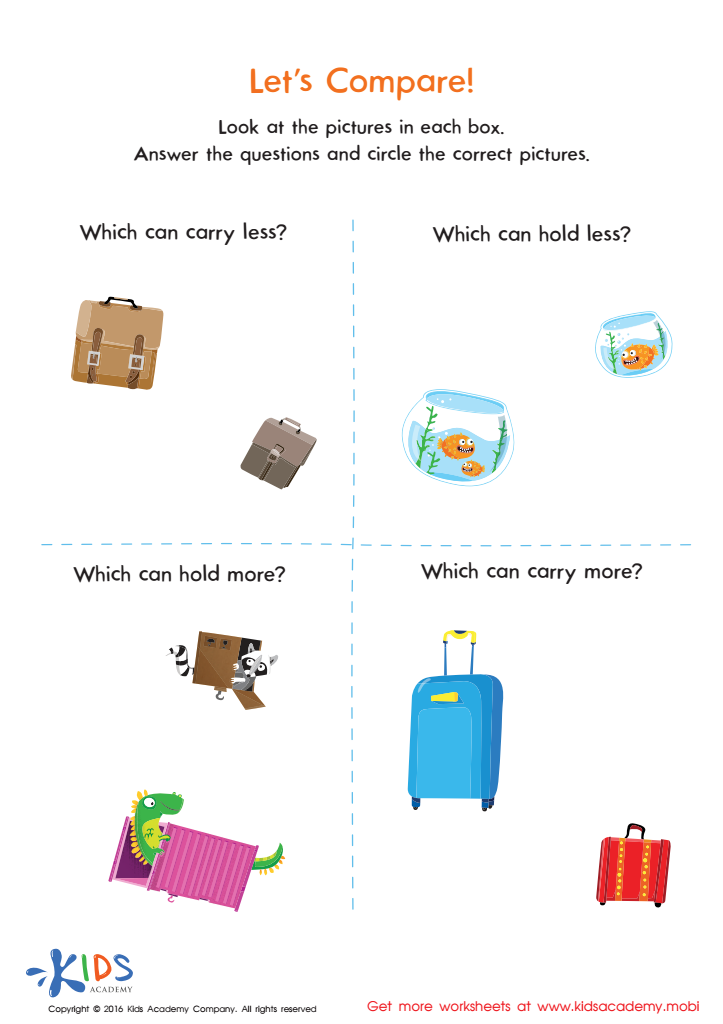
Let's Compare Worksheet: Big or Small
This worksheet will help your child gain an awareness of simple geometry and strengthen cognitive skills. Visualizing objects in 3D and comparing sizes helps to practice solving problems mentally and build analytical skills. Let's Compare worksheet will challenge your child to think hard.
 Assign to My Students
Let's Compare Worksheet: Big or Small
Worksheet
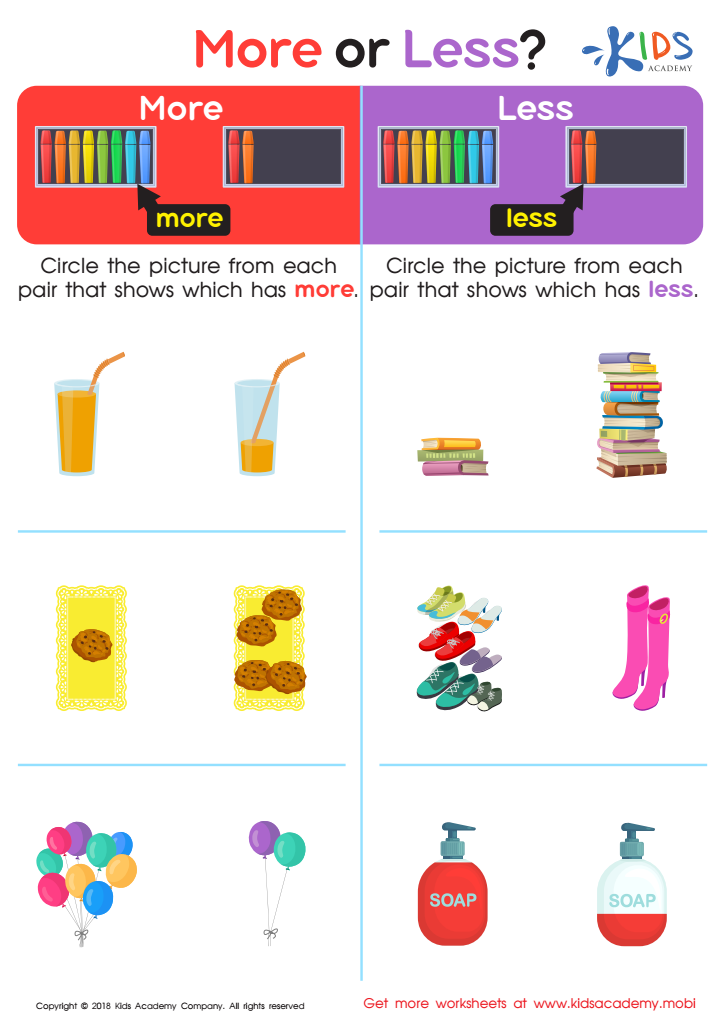
More or Less? Worksheet
Understanding "more or less" can be hard for kids. This PDF uses colorful images to help them learn. By matching the right picture pairs, children can gain a better understanding and strengthen their comparison skills for more complex tasks.
More or Less? Worksheet
Worksheet
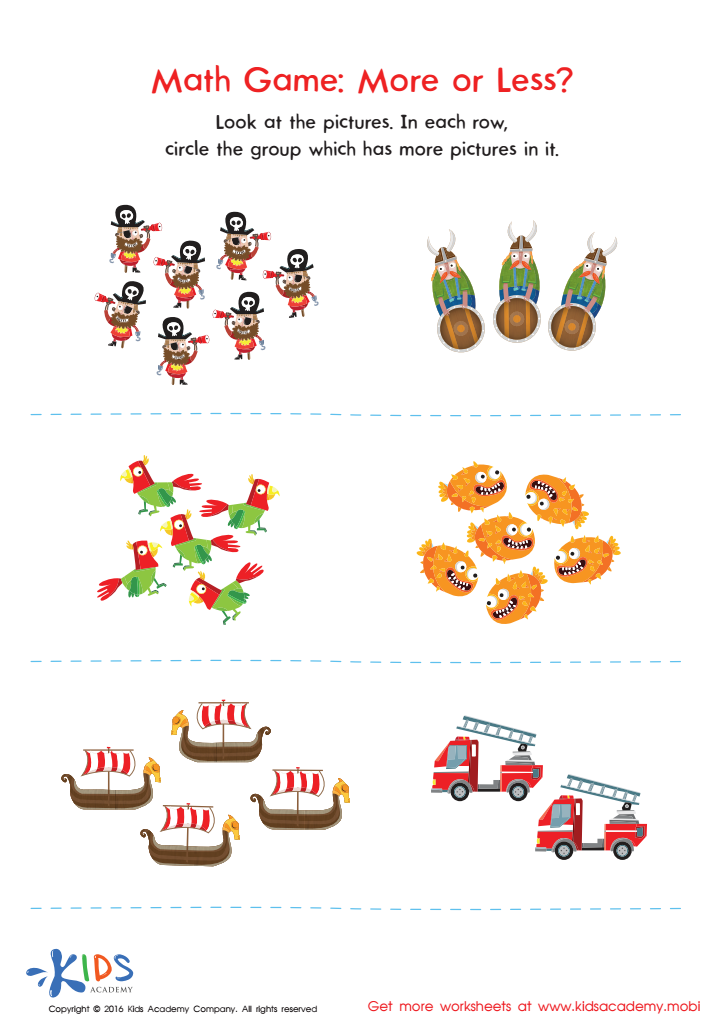
More or Less Worksheet
Counting and understanding quantity are essential skills for kindergarteners. Get your free printable more or less worksheet now!
More or Less Worksheet
Worksheet
Join Kids Academy for Free
Who is primarily going to use this learning content?



.jpg)



Number comparison skills are a critical foundation for early mathematics learning in children aged 5-9. These skills involve recognizing and evaluating the relative sizes of numbers, which is essential for grasping more complex mathematical concepts later on. Understanding how to compare numbers helps children develop a strong numerical sense, enabling them to arrange numbers, comprehend the idea of greater than or less than, and ultimately inform their decisions in problem-solving.
Caring about these skills is crucial for educators and parents because they influence children’s confidence in math from a young age. Children who master number comparisons are more likely to succeed in subsequent math topics, such as addition, subtraction, and understanding number patterns. When children struggle with these foundational skills, they may develop math anxiety, which can hinder their overall academic performance and interest in learning.
Moreover, fostering number comparison skills promotes logical reasoning and critical thinking. These abilities extend beyond math; they are vital life skills, helping children assess and evaluate information in daily situations. Involving parents in activities that reinforce these concepts can create a supportive learning environment, making math a more engaging and less intimidating subject for children. Thus, prioritizing number comparison skills is essential for holistic development in young learners.








