Number Recognition Worksheets for Ages 5-9 - Page 36
848 filtered results
-
From - To
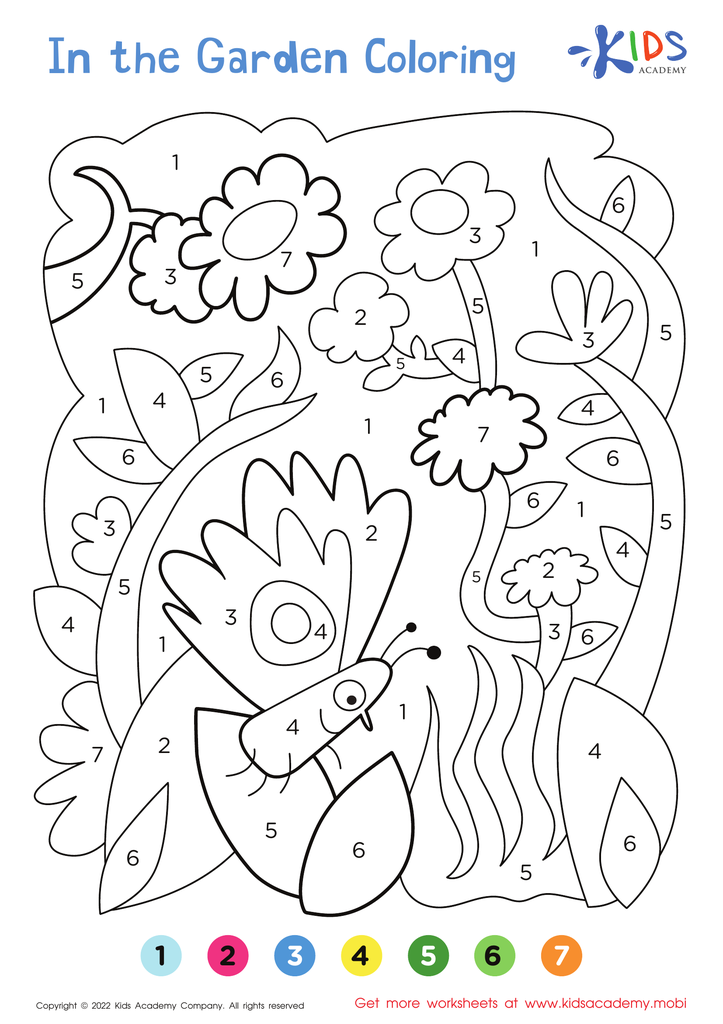
In the Garden – Coloring by Numbers






Number recognition is a foundational skill for children aged 5-9, forming the bedrock of their mathematical understanding and future success in more advanced concepts. Parents and teachers should prioritize this because it helps children grasp the basics of numeracy—understanding numbers, their symbols, and how they relate to quantities. Recognizing numbers early on fosters confidence in young learners, enabling smoother transitions to addition, subtraction, multiplication, and division, which are critical for later educational stages.
Moreover, number recognition enhances children's problem-solving skills and logical thinking. It allows them to categorize, sequence, and manipulate numbers, which are essential skills in daily life, such as telling time, measuring objects, or handling money. The link between strong number recognition skills and academic performance in other subjects, such as science and technology, is also notable.
Importantly, developing these skills requires a supportive environment filled with practice and positive reinforcement. Parents and teachers can engage children in fun, number-based activities that make learning enjoyable. For example, number games, counting exercises, and real-world applications like grocery shopping can make the learning process interactive and meaningful. By focusing on number recognition, we are equipping children with critical life skills that will benefit them throughout their academic journey and beyond.








