
Numerical recognition Worksheets for Ages 5-9
3 filtered results
Difficulty Level
Grade
Age
-
From - To
Subject
Activity
Standards
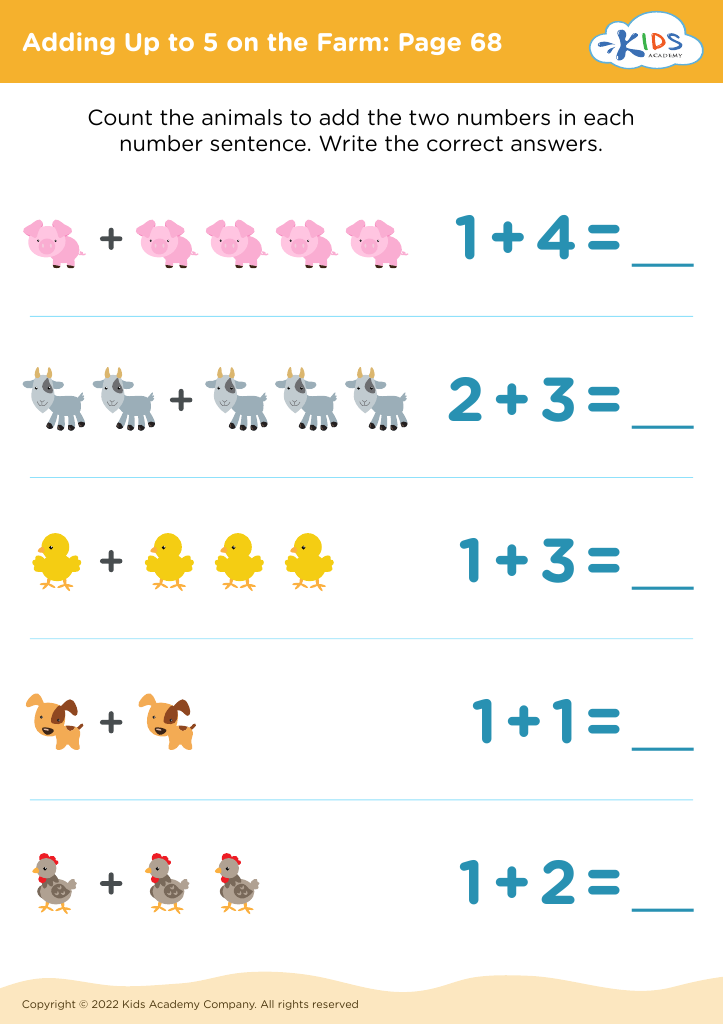
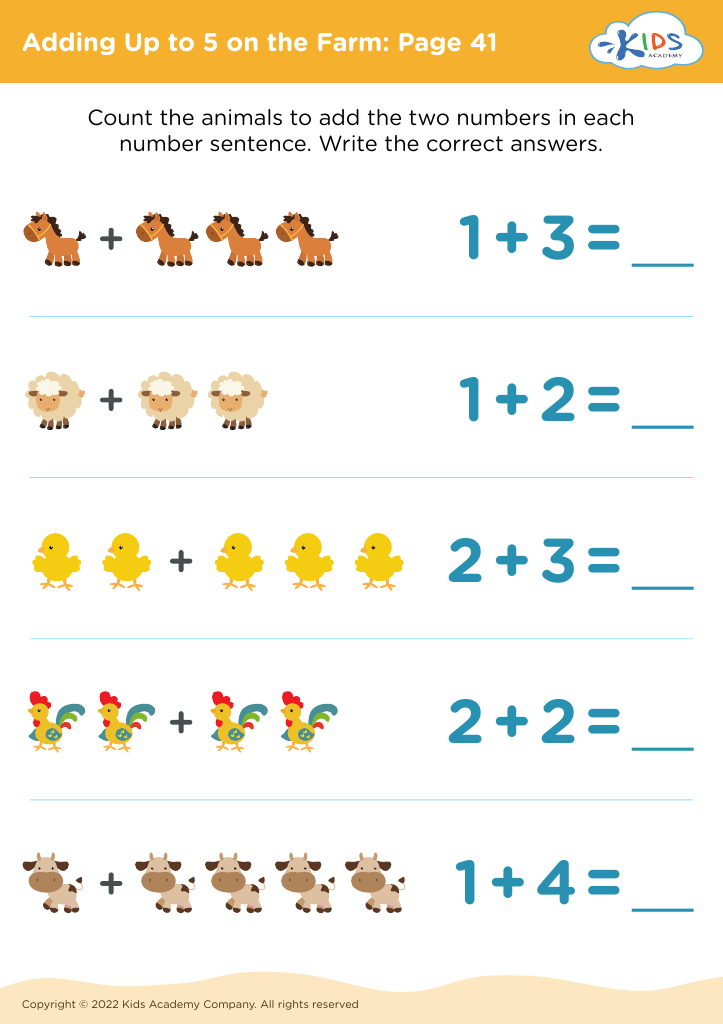
Boost your child's numerical skills with our Numerical Recognition Worksheets, designed for ages 5-9. These fun and engaging printables from Kids Academy will help young learners identify numbers, understand value, and improve counting abilities. Each worksheet employs colorful themes, engaging activities, and gradual difficulty increases to ensure children build proficiency with enjoyment. Ideal for both classroom and home use, our worksheets support the development of essential math concepts for young minds. Download now and give your child a head start in math with these expertly crafted, age-appropriate activities.
Favorites
With answer key
Interactive
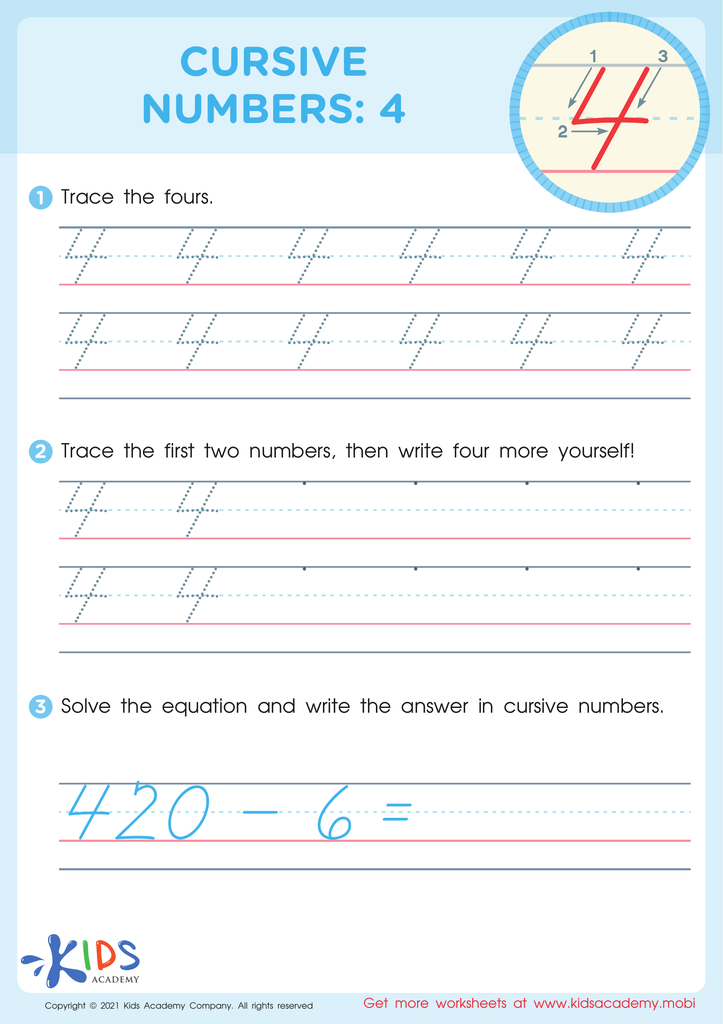
Cursive Numbers: 4 Worksheet
Math is challenging, and teaching cursive alongside it can be overwhelming. Make lessons enjoyable and your child will be more likely to stay engaged. Utilize worksheets to practice tracing the number 4 in cursive. With regular practice, your child can learn to write the number on their own.
Cursive Numbers: 4 Worksheet
Worksheet
Join Kids Academy for Free
Who is primarily going to use this learning content?




.jpg)


Numerical recognition is a fundamental skill that lays the groundwork for all future mathematical learning, making it essential for parents and teachers to prioritize during the ages of 5 to 9. At this formative stage, children are highly receptive and can assimilate concepts that support cognitive, linguistic, and social development. Understanding and recognizing numbers helps build a robust foundation for arithmetic, geometry, and data analysis, which are critical components of everyday decision-making and future academic pursuits.
Numerical recognition fosters logical thinking and problem-solving abilities. Children learn to categorize, compare, and sequence, which enhances critical thinking skills. Early competency in recognizing numbers also correlates with higher school achievement and interest in STEM fields (science, technology, engineering, and mathematics). Moreover, it improves children's confidence and fosters a positive attitude towards learning.
Intervention at the appropriate time can reap significant long-term benefits. Educators and parents can use engaging methods like games, songs, and hands-on activities to teach numerical concepts, making learning enjoyable and meaningful. Neglecting this facet of early education could lead to academic difficulties and a diminished self-esteem, often leading to a lifelong aversion to mathematics. Therefore, paying careful attention to numerical recognition in early childhood can set a child on a path of educational success and a love for learning.








