Sentence completion Worksheets for Ages 5-9
5 filtered results
-
From - To
Enhance your child's language skills with our Sentence Completion Worksheets for ages 5-9! Designed to boost reading comprehension, vocabulary, and creative thinking, these engaging worksheets provide the perfect practice for young learners. Each sheet presents fun, age-appropriate challenges that help children build confidence in their writing abilities. Perfect for parents, teachers, or tutors looking to supplement educational activities at home or in the classroom. Unlock your child’s potential with Kids Academy's carefully curated sentence completion exercises, fostering a foundation for lifelong learning and communication skills. Start exploring today and watch your young writer flourish!
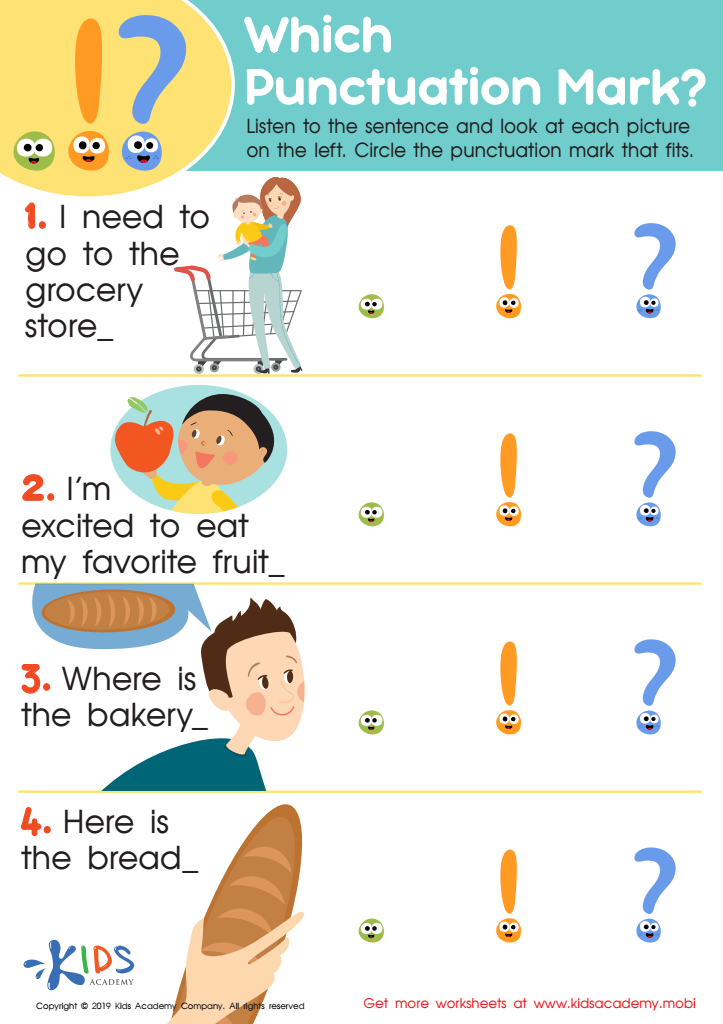
Which Punctuation Mark Worksheet
 Assign to My Students
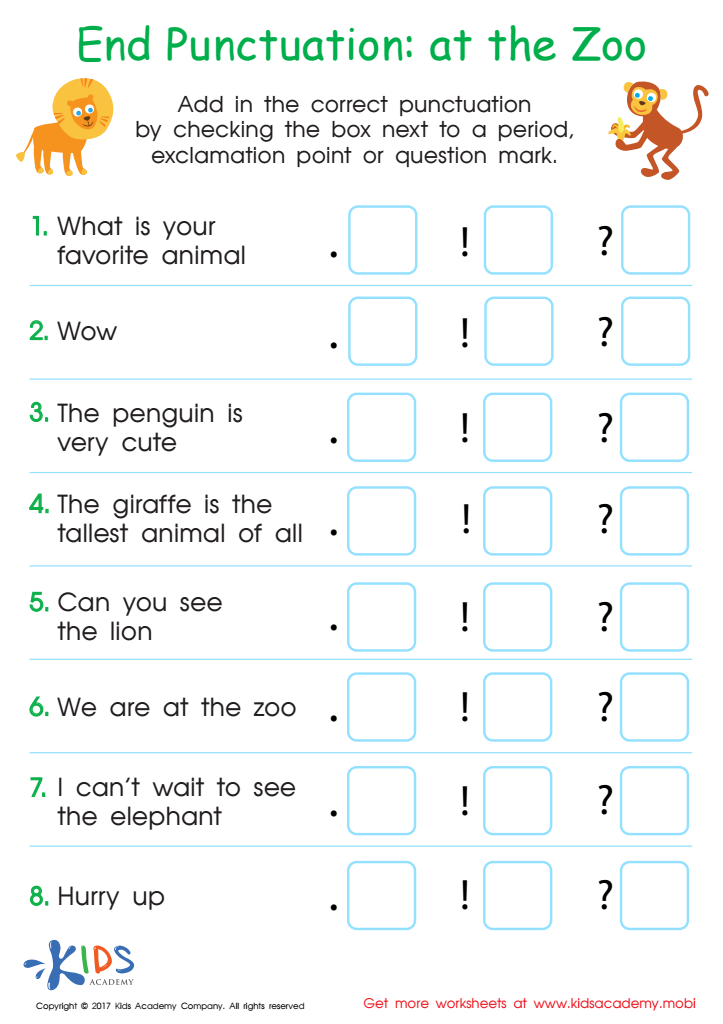
End Punctuation: At the Zoo Worksheet
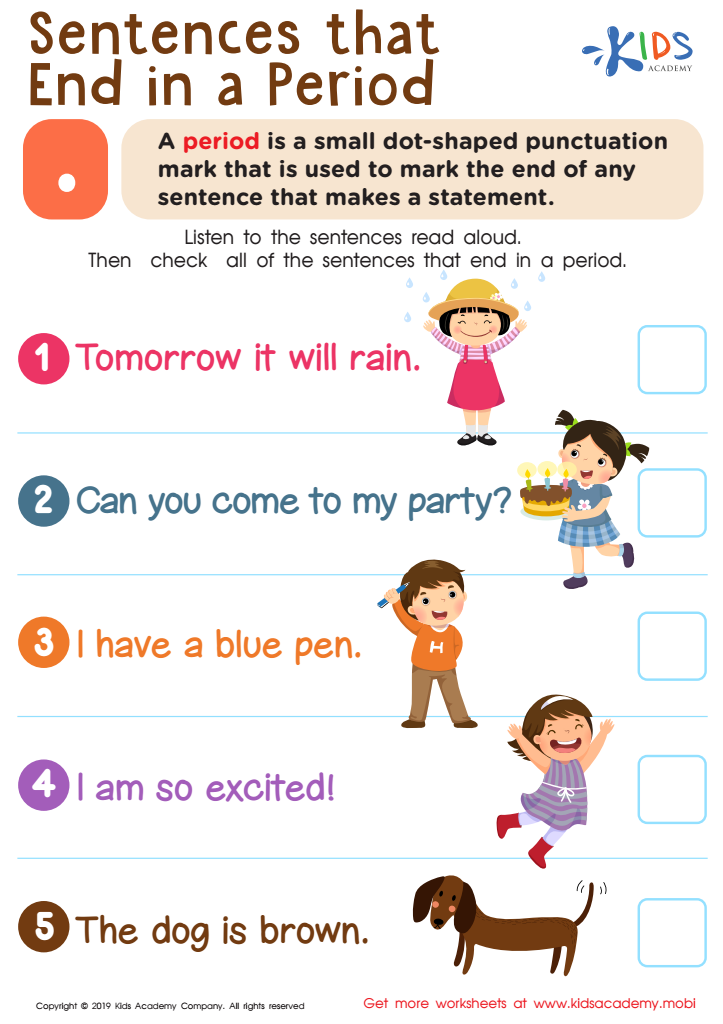
Sentences That End in a Period Worksheet
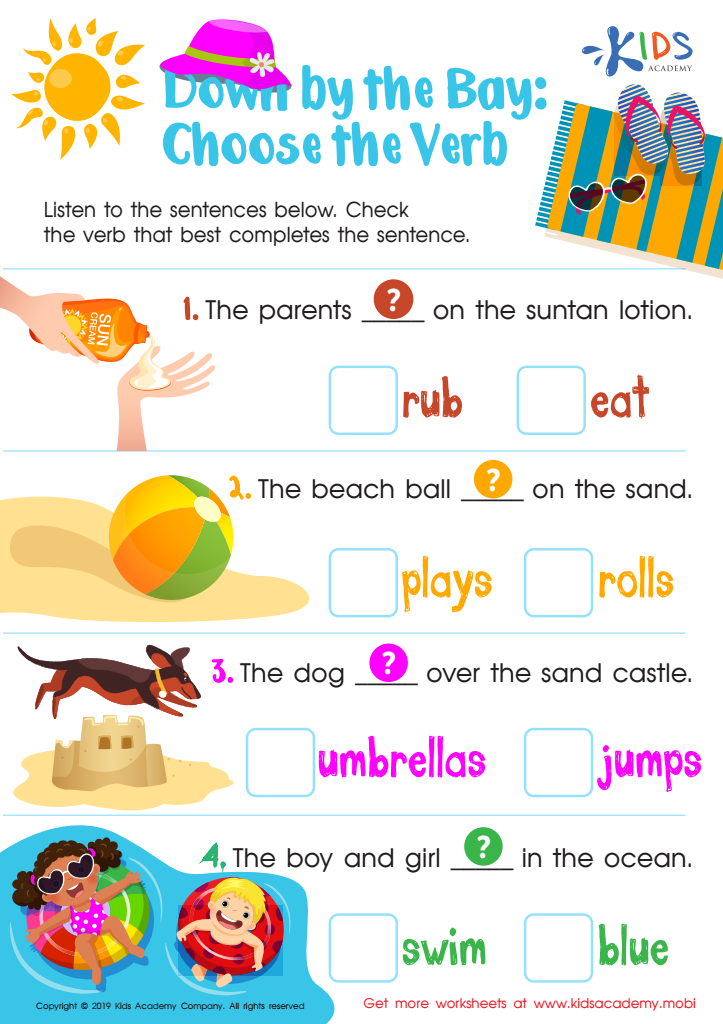
Down by the Bay: Choose the Verb Worksheet
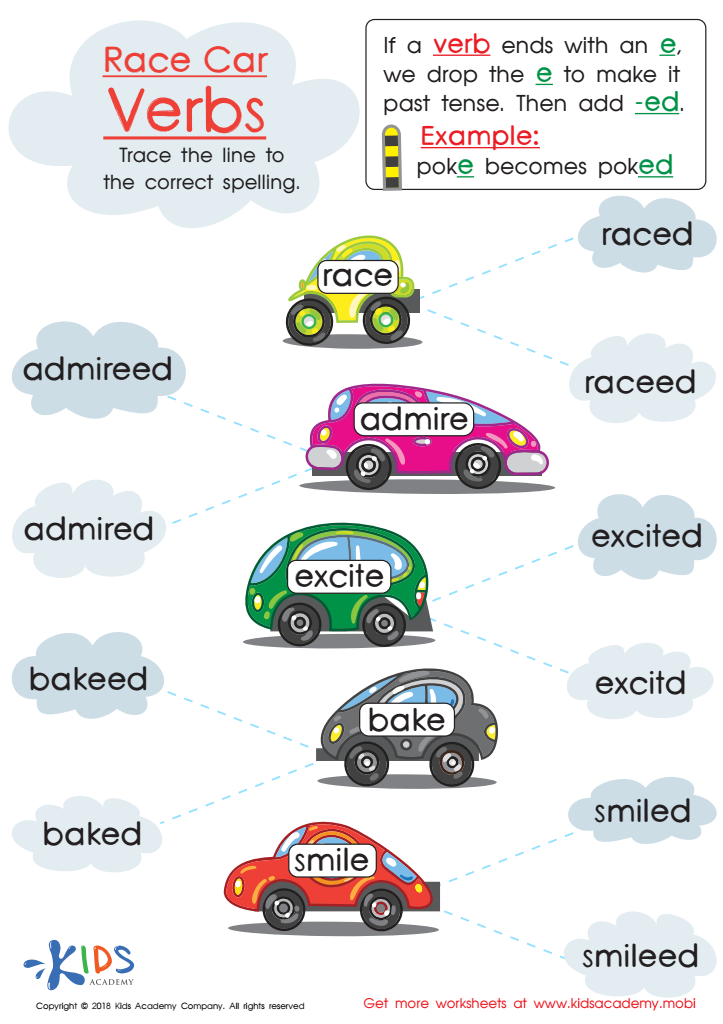
Race Car Verbs Worksheet








Sentence completion exercises are fantastic tools for parents and teachers working with children ages 5-9. These exercises help cultivate essential language skills. First, they support vocabulary development, which is crucial at this developmental stage. By encouraging children to think of different words that fit into a sentence, they are prompted to reach into their existing knowledge and often learn new words in the process.
Secondly, sentence completion fosters critical thinking and creativity. Young children are naturally curious and imaginative. These exercises allow them to explore different scenarios and ideas by coming up with their own endings to sentences, thereby engaging their creative thinking skills.
Additionally, sentence completion activities enhance grammar and syntax awareness. They provide opportunities for kids to practice correct sentence structure and punctuation in a fun, non-pressure setting. This early practice can lay a strong foundation for more complex writing tasks in the future.
Furthermore, these exercises can serve as an emotional outlet and a way to connect. Through their responses, children might express feelings and thoughts they otherwise might find challenging to communicate. This gives parents and teachers insight into children's inner worlds, helping promote stronger emotional bonds and better-informed support.
In conclusion, sentence completion is more than just a language activity—it's a multifaceted tool that supports vocabulary enrichment, critical thinking, emotional expression, and language mastery, fundamental components for a child's overall development.








