Spatial awareness development Worksheets for Ages 5-9
3 filtered results
-
From - To
Boost your child's spatial intelligence with our dynamic Spatial Awareness Development Worksheets for Ages 5-9! Our expertly crafted worksheets help young learners grasp essential concepts like shapes, patterns, and spatial relationships through fun and engaging activities. These resources are designed to enhance hand-eye coordination, critical thinking, and problem-solving skills. Perfect for classroom use or at-home learning, our worksheets are an excellent tool for parents and teachers to identify areas needing improvement and track progress. Ignite your child's imagination and watch their confidence soar as they master spatial skills crucial for success in both academics and everyday life.
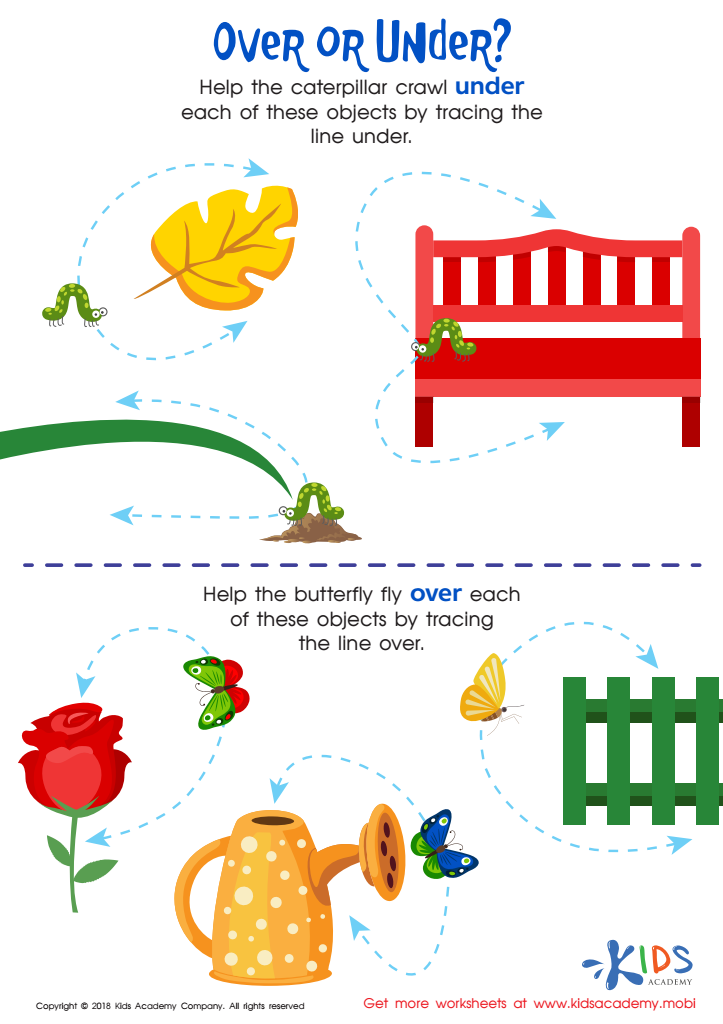
Over or Under? Worksheet
 Assign to My Students
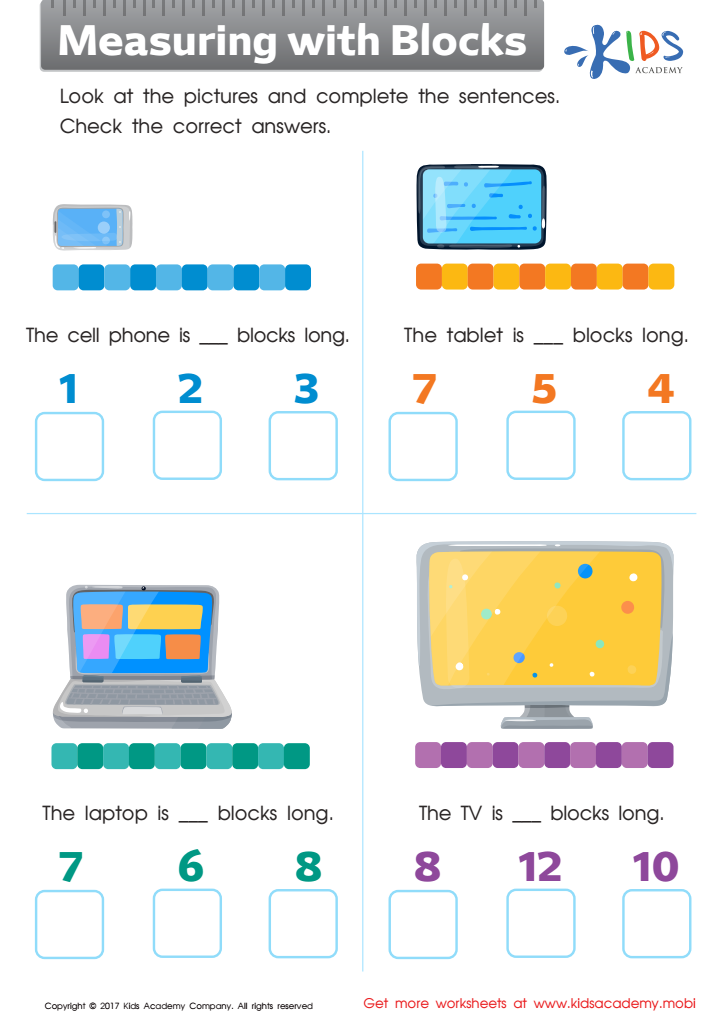
Measuring with Blocks Worksheet
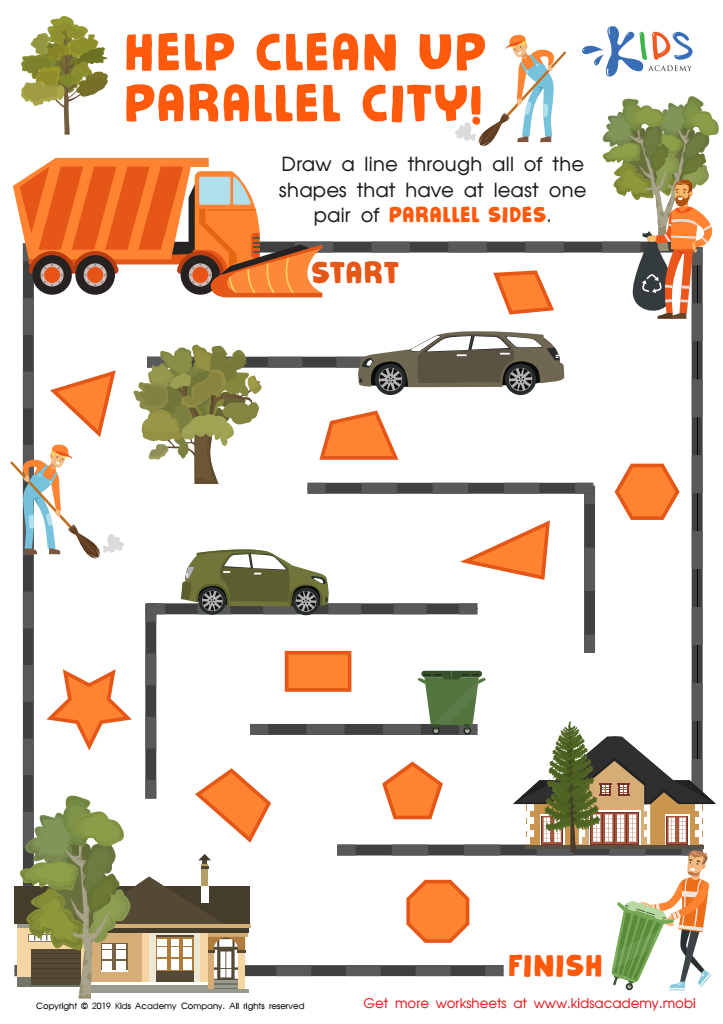
Help Clean Up Parallel City Worksheet



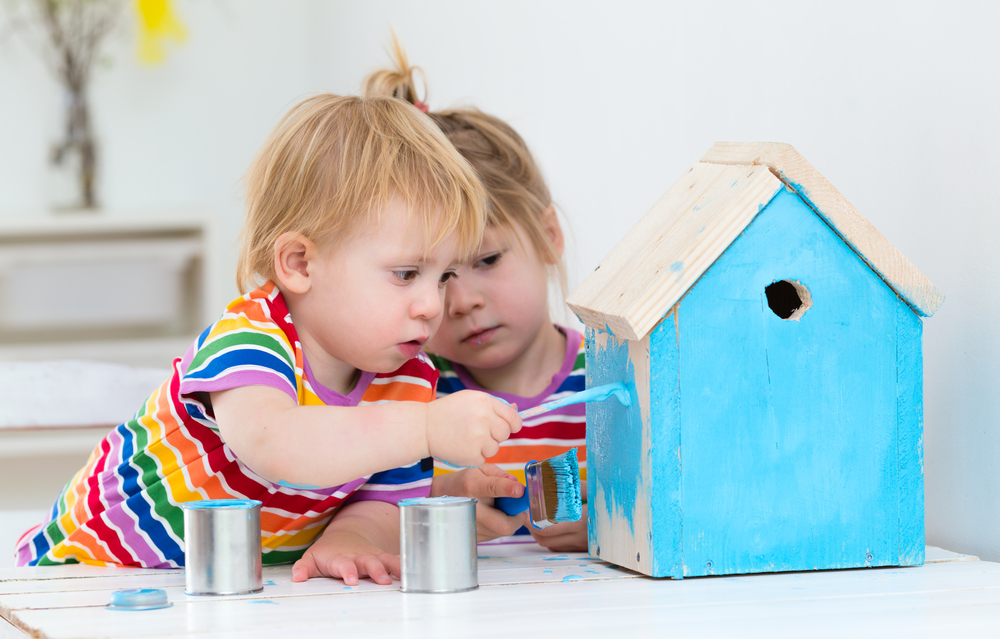



Spatial awareness, the understanding of how objects and oneself move and relate in space, is crucial for children ages 5-9. Firstly, it underpins critical areas of early education like reading and mathematics. Recognizing the orientation of letters and numbers, understanding geometric relationships, and grasping concepts like size, shape, and patterns are rooted in spatial skills.
Additionally, spatial awareness supports physical development. Children who understand space well are better at activities requiring coordination, such as sports, dancing, and even simple playground games. This physical competence can boost confidence, encouraging more active play, which is essential for overall health and well-being.
Socially, strong spatial skills can improve a child's ability to navigate personal space accurately, enhancing interactions with peers. This minimizes conflicts and fosters smoother interpersonal relationships, promoting a positive school environment.
Finally, spatial skills are foundational for future STEM (Science, Technology, Engineering, Mathematics) learning and careers. Encouraging spatial activities early on—like building with blocks, drawing, and solving puzzles—can inspire curiosity and competence in these fields.
Thus, parents and teachers should prioritize developing spatial awareness, as it enriches academic success, physical abilities, social interactions, and long-term interest in STEM disciplines.








