Understanding food chains Worksheets for Ages 5-9
3 filtered results
-
From - To
Explore our engaging "Understanding Food Chains Worksheets" designed for kids aged 5-9. These interactive resources help young learners discover the connections between different living organisms in nature. Through fun activities, children will identify producers, consumers, and decomposers while enhancing their knowledge of ecosystems. Our worksheets promote critical thinking and foster a love for science. Ideal for classroom use or at home, these printable materials allow kids to visualize and comprehend food chains easily. Help your child develop essential skills with our creative and educational worksheets that make learning about the environment an exciting adventure! Perfect for budding ecologists!
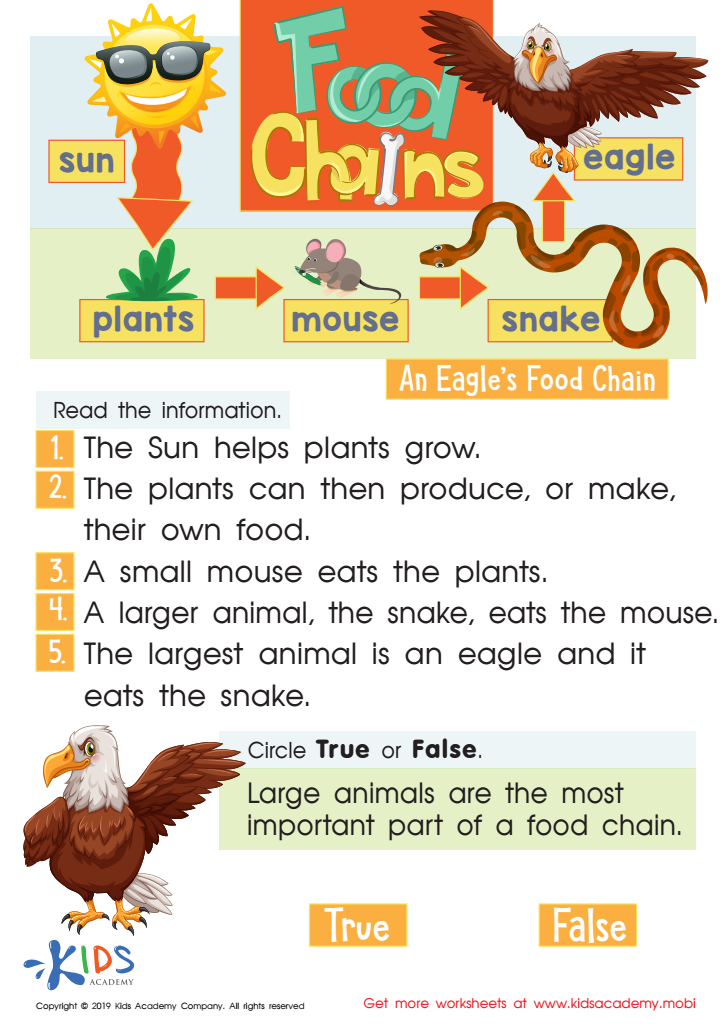
Food Chains Worksheet
 Assign to My Students
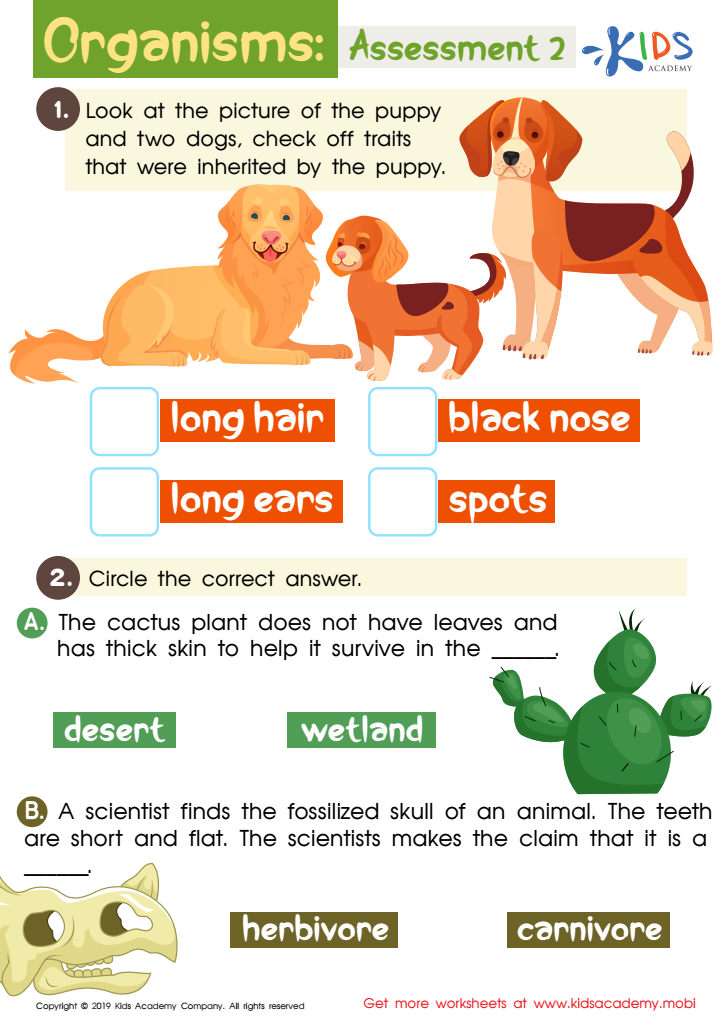
Organisms: Assessment 2 Worksheet
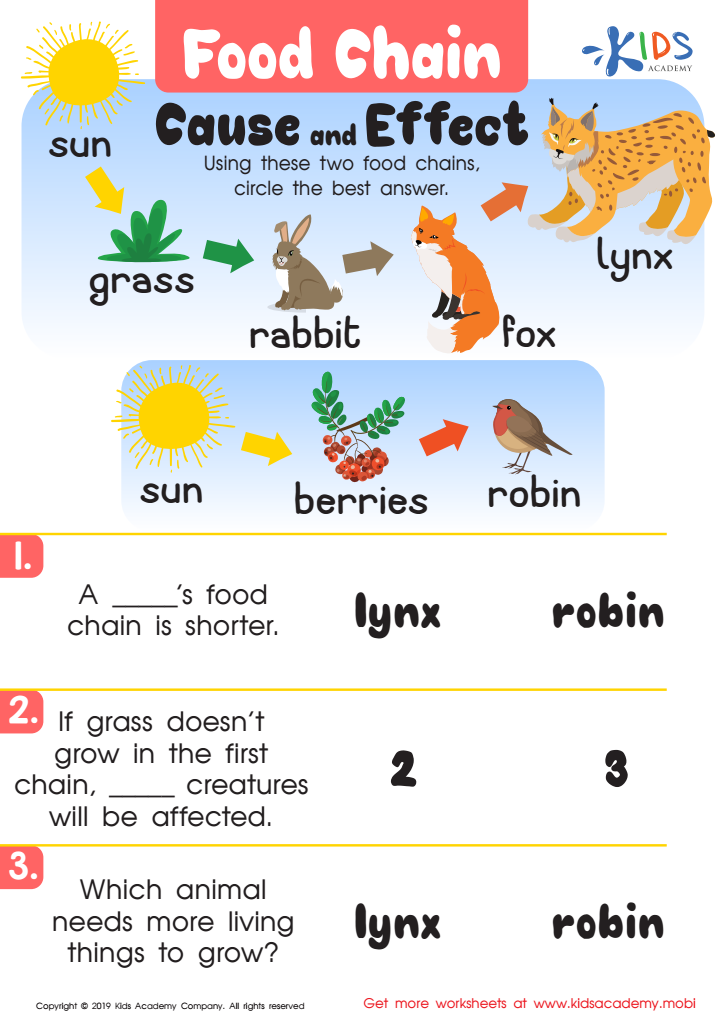
Food Chain Cause Worksheet







Understanding food chains is vital for children aged 5-9 as it lays the groundwork for their appreciation of nature and ecosystems. At this age, children are naturally curious about their surroundings, making it an ideal time to introduce them to essential ecological concepts. Learning about food chains helps children understand how living organisms are interconnected and rely on each other for survival. This fosters a sense of empathy and respect for all forms of life.
Moreover, grasping food chains introduces key scientific principles such as producers, consumers, and decomposers, enhancing their cognitive development and critical thinking skills. It serves as a gateway to exploring broader topics like habitats, biodiversity, and conservation, encouraging a lifelong interest in science.
Additionally, education about food chains can inspire healthier eating habits. By recognizing the origins of their food, children may develop a greater appreciation for fruits, vegetables, and local produce, fostering a connection between food, health, and the environment.
In summary, teaching food chains engages children’s curiosity, promotes ecological awareness, enhances critical thinking skills, and encourages healthier lifestyle choices. For parents and teachers, investing time in these concepts is crucial for nurturing informed, compassionate, and environmentally responsible future citizens.








