Understanding length Worksheets for Ages 5-9
3 filtered results
-
From - To
Unlock your child’s potential with our "Understanding Length Worksheets for Ages 5-9". These engaging, age-appropriate resources are designed to help young learners grasp the concepts of measurement and comparison. Featuring colorful visuals and fun activities, our worksheets guide children through determining and comparing lengths, using rulers, and developing critical thinking skills. Perfect for both classroom and at-home learning, each worksheet builds on previous knowledge to reinforce understanding. Help your child build a strong foundation in math while enjoying the process of learning. Download today to inspire and nurture a love for math in your young scholar!
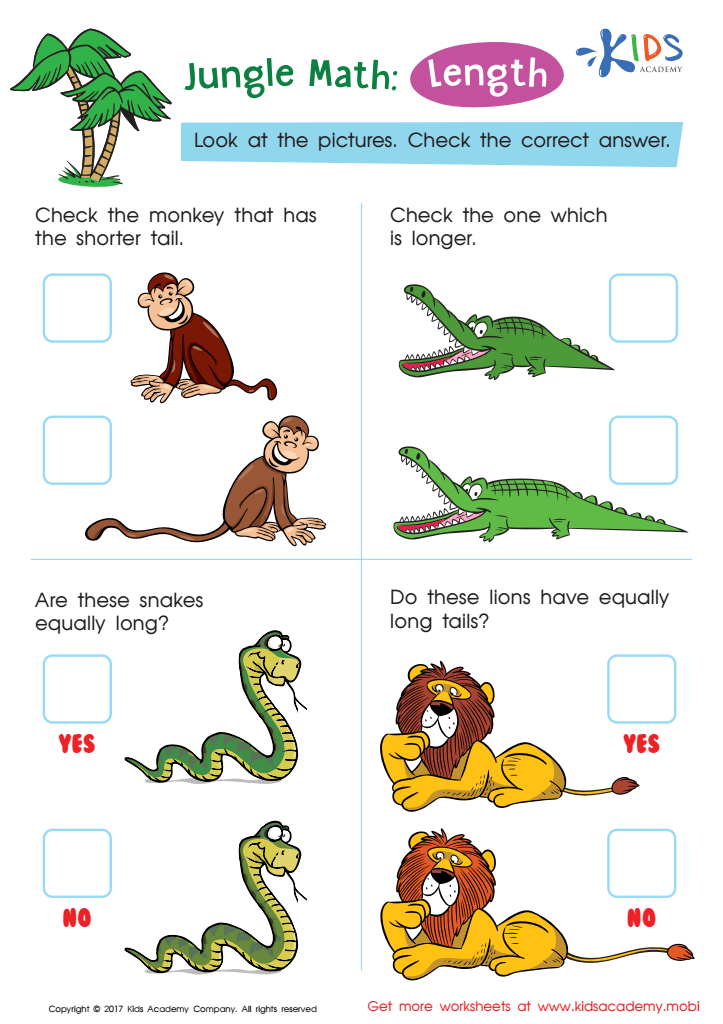
Which One Is Longer - Length Worksheet
 Assign to My Students
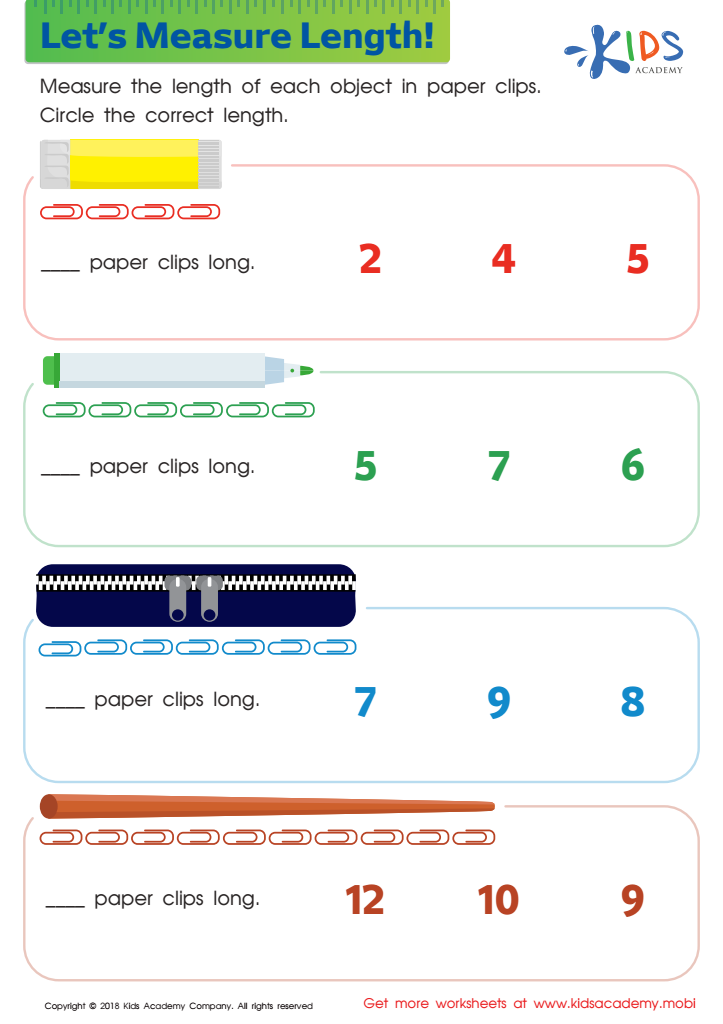
Lets Measure Length Worksheet
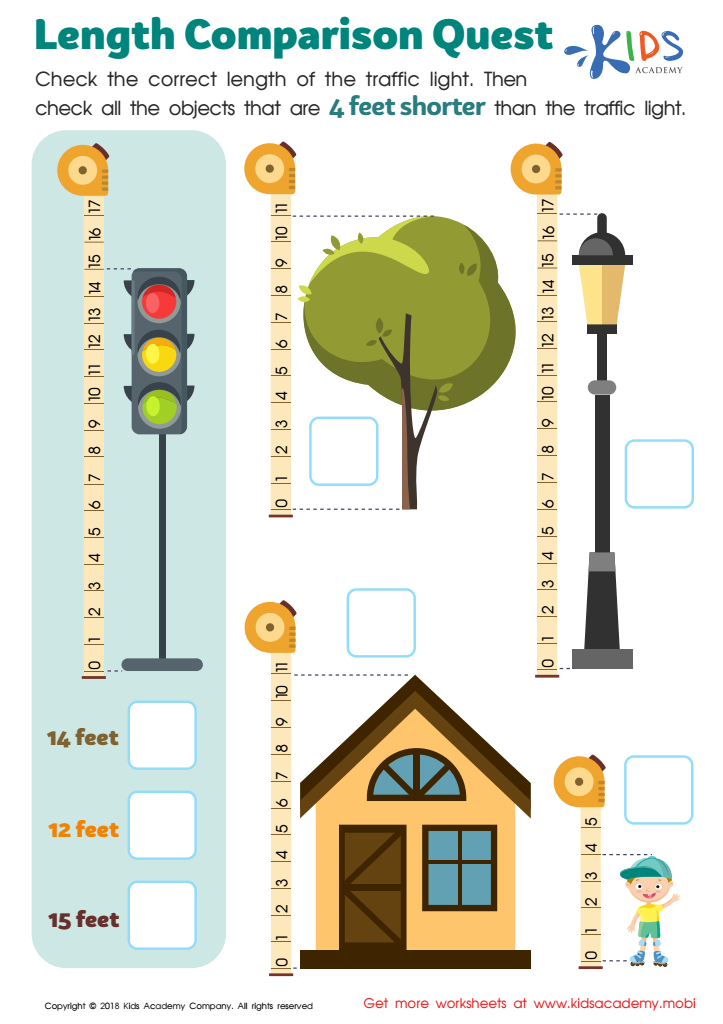
Length Comparison Quest Worksheet








Understanding the concept of length for children aged 5-9 is crucial for multiple reasons that impact their cognitive development and practical life skills. At this stage, children's brains are highly receptive to fundamental mathematical concepts, making it an ideal time to introduce measurements. Comprehension of length enables them to make sense of the physical world around them, fostering spatial awareness and logical thinking.
First, fundamental skills in measuring length develop critical thinking and problem-solving abilities. These skills are essential for advanced mathematical topics such as geometry, algebra, and calculus later in their education. Measuring objects, comparing lengths, and understanding units of measurement like centimeters and inches form the foundation for these more complex math concepts.
Second, practical life skills such as following a recipe, building a model, or arranging objects in space also stem from an understanding of length. When children grasp the fundamentals of measuring, they can more effectively participate in everyday tasks and activities. This kind of real-world application reinforces the importance and utility of what they are learning.
Lastly, developing a robust understanding of length encourages a mindset of inquiry and exploration. When children measure and compare objects, they ask questions, make predictions, and seek answers, which are key scientific methods. This curiosity-driven approach to learning builds lifelong learners who are enthusiastic about discovery and problem-solving. Therefore, both parents and teachers should prioritize nurturing this early mathematical skill.








