Understanding number relationships Worksheets for Ages 5-9
9 filtered results
-
From - To
Discover our engaging "Understanding Number Relationships" worksheets tailored for children ages 5-9! Designed to enhance early math skills, these worksheets help young learners explore essential concepts like addition, subtraction, and comparison. Our user-friendly activities promote critical thinking and problem-solving, allowing kids to grasp the connections between numbers in an enjoyable way. Whether you’re a teacher or a parent, these resources are perfect for reinforcing math skills at home or in the classroom. With vibrant illustrations and interactive challenges, your child will develop confidence and a solid foundation in numeracy. Start helping your child excel in math today!
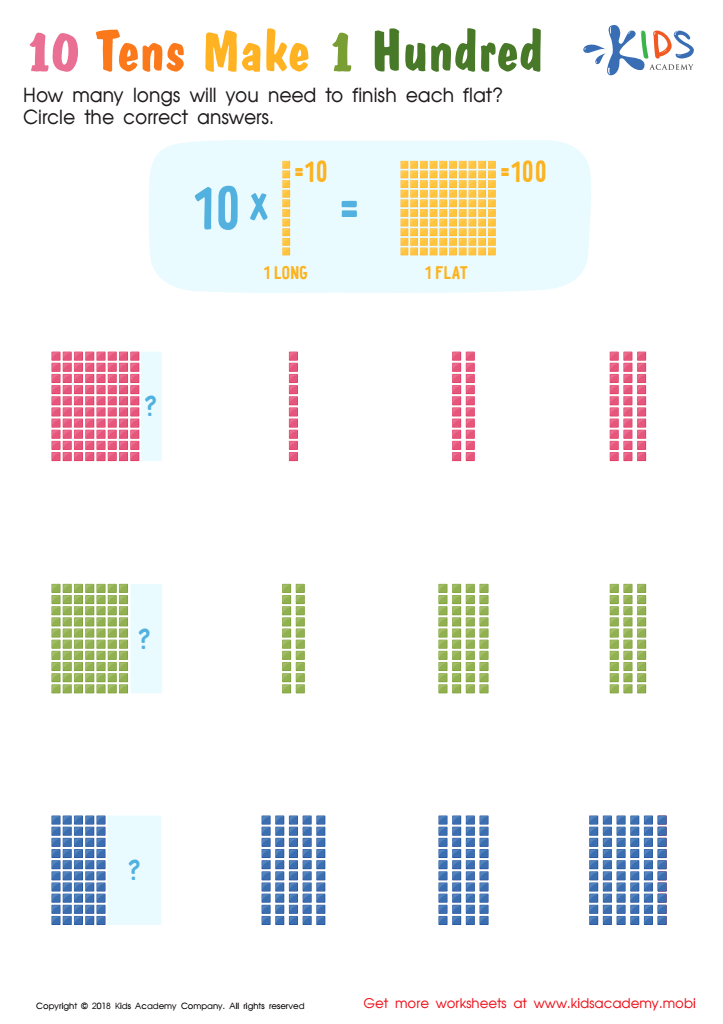
10 Tens Make 1 Hundred Worksheet
 Assign to My Students
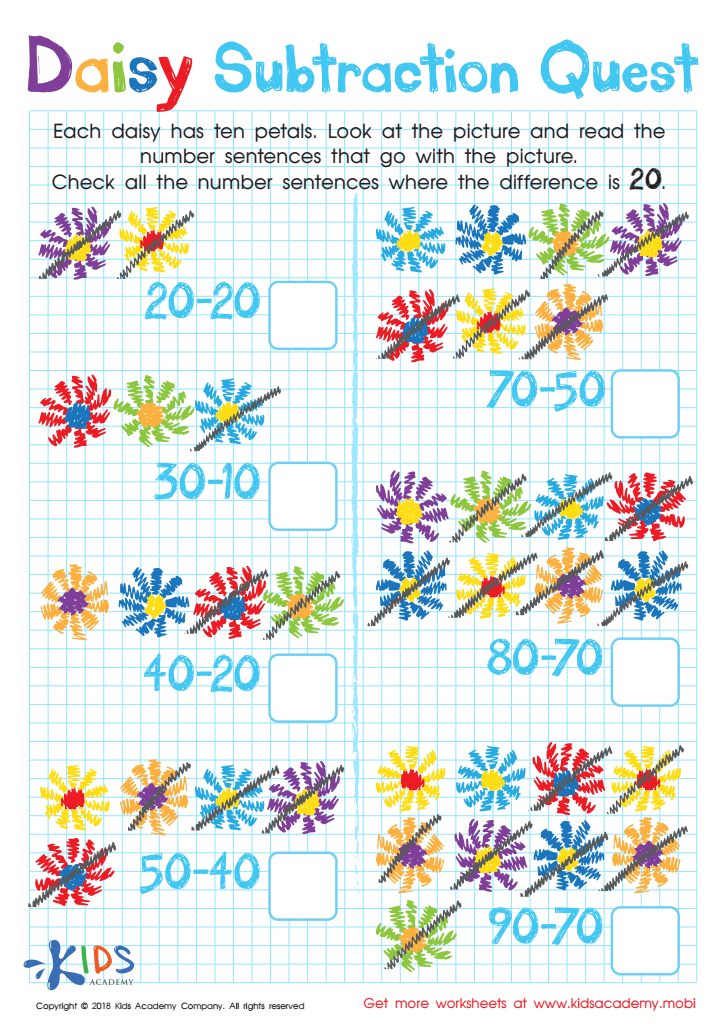
Daisy Subtraction Quest Worksheet
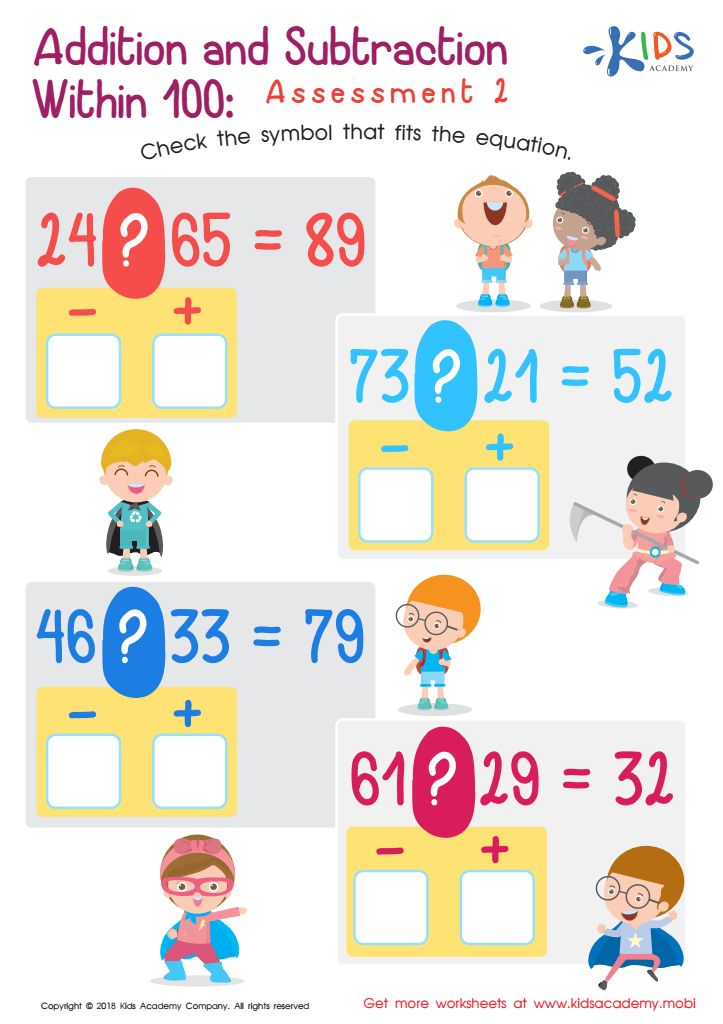
Addition and Subtraction Within 1: Assessment 2 Worksheet
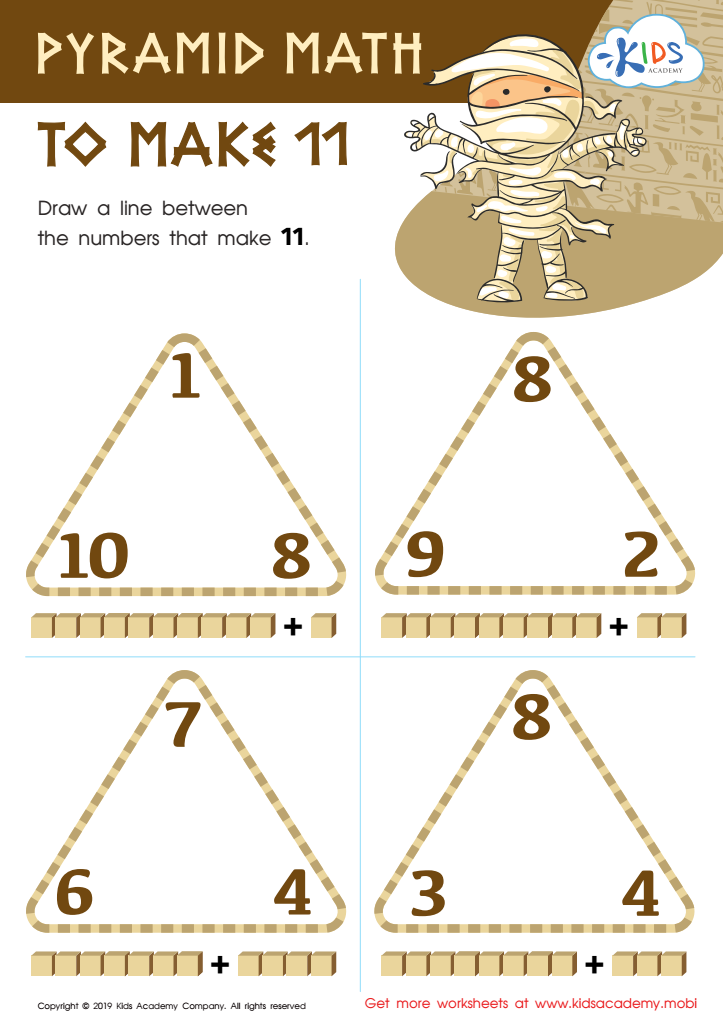
Pyramid Math to Make 11 Worksheet





.jpg)
.jpg)

Understanding number relationships is crucial for children aged 5-9, as it serves as a foundation for future mathematical learning and everyday problem-solving. During these formative years, children develop essential skills that enable them to compare, group, and manipulate numbers, which aids in developing a deep conceptual understanding of mathematics.
Parents and teachers should recognize that children who grasp number relationships can more easily learn addition and subtraction, recognize patterns, and understand fractions. This knowledge also enhances their ability to tackle more complex mathematical concepts in later years. Moreover, understanding number relationships fosters critical thinking and logical reasoning, skills that extend beyond the classroom and into real-life situations.
Furthermore, a solid grasp of number relationships helps build children's confidence in math, reducing anxiety and promoting a positive attitude toward the subject. Supportive adults can create a stimulating environment that encourages exploration, discussions of numbers, and practical applications during everyday experiences.
By prioritizing number relationship understanding, parents and teachers equip children with not only essential math skills but also lifelong learning habits that bolster their overall intellectual development. This partnership is vital in nurturing future problem-solvers and creative thinkers who can navigate the complexities of the world around them.








