Understanding punctuation Worksheets for Ages 5-9
5 filtered results
-
From - To
Discover our engaging "Understanding Punctuation Worksheets" designed specifically for children aged 5-9! These worksheets aim to build a strong foundation in punctuation, helping young learners grasp the basics of commas, periods, question marks, and more. With fun, interactive exercises and colorful illustrations, students will enjoy practicing punctuation in sentences and scenarios that capture their imagination. Our resources are tailored to meet the developmental needs of early learners, fostering essential reading and writing skills. Perfect for classroom use or home learning, these worksheets will ensure that children develop confidence and competence in using punctuation effectively. Start their punctuation journey today!
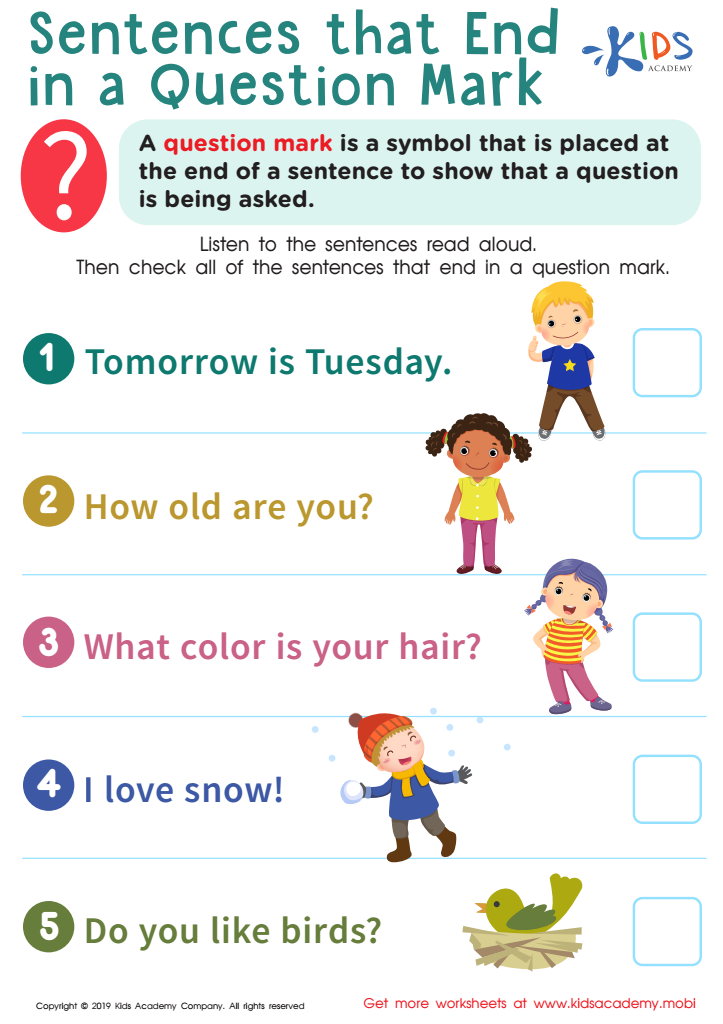
Sentences That End in an Question Mark Worksheet
 Assign to My Students
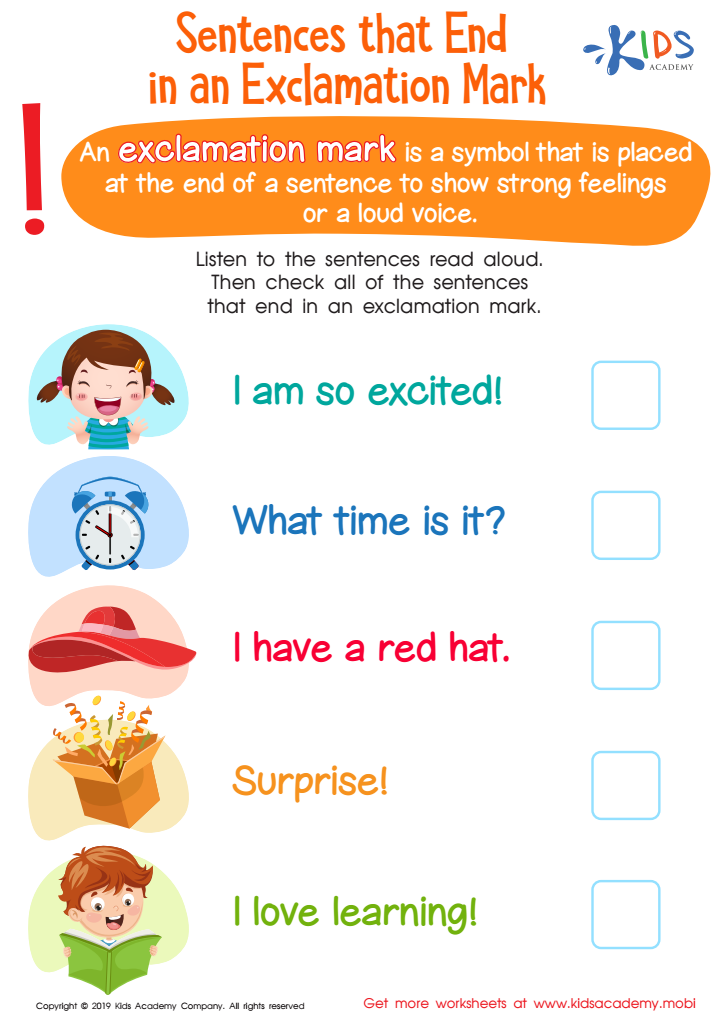
Sentences That End in an Exclamation Mark Worksheet
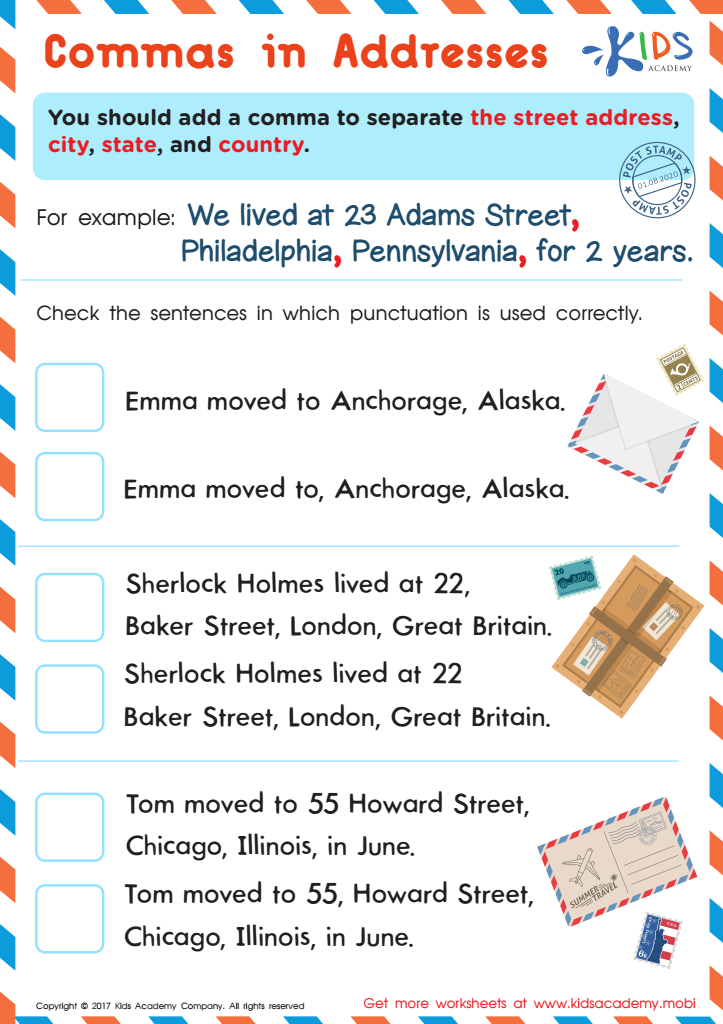
Commas in Addresses Worksheet
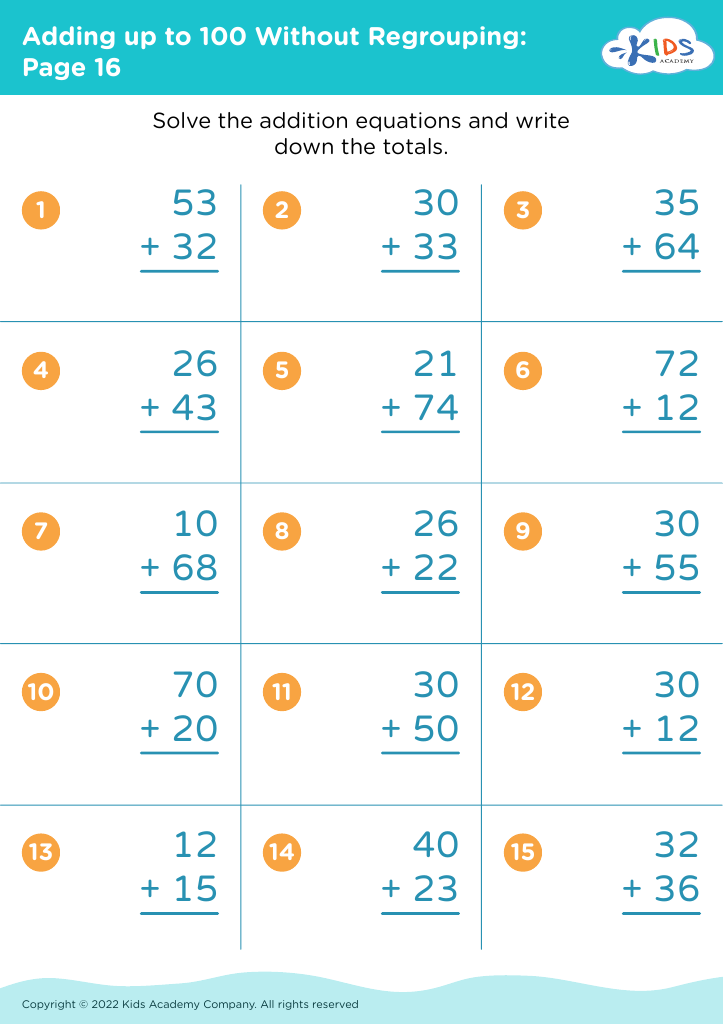


.jpg)




Understanding punctuation is crucial for children aged 5-9, as it lays the foundation for effective communication and comprehension skills. At this age, children are beginning to develop their reading and writing abilities, and punctuation plays a key role in conveying meaning. For parents and teachers, focusing on punctuation helps in fostering clarity in children's writing. For instance, the placement of a comma or period can drastically change a sentence's meaning, emphasizing the importance of precise language.
Moreover, mastering punctuation boosts children's confidence in their literacy skills. When children use punctuation correctly, they can express their thoughts and ideas more clearly, leading to improved engagement in both writing tasks and conversations. This skill also supports their ability to understand complex texts, which becomes increasingly important as they progress in their education.
Furthermore, teachers can utilize punctuation to introduce concepts of rhythm and expression in reading, making literature more enjoyable and accessible for young learners. By prioritizing punctuation education, parents and teachers help create strong communicators who are better prepared for academic success and effective social interactions. Ultimately, understanding punctuation is essential for young children to navigate their world proficiently, fostering a love for language and learning.








