Understanding shapes Worksheets for Ages 5-9
7 filtered results
-
From - To
Discover our engaging Understanding Shapes Worksheets, designed specifically for children aged 5 to 9! These worksheets are a fantastic resource to help young learners identify, describe, and manipulate various shapes. Filled with colorful illustrations and fun activities, they encourage critical thinking and boost shape recognition skills. Whether your child is sorting, coloring, or completing shape patterns, each worksheet offers an interactive approach to learning that keeps them motivated. These educational resources not only foster a solid foundation in geometry but also promote creativity and problem-solving. Start your child’s shape exploration journey today and watch their confidence grow!
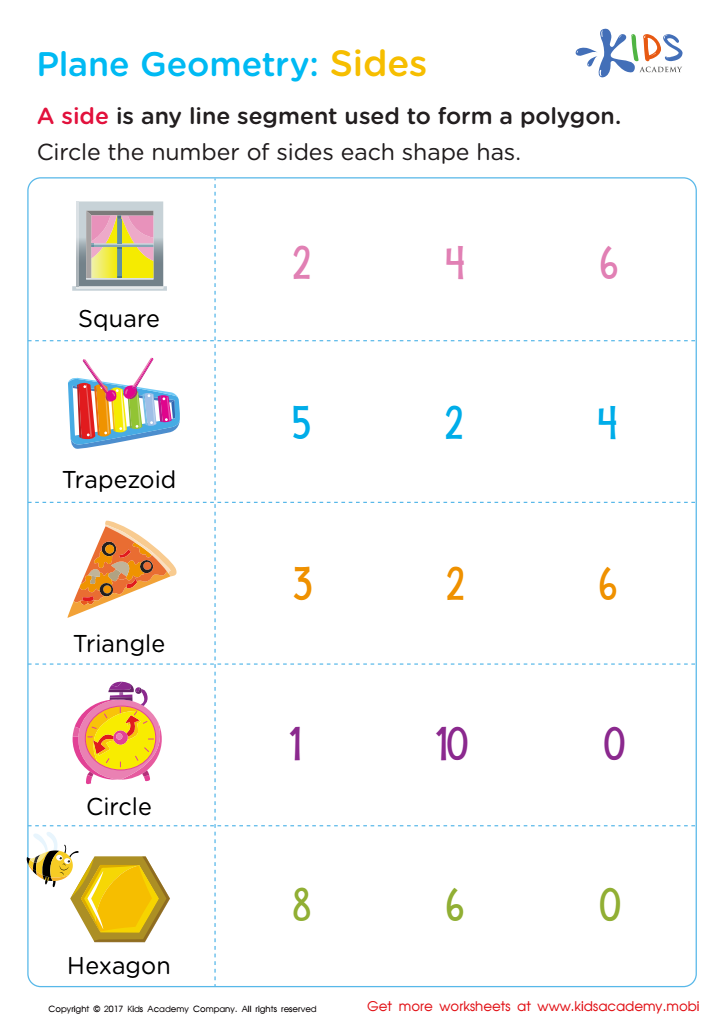
 Assign to My Students
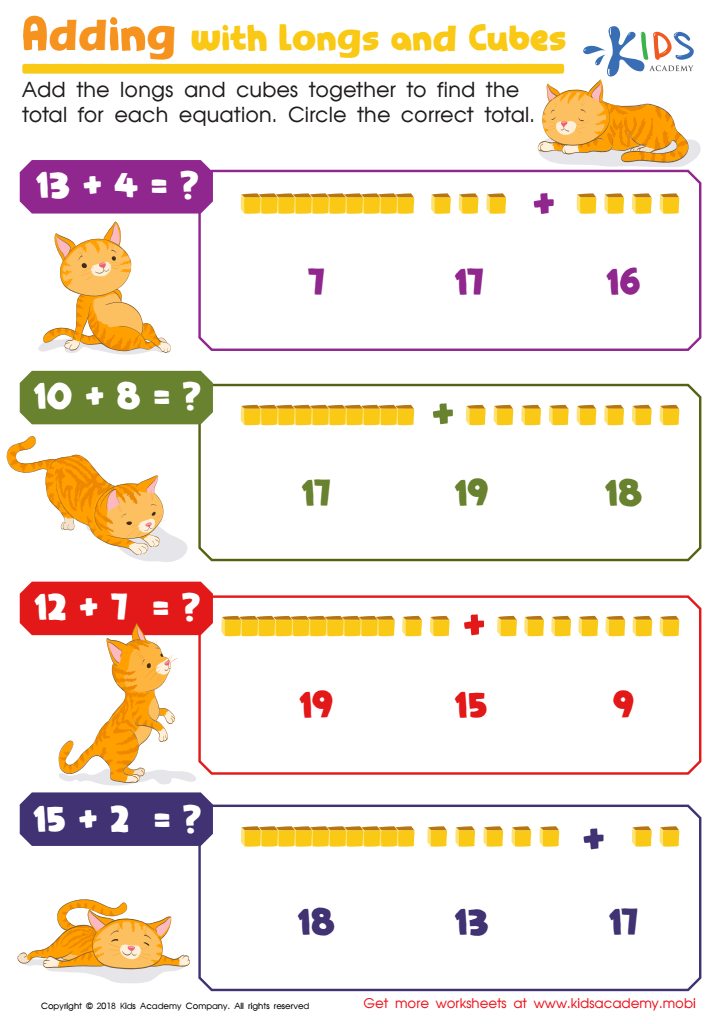
Adding With Longs and Cubes Worksheet
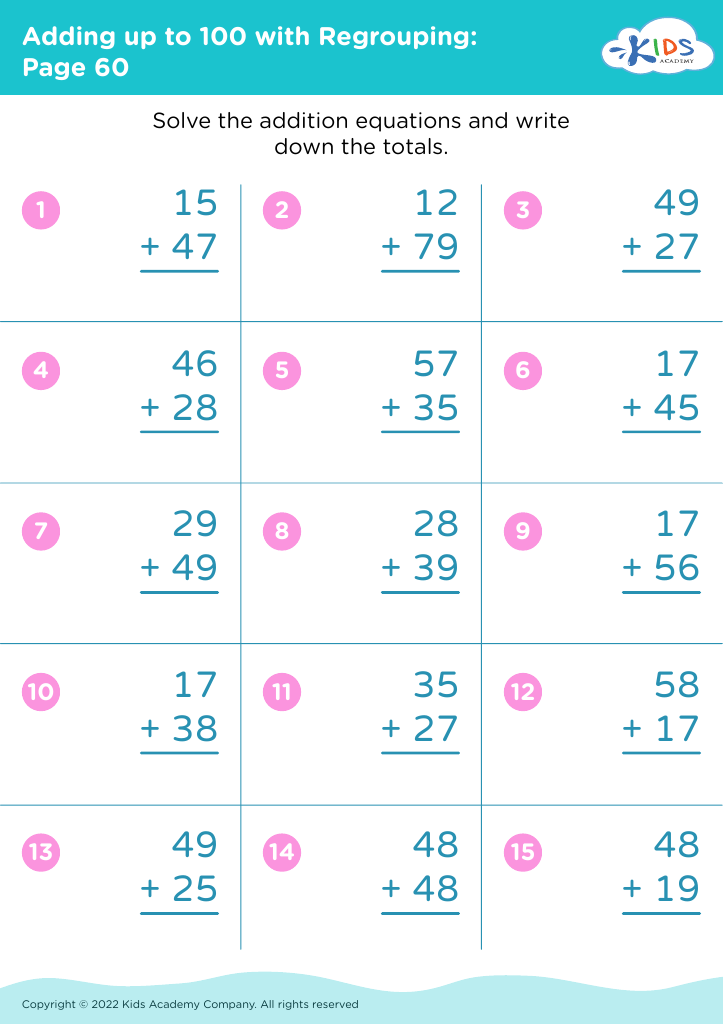
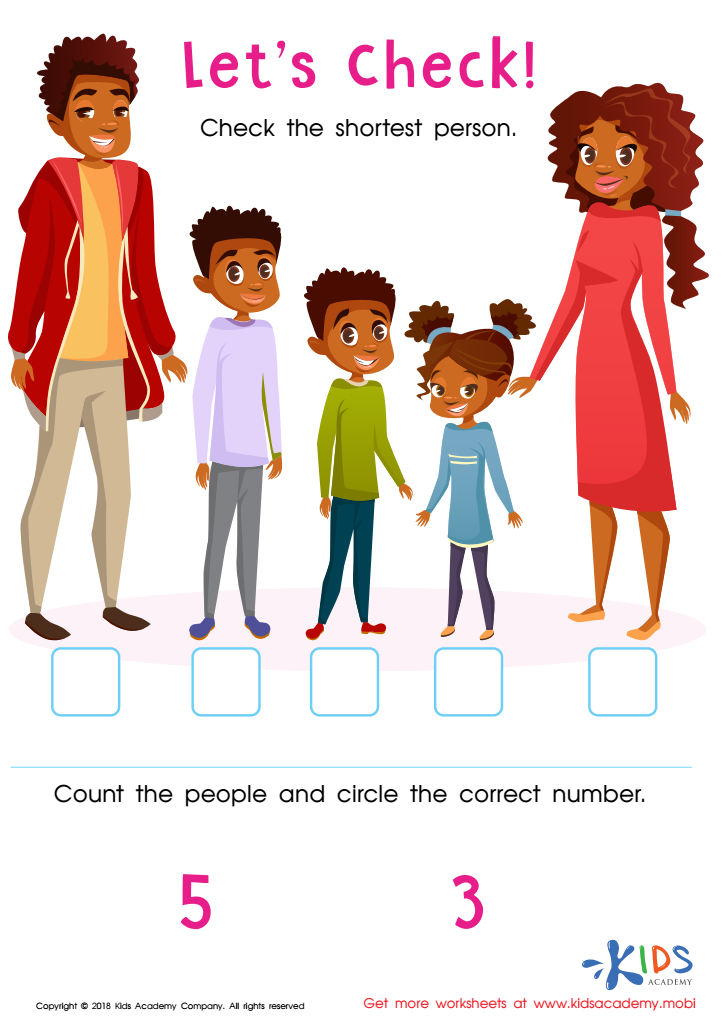
Let's Check! Assessment Worksheet
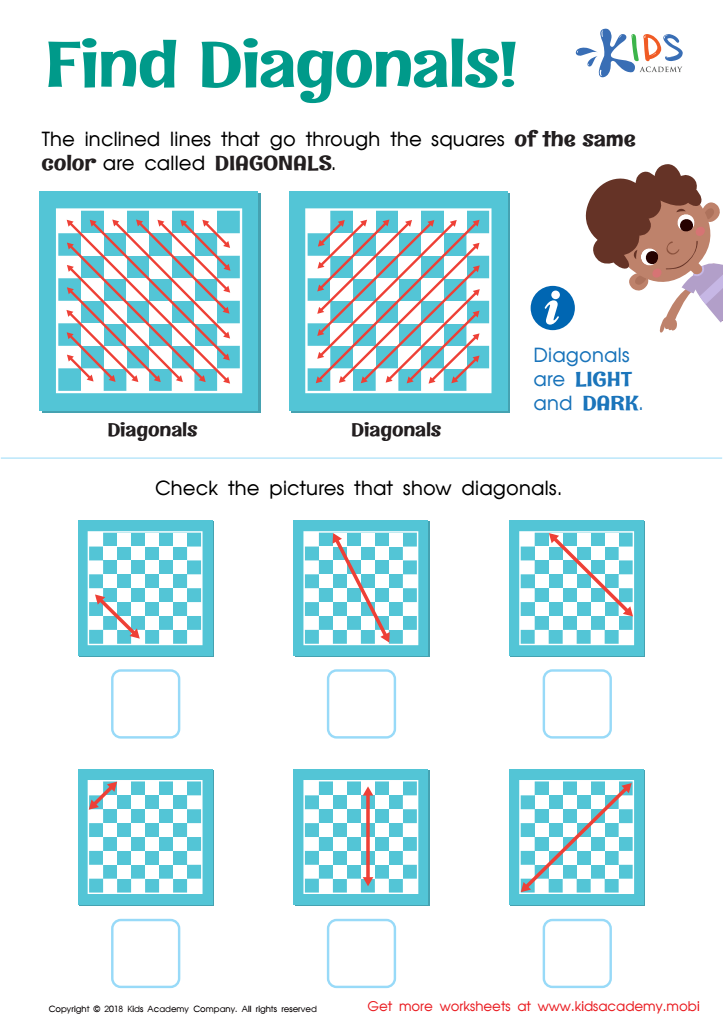
Find Diagonals Worksheet
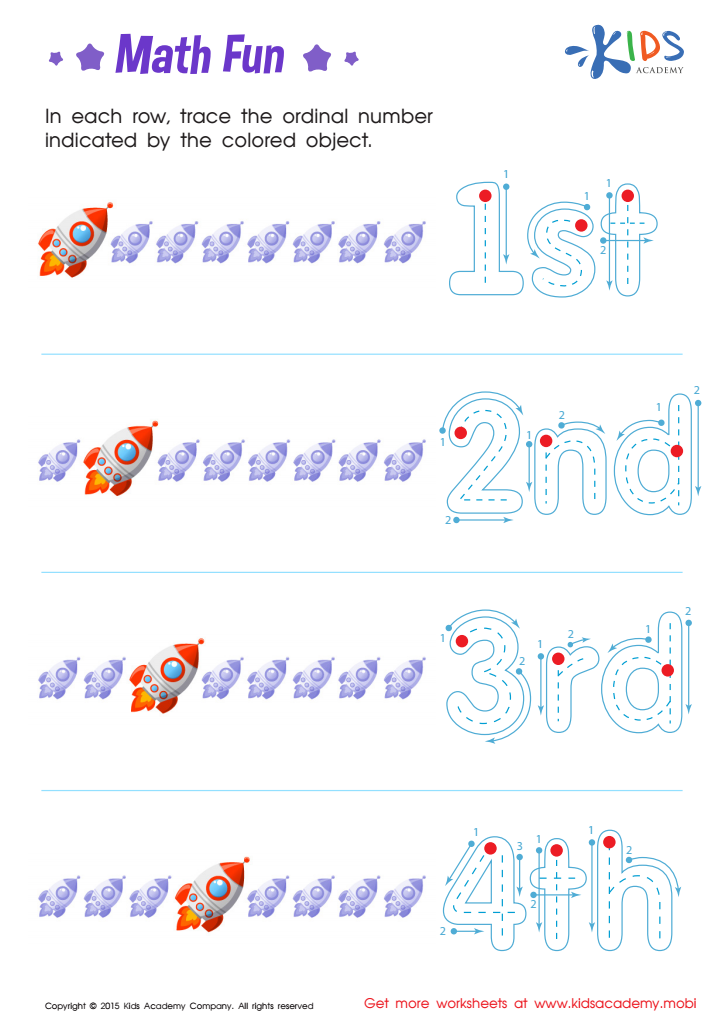
Ordinal Numbers: Math Fun Worksheet
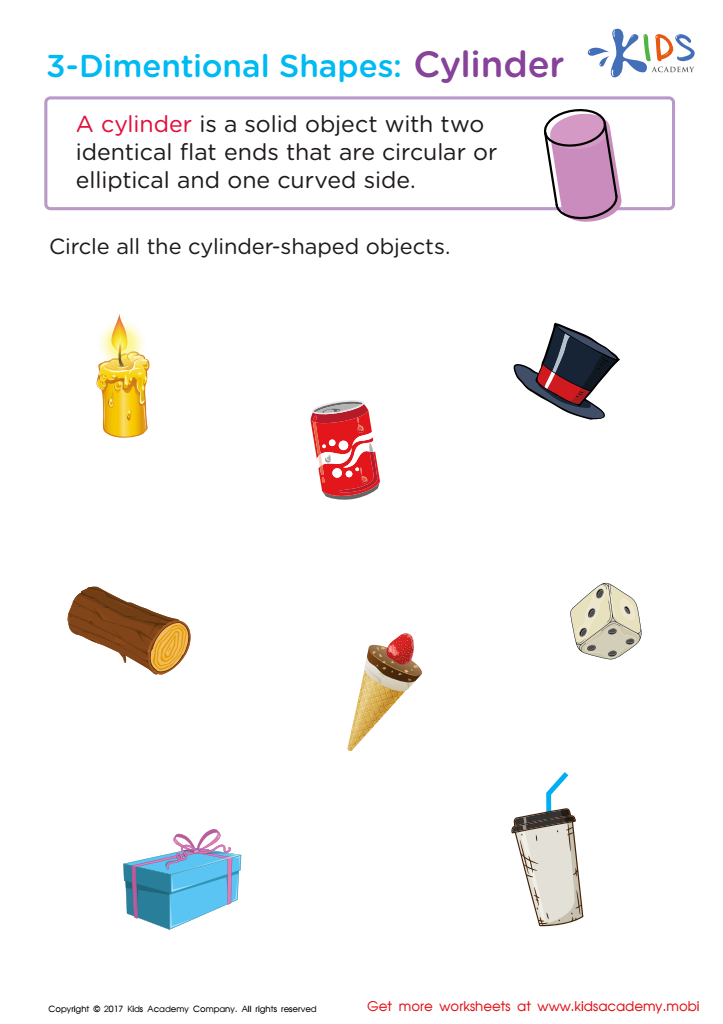
Three–Dimensional Shapes: Cylinder Worksheet








Understanding shapes is fundamental for children aged 5-9 as it lays the groundwork for essential cognitive and mathematical skills. At this developmental stage, children are naturally curious and eager to explore their environment. Learning about shapes enhances their ability to observe and describe the world around them, which fosters critical thinking and observation skills.
Shapes are not just abstract concepts; they play a vital role in everyday life. Familiarity with geometric shapes aids in activities like sorting, categorizing, and problem-solving—skills crucial for later success in math. When children understand shapes, they gain the foundation needed for more complex mathematical concepts such as symmetry, spatial awareness, and measurement.
Moreover, the understanding of shapes supports the development of fine motor skills through activities like drawing and constructing. Parents and teachers can engage children in playful learning experiences that promote spatial reasoning through games, puzzles, and art.
Lastly, recognizing shapes nurtures creativity and imagination, as children learn to relate shapes to the real world, enhancing their ability to visualize and plan. Overall, prioritizing shape recognition in early education helps cultivate confident, well-rounded learners who are prepared for future academic challenges.








